Legislative Activity
Track Scott's sponsored bills, co-sponsored legislation, and voting record
This Act establishes a federal database to identify and prohibit federal funding for state and local governments deemed to have sanctuary policies that conflict with immigration enforcement.

Chip Roy
Representative
TX
Chip Roy
Representative
TX
The Sanctuary Penalty and Public Protection Act of 2025 establishes a federal database to identify and publicly list state and local governments deemed to have policies that obstruct federal immigration enforcement. Jurisdictions placed on this "sanctuary jurisdiction" list will be prohibited from receiving or using any new federal funding. This act aims to penalize local governments that refuse to fully cooperate with federal immigration detainers and enforcement requests.
This Act prohibits the Secretary of Agriculture from using race or sex as criteria when administering major USDA farm support, conservation, and rural development programs.
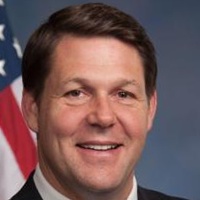
Jodey Arrington
Representative
TX
Jodey Arrington
Representative
TX
The No Discrimination in Farm Programs Act prohibits the Secretary of Agriculture from using race or sex as criteria when administering key USDA programs. This ensures that major financial support, conservation, and loan programs are managed based on fairness, equal opportunity, and merit. The bill specifically applies to pandemic assistance, crop insurance, conservation efforts, and various farm loan programs.
This bill requires the District of Columbia to allow Members of Congress with valid concealed carry permits from their home states to carry concealed firearms within the District.
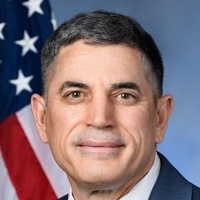
Andrew Clyde
Representative
GA
Andrew Clyde
Representative
GA
This bill would require the District of Columbia to recognize valid concealed carry permits or the legal right to carry a concealed firearm held by Members of Congress from their home states. Specifically, it allows Senators, Representatives, Delegates, and Resident Commissioners to carry a concealed firearm in D.C. provided they meet federal eligibility requirements and carry proper identification.
The Freights First Act limits Amtrak's automatic track preference over freight trains within 50 miles of ports or major rail yards.
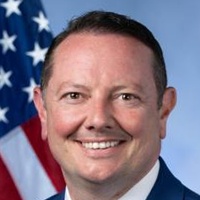
Eric Burlison
Representative
MO
Eric Burlison
Representative
MO
The Freights First Act revises federal law regarding track-sharing priority between Amtrak passenger trains and freight trains. This bill removes the automatic preference for Amtrak when sharing tracks within 50 miles of a port or major rail yard. Consequently, freight trains may now take precedence over Amtrak in these busy, localized areas unless a genuine emergency exists.
The PRIME Act exempts custom slaughter facilities from federal inspection requirements for meat distributed only within the state where it was processed, provided they comply with state law.
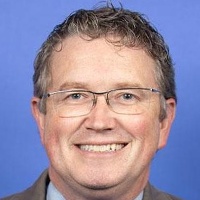
Thomas Massie
Representative
KY
Thomas Massie
Representative
KY
The PRIME Act, or Processing Revival and Intrastate Meat Exemption Act, exempts custom slaughter facilities from federal inspection requirements for meat that is processed and sold only within the state of origin. To qualify, facilities must comply with all applicable state laws regarding slaughter and preparation. This legislation ensures that states retain the authority to enforce their own, potentially stricter, regulations on local meat processing.
This resolution expresses congressional disapproval of the United States Fish and Wildlife Service's submitted rule regarding the Barred Owl Management Strategy.
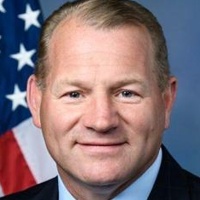
Troy Nehls
Representative
TX
Troy Nehls
Representative
TX
This joint resolution expresses the disapproval of Congress regarding the United States Fish and Wildlife Service's recently submitted rule on the "Barred Owl Management Strategy." By invoking the Congressional Review Act, this action nullifies the proposed management strategy, preventing it from taking legal effect. Essentially, Congress is rejecting the USFWS's plan for managing Barred Owls.
This Act prohibits the Federal Reserve from directly or indirectly issuing a Central Bank Digital Currency (CBDC) and bars the Fed from developing or using one for monetary policy without explicit Congressional authorization.
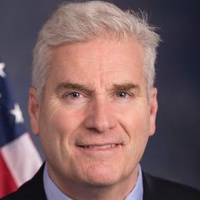
Tom Emmer
Representative
MN
Tom Emmer
Representative
MN
The Anti-CBDC Surveillance State Act strictly prohibits the Federal Reserve from directly or indirectly issuing a Central Bank Digital Currency (CBDC) to individuals. This legislation prevents the Fed from developing, testing, or implementing any digital currency that functions as a direct liability of the Federal Reserve. Furthermore, Congress asserts that any authority to create such a digital asset must explicitly come from Congress itself.
This resolution mandates the public release of nearly all Department of Justice documents related to the Jeffrey Epstein and Ghislaine Maxwell investigations, with limited exceptions for victim privacy and ongoing legal integrity.
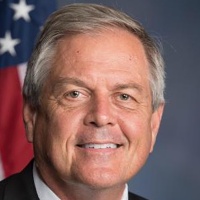
Ralph Norman
Representative
SC
Ralph Norman
Representative
SC
This resolution mandates the Department of Justice (DOJ) to publicly release nearly all documents, records, and communications related to the investigations of Jeffrey Epstein and Ghislaine Maxwell within 30 days. The bill strictly prohibits withholding information based on embarrassment or political sensitivity. Any permitted redactions, such as protecting victim privacy or grand jury secrets, must be publicly justified to Congress.
The TRANS MICE Act prohibits federal funding for research on non-human vertebrates that involves interventions designed to alter the animal's body to not match its biological sex.
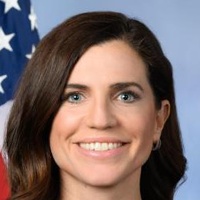
Nancy Mace
Representative
SC
Nancy Mace
Representative
SC
The TRANS MICE Act prohibits the use of federal funds for animal research that involves interventions like drugs or surgery intended to alter a non-human vertebrate animal's body to change its biological sex characteristics. This ban specifically targets research that disrupts natural development or physical appearance, while exempting animals that naturally change sex or possess both reproductive organs.
The SHIELD Act amends federal unemployment rules to prohibit benefits for individuals unemployed due to active participation in or direct stake in a labor dispute or strike.
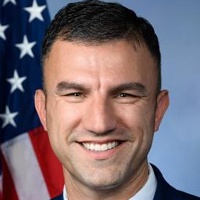
Rudy Yakym
Representative
IN
Rudy Yakym
Representative
IN
The Securing Help for Involuntary Employment Loss and Displacement Act (SHIELD Act) revises federal requirements for state unemployment programs regarding labor disputes. This bill mandates that states deny regular unemployment benefits to individuals unemployed due to a strike or labor dispute in which they actively participated or had a direct stake. The new federal conditions take effect in two years, though states may adopt them sooner.
This Act prohibits lawsuits claiming discrimination based solely on the unintended, disproportionate statistical effect (disparate impact) of employment or housing practices.
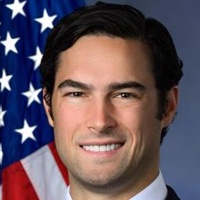
Brandon Gill
Representative
TX
Brandon Gill
Representative
TX
The Restoring Equal Opportunity Act aims to eliminate "disparate-impact liability" across major federal laws. This bill prohibits lawsuits claiming discrimination based solely on the unintended, disproportionate negative effect of a rule or practice. Consequently, it removes the ability to challenge employment and housing practices unless discriminatory intent can be proven. The Act also nullifies specific prior regulatory approvals related to civil rights enforcement.
This Act authorizes livestock producers and their employees to take certain black vultures that threaten their livestock, with the exception of using poison, and requires annual reporting of such actions.
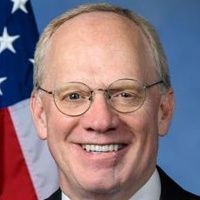
John Rose
Representative
TN
John Rose
Representative
TN
The Black Vulture Relief Act authorizes livestock producers and their employees to take action against black vultures that pose an imminent threat to their livestock. This permission overrides certain existing regulations but strictly prohibits the use of poison. Those who take vultures under this authority must submit an annual report to the U.S. Fish and Wildlife Service once the required reporting form is made available.
The OCED Elimination Act abolishes the Office of Clean Energy Demonstrations (OCED) within the Department of Energy and repeals related provisions, including Section 41201 of the Infrastructure Investment and Jobs Act.
Brandon Gill
Representative
TX
Brandon Gill
Representative
TX
The OCED Elimination Act officially abolishes the Office of Clean Energy Demonstrations (OCED) within the Department of Energy. This legislation also repeals Section 41201 of the Infrastructure Investment and Jobs Act, eliminating associated programs and requirements. In short, this bill shuts down the OCED and removes a specific section of prior energy legislation.
The TPS Reform Act of 2025 transfers the authority to designate, extend, or terminate Temporary Protected Status from the executive branch to Congress through new legislative acts.
Chip Roy
Representative
TX
Chip Roy
Representative
TX
The TPS Reform Act of 2025 fundamentally shifts the authority for designating and extending Temporary Protected Status (TPS) from the executive branch to Congress. Under this Act, Congress must pass specific legislation to grant initial TPS or approve any extensions based on ongoing conflict or disaster conditions. The Secretary of Homeland Security assumes the administrative responsibilities previously held by the Attorney General regarding TPS.
The End DED Act prohibits the use of federal funds for the Deferred Enforced Departure program, asserting that immigration benefits are the purview of Congress, not the Executive Branch.
Chip Roy
Representative
TX
Chip Roy
Representative
TX
The End DED Act seeks to eliminate the use of Deferred Enforced Departure (DED) by the executive branch, asserting that this authority belongs to Congress. The bill prohibits the use of any federal funds or resources for the DED program. This action aims to formalize immigration relief through the existing Temporary Protected Status (TPS) framework established by Congress.
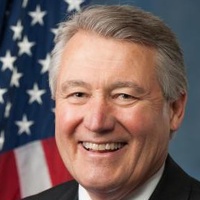
The Employee Rights Act mandates secret ballot elections for union representation, restricts voting eligibility to lawfully present workers, tightens rules on employer-employee data sharing during elections, limits union spending of member dues, clarifies independent contractor and joint employer standards, extends NLRA coverage to tribal entities, allows for independent negotiation in certain states, bans non-job-related DEI clauses in contracts, and limits federal prosecution for minor acts of violence during labor disputes.
Rick Allen
Representative
GA
Rick Allen
Representative
GA
The Employee Rights Act fundamentally reforms U.S. labor law by mandating secret ballot elections for union representation and restricting union access to employee contact information. It also clarifies definitions for independent contractors and joint employers under federal wage and labor relations statutes. Furthermore, the bill prohibits Diversity, Equity, or Inclusion (DEI) clauses in collective bargaining agreements and establishes federal penalties for violence during labor disputes, while prioritizing state authority for minor incidents.
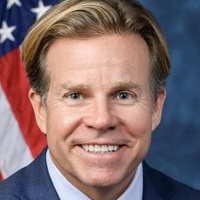
The LEDGER Act mandates the establishment of a comprehensive, government-wide system to track and record the exact destination and availability period of every federal expenditure.
Mike Haridopolos
Representative
FL
Mike Haridopolos
Representative
FL
The LEDGER Act mandates the creation of a comprehensive, centralized system managed by the Secretary of the Treasury to track every expenditure made by all branches of the U.S. Government. This new system must detail exactly where federal funds are spent and how long those funds were available for obligation. The goal is to significantly enhance the traceability and transparency of government spending.
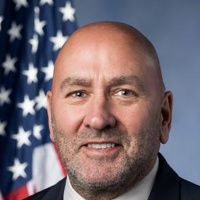
This resolution censures Representative LaMonica McIver and removes her from the Committee on Homeland Security following her alleged interference with federal officers at an immigration facility.
Clay Higgins
Representative
LA
Clay Higgins
Representative
LA
This resolution formally censures Representative LaMonica McIver following her indictment for allegedly interfering with federal officers at an immigration facility. As a result of her conduct, the House is officially expressing its strong disapproval and immediately removing her from the Committee on Homeland Security. This action is taken because her alleged actions are deemed not to reflect creditably upon the House.
This act exempts large propane tanks holding up to 126,000 pounds from Chemical Facility Anti-Terrorism Standards (CFATS) regulations.
Eric Burlison
Representative
MO
Eric Burlison
Representative
MO
The Propane Accessibility and Regulatory Relief Act exempts large propane tanks, specifically those holding up to 126,000 pounds, from the security regulations under the Chemical Facility Anti-Terrorism Standards (CFATS). This measure aims to reduce regulatory burdens on facilities storing these specific quantities of propane. The Secretary of Homeland Security is required to implement this exemption promptly.
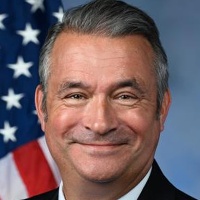
The FIGHT Act of 2025 strengthens federal prohibitions against animal fighting, enhances enforcement mechanisms, and allows citizens to sue violators of animal fighting provisions.
Don Bacon
Representative
NE
Don Bacon
Representative
NE
The FIGHT Act of 2025 significantly strengthens federal prohibitions against animal fighting ventures, specifically targeting the sponsorship, exhibition, and gambling associated with these events. This legislation clarifies the definition of a rooster for legal purposes and bans the interstate transport of roosters for fighting. Furthermore, it empowers private citizens to file lawsuits against violators, allowing for civil penalties and the potential seizure of property used to facilitate illegal animal fighting.