
Legislative Activity
Track Chellie's sponsored bills, co-sponsored legislation, and voting record
The High Court Gift Ban Act prohibits federal judicial officers from accepting gifts exceeding $50 per instance or $100 annually from a single source, with specific exceptions and enforcement penalties.
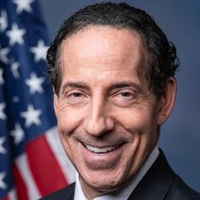
Jamie Raskin
Representative
MD
Jamie Raskin
Representative
MD
The High Court Gift Ban Act establishes strict limits on gifts accepted by federal judicial officers, prohibiting any gift valued over $50 or exceeding $100 in total annual value from a single source. The bill includes specific exemptions for personal hospitality, professional events, and family gifts, while mandating enforcement through the Judicial Conference and potential civil or criminal penalties for violations.
The PRESERVE Act mandates that the General Services Administration establish preservation committees and formal plans to protect and maintain public access to government-commissioned artwork before disposing of surplus federal property.
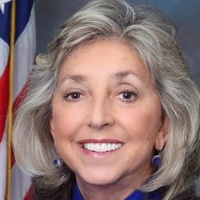
Dina Titus
Representative
NV
Dina Titus
Representative
NV
The PRESERVE Act ensures the protection of publicly commissioned artwork located on federal property slated for sale, transfer, or demolition. It mandates that the General Services Administration establish a specialized Preservation Committee to develop and implement plans to safeguard these cultural assets. Ultimately, the bill requires that such artwork remains preserved and accessible to the public, even after the property changes hands.
This bill prohibits the National Science Foundation from decommissioning or reducing the scope of Ocean Observatories Initiative instruments until a comprehensive review with scientific and community input is completed.
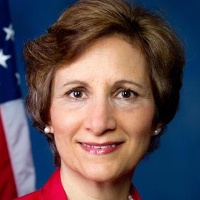
Suzanne Bonamici
Representative
OR
Suzanne Bonamici
Representative
OR
This bill prohibits the National Science Foundation from decommissioning or reducing the scope of the Ocean Observatories Initiative (OOI) instruments across its various coastal and oceanic locations. It mandates that the OOI must remain fully operational until the NSF completes a comprehensive review of the program that incorporates input from the scientific and coastal communities.
This bill directs the President to remove U.S. Armed Forces from hostilities in Lebanon within seven days, pursuant to the War Powers Resolution.
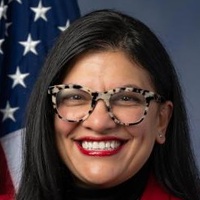
Rashida Tlaib
Representative
MI
Rashida Tlaib
Representative
MI
This resolution directs the President to withdraw U.S. Armed Forces from hostilities in Lebanon within seven days, utilizing authority under the War Powers Resolution. It explicitly clarifies that this action does not authorize the use of military force or limit security cooperation with Lebanese forces or the protection of diplomatic facilities.
The Save MEDICARE Act of 2026 reforms Medicare Advantage by tightening payment accuracy, enhancing audit and enforcement authority, and requiring private insurers to reimburse the VA for veteran healthcare services.

Lloyd Doggett
Representative
TX
Lloyd Doggett
Representative
TX
The Save MEDICARE Act of 2026 aims to increase transparency and accountability within the Medicare Advantage program by reforming payment methodologies, tightening oversight of diagnosis coding, and accelerating audit processes. The bill also enhances the Department of Veterans Affairs' ability to recover healthcare costs from private insurers and empowers states to enforce federal requirements for Medicare Advantage plans. These measures are designed to ensure more accurate payments, reduce deceptive practices, and protect resources for all Medicare enrollees.
This bill renames and revises the Great American Outdoors Act's maintenance fund, increases dedicated funding through new, higher fees for foreign visitors, and sets spending priorities for deferred maintenance across public lands agencies.
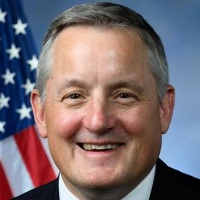
Bruce Westerman
Representative
AR
Bruce Westerman
Representative
AR
This bill, the Great American Outdoors Act 250, significantly reforms and renames the existing public lands restoration fund to the America’s Legacy Restoration Fund. It secures dedicated funding streams, primarily from energy revenues and new fees on foreign visitors, to address critical deferred maintenance across the National Park Service, Forest Service, and other public land agencies. The legislation establishes strict spending priorities for infrastructure repair while also creating pilot programs for enhancing outdoor recreation and sportsmen's access. Finally, it mandates increased transparency and accountability through standardized metrics and public reporting on all funded projects.
The LIFT the BAR Act restores federal public benefit eligibility, including SNAP, Medicaid, and housing assistance, for many lawfully present noncitizens by repealing restrictions from the 1996 welfare law and updating terminology.

Pramila Jayapal
Representative
WA
Pramila Jayapal
Representative
WA
The LIFT the BAR Act repeals decades-old restrictions that barred many lawfully present noncitizens from accessing essential federal public benefits. This legislation restores eligibility for programs like SNAP, Medicaid, CHIP, and housing assistance for qualified noncitizens. The bill also updates terminology, replacing "alien" with "noncitizen" throughout relevant statutes.
The Latonya Reeves Freedom Act of 2026 strengthens the right of individuals eligible for long-term services and supports to live in the most integrated community setting possible, holding states and providers accountable for transitioning people out of institutions.

Steve Cohen
Representative
TN
Steve Cohen
Representative
TN
The Latonya Reeves Freedom Act of 2026 aims to strengthen the right of individuals eligible for long-term services and supports (LTSS) to live in the most integrated community setting possible. It prohibits discrimination by public entities and insurers against those who qualify for institutional placement but desire community-based services. The Act mandates comprehensive planning, self-evaluation, and enforcement mechanisms to speed up the transition of individuals out of institutions and ensure maximum control over their supports.
This act doubles the maximum Pell Grant award, makes funding mandatory, extends eligibility to Dreamer students, restores previous eligibility limits, and reforms Satisfactory Academic Progress rules.
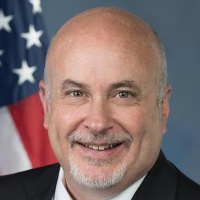
Mark Pocan
Representative
WI
Mark Pocan
Representative
WI
The Pell Grant Preservation and Expansion Act of 2026 aims to significantly strengthen federal student aid by doubling the maximum Pell Grant award and funding it through mandatory appropriations. This bill also expands eligibility to include Dreamer students, restores Pell Grant eligibility for students with certain scholarships, and reforms Satisfactory Academic Progress (SAP) rules to make regaining aid easier after academic setbacks. These changes are designed to stabilize and expand access to postsecondary education for millions of students.
This Act immediately cancels the registration of the pesticide paraquat, banning its sale and use due to unreasonable adverse effects.
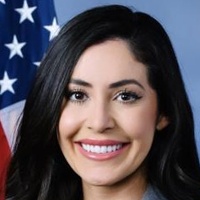
Anna Luna
Representative
FL
Anna Luna
Representative
FL
The Paraquat Prevention Act immediately cancels the registration of the pesticide paraquat, deeming it to cause unreasonable adverse effects. This legislation bans the future sale, use, and reregistration of paraquat and revokes any existing food tolerances. The bill effectively removes paraquat from the market upon enactment.
This bill establishes the "Protecting Americas Herds Act" to create a competitive grant program supporting cooperative extension services in preparing for and responding to New World screwworm outbreaks.
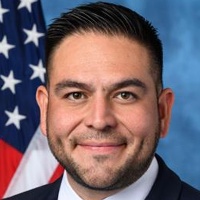
Gabriel (Gabe) Vasquez
Representative
NM
Gabriel (Gabe) Vasquez
Representative
NM
The "Protecting Americas Herds Act" establishes a competitive grant program administered by the Secretary of Agriculture. This program is designed to help cooperative extension services prepare for and respond to New World screwworm outbreaks. Funds will support training, livestock inspections, producer education, and technical assistance to prevent and manage infestations. Priority will be given to areas facing a heightened risk of introduction or spread.
This bill, the "Protect Local Funding Act," prohibits the finalization, implementation, or enforcement of the proposed "Regulation for Federal Financial Assistance" rule published on May 29, 2026, or any substantially similar rule.

Haley Stevens
Representative
MI
Haley Stevens
Representative
MI
This bill, the "Protect Local Funding Act," prohibits the finalization, implementation, or enforcement of the proposed "Regulation for Federal Financial Assistance" published on May 29, 2026, or any substantially similar rule. It prevents federal agencies from enacting this specific regulation concerning federal financial assistance.
This act repeals the federal tax credit for contributions to scholarship organizations and eliminates the income exclusion for certain scholarship amounts received from those organizations.
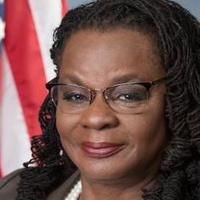
Gwen Moore
Representative
WI
Gwen Moore
Representative
WI
The Keep Public Funds in Public Schools Act of 2026 aims to redirect funding by eliminating federal tax incentives for private school scholarships. Specifically, it repeals the tax credit for contributions to scholarship-granting organizations and removes the income exclusion for certain scholarship amounts received. These changes are set to take effect starting in 2027.
This bill gradually phases out Social Security taxes on high earners while increasing benefit calculations, mandating the use of a new Consumer Price Index for the Elderly, and improving survivor benefits for two-income households.

Linda Sánchez
Representative
CA
Linda Sánchez
Representative
CA
The Strengthening Social Security Act of 2026 gradually phases out Social Security taxes on earnings above the contribution base starting in 2028. It also adjusts benefit calculations by increasing the first bend point rate and incorporating a portion of previously untaxed surplus earnings into the primary insurance amount formula starting in 2033. Furthermore, the bill mandates the creation of a new Consumer Price Index for Elderly Consumers (CPI-E) to be used for calculating future cost-of-living adjustments. Finally, it improves survivor benefits for widows and widowers in two-income households and protects current SSI recipients from benefit reductions.
This bill expresses congressional disapproval of the Department of Health and Human Services' rule aimed at restoring flexibility within the Child Care and Development Fund (CCDF).
Suzanne Bonamici
Representative
OR
Suzanne Bonamici
Representative
OR
This bill expresses the disapproval of Congress, under the Congressional Review Act, of a Department of Health and Human Services rule concerning the Child Care and Development Fund (CCDF). Specifically, it rejects the rule that aimed to restore flexibility within the CCDF program. As a result, the rule published on May 12, 2026, will not take effect.
This bill establishes a mandatory timeline and binding arbitration process to expedite the negotiation of first-time collective bargaining agreements between employers and newly certified unions.
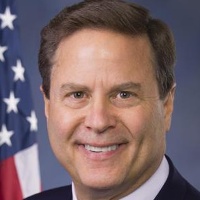
Donald Norcross
Representative
NJ
Donald Norcross
Representative
NJ
The Faster Labor Contracts Act aims to speed up the process of securing a first collective bargaining agreement after a union is certified. It establishes a mandatory timeline, including mediation and binding arbitration, if an agreement is not reached within 90 days of bargaining. This process is designed to prevent lengthy delays that currently weaken the union's position. The bill also requires a GAO report on current time-to-contract averages.
This bill, the "No Toxic Chemicals in Food Packaging Act of 2026," bans specific harmful chemicals from being used in food contact substances and requires extra safety reviews for alternatives impacting vulnerable populations.

Janice Schakowsky
Representative
IL
Janice Schakowsky
Representative
IL
The "No Toxic Chemicals in Food Packaging Act of 2026" amends federal law to deem specific toxic chemicals, including certain phthalates, PFAS, and Bisphenols, unsafe for use in food contact materials. This legislation mandates that the FDA consider the impact on vulnerable populations when reviewing alternatives to these banned substances. Furthermore, the Act preserves the authority of states and local governments to enact stricter regulations regarding food additives and contact substances.
This act amends federal law to double the overtime pay rate for covered employees from time-and-a-half to double their regular rate of pay.
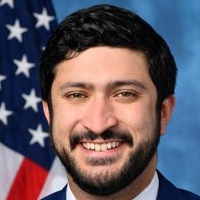
Gregorio Casar
Representative
TX
Gregorio Casar
Representative
TX
The Double the Wage for Overtime Act of 2026 amends the Fair Labor Standards Act to increase the required overtime pay rate for covered employees from time-and-a-half to double their regular rate of pay. This means employees will earn twice their normal hourly wage for all hours worked beyond 40 in a workweek. This change will take effect 180 days after the bill is enacted.
This bill mandates the Postal Service to implement recommendations from the Inspector General's report on improving the identification and notification of undelivered or partially delivered mail routes.
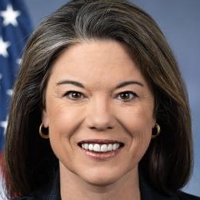
Angie Craig
Representative
MN
Angie Craig
Representative
MN
This bill mandates the U.S. Postal Service to review and implement recommendations from a specific 2022 Inspector General report. These recommendations focus on improving how the Postal Service identifies and notifies customers about undelivered or partially delivered mail routes. The Postal Service must complete this implementation within one year of the law's enactment.
This bill updates federal law to require a warrant for government access to the content of stored electronic communications, regardless of how long they have been stored, while also clarifying provider disclosure rules.
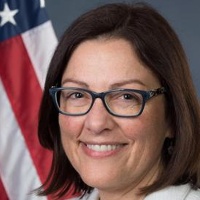
Suzan DelBene
Representative
WA
Suzan DelBene
Representative
WA
The Email Privacy Act updates federal law regarding electronic communication privacy and government access to stored digital data. This bill mandates that law enforcement must obtain a warrant to compel service providers to disclose the content of any stored electronic communication, regardless of how long it has been stored. It also clarifies the rules under which providers may voluntarily disclose customer information.