
Legislative Activity
Track Alexandria's sponsored bills, co-sponsored legislation, and voting record
The Schedules That Work Act establishes rights for employees to request flexible schedules, mandates advance notice and predictability pay for schedule changes in covered sectors, and grants employees rest time between shifts.

Rosa DeLauro
Representative
CT
Rosa DeLauro
Representative
CT
The Schedules That Work Act aims to provide workers with greater stability and predictability in their work hours. It grants employees the right to request flexible or stable schedules and requires employers to engage in a good-faith discussion about these requests. For covered sector employees (like retail and food service), the bill mandates 14 days' advance notice of schedules and establishes "predictability pay" for last-minute changes or split shifts. The Act also grants employees the right to 11 hours of rest between shifts, with premium pay required if this rest period is violated.
This bill officially recognizes Middle Eastern and North African (MENA) individuals as a racial and ethnic minority group under the Public Health Service Act and mandates a comprehensive study of MENA population health disparities.
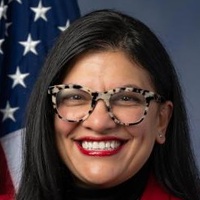
Rashida Tlaib
Representative
MI
Rashida Tlaib
Representative
MI
This bill officially recognizes Middle Eastern and North African (MENA) individuals as a distinct racial and ethnic minority group within federal health law. It directs the Secretary of Health and Human Services to conduct a comprehensive study on the unique health disparities affecting the MENA population. The legislation aims to ensure MENA individuals are included in federal health policies and resource allocation, addressing historical exclusion.
This bill officially renames the United States Postal Service facility at 130 North Winton Road in Rochester, New York, as the "Lieutenant James N. Lyons Post Office."
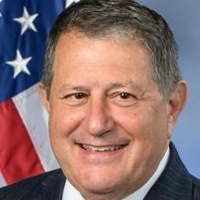
Joseph Morelle
Representative
NY
Joseph Morelle
Representative
NY
This bill officially designates the United States Postal Service facility located at 130 North Winton Road in Rochester, New York, as the "Lieutenant James N. Lyons Post Office." The legislation ensures that all future official references to this location will use the new designated name.
This act nullifies a recent Executive Order regarding federal labor relations and ensures existing collective bargaining agreements remain in effect.

Jared Golden
Representative
ME
Jared Golden
Representative
ME
The Protect America's Workforce Act nullifies a specific Executive Order issued in March 2025 concerning exclusions from federal labor-management relations programs. This legislation ensures that any existing collective bargaining agreements between federal agencies and employee unions remain fully in effect until their stated expiration dates. The Act also prohibits the use of federal funds to implement the overturned Executive Order.
This bill honors the lifetime achievements, cultural impact, and enduring legacy of pioneering Latina artist and EGOT winner, Rita Moreno.
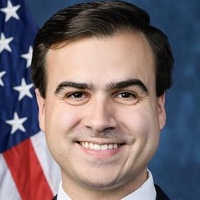
Pablo José Hernández Rivera
Representative
PR
Pablo José Hernández Rivera
Representative
PR
This resolution officially honors the lifetime accomplishments and enduring legacy of Rita Moreno, a pioneering Latina artist and cultural icon. It recognizes her historic achievements in the performing arts, including becoming an EGOT winner and the first Latina to win an Academy Award. Furthermore, the bill commends her tireless advocacy for civil rights and her embodiment of the American dream.
This bill significantly increases civil penalties across various federal labor laws, strengthens enforcement for health plan compliance, establishes penalties for employer unfair labor practices, and treats certain recordkeeping failures as continuing violations.
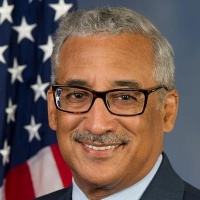
Robert Scott
Representative
VA
Robert Scott
Representative
VA
The Labor Enforcement to Securely Protect Workers (LETS Protect Workers) Act significantly increases civil penalties for violations across major federal labor laws, including child labor, wage and hour, and workplace safety standards. It strengthens enforcement mechanisms for mine safety violations and retaliation against miners, while also establishing new penalties for employer unfair labor practices under the National Labor Relations Act. Furthermore, the bill enhances enforcement for health plan parity and makes certain recordkeeping failures under OSHA and FLSA continuing violations.
This resolution commends state and local governments for championing reproductive rights as human rights while condemning abortion restrictions and criminalization following the *Dobbs* decision.
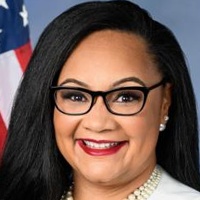
Nikema Williams
Representative
GA
Nikema Williams
Representative
GA
This concurrent resolution commends state and local governments for championing reproductive rights as human rights following the overturning of *Roe v. Wade*. It declares that denying abortion care leads to severe health risks and highlights the criminalization of pregnancy outcomes across the U.S. The resolution urges states to repeal abortion restrictions and affirm that reproductive rights are fundamental human rights.
This bill officially designates the United States Postal Service facility at 86 Main Street in Haverstraw, New York, as the Paul Piperato Post Office Building.
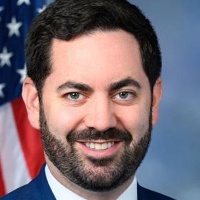
Michael Lawler
Representative
NY
Michael Lawler
Representative
NY
This bill officially designates the United States Postal Service facility located at 86 Main Street in Haverstraw, New York, as the "Paul Piperato Post Office Building." This action ensures the facility will be known by this name in all official federal records and documents moving forward.
This bill officially renames the United States Postal Service facility in Holmes, New York, as the Sheriff Adrian Butch Anderson Post Office Building.
Michael Lawler
Representative
NY
Michael Lawler
Representative
NY
This bill officially designates the United States Postal Service facility located at 298 Route 292 in Holmes, New York, as the "Sheriff Adrian Butch Anderson Post Office Building." This change ensures all federal records and documents will use the new official name for this location.
This bill officially renames the U.S. Postal Service facility in Avon, New York, as the Officer Anthony Mazurkiewicz Memorial Post Office Building.
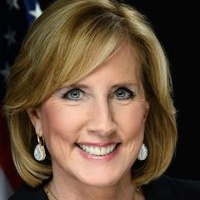
Claudia Tenney
Representative
NY
Claudia Tenney
Representative
NY
This bill officially designates the United States Postal Service facility located at 80 Prospect Street in Avon, New York, as the **Officer Anthony Mazurkiewicz Memorial Post Office Building**. This action ensures the facility will bear this name in all federal records and references moving forward.
This bill prohibits immigration enforcement officers from arresting or detaining individuals at or near immigration court facilities unless there is a judicial warrant or an imminent threat.

Dan Goldman
Representative
NY
Dan Goldman
Representative
NY
The Immigration Court Due Process Protection Act of 2025 restricts Department of Homeland Security (DHS) officers from arresting or detaining individuals attending or departing from immigration court proceedings or scheduled appointments, unless a judicial warrant is present or an imminent threat exists. The bill mandates specific supervisory approval for arrests during scheduled check-ins. Furthermore, it requires the DHS Inspector General to submit an annual report to Congress detailing compliance with these new protections.
The Dignity for Detained Immigrants Act establishes comprehensive standards, rigorous oversight, and new custody procedures to ensure humane treatment and due process for all noncitizens detained by the Department of Homeland Security, while phasing out for-profit detention facilities.

Pramila Jayapal
Representative
WA
Pramila Jayapal
Representative
WA
The Dignity for Detained Immigrants Act aims to overhaul immigration detention by establishing mandatory, high standards based on ABA guidelines and increasing transparency through rigorous, unannounced inspections. The bill prohibits the use of private, for-profit detention facilities within three years and ends the mandatory detention of most noncitizens, prioritizing release or community-based alternatives. Furthermore, it establishes new due process rights, including timely custody hearings, a presumption of release, and prohibitions on detaining children or using solitary confinement.
The Artificial Intelligence Civil Rights Act of 2025 establishes comprehensive federal rules to prevent algorithmic discrimination, mandate independent safety audits for high-risk AI systems, and grant individuals new rights to transparency and legal recourse against biased automated decisions.

Yvette Clarke
Representative
NY
Yvette Clarke
Representative
NY
The Artificial Intelligence Civil Rights Act of 2025 establishes comprehensive federal rules to prevent discrimination caused by automated decision-making systems in critical areas like employment, housing, and credit. It mandates independent safety checks, public reporting for high-risk findings, and clear contractual standards between algorithm creators and users. The law empowers the Federal Trade Commission (FTC) and grants individuals a private right of action to enforce these new civil rights protections against algorithmic bias.
This Act prohibits sellers from price gouging on goods affected by tariffs for five years by limiting price increases to direct tariff-related costs, with specific enforcement provisions and reporting requirements managed by the FTC.
Rosa DeLauro
Representative
CT
Rosa DeLauro
Representative
CT
The No GOUGE Act prohibits sellers from raising the price of "tariffed goods" by more than the direct costs resulting from a new or planned tariff for five years. This prevents companies from using tariffs as an excuse to charge unreasonably high prices, with specific rules for final goods, assembled products, and components. The Federal Trade Commission (FTC) is tasked with enforcement, while large companies face a presumption of violation following major tariff announcements. The bill also mandates annual reports from the FTC and other agencies detailing price changes and enforcement actions.
This Act mandates FERC to modernize and standardize electric utility reporting, establishes a centralized, public data repository, and directs research and a public dashboard to analyze grid expansion costs and interconnection processes.
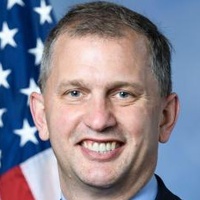
Sean Casten
Representative
IL
Sean Casten
Representative
IL
The Grid Research and Development Act mandates the Federal Energy Regulatory Commission (FERC) to modernize and standardize how electric utilities report detailed data on transmission projects, costs, and operations. This law establishes a centralized, publicly accessible data repository, managed by FERC and the EIA, to make this information searchable and machine-readable. Furthermore, it directs the Secretary of Energy to conduct research and develop a public dashboard to analyze grid expansion costs, interconnection efficiency, and overall system performance for improved affordability and planning.
This Act establishes mandatory, standardized annual scorecards for electricity transmission entities, detailing performance metrics on interconnection, investment, and reliability, to be made publicly available and subject to independent verification.
Sean Casten
Representative
IL
Sean Casten
Representative
IL
The Electricity Transmission Scorecard Act mandates that major electricity transmission entities annually report detailed performance data to FERC and the EIA. This data, covering interconnection queues, project development, and system performance, will be made publicly available via an online portal. The goal is to create standardized transparency to improve accountability, reliability, and affordability across the national transmission system. FERC is also required to periodically review and update these scorecard metrics with stakeholder input.
This Act prohibits discrimination based on religion, sex, or marital status in federally funded child welfare services to improve outcomes for all children, especially LGBTQ youth.
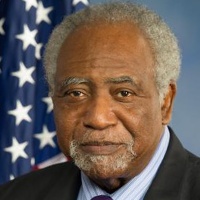
Danny Davis
Representative
IL
Danny Davis
Representative
IL
The John Lewis Every Child Deserves a Family Act prohibits discrimination based on religion, sex, or marital status in federally funded child welfare services. This aims to increase the number of stable, family-like placements for children, especially for LGBTQ youth who are overrepresented in foster care. The bill mandates federal guidance, training, and data collection to improve safety and well-being outcomes for all children involved in the system.
This bill limits the number of Medicare Advantage plans a single organization can offer under contract to three, unless those plans are significantly different from each other.
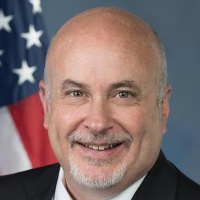
Mark Pocan
Representative
WI
Mark Pocan
Representative
WI
This bill amends the Social Security Act to impose new limitations on the number of Medicare Advantage (MA) plans an organization can offer under contract. Specifically, it restricts MA organizations from offering more than three MA plans unless those plans have significant differences in premiums, benefits, or cost-sharing. This measure aims to streamline the offerings available through Medicare Advantage.
This bill prohibits the Department of Health and Human Services from using appropriated funds to automatically enroll individuals into Medicare Advantage plans.
Mark Pocan
Representative
WI
Mark Pocan
Representative
WI
This bill prohibits the Department of Health and Human Services from using appropriated funds to automatically enroll individuals into Medicare Advantage (MA) plans. It ensures that enrollment in an MA plan only occurs when an individual actively makes that choice, rather than it being the default option.
This bill mandates the Secretary of Health and Human Services to create a website allowing Medicare beneficiaries to search for providers participating in both Medicare Advantage (MA) plans and traditional Medicare.
Mark Pocan
Representative
WI
Mark Pocan
Representative
WI
This bill mandates the Secretary of Health and Human Services to create and maintain a public website for Medicare beneficiaries. This resource will allow users to easily search for healthcare providers and suppliers participating in either Medicare Advantage (MA) plans or traditional Medicare. The website must clearly identify which networks each provider belongs to.