Legislative Activity
Track Zachary's sponsored bills, co-sponsored legislation, and voting record
The Neighborhood Homes Investment Act establishes a new federal tax credit to incentivize the development and substantial rehabilitation of affordable starter homes in low-income communities by closing the financing gap between construction costs and sale prices.
Mike Kelly
Representative
PA
Mike Kelly
Representative
PA
The Neighborhood Homes Investment Act establishes a new federal tax credit designed to close the financing gap hindering the construction and rehabilitation of affordable starter homes in distressed communities. This credit incentivizes developers to build or substantially renovate housing in specific low-income census tracts and sell it affordably to qualified moderate-income homeowners. State agencies will manage the allocation of these credits, ensuring projects meet affordability standards and promoting revitalization in struggling neighborhoods.
This Act establishes an Office of Community Affairs within the CFPB to research barriers, coordinate efforts, and report recommendations to Congress on increasing banking access for under-banked and un-banked consumers.
David Scott
Representative
GA
David Scott
Representative
GA
The Financial Inclusion in Banking Act of 2025 establishes a new Office of Community Affairs within the Consumer Financial Protection Bureau (CFPB). This office is tasked with researching the barriers preventing un-banked and under-banked consumers from accessing traditional banking services. The Act mandates that this office coordinate federal efforts and develop strategies to boost financial education for these underserved populations. Finally, the Office must report biennially to Congress with findings and specific recommendations to improve financial inclusion.
This resolution calls for accountability for unpunished Serbian sexual war crimes during the 1999 Kosovo war, specifically highlighting the case of U.S. citizen and survivor Vasfije Krasniqi Goodman.
Julie Johnson
Representative
TX
Julie Johnson
Representative
TX
This resolution formally condemns the impunity surrounding unpunished Serbian sexual war crimes from the 1999 Kosovo War, centering on the case of U.S. citizen and survivor Vasfije Krasniqi Goodman. It details the systemic failures of justice mechanisms to hold perpetrators accountable for widespread sexual and gender-based violence during the conflict. The bill urges the Serbian government to prosecute those responsible for these atrocities against women and calls on the U.S. government to prioritize accountability for wartime sexual violence globally.
This Act improves early childhood nutrition programs by revising eligibility certification for proprietary centers, streamlining serious deficiency reviews, adjusting meal reimbursement limits, updating inflation calculations, and establishing an advisory committee to reduce paperwork burdens.
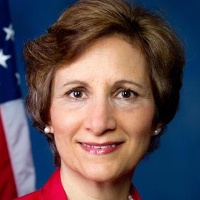
Suzanne Bonamici
Representative
OR
Suzanne Bonamici
Representative
OR
The Early Childhood Nutrition Improvement Act aims to strengthen federal nutrition programs for children by clarifying eligibility rules for for-profit childcare centers and mandating a comprehensive review of serious deficiency processes to ensure fairness and reduce unnecessary state-level burdens. The bill also adjusts meal reimbursement limits, updates inflation tracking for program costs, and establishes an advisory committee to drastically reduce paperwork and modernize administrative requirements for providers. These changes seek to streamline operations, improve consistency, and better support child care providers participating in federal meal programs.
This bill formally rejects the Internal Revenue Service's proposed rule requiring brokers to report gross proceeds from digital asset sales.

Mike Carey
Representative
OH
Mike Carey
Representative
OH
This bill seeks to formally reject a recent rule issued by the Internal Revenue Service (IRS) concerning gross proceeds reporting by brokers for digital asset sales. Through this joint resolution, Congress is exercising its authority to disapprove the specific IRS regulation. Consequently, the proposed reporting requirement will not take effect.
This bill amends the Small Business Act to make disaster loans available to small businesses for damages and resilience upgrades resulting from prolonged power outages.

Haley Stevens
Representative
MI
Haley Stevens
Representative
MI
This bill amends the Small Business Act to allow disaster loans to be issued specifically for damages resulting from prolonged power outages. It defines a "prolonged power outage" based on the number of affected properties and the duration or severity of uninsured losses. Furthermore, the legislation permits loan funds to be used by small businesses for purchasing energy resilience systems, such as generators and solar power equipment.
This act prohibits the Federal Motor Carrier Safety Administration from mandating speed limiting devices on interstate commercial vehicles over 26,000 pounds.
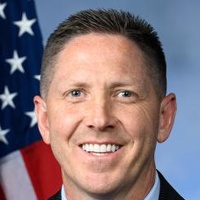
Josh Brecheen
Representative
OK
Josh Brecheen
Representative
OK
The DRIVE Act prohibits the Federal Motor Carrier Safety Administration from mandating speed limiting devices on heavy commercial vehicles engaged in interstate commerce. This legislation removes any federal requirement for trucks over 26,000 pounds to have their top speed electronically capped. In essence, the bill deregulates restrictions concerning speed control technology for large, cross-state eighteen-wheelers.
The AG2PI Act of 2025 reauthorizes the Genome to Phenome Initiative until 2030 to advance research connecting crop and livestock genetics to observable traits for more productive and sustainable agriculture.
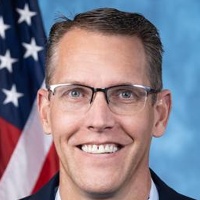
Randy Feenstra
Representative
IA
Randy Feenstra
Representative
IA
The AG2PI Act of 2025 reauthorizes the critical Genome to Phenome Initiative through 2030. This legislation aims to bridge the gap between genetic knowledge and practical agricultural traits in crops and livestock. By extending this research program, the bill supports interdisciplinary efforts to develop more resilient, productive, and sustainable farming systems.
The S-CAP Act of 2025 increases the maximum number of shareholders a business can have to qualify as an S corporation from 100 to 250, effective for tax years beginning after December 31, 2025.
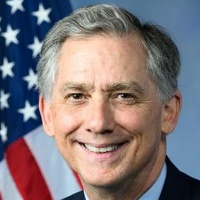
J. Hill
Representative
AR
J. Hill
Representative
AR
The S-CAP Act of 2025 significantly increases the maximum number of shareholders a business can have while qualifying for S corporation tax status, raising the limit from 100 to 250. This change is designed to allow more small businesses to benefit from pass-through taxation. This new 250-shareholder limit will take effect for tax years beginning after December 31, 2025.
This Act establishes a specific P visa category for temporary workers employed by traveling carnivals, circuses, and associated concession providers, while subjecting them to existing H-2B temporary worker regulations.
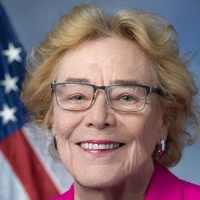
Zoe Lofgren
Representative
CA
Zoe Lofgren
Representative
CA
The Carnivals are Real Entertainment Act establishes a specific P visa pathway for temporary workers employed by traveling carnivals, circuses, and associated concession providers. This new classification ensures essential mobile entertainment staff can enter the U.S. while adhering to existing H-2B temporary worker program regulations. The law mandates that the Secretaries of Homeland Security and Labor develop and finalize the necessary rules within one year of enactment.
The TAKE IT DOWN Act establishes federal criminal penalties for sharing nonconsensual intimate images (real or digitally forged) and mandates that covered online platforms remove such content within 48 hours of receiving a valid request.

Maria Salazar
Representative
FL
Maria Salazar
Representative
FL
The TAKE IT DOWN Act establishes federal criminal penalties for the intentional sharing of both real and digitally forged nonconsensual intimate images, with stricter penalties for images involving minors. It mandates that covered online platforms create a clear process for victims to request the removal of such content within 48 hours. Failure by platforms to reasonably comply with these removal requests will be treated as an unfair or deceptive practice enforced by the Federal Trade Commission (FTC).
The Affordable Housing Credit Improvement Act of 2025 updates state allocation formulas, reforms tenant eligibility and credit determination rules, and enhances assistance for Native American and rural housing projects.
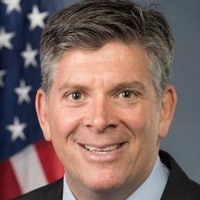
Darin LaHood
Representative
IL
Darin LaHood
Representative
IL
The Affordable Housing Credit Improvement Act of 2025 updates federal housing tax credit allocations to reflect current economic realities and boosts minimum state allotments. It reforms tenant eligibility rules to stabilize tenancy and enhance protections for vulnerable residents, including victims of abuse. The bill also provides disaster relief for property owners, increases incentives for housing the extremely low-income, and directs greater resources toward Native American and rural housing needs. Finally, it streamlines administrative processes and signals a future focus on data transparency and discouraging restrictive local zoning.
The Invest to Protect Act of 2025 establishes a Department of Justice grant program to fund training, mental health resources, and recruitment/retention bonuses for small local law enforcement agencies.
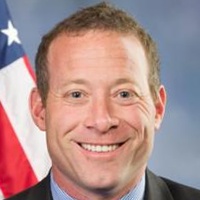
Josh Gottheimer
Representative
NJ
Josh Gottheimer
Representative
NJ
The Invest to Protect Act of 2025 establishes a new, streamlined grant program within the Department of Justice to support small local and Tribal law enforcement agencies (under 175 officers). These funds are specifically designated for officer training, mental health resources, and recruitment/retention bonuses. The law mandates a rapid application process and includes strict accountability measures, such as audits and public reporting of bonuses. Congress is authorized to appropriate up to $50 million annually for this program through fiscal year 2031.
This bill exempts qualified student loan bonds from the federal volume cap and the Alternative Minimum Tax to encourage investment in student lending.
Randy Feenstra
Representative
IA
Randy Feenstra
Representative
IA
This bill amends the Internal Revenue Code to exempt "qualified student loan bonds" from the annual volume cap imposed on certain tax-exempt bonds. Furthermore, it ensures that interest earned from these bonds will not be subject to the Alternative Minimum Tax (AMT). These changes aim to make issuing bonds for student loans more flexible and attractive to investors.
This bill reauthorizes and significantly increases federal funding for building and supporting communities of recovery from substance use disorder through 2030.
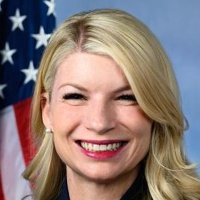
Brittany Pettersen
Representative
CO
Brittany Pettersen
Representative
CO
The Communities of Recovery Reauthorization Act of 2025 aims to significantly boost support for recovery services. This bill increases the annual funding set aside for building communities of recovery from \$5 million to \$17 million for the fiscal years 2026 through 2030. This reauthorization ensures continued and expanded resources for individuals in recovery from substance use disorders.
This Act directs the National Science Foundation to prioritize research on the role of adverse childhood experiences and toxic stress in youth suicide prevention.
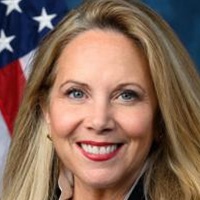
Laura Gillen
Representative
NY
Laura Gillen
Representative
NY
The Youth Suicide Prevention Research Act updates the National Science Foundation's research priorities to better address childhood suicide. This legislation specifically mandates the NSF to focus new research efforts on understanding the roles of adverse childhood experiences (ACEs) and toxic stress in youth suicide risk.
This bill repeals the requirement for financial institutions to collect and report specific data on small business loans to reduce compliance costs and improve small business access to credit.
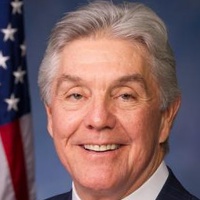
Roger Williams
Representative
TX
Roger Williams
Representative
TX
The 1071 Repeal to Protect Small Business Lending Act aims to eliminate the mandatory data collection and reporting requirements for small business loans previously established under Section 704B of the Equal Credit Opportunity Act. Proponents argue that these regulations impose unnecessary compliance costs on lenders, potentially hindering small business access to credit. This bill repeals those specific reporting mandates to reduce regulatory burdens on financial institutions.
The STABLE Act of 2025 establishes a comprehensive federal framework to regulate payment stablecoin issuers through strict reserve, transparency, and operational requirements while clarifying that these stablecoins are not securities.
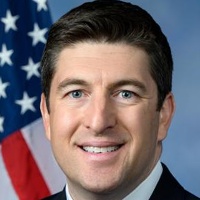
Bryan Steil
Representative
WI
Bryan Steil
Representative
WI
The STABLE Act of 2025 establishes a comprehensive federal framework for regulating payment stablecoins, requiring issuers to maintain 1:1 reserves in safe assets and adhere to strict transparency and anti-money laundering standards. The bill strictly limits issuance to approved entities, whether federally or state-qualified, and clarifies that these dollar-backed digital assets are not considered securities. Furthermore, it mandates robust consumer protection rules, ensuring customer assets are segregated and prioritized in bankruptcy proceedings.
The EASE Act of 2025 mandates the testing of a new model to improve specialty healthcare access for rural and underserved Medicare and Medicaid beneficiaries using digital tools and coordinated care.
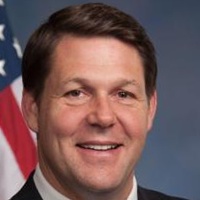
Jodey Arrington
Representative
TX
Jodey Arrington
Representative
TX
The EASE Act of 2025 mandates that the Center for Medicare and Medicaid Innovation (CMMI) test a new model to improve access to specialty health services. This "Specialty Health Care Services Access Model" will utilize digital tools, like telehealth, to connect eligible Medicare, Medicaid, and CHIP beneficiaries in rural or underserved areas with necessary specialty care. The model must be tested through a network of qualified, experienced, and primarily rural-based nonprofit providers.
This bill mandates sanctions on Iranian natural gas transactions to curb the growth of Iran's gas industry.
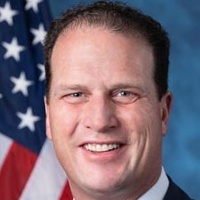
August Pfluger
Representative
TX
August Pfluger
Representative
TX
The No Iranian Energy Act aims to strengthen U.S. policy by explicitly targeting Iran's growing natural gas industry with sanctions. This bill amends existing law to ensure that sanctions apply to the sale, supply, or transfer of Iranian natural gas. The legislation reflects Congress's intent to restrict Iran's energy sector activities.