Legislative Activity
Track Dan's sponsored bills, co-sponsored legislation, and voting record
This act establishes a dedicated unit within the Department of Justice to enhance the investigation and prosecution of international trade-related crimes, such as smuggling, money laundering, and duty evasion.
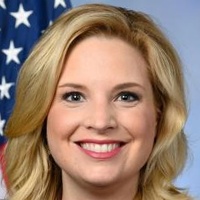
Ashley Hinson
Representative
IA
Ashley Hinson
Representative
IA
The Protecting American Industry and Labor from International Trade Crimes Act of 2026 establishes a dedicated unit within the Department of Justice to investigate and prosecute criminal trade activities, such as smuggling, duty evasion, and trade-based money laundering. This legislation aims to bolster enforcement capacity through increased staffing, interagency collaboration, and the development of multi-jurisdictional responses. Additionally, it mandates annual reporting to Congress to ensure transparency and accountability in the government's efforts to protect American industry and labor.
The Freedom to Home Distill Act exempts small-scale, personal-use home distilling from federal excise taxes, registration requirements, and associated penalties.
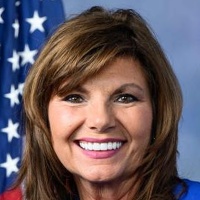
Diana Harshbarger
Representative
TN
Diana Harshbarger
Representative
TN
The Freedom to Home Distill Act seeks to legalize the production of distilled spirits for personal or family use by exempting home distilleries from federal excise taxes and registration requirements. The bill establishes clear production limits for households and mandates safety standards for distilling equipment. These provisions are set to take effect for spirits produced and equipment sold after December 31, 2026.
The CCP Fentanyl Sanctions Act codifies existing executive orders and authorizes the President to impose financial and property sanctions on foreign persons, entities, and financial institutions involved in the proliferation of illicit synthetic narcotics originating from the People’s Republic of China.
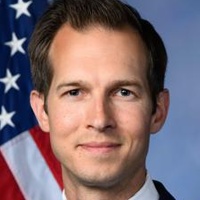
Jake Auchincloss
Representative
MA
Jake Auchincloss
Representative
MA
The CCP Fentanyl Sanctions Act codifies existing executive orders and authorizes the President to impose targeted sanctions on foreign individuals, entities, and financial institutions involved in the production or distribution of illicit synthetic narcotics originating from the People’s Republic of China. This legislation aims to disrupt the supply chain of these substances by blocking the property and financial access of those facilitating their proliferation.
This resolution honors the life and historic congressional legacy of the Honorable Kay Granger, recognizing her trailblazing service as a Representative from Texas and her dedicated contributions to national defense and the city of Fort Worth.
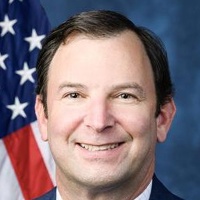
Craig Goldman
Representative
TX
Craig Goldman
Representative
TX
This resolution honors the life and legacy of the Honorable Kay Granger, celebrating her nearly 28 years of service in the U.S. House of Representatives. It recognizes her historic achievements as a trailblazer for women in public office, her dedicated advocacy for national defense, and her lasting contributions to the city of Fort Worth, Texas.
This resolution expresses support for designating July 2026 as "American Grown Flower and Foliage Month" to promote the domestic floral industry and encourage the purchase of U.S.-grown products.
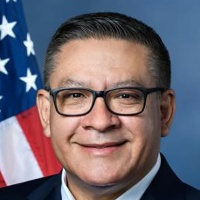
Salud Carbajal
Representative
CA
Salud Carbajal
Representative
CA
This resolution expresses support for designating July 2026 as "American Grown Flower and Foliage Month." It highlights the economic importance of the domestic floral industry and encourages consumers to choose U.S.-grown products to support American farmers, small businesses, and jobs.
This bill officially renames the U.S. Postal Service facility in Wai'anae, Hawai'i, as the "U.S. Representative Colleen Hanabusa Post Office Building."
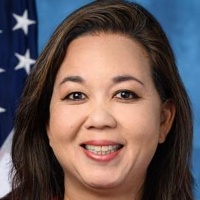
Jill Tokuda
Representative
HI
Jill Tokuda
Representative
HI
This bill officially renames the United States Postal Service facility located at 86-014 Farrington Highway in Wai'anae, Hawai'i. The building will now be known as the "U.S. Representative Colleen Hanabusa Post Office Building." This designation applies to all official records and references to the facility.
This bill clarifies that a franchisor is only considered a joint employer of a franchisee's workers if it exercises substantial, direct, and immediate control over essential terms of employment.
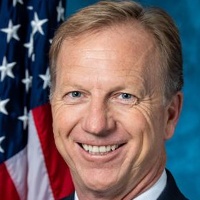
Kevin Hern
Representative
OK
Kevin Hern
Representative
OK
The American Franchise Act aims to protect the traditional franchise business model by clarifying the definition of a "joint employer." This legislation establishes that a franchisor is only considered a joint employer if it exercises "substantial direct and immediate control" over the essential terms of employment for a franchisee's workers. This change specifically targets liability risks associated with maintaining brand standards, ensuring franchisors are not automatically held responsible for local labor practices. The new standard applies prospectively to future legal proceedings.
This bill mandates electronic prior authorization, increases transparency through required data reporting, and establishes faster decision timelines for Medicare Advantage plans to improve timely access to care for seniors.
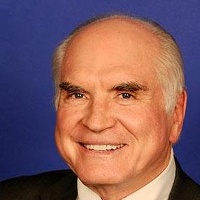
Mike Kelly
Representative
PA
Mike Kelly
Representative
PA
The Improving Seniors’ Timely Access to Care Act of 2025 aims to streamline and modernize the prior authorization process within Medicare Advantage plans. This bill mandates the adoption of electronic prior authorization systems and significantly increases transparency regarding approval rates and decision times starting in 2027. Furthermore, it establishes new enrollee protections and grants the Secretary authority to enforce faster decision timeframes for medical services.
This Act prohibits payment card networks and processors from assigning specific merchant category codes to identify firearms retailers, protecting the privacy of firearm and ammunition purchases.
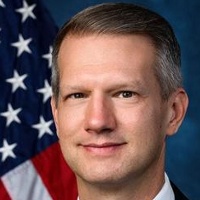
Riley Moore
Representative
WV
Riley Moore
Representative
WV
The Protecting Privacy in Purchases Act prohibits payment card networks and processors from assigning specific merchant category codes to firearms retailers. This legislation aims to protect consumer privacy by preventing the tracking of firearm and ammunition purchases through specialized financial classification. The Attorney General is tasked with enforcing these provisions and reporting annually on compliance.
The Sunshine Protection Act of 2025 establishes daylight saving time as the permanent, year-round standard time across the United States, while providing states the option to maintain their current standard time.

Vern Buchanan
Representative
FL
Vern Buchanan
Representative
FL
The Sunshine Protection Act of 2025 proposes making daylight saving time the permanent, year-round standard time across the United States. By advancing standard time zones by one hour, the bill eliminates the need for biannual clock changes. Additionally, it provides states that currently observe standard time year-round the option to maintain their existing timekeeping practices.
The Securing Agriculture's Workforce Act of 2026 modernizes the H-2A visa program by streamlining the application process through a centralized online platform, updating labor and housing requirements, and expanding the definition of eligible agricultural work.
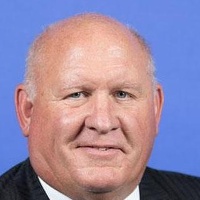
Glenn Thompson
Representative
PA
Glenn Thompson
Representative
PA
The Securing Agriculture's Workforce Act of 2026 modernizes the H-2A visa program to better support the agricultural industry by streamlining application processes and establishing a centralized online portal for employers. The bill updates labor certification, housing, and wage requirements while expanding the definition of eligible agricultural work to include a broader range of activities. Additionally, it enhances worker protections—including new heat illness prevention standards—and provides greater administrative efficiency for federal agencies managing the program.
The Freedom of Association in Higher Education Act of 2026 prohibits colleges and universities that receive federal funding from taking adverse actions against students or organizations based on their participation in single-sex social groups.
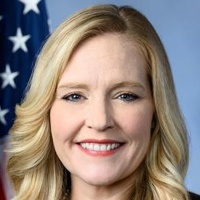
Erin Houchin
Representative
IN
Erin Houchin
Representative
IN
The Freedom of Association in Higher Education Act of 2026 protects students and single-sex social organizations from adverse actions by colleges and universities that receive federal funding. The bill ensures that students can freely join or lead these organizations without facing institutional bias or discrimination based on their membership. It establishes clear standards to prevent schools from penalizing students or organizations solely for maintaining single-sex membership policies.
This Act mandates updated threat analyses, strategy revisions, and performance metrics for enhancing security along the northern border.
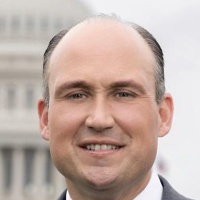
Nicholas Langworthy
Representative
NY
Nicholas Langworthy
Representative
NY
The Northern Border Security Enhancement and Review Act mandates updated threat analyses of the northern border every two years, with the first due by September 2, 2026. Following each analysis, the Department of Homeland Security must update its border strategy or formally explain why an update is unnecessary. The bill also requires classified briefings for Congress and the development of performance measures for Air and Marine Operations along the northern border.
This bill, the Hydropower Licensing Affordability Act, modernizes the hydropower licensing process by expanding the Federal Energy Regulatory Commission's authority to require mitigation measures for adverse effects on federal reservations and fish populations.
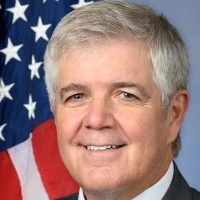
Cliff Bentz
Representative
OR
Cliff Bentz
Representative
OR
This bill, the Hydropower Licensing Affordability Act, modernizes the hydropower licensing process under the Federal Power Act. It expands the Federal Energy Regulatory Commission's authority to impose conditions on licenses to ensure hydropower projects reasonably mitigate direct adverse effects on federal reservations and local fish populations.
The **Take Care of America’s Veterans Act** comprehensively reforms veteran benefits, healthcare access, education opportunities, and VA organizational structure to improve services and increase accountability across the board.
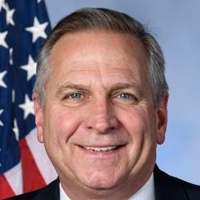
Mike Bost
Representative
IL
Mike Bost
Representative
IL
The **Take Care of America’s Veterans Act** is a comprehensive bill designed to strengthen benefits and modernize services across compensation, education, health care, and VA operations. It eliminates benefit offsets for disabled retirees, expands educational flexibility, sets new standards for timely health care access, and invests in VA technology and infrastructure. Overall, the legislation aims to provide faster, fairer, and more comprehensive support for veterans and their families.
This Act expands the geographic scope and duties of the Presidential Envoy for the Abraham Accords to include Central Asia and the Caucasus, leveraging existing authorities without new funding.
Craig Goldman
Representative
TX
Craig Goldman
Representative
TX
The Abraham Accords Expansion Act of 2026 formally expands the mission of the Presidential Envoy for the Abraham Accords to include Central Asia and the Caucasus. This legislation directs the Envoy to promote normalization and integration efforts in these strategically important regions, aligning with U.S. national security and economic interests. The Act utilizes existing authorities and funding to carry out these expanded duties.
This bill expands missing person alerts and training requirements to specifically include individuals with developmental disabilities, Alzheimer's disease, and dementia.
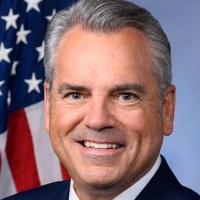
Mark Alford
Representative
MO
Mark Alford
Representative
MO
This bill, the **Enhanced Alerts for Missing Loved Ones with Disabilities Act of 2026**, expands existing alert systems to specifically include information about missing adults with developmental disabilities, Alzheimer’s disease, or dementia. It mandates that these critical health details be included in missing person alerts issued by law enforcement. Furthermore, the Act requires updated training for responding to cases involving missing children and adults with developmental disabilities.
This bill prohibits the VA from reporting veterans to the NICS background check system solely because a fiduciary has been appointed to manage their benefits, unless a judicial authority deems them a danger to themselves or others.
Mike Bost
Representative
IL
Mike Bost
Representative
IL
The Veterans 2nd Amendment Protection Act prohibits the VA from reporting veterans to the NICS background check system solely because a fiduciary was appointed to manage their benefits. This legislation ensures that a VA finding of mental incompetence or the appointment of a fiduciary alone is not used to treat a veteran as a "mental defective" for gun control purposes. Furthermore, the VA must notify the Attorney General about past transmissions of this information that lacked a proper legal basis.
This bill establishes the Smithsonian American Women's History Museum, designates its site on the National Mall, and sets requirements for its mission, construction, and diverse representation of viewpoints.
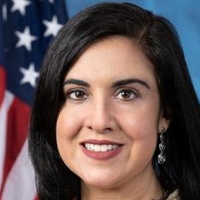
Nicole Malliotakis
Representative
NY
Nicole Malliotakis
Representative
NY
This act officially establishes the Smithsonian American Women’s History Museum and designates its location on the National Mall, requiring the transfer of land jurisdiction to the Smithsonian Institution. The museum is mandated to preserve and present the history and achievements of biological women in the United States. Furthermore, the legislation requires that exhibits and programs reflect diverse political viewpoints and authentic experiences of women, as guided by a broad array of knowledgeable sources.
This bill designates the America 250 flag as a national symbol to commemorate the 250th anniversary of the Declaration of Independence.
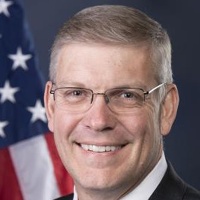
Barry Loudermilk
Representative
GA
Barry Loudermilk
Representative
GA
This bill officially designates the "America 250 flag" as a national symbol to commemorate the 250th anniversary of the Declaration of Independence. It authorizes this special flag, featuring the number 250 within the circle of stars, to be flown alongside the U.S. flag at government buildings worldwide during the Semiquincentennial celebration. The act recognizes the flag as a symbol of the nation's founding and commitment to liberty.