
Legislative Activity
Track Eleanor's sponsored bills, co-sponsored legislation, and voting record
This bill requires federal financial regulators to create and quickly disseminate guidance encouraging lenders to offer flexible, fair accommodations to consumers and businesses impacted by a government shutdown.
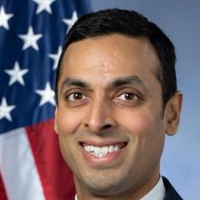
Suhas Subramanyam
Representative
VA
Suhas Subramanyam
Representative
VA
The Shutdown Guidance for Financial Institutions Act requires federal financial regulators to create and issue guidance for banks and lenders on how to support customers and businesses affected by a government shutdown. This guidance must encourage flexible loan adjustments and prevent unfair negative credit reporting for those experiencing income loss due to the lapse in funding. Regulators must also issue rapid alerts when a shutdown occurs and report on the effectiveness of the guidance afterward.
This bill allows federal contractors and affected government employees to make tax-advantaged retirement plan withdrawals during a government shutdown, with provisions for repayment within three years.
Suhas Subramanyam
Representative
VA
Suhas Subramanyam
Representative
VA
The Emergency Relief for Federal Contractors Act of 2025 allows individuals affected by a federal appropriations lapse to make tax-favored withdrawals of up to \$30,000 from their retirement plans without incurring early withdrawal penalties. These distributions can be repaid within three years and the taxable income can be spread over three years. This relief specifically targets furloughed federal contractors, grantee employees, and certain D.C. government workers impacted by shutdowns lasting two weeks or more.
This act automatically reinstates Department of Energy financial assistance awards that were previously canceled based on the May 15, 2025 Secretarial Memorandum.
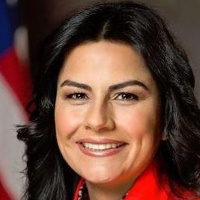
Nanette Barragán
Representative
CA
Nanette Barragán
Representative
CA
The Stop the Trump Electricity Price Hikes Act immediately reinstates financial assistance awards previously canceled by the Department of Energy (DOE). This action specifically reverses cancellations based on the May 15, 2025 Secretarial Memorandum. The bill ensures these awards continue as if they had never been terminated.
This bill increases the minimum monthly Personal Needs Allowance for institutionalized individuals and couples under Medicaid and ties future increases to Social Security cost-of-living adjustments.
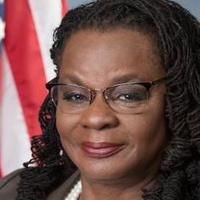
Gwen Moore
Representative
WI
Gwen Moore
Representative
WI
The Personal Needs Allowance Modernization Act, or PNA Modernization Act, increases the minimum monthly allowance Medicaid recipients in long-term care facilities can keep for personal needs. This bill raises the minimum allowance from $\$30$ to $\$60$. Furthermore, it mandates that the allowance amounts will automatically increase in the future, tied directly to cost-of-living adjustments made to Social Security benefits after November 2025.
This bill prohibits the termination or layoff of career federal civil service employees during a government shutdown due to a lapse in discretionary funding.
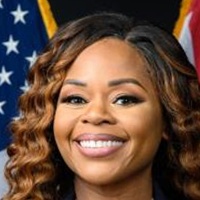
Sheila Cherfilus-McCormick
Representative
FL
Sheila Cherfilus-McCormick
Representative
FL
The Stop Stealing Our Jobs Act prohibits the President or agency heads from firing, laying off, or removing career civil service employees during a government shutdown caused by a lapse in discretionary funding. This protection ensures job security for the career federal workforce, while explicitly excluding political appointees from coverage. The bill clarifies definitions to specify which employees are shielded and which are not.
The Weatherization Resilience and Adaptation Program Act establishes a grant program to help low-income homeowners adapt their properties against climate-driven hazards using new resilience standards.
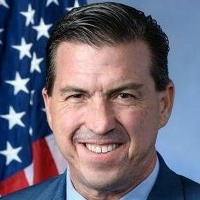
Kevin Mullin
Representative
CA
Kevin Mullin
Representative
CA
The Weatherization Resilience and Adaptation Program Act establishes a grant program to help low-income homeowners and eligible property owners adapt their homes against increasing climate-driven hazards like floods and extreme heat. This program requires the development of new resilience and adaptation standards in consultation with NIST. Funding is authorized to support these critical upgrades, ensuring vulnerable communities can better withstand the impacts of a changing climate.
This Act prohibits the Department of Veterans Affairs from discriminating against veterans based on gender identity in healthcare, ensuring access to medically necessary treatments like those for gender dysphoria.
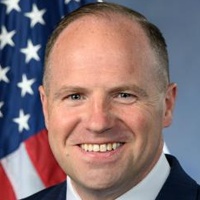
Timothy Kennedy
Representative
NY
Timothy Kennedy
Representative
NY
The Veterans Healthcare Equality Act of 2025 explicitly prohibits the Department of Veterans Affairs (VA) from discriminating against veterans based on gender identity when providing healthcare services. This law mandates that the VA must furnish medically necessary treatments, including those for gender dysphoria, prescribed by a healthcare provider. Furthermore, the VA Secretary is required to provide regular updates to Congress regarding the implementation of these non-discrimination protections.
This Act provides appropriations and mandates contract price adjustments to compensate federal contractor employees for losses incurred due to funding lapses or government shutdowns.
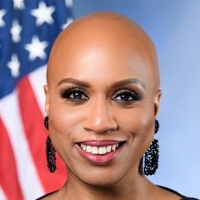
Ayanna Pressley
Representative
MA
Ayanna Pressley
Representative
MA
The Fair Pay for Federal Contractors Act of 2025 ensures that employees of federal contractors are compensated for losses incurred due to government funding lapses or shutdowns. It requires federal agencies to adjust existing contracts to cover reasonable costs associated with furloughs, pay cuts, or mandatory leave taken by contractor employees. The bill appropriates necessary funds to cover these contract price adjustments and mandates public reporting on the compensation provided.
The Water Preservation and Affordability Act of 2025 mandates the prioritization of resource preservation techniques in federal water infrastructure projects and increases funding for wastewater efficiency and resiliency programs.
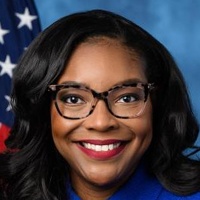
Emilia Sykes
Representative
OH
Emilia Sykes
Representative
OH
The Water Preservation and Affordability Act of 2025 mandates the prioritization of "resource preservation techniques"—such as water reuse and rainwater management—in all federally funded water infrastructure projects. This legislation updates grant agreements and loan fund requirements to ensure these environmentally innovative methods are adopted for repairs, replacements, and expansions. Furthermore, the bill increases funding authorizations for both the Wastewater Efficiency Grant Pilot Program and the Infrastructure Resiliency and Sustainability Program through 2031.
The Wildfire Recovery Act ensures the federal government covers at least 75% of eligible fire management assistance costs and updates policies to allow pre-disaster reimbursement for pre-staged domestic assets.
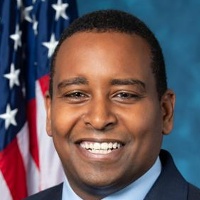
Joe Neguse
Representative
CO
Joe Neguse
Representative
CO
The Wildfire Recovery Act ensures the federal government covers at least 75% of eligible fire management assistance costs for newly appropriated funds. It also mandates new rulemaking to establish clear standards for increasing federal disaster cost-sharing based on measurable financial impact. Finally, the bill updates FEMA policy to allow state, local, and Tribal governments to seek reimbursement for pre-staging their own equipment before a disaster is officially declared.
This Act establishes the National Gun Violence Research Program to fund comprehensive research, repeal data restrictions, and coordinate federal efforts to study and prevent gun violence.
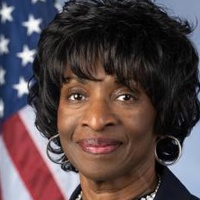
Valerie Foushee
Representative
NC
Valerie Foushee
Representative
NC
The National Gun Violence Research Act of 2025 aims to significantly increase federal research into the causes, consequences, and prevention of gun violence. This bill repeals previous restrictions that limited data collection and research by agencies like the ATF, CDC, and NIH. It establishes a new National Gun Violence Research Program to coordinate efforts, fund grants through agencies like the NSF and HHS, and develop voluntary safety standards through NIST.
The Trust Through Transparency Act of 2025 mandates body camera usage for immigration enforcement agents, establishes specific video retention schedules, and requires annual public reporting on compliance and disciplinary actions.
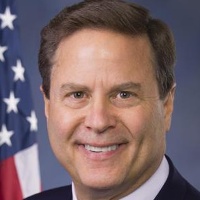
Donald Norcross
Representative
NJ
Donald Norcross
Representative
NJ
The Trust Through Transparency Act of 2025 mandates that federal immigration enforcement agents wear body cameras during public-facing duties. The bill establishes specific rules for retaining video footage, generally requiring deletion after six months unless exceptions like use of force or a filed complaint apply. Furthermore, it requires annual public reporting to Congress on compliance and establishes an advisory panel to recommend best practices for camera usage and data management.
This resolution formally reaffirms the foundational principle of the separation of church and state while opposing extreme right-wing Christian nationalism, citing key historical addresses and anniversaries.
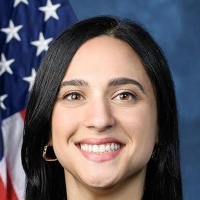
Yassamin Ansari
Representative
AZ
Yassamin Ansari
Representative
AZ
This resolution formally reaffirms the foundational American principle of the separation of church and state, citing historical context and key figures. It strongly opposes the rise of extreme right-wing Christian nationalism as a threat to religious diversity and democracy. The measure also commemorates the 65th anniversary of President Kennedy's address on this separation and the 150th anniversary of a speech by President Grant. Ultimately, this is a statement recognizing core values rather than enacting new law.
This resolution expresses U.S. support for recognizing September 29, 2025, as the International Day of Awareness of Food Loss and Waste to combat global hunger and climate change.
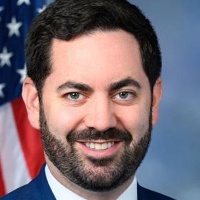
Michael Lawler
Representative
NY
Michael Lawler
Representative
NY
This resolution expresses the support of Congress for recognizing September 29, 2025, as the "International Day of Awareness of Food Loss and Waste." It highlights the severe global impacts of food waste on hunger and climate change, noting that nearly 40% of all food produced is lost annually. By supporting this awareness day, the bill encourages efforts to meet the U.S. goal of halving food loss and waste by 2030.
This bill establishes a process for federal employees, contractors, and states to be reimbursed for financial costs incurred due to government shutdowns.
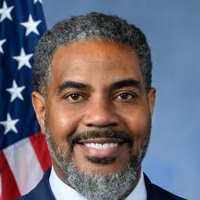
Steven Horsford
Representative
NV
Steven Horsford
Representative
NV
The Pay Workers What They've Earned Act aims to reimburse federal employees and contractors for direct financial costs incurred due to government shutdowns. This legislation specifically covers expenses like late fees and interest charges resulting from missed paychecks during a lapse in funding. It also establishes a process for states to be reimbursed if they use their own funds to cover normally federal responsibilities during extended shutdowns. The bill creates a dedicated Treasury fund to ensure timely payments to affected workers in the future.
The No Shame at School Act of 2025 mandates that schools must eliminate meal debt stigma by prohibiting overt identification of students who owe fees and ensuring immediate action to certify eligible children for free or reduced-price meals.

Ilhan Omar
Representative
MN
Ilhan Omar
Representative
MN
The No Shame at School Act of 2025 mandates that schools must stop shaming students over unpaid meal debt by prohibiting overt identification or segregation of students who owe fees. This law requires local agencies to actively pursue free meal certification for students with outstanding balances and prevents schools from taking food away after it has been served. Furthermore, it establishes strict rules for debt collection, forbidding communication directed at the child and banning the use of third-party debt collectors.
This act expands physical therapists' participation in the National Health Service Corps loan repayment program and ensures Medicare coverage for their services at Rural Health Clinics and Federally Qualified Health Centers.

Diana DeGette
Representative
CO
Diana DeGette
Representative
CO
The Physical Therapist Workforce and Patient Access Act of 2025 aims to increase patient access to physical therapy, recognizing its importance in pain management and recovery. This bill integrates physical therapists into the National Health Service Corps, making them eligible for loan repayment in underserved areas. Furthermore, it mandates that Medicare Rural Health Clinics and Federally Qualified Health Centers cover physical therapy services starting in 2027.
The Child Care for Every Community Act establishes a national framework to guarantee universal access to high-quality, regulated early learning programs with mandated national standards and comparable pay for staff.
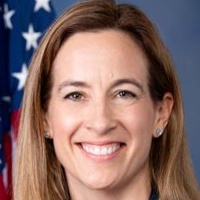
Mikie Sherrill
Representative
NJ
Mikie Sherrill
Representative
NJ
The Child Care for Every Community Act establishes a national framework to guarantee universal access to high-quality, regulated child care and early learning programs for every young child. It mandates federal standards for quality, ensures child care staff receive pay comparable to K-12 employees, and requires local coordination with school systems. Furthermore, the bill protects existing state funding levels and caps family fees based on income.
This resolution expresses support for National Public Lands Day, encouraging Americans to visit public lands on the fee-free day to recognize their cultural and economic value.
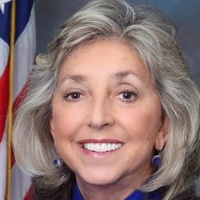
Dina Titus
Representative
NV
Dina Titus
Representative
NV
This resolution officially expresses support for National Public Lands Day, recognizing the vast spiritual, cultural, and economic value of America's public lands. It encourages all citizens to visit these lands on the designated fee-free day. The measure highlights the significant acreage managed by various federal agencies that support recreation and the national economy.
This bill prohibits the removal of Federal employees during a lapse in discretionary appropriations, ensuring job security for civil servants during government shutdowns.
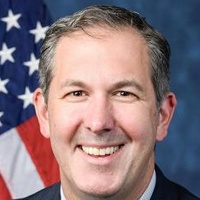
Johnny Olszewski
Representative
MD
Johnny Olszewski
Representative
MD
This bill prohibits federal agencies from removing civil service employees during any lapse in discretionary appropriations, commonly known as a government shutdown. If an employee is terminated in violation of this rule during a shutdown, they will have the option to be reinstated with full back pay once funding resumes. This measure aims to protect federal workers from job loss caused by budget impasses.