
Legislative Activity
Track Eleanor's sponsored bills, co-sponsored legislation, and voting record
The STORE Act of 2025 expands and modernizes the Emergency Food Assistance Program’s infrastructure grants to better support food distribution in underserved communities while mandating a national study on cold storage needs.
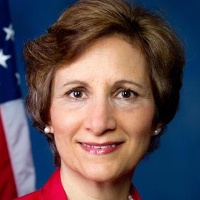
Suzanne Bonamici
Representative
OR
Suzanne Bonamici
Representative
OR
The STORE Act of 2025 strengthens the Emergency Food Assistance Program by increasing annual funding to $25 million and modernizing infrastructure grants to better support food storage, distribution technology, and delivery services. The bill expands grant eligibility to prioritize Tribal, low-income, and remote communities while mandating a national study to assess and address critical shortages in cold storage and transportation equipment.
The Tobacco TRACE Act mandates that the Secretary of Health and Human Services establish a mandatory tracking and tracing system for tobacco products by June 1, 2026.
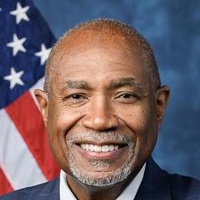
Herbert Conaway
Representative
NJ
Herbert Conaway
Representative
NJ
The Tobacco TRACE Act mandates that the Secretary of Health and Human Services establish a comprehensive tracking and tracing system for all tobacco products. By converting previous discretionary authority into a firm requirement, the bill sets a deadline of June 1, 2026, to implement these product codes to improve regulatory compliance and enforcement.
This bill imposes comprehensive sanctions on Russia for its war against Ukraine while permanently extending the U.S. sanctions authority against Iran.
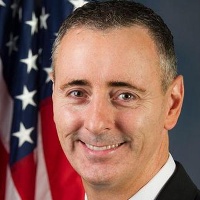
Brian Fitzpatrick
Representative
PA
Brian Fitzpatrick
Representative
PA
The Peace Through Strength Against Russia Act of 2025 imposes comprehensive sanctions on Russia's financial, military, and energy sectors in response to its war against Ukraine. This legislation cuts off major Russian banks from the U.S. financial system and bans new American investment in Russia. Additionally, the bill makes the existing sanctions authority against Iran permanent by removing its expiration date.
This Act establishes a national certification program, administered by the Secretary of Labor, to recognize employers who provide comprehensive benefits supporting work-life balance, including paid family leave, childcare subsidies, and flexible work options.

Grace Meng
Representative
NY
Grace Meng
Representative
NY
The Honoring Family-Friendly Workplaces Act establishes a national certification program, administered by the Secretary of Labor, to recognize employers who support work-life balance. To qualify, employers must meet rigorous standards, including offering at least 12 weeks of paid family leave and providing childcare assistance and flexible work options. This certification aims to encourage and publicly acknowledge businesses that actively help employees manage family responsibilities.
This bill aims to prohibit most U.S. natural gas exports to lower domestic energy costs and mitigate environmental impacts.
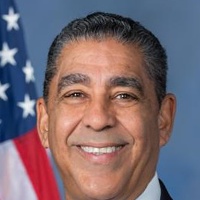
Adriano Espaillat
Representative
NY
Adriano Espaillat
Representative
NY
The Lowering American Energy Costs Act of 2025 seeks to reduce domestic energy prices by restricting the export of natural gas. Citing findings that exports increase consumer costs and harm the environment, the bill mandates the President to establish rules prohibiting most U.S. natural gas exports. Any exemptions to this prohibition must align with the national interest and receive approval via a joint resolution of Congress.
The American Affordability Act of 2025 is a comprehensive bill designed to lower costs for families through expanded housing assistance, clean energy tax credits, monthly child payments, education relief, and enhanced healthcare subsidies.
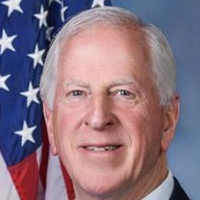
Mike Thompson
Representative
CA
Mike Thompson
Representative
CA
The American Affordability Act of 2025 is a comprehensive bill designed to lower costs across five key areas: housing, energy, family care, education, and healthcare. It achieves this by expanding tax credits for housing construction and homebuyers, extending incentives for clean energy manufacturing and consumer adoption, replacing the Child Tax Credit with larger monthly payments, making higher education expenses more affordable, and permanently expanding subsidies to lower health insurance premiums for millions. Overall, the legislation aims to provide direct financial relief and increase access to essential services for American families and workers.
This bill mandates the removal of U.S. Armed Forces from hostilities within or against Venezuela unless explicitly authorized by Congress.
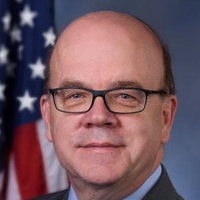
James McGovern
Representative
MA
James McGovern
Representative
MA
This bill mandates the President to immediately remove all United States Armed Forces from hostilities within or against Venezuela. This action is required unless Congress has specifically authorized the use of military force. The legislation aims to ensure that military engagement in Venezuela requires explicit Congressional approval.
This resolution condemns the antisemitic shooting in Sydney, Australia, and reaffirms the commitment to combating all forms of religious hatred and violence.
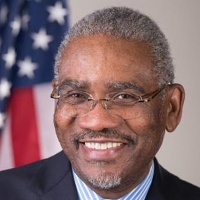
Gregory Meeks
Representative
NY
Gregory Meeks
Representative
NY
This resolution strongly condemns the antisemitic shooting attack during a Hanukkah celebration in Sydney, Australia. It expresses solidarity with the victims, their families, and the Jewish community worldwide. Furthermore, the bill reaffirms the U.S. commitment to combating all forms of religious hatred and violence.
The Part-Time Worker Bill of Rights Act expands FMLA eligibility to part-time employees and establishes protections against scheduling discrimination, ensuring fair access to benefits and work hours.

Janice Schakowsky
Representative
IL
Janice Schakowsky
Representative
IL
The Part-Time Worker Bill of Rights Act aims to strengthen protections and expand benefits for part-time and temporary employees. The legislation eliminates restrictive hours-of-service requirements for FMLA leave and prohibits discrimination based on hours worked regarding pay, benefits, and promotion opportunities. Additionally, it mandates that employers offer available work hours to existing staff before hiring new employees or contractors.
The D-BLOC Act establishes a national 10-minute time limit for trains blocking public highway-rail grade crossings, mandates investigation of frequent blockages, and requires railroads to provide public contact information for reporting these incidents.
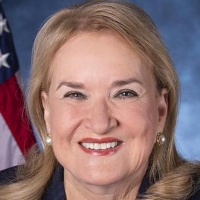
Sylvia Garcia
Representative
TX
Sylvia Garcia
Representative
TX
The D-BLOC Act establishes a national 10-minute time limit for trains blocking public highway-rail grade crossings, with specific exceptions for safety or emergencies. The bill mandates investigations and potential civil penalties for railroads that frequently violate this limit. Additionally, it enhances public access to reporting mechanisms by requiring railroads to establish public contact numbers and link to the federal blocked crossing portal.
The Public Health Air Quality Act of 2025 establishes comprehensive new monitoring, reporting, and data transparency requirements for industrial air toxics and ambient air quality across the nation.
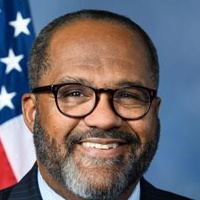
Troy Carter
Representative
LA
Troy Carter
Representative
LA
The Public Health Air Quality Act of 2025 aims to significantly enhance air quality monitoring and public data access across the United States. It establishes new federal requirements for industrial facilities to monitor and report hazardous air pollutant emissions, including real-time fenceline data. The Act also mandates the deployment of hundreds of new, advanced air quality monitors in vulnerable communities to better assess compliance with National Ambient Air Quality Standards. Ultimately, this legislation seeks to use improved, publicly accessible data to protect public health from industrial air pollution.
This resolution reaffirms the U.S. commitment to leading global efforts to eliminate new pediatric HIV infections and expand treatment for children and women affected by the epidemic.
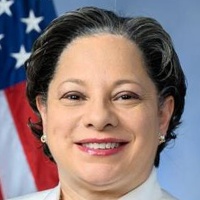
Jennifer McClellan
Representative
VA
Jennifer McClellan
Representative
VA
This resolution reaffirms the United States' commitment to ending pediatric HIV/AIDS globally by supporting critical prevention and treatment efforts. It emphasizes the need to close gaps in care, particularly for women and children in high-burden areas, and supports expanding access to testing, antiretroviral therapy, and new prevention methods. The bill specifically encourages continued U.S. leadership through initiatives like PEPFAR to achieve the goal of eliminating new pediatric HIV infections by 2030.
This bill reauthorizes and expands the Farmers Market and Local Food Promotion Program to $100 million annually while prioritizing the establishment of new farmers markets and increasing program oversight.
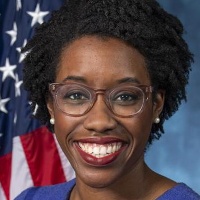
Lauren Underwood
Representative
IL
Lauren Underwood
Representative
IL
The New Markets for Farmers and Families Act reauthorizes and expands the Farmers Market and Local Food Promotion Program to bolster local agricultural economies. The bill doubles total authorized funding to $100 million, establishes a set-aside for new farmers markets, and introduces updated matching requirements. Additionally, it mandates increased transparency through new reporting requirements on program participation and oversight.
The Farmers to Families Act establishes grants and expands benefit usage to increase direct sales of local agricultural products to participants in federal nutrition assistance programs like WIC.
Lauren Underwood
Representative
IL
Lauren Underwood
Representative
IL
The Farmers to Families Act establishes a grant program to increase the purchase of local agricultural products by recipients of federal nutrition assistance programs like WIC. It expands where WIC and Senior Farmers Market Nutrition Program benefits can be used to include local food sources and requires the USDA to facilitate EBT access for these purchases. The Act also creates a Technical Assistance Center to help farmers and markets comply with new regulations and accept federal nutrition benefits.
This bill mandates the EPA to create a public online mapping tool that identifies disproportionately burdened communities based on environmental, climate, health, economic, and social factors.
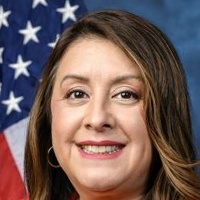
Luz Rivas
Representative
CA
Luz Rivas
Representative
CA
The Environmental Justice Screening Tool Act of 2025 mandates the Environmental Protection Agency (EPA) to create a public online mapping tool within one year to identify communities disproportionately burdened by environmental, climate, health, economic, and social factors. This tool will use specific thresholds across various categories to flag census tracts needing attention. Federal agencies must then adopt this tool to prioritize funding and resources for the identified communities.
This Act establishes a comprehensive federal strategy to combat rising antisemitism through policy statements, enhanced security grants, improved hate crime reporting, and specific mandates for educational institutions and federal agencies, while prohibiting the weaponization of antisemitism for partisan goals.
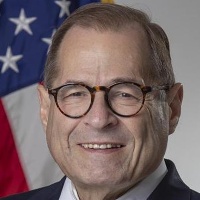
Jerrold Nadler
Representative
NY
Jerrold Nadler
Representative
NY
The Antisemitism Response and Prevention Act of 2025 aims to combat rising antisemitism through comprehensive federal action, emphasizing evidence-based strategies consistent with democratic values. The bill establishes new offices within the DOJ and FBI to coordinate counter-efforts and improve hate crime data collection. Furthermore, it mandates specific compliance and reporting requirements for colleges regarding civil rights and prohibits partisan conditions on nonprofit security grants.
The Fair Competition for Small Business Act of 2025 empowers state attorneys general to sue on behalf of residents for damages resulting from antitrust violations under the Sherman Act.
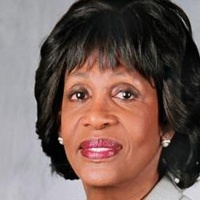
Maxine Waters
Representative
CA
Maxine Waters
Representative
CA
The Fair Competition for Small Business Act of 2025 empowers state attorneys general to file lawsuits on behalf of their residents against companies violating federal antitrust laws. This legislation strengthens consumer protections by allowing states to seek damages for anti-competitive practices under the Sherman Act.
This Act mandates that state highway safety programs prioritize reducing traffic incidents in school zones and expands eligible uses for federal funding to include specific safety improvements like crossing guards and traffic calming measures.
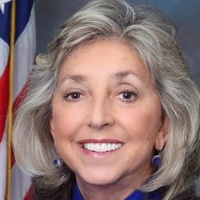
Dina Titus
Representative
NV
Dina Titus
Representative
NV
The Protect Our Students Act aims to significantly enhance safety in school zones by requiring states to prioritize crash reduction efforts in these areas. This legislation mandates the Secretary of Transportation to clarify eligible safety improvements, including funding for crossing guards, traffic calming measures, and school zone audits. Furthermore, it increases the federal allocation for the Highway Safety Improvement Program to support these critical safety initiatives.
The Schedules That Work Act establishes rights for employees to request flexible schedules, mandates advance notice and predictability pay for schedule changes in covered sectors, and grants employees rest time between shifts.

Rosa DeLauro
Representative
CT
Rosa DeLauro
Representative
CT
The Schedules That Work Act aims to provide workers with greater stability and predictability in their work hours. It grants employees the right to request flexible or stable schedules and requires employers to engage in a good-faith discussion about these requests. For covered sector employees (like retail and food service), the bill mandates 14 days' advance notice of schedules and establishes "predictability pay" for last-minute changes or split shifts. The Act also grants employees the right to 11 hours of rest between shifts, with premium pay required if this rest period is violated.
This bill establishes federal programs and research priorities to advance domestic capabilities in food biomanufacturing, workforce development, and innovation for diversifying edible protein sources.
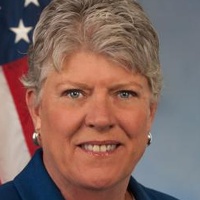
Julia Brownley
Representative
CA
Julia Brownley
Representative
CA
This bill aims to bolster the U.S. bioeconomy and food system resilience by promoting innovation in edible protein production, particularly through biomanufacturing and utilizing under-utilized biomass. It establishes new research centers, prioritizes funding for alternative protein research through existing programs, and creates grant opportunities for commercial-scale production and workforce development. Ultimately, the Act seeks to secure the nation's protein supply, create economic opportunities, and maintain U.S. leadership in food technology.