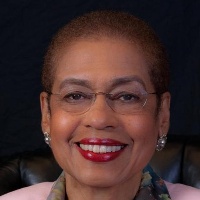
Legislative Activity
Track Eleanor's sponsored bills, co-sponsored legislation, and voting record
The Returning Home Act establishes a Department of Justice grant program, coordinated with HUD, to provide rental assistance and housing services to individuals reentering the community after incarceration.
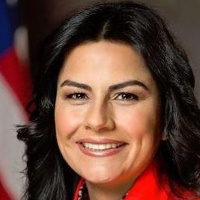
Nanette Barragán
Representative
CA
Nanette Barragán
Representative
CA
The Returning Home Act establishes a new grant program to provide rental assistance and housing support services for individuals reentering the community after incarceration. This initiative, run by the DOJ and HUD, offers up to 24 months of rental aid and crucial supportive services to help reduce homelessness among formerly incarcerated individuals. The law prioritizes applicants who implement a "housing first" approach and specifically excludes law enforcement entities from receiving grants.
This Act prohibits the federal government from taking investigative, regulatory, or enforcement actions against persons or entities if those actions are substantially motivated by the target's constitutionally protected speech or political participation.
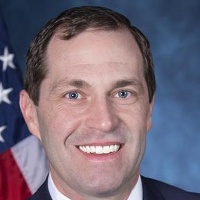
Jason Crow
Representative
CO
Jason Crow
Representative
CO
The No Political Enemies Act prohibits the federal government from initiating investigative, regulatory, or enforcement actions against individuals or entities if those actions are substantially motivated by the person's constitutionally protected speech or political participation. The bill establishes an affirmative defense for defendants facing such politically motivated actions and allows covered persons to sue federal officials for damages or seek injunctions against targeting based on protected speech. Furthermore, it mandates regular reporting from the Department of Justice to Congress regarding sensitive investigations and prosecutions.
This bill mandates the National Science Foundation to develop and implement a plan for ongoing data collection and analysis regarding the skilled technical workforce.
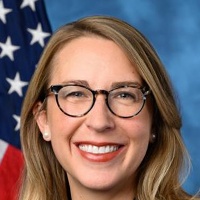
Hillary Scholten
Representative
MI
Hillary Scholten
Representative
MI
This bill amends the Research and Development, Competition, and Innovation Act to mandate the National Science Foundation to develop a plan for ongoing data collection and analysis concerning the skilled technical workforce. The plan, submitted to Congress every two years, will establish the necessary capabilities within the National Center for Science and Engineering Statistics. This action aims to improve understanding and tracking of this critical workforce segment.
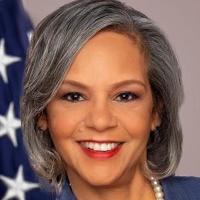
This bill impeaches Secretary of Homeland Security Kristi Lynn Arnold Noem for high crimes and misdemeanors, citing willful refusal to comply with oversight law, violating the Impoundment Control Act, directing unlawful ICE misconduct, and misusing federal funds for personal gain.
Robin Kelly
Representative
IL
Robin Kelly
Representative
IL
This resolution initiates impeachment proceedings against Secretary of Homeland Security Kristi Lynn Arnold Noem for high crimes and misdemeanors. The articles of impeachment charge her with willfully refusing to comply with Congressional oversight laws and violating the Impoundment Control Act by improperly withholding funds. Further articles allege she directed widespread misconduct by ICE agents that violated federal law and constitutional rights, and misused taxpayer funds for personal gain through improper contracting.
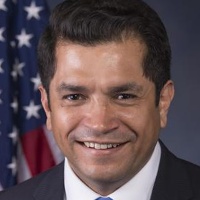
This resolution designates January 13th as Korean American Day to honor the contributions of Korean Americans and recognize the anniversary of the first Korean immigrants' arrival.
Jimmy Gomez
Representative
CA
Jimmy Gomez
Representative
CA
This resolution officially designates January 13th as Korean American Day. It expresses support for the day's ideals and encourages Americans to observe it. The resolution also honors the 123rd anniversary of the first Korean immigrants arriving in the United States.
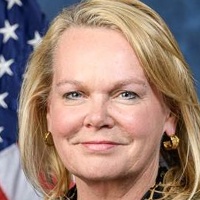
This act prohibits naming federal property after a sitting President and mandates the reversion of any existing presidential namesake to its previous federal designation.
April McClain Delaney
Representative
MD
April McClain Delaney
Representative
MD
The SERVE Act of 2026 prohibits naming any federal property, land, or asset after a sitting President, preventing the use of federal funds for such purposes. Furthermore, any federal property currently named after the sitting President upon enactment will revert to its previously established federal name.
This bill establishes a special base pay system that increases the salaries of Bureau of Prisons correctional officers and certain hourly employees by 35 percent for a five-year period, subject to review.

Dan Goldman
Representative
NY
Dan Goldman
Representative
NY
The Federal Correctional Officer Paycheck Protection Act of 2026 establishes a special pay system to increase the base pay for Bureau of Prisons (BOP) correctional officers by 35 percent. This legislation also provides a similar 35 percent wage increase for certain hourly BOP employees involved in inmate custody. The new pay authority is set to expire after five years, unless the Department of Justice Inspector General reports measurable progress in reducing the use of non-custodial staff for officer duties and excessive overtime.
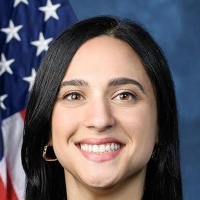
This bill expresses support for the Iranian people protesting for a free and democratic Iran while condemning the Islamic Republic's violent repression.
Yassamin Ansari
Representative
AZ
Yassamin Ansari
Representative
AZ
This resolution expresses strong support for the Iranian people protesting for freedom, democracy, and basic human rights against the repressive Islamic Republic. It condemns the regime's brutal crackdown on demonstrators and demands an end to violence and the release of political prisoners. Furthermore, it urges the U.S. government to work with allies to deter further lethal violence against protesters.
The REAADI for Disasters Act aims to improve disaster preparedness, response, recovery, and mitigation by ensuring the inclusion, protection, and civil rights of older adults and individuals with disabilities through funding, training, and new federal standards.
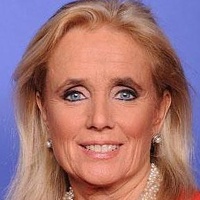
Debbie Dingell
Representative
MI
Debbie Dingell
Representative
MI
The **REAADI for Disasters Act** aims to significantly improve disaster preparedness, response, and recovery for older adults and individuals with disabilities. It establishes dedicated funding, creates new grant programs, and mandates accessible standards across all phases of emergency management. The bill seeks to ensure these vulnerable populations are included in planning, protected from discrimination, and receive necessary human services during and after a disaster.
This bill prohibits the use of federal funds to support Venezuela's oil and petroleum infrastructure and requires an annual report from the Secretary of State on compliance.
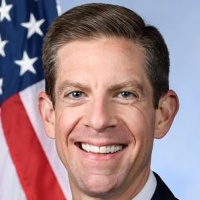
Mike Levin
Representative
CA
Mike Levin
Representative
CA
This bill prohibits the use of any federal funds to support, finance, or insure Venezuela's oil and petroleum infrastructure. It ensures taxpayer money is not used to aid the development or expansion of the Venezuelan oil sector. Furthermore, the Secretary of State must submit an annual report to Congress detailing compliance with this prohibition.
This Act establishes federal minimum salary and wage floors for school paraprofessionals and support staff, providing federal funding to help states meet these new pay standards within four years.
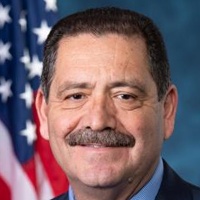
Jesús García
Representative
IL
Jesús García
Representative
IL
The Pay Paraprofessionals and Support Staff Act establishes minimum federal salary and wage floors for school support staff, requiring states to implement higher state-level standards. It authorizes significant federal funding through grants to help states and local districts meet these new pay requirements within four years. States must prioritize funding distribution to districts serving high numbers of low-income students to ensure compliance with the mandated pay increases.
This bill modifies deposits into the Crime Victims Fund by excluding certain False Claims Act recoveries and mandates an Inspector General audit of the Fund's sustainability.
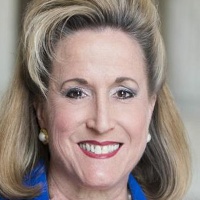
Ann Wagner
Representative
MO
Ann Wagner
Representative
MO
This bill amends the Victims of Crime Act of 1984 to temporarily exclude certain False Claims Act recoveries from being deposited into the Crime Victims Fund through fiscal year 2029. It also mandates a comprehensive audit by the Department of Justice Inspector General on the Fund's sustainability and the impact of recent legislative changes. The resulting report will provide recommendations for improving the Fund's effectiveness and oversight.
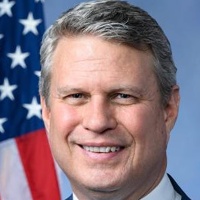
This bill designates Burma for Temporary Protected Status (TPS) for eligible nationals present in the U.S. since enactment.
Bill Huizenga
Representative
MI
Bill Huizenga
Representative
MI
This bill designates Burma for Temporary Protected Status (TPS) for an initial period of 18 months, beginning November 25, 2025. It establishes eligibility requirements for Burmese nationals already present in the U.S. and outlines conditions for emergency travel authorization.
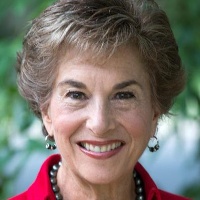
The Affordable CHOICE Act establishes a federally administered public health insurance option to be offered through Health Insurance Marketplaces starting in 2027 to increase competition and consumer choice.
Janice Schakowsky
Representative
IL
Janice Schakowsky
Representative
IL
The Affordable CHOICE Act establishes a federally administered public health insurance option to be offered through Health Insurance Marketplaces starting in 2027. This plan aims to increase competition and affordability by offering bronze, silver, and gold coverage levels with premiums and provider reimbursement rates negotiated by the Secretary of Health and Human Services. The legislation ensures the public option operates on a level playing field with existing private plans while providing a sustainable, self-funded model for consumer health coverage.
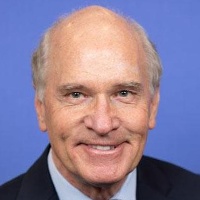
This act prohibits the use of federal funds and official action for any invasion of NATO member territory.
William Keating
Representative
MA
William Keating
Representative
MA
The **No Funds for NATO Invasion Act** prohibits the use of any federal funds for an invasion of any territory belonging to a member nation of the North Atlantic Treaty Organization (NATO). Furthermore, the bill bars U.S. officials from taking any action to execute such an invasion.
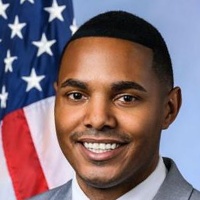
This act prohibits federal officials and employees from trading prediction market contracts while possessing material nonpublic government information.
Ritchie Torres
Representative
NY
Ritchie Torres
Representative
NY
The Public Integrity in Financial Prediction Markets Act of 2026 prohibits federal officials and employees from trading in prediction market contracts while possessing material, nonpublic government information. This ban specifically targets transactions related to government policy, actions, or political outcomes. The goal is to prevent insider trading within these emerging financial markets by those with privileged access to government knowledge.
This resolution declares elective declawing of cats inhumane and urges states to prohibit the practice except when medically necessary.
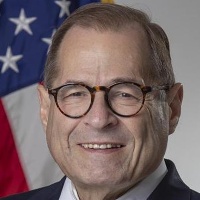
Jerrold Nadler
Representative
NY
Jerrold Nadler
Representative
NY
This resolution expresses strong opposition to elective declawing (onychectomy) of cats, deeming the procedure inhumane due to the lifelong pain and adverse behavioral effects it causes. It defines declawing broadly to include any procedure that disables a cat's claws and affirms that it should only be performed when medically necessary for the cat's health. The bill urges states to prohibit the practice on animal welfare and public health grounds, noting that humane alternatives exist.
This bill explicitly prohibits discrimination based on sex, sexual orientation, and gender identity in all places of public accommodation.
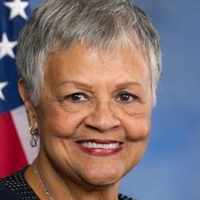
Bonnie Watson Coleman
Representative
NJ
Bonnie Watson Coleman
Representative
NJ
The Customer Non-Discrimination Act amends the Civil Rights Act of 1964 to explicitly prohibit discrimination in public accommodations based on sex, sexual orientation, and gender identity. This expansion covers a wide range of establishments, including retailers, service providers, and transportation services. The bill also provides clear definitions for these protected characteristics and clarifies that existing federal sex discrimination laws already cover these areas.
This act significantly increases both criminal and civil penalties for employers who violate child labor laws.
Hillary Scholten
Representative
MI
Hillary Scholten
Representative
MI
The Justice for Exploited Children Act significantly strengthens penalties for child labor violations under the Fair Labor Standards Act. This legislation introduces harsher criminal penalties, including substantial fines and imprisonment, for willful or repeated offenses. It also dramatically increases the civil monetary penalties for all child labor violations, especially those resulting in serious injury or death to a minor employee.
This act establishes a ten-year, \$50 billion program to fund grants for recruiting, hiring, and training public health nurses, particularly in underserved areas.
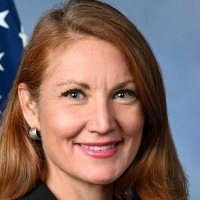
Melanie Stansbury
Representative
NM
Melanie Stansbury
Representative
NM
The Public Health Nursing Act establishes a ten-year, \$50 billion program to fund and expand the public health nursing workforce across the nation. This funding will provide grants to state, local, and territorial health departments to recruit, hire, and train registered nurses for essential public health services. Priority will be given to applicants serving medically underserved areas facing high rates of chronic disease, infant mortality, or maternal morbidity.