Legislative Activity
Track April's sponsored bills, co-sponsored legislation, and voting record
This bill significantly increases federal loan limits for farm ownership, operating, and microloans, updates inflation calculations for rural programs, and establishes conditions for refinancing distressed guaranteed loans into direct FSA loans.
Brad Finstad
Representative
MN
Brad Finstad
Representative
MN
The Producer and Agricultural Credit Enhancement Act of 2025 significantly increases the maximum loan amounts available through federal farm ownership and operating loan programs, effective in fiscal year 2025. The bill also updates the calculation method for inflation adjustments in rural development programs and raises the cap for agricultural microloans from $\$50,000$ to $\$100,000$. Finally, it establishes conditions under which distressed FSA guaranteed loans may be refinanced into direct loans, provided the operation has a reasonable chance of success.
This act automatically appropriates necessary funds to ensure the Supplemental Nutrition Assistance Program (SNAP) continues operating for the first 90 days of any fiscal year lapse in appropriations.
Emilia Sykes
Representative
OH
Emilia Sykes
Representative
OH
The Feed Our Families Act of 2025 ensures the continuity of the Supplemental Nutrition Assistance Program (SNAP) during the initial phase of a government shutdown. This bill automatically reserves necessary funding to operate SNAP for the first 90 days following a lapse in appropriations at the start of a fiscal year. These funds are held in reserve and released only as needed to maintain essential program services.
The American Teacher Act establishes federal grants to incentivize states to set a minimum annual teacher salary of $60,000 and provide inflation adjustments for teacher pay.
Frederica Wilson
Representative
FL
Frederica Wilson
Representative
FL
The American Teacher Act aims to address critical teacher shortages by establishing federal grants to help states raise the minimum annual salary for full-time teachers to \$60,000, adjusted for inflation. States must submit sustainability plans to ensure these minimums continue after the initial four-year grant period ends. The bill also provides funds for cost-of-living adjustments and a national campaign to enhance the value and diversity of the teaching profession.
The HERO Act establishes a national data system for tracking public safety officer suicides, funds peer-support mental health programs for fire and EMS personnel, supports wellness programs for healthcare providers, and develops educational resources and best practices for treating first responder mental health issues.
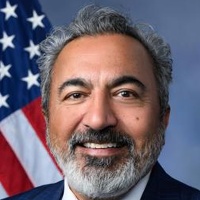
Ami Bera
Representative
CA
Ami Bera
Representative
CA
The HERO Act establishes a national system to track suicides among public safety officers to better understand prevention needs. It also creates grant programs to fund peer-support and wellness programs for fire, EMS, and healthcare workers. Finally, the bill mandates the development of educational resources to improve mental health treatment for first responders dealing with trauma and PTSD.
This bill increases the annual stipend for educational costs for veterans under the Post-9/11 Educational Assistance Program and adjusts it annually for inflation.
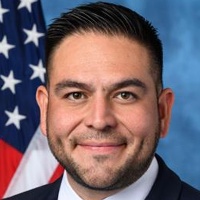
Gabriel (Gabe) Vasquez
Representative
NM
Gabriel (Gabe) Vasquez
Representative
NM
The Veteran Education Assistance Adjustment Act increases the annual stipend for books, supplies, and equipment for veterans under the Post-9/11 Educational Assistance Program from $1,000 to $1,400. Beginning in 2026, this stipend will be subject to annual increases based on the Consumer Price Index.
The Farewell to Foam Act of 2025 bans the sale and distribution of expanded polystyrene food service ware, loose fill packaging, and coolers starting January 1, 2028, with escalating fines for non-compliance.
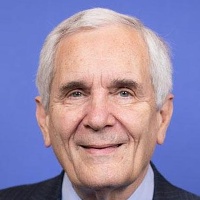
Lloyd Doggett
Representative
TX
Lloyd Doggett
Representative
TX
The Farewell to Foam Act of 2025 bans the sale and distribution of expanded polystyrene (Styrofoam) food service ware, loose fill packaging, and coolers starting January 1, 2028. The bill clearly defines these targeted foam products and the roles of manufacturers, distributors, and retailers involved in their supply chain. Enforcement begins with a written warning for first-time violations, followed by escalating fines for repeat offenses. The Administrator of the EPA is granted the authority to issue necessary regulations to implement the Act.
The TAP Promotion Act mandates a standardized, one-hour presentation on available VA benefits during mandatory preseparation counseling for service members.
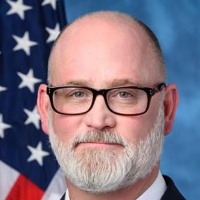
Derrick Van Orden
Representative
WI
Derrick Van Orden
Representative
WI
The TAP Promotion Act mandates a standardized, one-hour presentation on available VA benefits during mandatory preseparation counseling for service members. This presentation must be developed and approved by the Secretary of Veterans Affairs in consultation with recognized Veterans Service Organizations (VSOs). The goal is to ensure separating service members are fully informed of their entitlements and how VSOs can assist with filing claims.
The "Keeping Our Field Offices Open Act" prevents the Social Security Administration from closing or limiting access to field offices, hearing offices, and resident stations, ensuring continued service availability for the public.
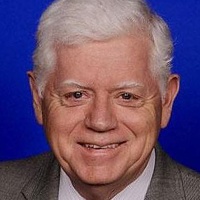
John Larson
Representative
CT
John Larson
Representative
CT
The "Keeping Our Field Offices Open Act" prevents the Social Security Administration (SSA) from closing or consolidating field offices, hearing offices, and resident stations, ensuring continued access to services. It requires the SSA Commissioner to justify any planned closures to Congress with detailed analysis and cost-benefit assessments, considering the impact on vulnerable populations. The bill mandates public notice, hearings, and a final report to Congress before any changes, allowing appeals and maintaining the number of offices at or above the January 20, 2025 level, excluding temporary emergency closures.
This Act prohibits the FCC from penalizing broadcasters or conditioning business approvals based on the viewpoints expressed over the airwaves, while maintaining authority over illegal content like fraud or incitement.

Doris Matsui
Representative
CA
Doris Matsui
Representative
CA
The Broadcast Freedom and Independence Act of 2025 aims to safeguard the independence of the Federal Communications Commission (FCC) from political pressure. It explicitly prohibits the FCC from revoking broadcast licenses or denying business transactions based on the viewpoints or opinions expressed by broadcasters. This legislation ensures that regulatory actions are focused on legal compliance rather than content censorship.
The John R. Lewis Voting Rights Advancement Act of 2025 aims to strengthen and update the Voting Rights Act of 1965 by addressing vote dilution and denial, establishing updated criteria for federal oversight of states and political subdivisions with a history of voting rights violations, and promoting transparency in election-related changes.
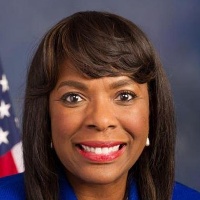
Terri Sewell
Representative
AL
Terri Sewell
Representative
AL
The John R. Lewis Voting Rights Advancement Act of 2025 amends the Voting Rights Act of 1965 to address vote dilution, denial, and abridgment claims, and to update which states and political subdivisions are subject to federal oversight based on a history of voting rights violations. It broadens the types of violations that allow a court to retain jurisdiction over a case, clarifies the Attorney General's authority to assign observers, and ensures transparency in voting-related changes. The Act also authorizes the Attorney General to demand documents and information to enforce voting rights and provides grants to small jurisdictions to assist with notification requirements.
The Fighter Force Preservation and Recapitalization Act of 2025 aims to increase and modernize the Air Force's fighter aircraft fleet, ensuring a strong national defense through the year 2030.
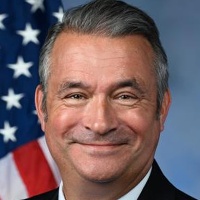
Don Bacon
Representative
NE
Don Bacon
Representative
NE
The Fighter Force Preservation and Recapitalization Act of 2025 aims to modernize and maintain the Air Force's fighter aircraft fleet by increasing the minimum number of fighter aircraft, requiring detailed reports on the fleet's status, prioritizing the assignment of new aircraft to existing squadrons, and preserving the Air National Guard's fighter capabilities. The act mandates the Air Force to assign at least three out of every four new advanced fighter aircraft to existing Air Force fighter squadrons and maintain at least 25 Air National Guard fighter aircraft squadrons. Additionally, it requires the Secretary of the Air Force to develop and submit an annual modernization plan for the Air National Guard's fighter fleet to Congress. The Act defines specific categories of fighter aircraft to clarify modernization efforts.
The Richard L. Trumka Protecting the Right to Organize Act of 2025 strengthens protections for workers' rights to organize and collectively bargain by modernizing labor laws, addressing unfair labor practices, and enhancing enforcement mechanisms.
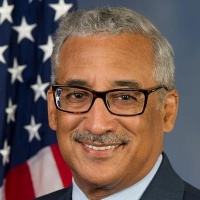
Robert Scott
Representative
VA
Robert Scott
Representative
VA
This bill, the Richard L. Trumka Protecting the Right to Organize Act of 2025, seeks to amend the National Labor Relations Act and other labor laws to strengthen protections for workers' rights to organize and collectively bargain. It aims to modernize labor regulations by clarifying definitions, addressing unfair labor practices, enhancing enforcement, and increasing transparency in labor-management relations. The bill introduces measures such as electronic voting in union elections, strengthens whistleblower protections, and mandates studies on collective bargaining practices. Ultimately, the goal is to ensure fair treatment of workers and promote equitable labor practices.
This bill restricts political appointees and special government employees from accessing Social Security data, establishes civil damages for unauthorized access, mandates Inspector General investigations, and requires a GAO study on the changes.
John Larson
Representative
CT
John Larson
Representative
CT
The Protecting Americans’ Social Security Data Act restricts political appointees and special government employees from accessing sensitive Social Security beneficiary data systems. It establishes a right for individuals to sue the government or responsible parties for unauthorized access or disclosure of their private Social Security information, including specified minimum damages. Furthermore, the bill mandates the Inspector General to investigate such violations and report findings to Congress within 30 days. Finally, it requires the GAO to conduct a comprehensive study on the impact of these new privacy and enforcement measures.
The ACRE Act of 2025 creates a federal tax exemption for qualified lenders on interest earned from loans secured by rural or agricultural real property, excluding loans to foreign adversary entities.
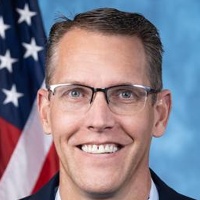
Randy Feenstra
Representative
IA
Randy Feenstra
Representative
IA
The Access to Credit for our Rural Economy Act of 2025 (ACRE Act) creates a new federal tax incentive for qualified lenders. This incentive excludes income earned from interest on loans secured by rural or agricultural real property from taxation. The goal is to encourage lending for agricultural, forestry, and certain rural home improvement purposes while prohibiting loans to foreign adversary entities.
The "Peace on the Korean Peninsula Act" promotes diplomatic engagement to formally end the Korean War, encourages humanitarian travel to North Korea, and suggests establishing liaison offices between the U.S. and North Korea, while reaffirming the U.S. troop presence in South Korea.
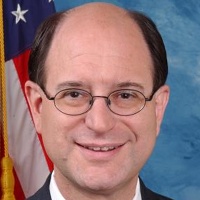
Brad Sherman
Representative
CA
Brad Sherman
Representative
CA
The "Peace on the Korean Peninsula Act" seeks to promote diplomatic engagement to formally end the Korean War by replacing the Armistice Agreement with a peace agreement. It requires the Secretary of State to review travel restrictions to North Korea for humanitarian reasons and to develop a plan for achieving a permanent peace agreement, including the potential establishment of liaison offices between the U.S. and North Korea. The act emphasizes that it does not affect the status of U.S. troops stationed in South Korea or elsewhere.
The "Safe Schools Improvement Act" amends the Elementary and Secondary Education Act of 1965, requiring states to establish policies that prevent and prohibit bullying and harassment in schools based on protected characteristics, ensuring a safe and inclusive learning environment for all students.
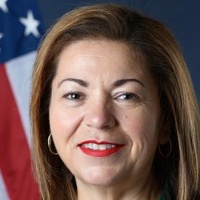
Linda Sánchez
Representative
CA
Linda Sánchez
Representative
CA
The Safe Schools Improvement Act aims to reduce bullying and harassment in schools by requiring states to establish policies prohibiting such conduct based on various characteristics, including race, sex, religion, and disability. It mandates annual notifications, data collection on incidents, biennial evaluations of programs, and regular reports to Congress to ensure accountability and effectiveness. This act does not infringe on existing nondiscrimination laws or freedom of speech but seeks to create a safer, more inclusive learning environment for all students.
This bill establishes the Justice Thurgood Marshall National Historic Site at his former elementary school in Baltimore, MD, to preserve and interpret his legacy, while the school will continue to be owned and operated by the Beloved Community Services Corporation with support from the National Park System.
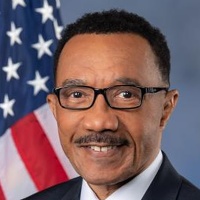
Kweisi Mfume
Representative
MD
Kweisi Mfume
Representative
MD
The "Justice Thurgood Marshall National Historic Site Establishment Act of 2025" establishes Justice Thurgood Marshall's elementary school, Public School 103 in Baltimore, Maryland, as the Justice Thurgood Marshall National Historic Site, affiliated with the National Park System. The Beloved Community Services Corporation will continue to own and manage the site, while the Secretary of the Interior may provide technical and financial assistance. This act aims to preserve and interpret Justice Marshall's historic contributions without authorizing the federal acquisition of the property or assuming financial responsibility for its operation. Necessary funds are authorized to be appropriated for the implementation of this Act.
The SAFE Act of 2025 amends existing law to include equines (horses) in the prohibition of slaughtering animals for human consumption.
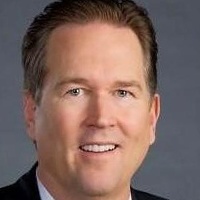
Vern Buchanan
Representative
FL
Vern Buchanan
Representative
FL
The SAFE Act of 2025 amends existing legislation to explicitly prohibit the slaughter of horses for human consumption, reinforcing protections for these animals. This bill seeks to prevent the inhumane treatment of American equines by closing loopholes that allow their slaughter and export for human consumption.
This bill officially renames the Robert E. Lee Memorial as the Arlington House National Historic Site.
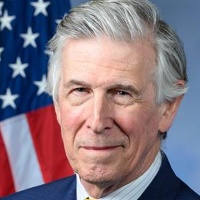
Donald Beyer
Representative
VA
Donald Beyer
Representative
VA
This bill officially redesignates the site currently known as the Robert E. Lee Memorial as the "Arlington House National Historic Site." It mandates that all official U.S. records, maps, and documents be updated to reflect this new name and repeals the previous joint resolutions that established the former designation.
The PAST Act of 2025 significantly strengthens the Horse Protection Act by increasing penalties, banning specific action devices, and mandating licensed inspectors to combat the practice of horse soring.
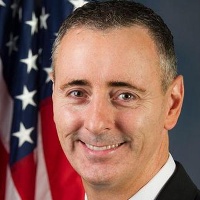
Brian Fitzpatrick
Representative
PA
Brian Fitzpatrick
Representative
PA
The PAST Act of 2025 significantly strengthens the Horse Protection Act to combat the painful practice of soring in specific horse breeds. This bill increases penalties for violations, establishes stricter licensing and oversight for inspectors, and explicitly bans the use of "action devices" designed to cause unnatural gaits. The legislation aims to enhance enforcement, ensure fairer competition, and hold violators accountable through increased fines and disqualifications.