Legislative Activity
Track Seth's sponsored bills, co-sponsored legislation, and voting record
The ePermit Act mandates the creation of a standardized, digital system for managing federal environmental reviews and project permits to improve efficiency, transparency, and data sharing.
Dusty Johnson
Representative
SD
Dusty Johnson
Representative
SD
The ePermit Act mandates the creation of a unified, digital system for managing all federal environmental reviews and project permits. This system will standardize data, automate processes, and provide real-time public access to review status and documents. The goal is to increase transparency, efficiency, and data interoperability across federal agencies involved in project authorizations.
This act increases the Social Security lump sum death payment to a fixed amount of \$2,900 for deaths occurring on or after January 1, 2025.
Gabe Amo
Representative
RI
Gabe Amo
Representative
RI
The Social Security Survivor Benefits Equity Act aims to update and simplify the Social Security lump sum death payment. This bill establishes a fixed payment amount of \$2,900 for eligible survivors, replacing the current formula for deaths occurring on or after January 1, 2025.
This bill amends federal law to allow Byrne JAG funds to establish and operate elder justice task forces dedicated to combating scams targeting seniors, requiring detailed reporting on their activities.
Gabe Amo
Representative
RI
Gabe Amo
Representative
RI
The STOP Scams Against Seniors Act amends existing law to allow federal Byrne JAG grant funds to be used by states and local governments to establish and operate elder justice task forces. These task forces will focus on combating financial exploitation, scams, and fraud targeting individuals aged 60 and older. The legislation also mandates detailed reporting on the task forces' activities, case outcomes, and victim support provided.
This act mandates the continued implementation of anti-trafficking programs for children based on specific GAO recommendations and requires a progress report to Congress.
Clarence Owens
Representative
UT
Clarence Owens
Representative
UT
The Preventing Child Trafficking Act of 2025 mandates the continuation and enhancement of federal anti-trafficking programs specifically for children. This law requires key Justice Department and Health and Human Services offices to implement recommendations from a 2023 Government Accountability Office report. Furthermore, the responsible office must establish measurable performance goals for these programs and report on their progress to Congress.
This bill establishes a National Strategy for Combating Scams, led by the FBI, to coordinate federal efforts, define scams, and improve prevention and victim recovery.
Gabe Amo
Representative
RI
Gabe Amo
Representative
RI
This bill establishes the **National Strategy for Combating Scams Act of 2025** to address the massive financial and personal toll of scams, which are increasingly utilizing advanced technology like AI. It mandates the FBI to form a working group with numerous federal agencies to develop a comprehensive, coordinated national strategy. This strategy will define "scam," evaluate risks, improve federal coordination, and outline plans for prevention, victim recovery, and international cooperation.
The Right to Read Act of 2025 establishes definitions for effective school libraries and the right to read, amends federal education law to require state and local plans supporting these rights, authorizes funding for literacy programs, and mandates data collection on school libraries.
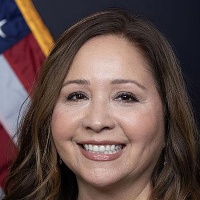
Adelita Grijalva
Representative
AZ
Adelita Grijalva
Representative
AZ
The Right to Read Act of 2025 amends federal education law to establish a comprehensive "right to read" for all students, ensuring access to evidence-based instruction, effective school libraries, and diverse reading materials. The bill defines key terms like "effective school library" and mandates that states and local agencies detail plans to support these resources and protect students' First Amendment rights regarding information access. Furthermore, it authorizes significant new funding to improve literacy programs, support school librarians, and mandates national data collection on school library resources.
This Act officially recognizes the installation of mechanical insulation in federal buildings as a qualifying energy or water efficiency measure.
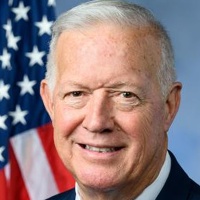
Randy Weber
Representative
TX
Randy Weber
Representative
TX
The Federal Mechanical Insulation Act officially recognizes the installation of mechanical insulation in federal buildings as a qualifying energy or water efficiency measure. This legislation defines compliant mechanical insulation as meeting or exceeding ASHRAE Standard 90.1 requirements and resulting in energy loss reduction. Furthermore, the Act mandates that comprehensive evaluations of federal buildings must identify these specific energy and water-saving insulation opportunities.
This act increases funding and the average cost limit for the Weatherization Assistance Program while adding a new reporting requirement on enhancement readiness to the Department of Energy's annual report.
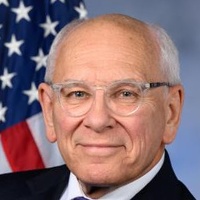
Paul Tonko
Representative
NY
Paul Tonko
Representative
NY
The Weatherization Enhancement and Readiness Act of 2025 significantly increases funding authorization for the Weatherization Assistance Program through 2030. This bill also raises the maximum average cost allowed for weatherizing a single home from $6,500 to $12,000. Finally, it mandates that the Department of Energy's annual readiness report to Congress include details on how enhancement efforts impact program eligibility.
This act establishes a $10 million childcare grant program to help parents cover costs while participating in job training activities.
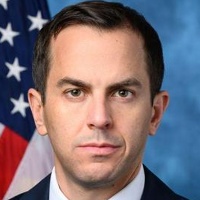
Robert Menendez
Representative
NJ
Robert Menendez
Representative
NJ
The Parental Workforce Training Act establishes a $10 million childcare grant program to support parents participating in job training. Local workforce development boards will receive competitive grants to help eligible individuals cover childcare costs while they engage in employment and training activities. This initiative aims to remove childcare barriers for parents seeking to enhance their job skills.
The College Athletics Reform Act establishes Name, Image, and Likeness (NIL) rights for college athletes, regulates sports agents, creates a commission to study college sports governance, and expands financial disclosure requirements for institutions.
Lori Trahan
Representative
MA
Lori Trahan
Representative
MA
The College Athletics Reform Act establishes comprehensive federal standards for college athletics, primarily by securing Name, Image, and Likeness (NIL) rights for college athletes and prohibiting restrictions on their ability to earn compensation or obtain professional representation. The bill also introduces new regulations for sports agents, mandates significant expansion of financial and participation data disclosure by institutions, and establishes a new Commission to study and recommend future governance structures for college sports. Finally, it amends broadcasting law to exempt certain large athletic association media agreements from antitrust scrutiny.
The Mikaela Naylon Give Kids a Chance Act primarily focuses on enhancing pediatric drug research, ensuring completion of pediatric study requirements, extending incentives for rare pediatric disease treatments, and making targeted updates to FDA and organ transplant network operations.
Michael McCaul
Representative
TX
Michael McCaul
Representative
TX
The Mikaela Naylon Give Kids a Chance Act focuses primarily on improving pediatric drug development and ensuring patient access to necessary treatments. This legislation mandates new research requirements for molecularly targeted pediatric cancer drugs, strengthens FDA enforcement of pediatric study completion, and extends incentives for developing drugs for rare pediatric diseases. Additionally, the bill updates organ transplant network functions and establishes an Abraham Accords Office within the FDA to enhance international regulatory cooperation.
This Act mandates FERC to modernize and standardize electric utility reporting, establishes a centralized, public data repository, and directs research and a public dashboard to analyze grid expansion costs and interconnection processes.
Sean Casten
Representative
IL
Sean Casten
Representative
IL
The Grid Research and Development Act mandates the Federal Energy Regulatory Commission (FERC) to modernize and standardize how electric utilities report detailed data on transmission projects, costs, and operations. This law establishes a centralized, publicly accessible data repository, managed by FERC and the EIA, to make this information searchable and machine-readable. Furthermore, it directs the Secretary of Energy to conduct research and develop a public dashboard to analyze grid expansion costs, interconnection efficiency, and overall system performance for improved affordability and planning.
This bill requires the FEMA Administrator to manage the Next Generation Warning System grant program and mandates research and development to improve emergency warning system accessibility and resiliency.
Timothy Kennedy
Representative
NY
Timothy Kennedy
Representative
NY
This bill mandates that the FEMA Administrator administer the Next Generation Warning System grant program. It requires the immediate disbursement of obligated 2022 funds and the initiation of grant awards for fiscal years 2023 and 2024. Additionally, the bill calls for research and development to improve the accessibility, resiliency, and security of emergency warning systems.
The ROTOR Act mandates increased transparency for sensitive government flights by narrowing ADS-B exception rules, requires ADS-B In equipment on certain aircraft, and establishes safety reviews for military and civilian operations near major airports.
Robert Onder
Representative
MO
Robert Onder
Representative
MO
The ROTOR Act aims to enhance aviation safety and transparency, primarily by narrowing exceptions for disabling ADS-B tracking on government aircraft and mandating that aircraft equipped with ADS-B Out must also install ADS-B In technology. The bill further requires the FAA to conduct comprehensive safety reviews of military and civilian operations in complex airspace, such as around Reagan National Airport. Finally, it mandates formal agreements for the FAA and the Department of the Army to share critical aviation safety data.
This bill extends and significantly enhances the Work Opportunity Tax Credit through 2030, increases credit amounts, adjusts for inflation, removes the age limit for SNAP recipients, and adds military spouses as an eligible group.
Lloyd Smucker
Representative
PA
Lloyd Smucker
Representative
PA
This bill extends and significantly enhances the Work Opportunity Tax Credit (WOTC) for employers hiring from targeted groups, increasing the credit amount and adjusting it for inflation through 2031. It also removes the age limit for SNAP recipients claiming the credit and adds qualified military spouses as an eligible group. Furthermore, the legislation mandates an inter-agency initiative to promote the hiring of targeted workers in key industries like manufacturing and healthcare.
This Act establishes mandatory, standardized annual scorecards for electricity transmission entities, detailing performance metrics on interconnection, investment, and reliability, to be made publicly available and subject to independent verification.
Sean Casten
Representative
IL
Sean Casten
Representative
IL
The Electricity Transmission Scorecard Act mandates that major electricity transmission entities annually report detailed performance data to FERC and the EIA. This data, covering interconnection queues, project development, and system performance, will be made publicly available via an online portal. The goal is to create standardized transparency to improve accountability, reliability, and affordability across the national transmission system. FERC is also required to periodically review and update these scorecard metrics with stakeholder input.
This act ensures the uninterrupted storage of National Oceanic and Atmospheric Administration (NOAA) data sets by restricting the Secretary of Commerce's ability to cancel cloud service contracts without a transition plan.
Sarah Elfreth
Representative
MD
Sarah Elfreth
Representative
MD
The NOAA Data Preservation Act aims to ensure the uninterrupted storage of critical National Oceanic and Atmospheric Administration (NOAA) data sets. This legislation restricts the Secretary of Commerce from canceling cloud storage contracts unless a comprehensive plan for seamless data transition and protection is established in collaboration with NOAA. The bill focuses on maintaining continuous access to vital environmental data.
The PEARL Act establishes a three-year pilot program for U.S. Customs and Border Protection to adopt and train shelter dogs as support dogs.
Ernest Gonzales
Representative
TX
Ernest Gonzales
Representative
TX
The PEARL Act establishes a three-year pilot program within U.S. Customs and Border Protection (CBP) to enhance its Support Canine Program. This initiative requires CBP to adopt dogs from local animal shelters and train them to serve as support dogs.
This act mandates Medicare coverage for FDA-approved early detection screening tests for Alzheimer's disease and related dementias beginning in 2028.
Vern Buchanan
Representative
FL
Vern Buchanan
Representative
FL
The Alzheimer’s Screening and Prevention Act of 2025 (ASAP Act) amends Medicare to cover early detection screening tests for Alzheimer's disease and related dementias starting in 2028. This coverage applies to FDA-cleared tests, including genomic sequencing and other equivalent diagnostic methods, designed to detect pre-symptomatic or early-stage conditions. The bill ensures these screenings are added to the list of covered medical services under Medicare.
This Act mandates the public release of all unclassified Department of Justice documents related to Jeffrey Epstein, Ghislaine Maxwell, and their associates within 30 days, with very limited exceptions for victim privacy or active investigations.
Ro Khanna
Representative
CA
Ro Khanna
Representative
CA
The Epstein Files Transparency Act mandates the Attorney General to publicly release all unclassified Department of Justice records related to Jeffrey Epstein and his associates within 30 days of the bill becoming law. This release must include materials concerning investigations, flight logs, settlements, and internal communications, with very limited exceptions for victim privacy or active investigations. The Act strictly prohibits withholding documents due to political sensitivity or reputational harm and requires detailed justification for any redactions made.