
Legislative Activity
Track Seth's sponsored bills, co-sponsored legislation, and voting record
This resolution formally recognizes the 204th anniversary of the Greek War of Independence while reaffirming the deep, shared history and strategic partnership between the United States and Greece based on democratic ideals.

Gus Bilirakis
Representative
FL
Gus Bilirakis
Representative
FL
This resolution formally recognizes the 204th anniversary of the War of Greek Independence, celebrating the deep, shared history rooted in democratic ideals. It reaffirms the strong strategic partnership between the U.S. and Greece, highlighting Greece's vital role in security and energy stability in the Eastern Mediterranean. The bill also commends the contributions of the Greek-American community to the United States.
This Act establishes a special refugee processing pathway for persecuted Uyghurs and other minorities from China's Xinjiang region and clarifies asylum standards for Chinese nationals facing government retaliation.

Suhas Subramanyam
Representative
VA
Suhas Subramanyam
Representative
VA
The Uyghur Human Rights Protection Act establishes a special Priority 2 refugee processing pathway for individuals facing persecution by the Chinese government in the Xinjiang Uyghur Autonomous Region (XUAR). It eases certain immigration hurdles for these applicants and clarifies that actions taken by the PRC against those seeking U.S. benefits can be considered persecution based on political opinion. Furthermore, the Act encourages U.S. allies to create similar accommodations for those fleeing the situation in XUAR. This legislation is set to terminate ten years after its enactment.
This Act establishes federal grant programs and mandates for the Bureau of Prisons to implement mandatory, confidential mental health screenings and dedicated outreach teams for corrections officers to connect them with necessary care.

Mariannette Miller-Meeks
Representative
IA
Mariannette Miller-Meeks
Representative
IA
The Corrections Officer Blake Schwarz Suicide Prevention Act of 2025 establishes federal grant programs to help states and local governments implement mandatory, confidential mental health screenings for corrections officers. The bill also directs the Bureau of Prisons to create a similar internal mental health survey and outreach program for federal staff. An Advisory Board will be created to oversee the implementation of these programs and ensure officers identified as needing care are connected with local mental health providers. Funding is authorized through Fiscal Year 2030 to support these critical suicide prevention and support initiatives.
This bill officially ratifies the Equal Rights Amendment, validating its inclusion in the Constitution regardless of any prior ratification deadlines.

Ayanna Pressley
Representative
MA
Ayanna Pressley
Representative
MA
This bill officially ratifies the Equal Rights Amendment, declaring it a valid part of the U.S. Constitution. It specifically removes any previously imposed deadlines for state ratification. If three-fourths of the states have approved the amendment, this law confirms its official status regardless of past time constraints.
The House of Representatives affirms every person's basic right to emergency health care, including abortion care.

Emilia Sykes
Representative
OH
Emilia Sykes
Representative
OH
This bill affirms the House of Representatives' belief that every person has the right to emergency health care, including abortion care. It argues that abortion restrictions endanger lives, force doctors to make impossible choices, and disproportionately harm people of color, low-income individuals, and LGBTQI individuals. The bill emphasizes that delays in emergency care due to abortion bans can lead to life-threatening situations and that everyone, including pregnant individuals, should have access to necessary medical care without discrimination.
The Puppy Protection Act of 2025 establishes stricter housing, daily care, veterinary, and breeding standards for dog dealers under the Animal Welfare Act.

Brian Fitzpatrick
Representative
PA
Brian Fitzpatrick
Representative
PA
The Puppy Protection Act of 2025 significantly increases humane treatment standards for dog dealers under the Animal Welfare Act. This legislation mandates specific minimum space requirements, daily exercise access, and mandatory socialization for housed dogs. Furthermore, it establishes strict limits on female dog breeding frequency and age, alongside enhanced veterinary care protocols.
This Act allows employees to deduct certain necessary work-related expenses, such as tools and safety gear, directly from their gross income when calculating federal income taxes, starting in 2026.

Nicole (Nikki) Budzinski
Representative
IL
Nicole (Nikki) Budzinski
Representative
IL
The Tools Tax Deduction Act aims to make it easier for employees to deduct necessary work-related expenses, such as tools and safety gear, from their federal income taxes. This legislation allows certain job expenses to be deducted "above the line," lowering Adjusted Gross Income even for those taking the standard deduction. Furthermore, it removes the 2% floor threshold for miscellaneous employee business expenses starting in 2026 if taxpayers itemize.
This bill mandates that veterans' disability compensation, dependency and indemnity compensation, and clothing allowance rates increase starting December 1, 2025, by the same percentage as the Social Security cost-of-living adjustment for that year.

Morgan Luttrell
Representative
TX
Morgan Luttrell
Representative
TX
The Veterans’ Compensation Cost-of-Living Adjustment Act of 2025 mandates an increase in disability compensation and dependency and indemnity compensation (DIC) rates for veterans and survivors. This increase, effective December 1, 2025, will match the percentage increase applied to Social Security benefits for that year. The bill also requires the VA to publish the adjusted rates according to the Social Security Administration's COLA announcement schedule.
The Major Richard Star Act ensures that military retirees with combat-related disabilities can concurrently receive their full military retirement pay and VA disability compensation without reduction.
Gus Bilirakis
Representative
FL
Gus Bilirakis
Representative
FL
The Major Richard Star Act ensures that military retirees with combat-related disabilities can receive both their military retirement pay and VA disability compensation concurrently without reduction. This law removes previous restrictions that caused military retirement pay to be offset by VA disability payments for these specific cases. The changes take effect on the first day of the month following the Act's enactment.
This Act establishes a federal strategy to prevent the trafficking of machinegun conversion devices, mandates forfeiture of profits from illegal machine gun activities, and requires specific reporting on these devices.

Sean Casten
Representative
IL
Sean Casten
Representative
IL
The Preventing Illegal Weapons Trafficking Act of 2025 mandates the creation of a federal strategy to intercept and seize illegal machinegun conversion devices entering or moving within the U.S. It also enhances penalties by allowing the forfeiture of proceeds derived from illegal machine gun trafficking. Furthermore, the Attorney General must now specifically report on crimes involving these conversion devices in the annual firearms trafficking report.
This act limits the government's ability to recover Social Security and SSI overpayments that were discovered ten or more years after the overpayment occurred.

Kristen McDonald Rivet
Representative
MI
Kristen McDonald Rivet
Representative
MI
The Social Security Overpayment Relief Act establishes a 10-year statute of limitations for the government to recover Social Security and SSI overpayments. This means the government cannot attempt to collect or offset future benefits for overpayments that occurred ten or more years before the mistake was officially discovered. This provides relief by limiting the recovery period for old benefit errors.
The Stop Comstock Act streamlines federal statutes by removing outdated and redundant language concerning "indecent" or "immoral" materials, focusing legal definitions on "obscene materials."

Becca Balint
Representative
VT
Becca Balint
Representative
VT
The Stop Comstock Act aims to modernize and streamline federal statutes concerning obscene materials. It revises several sections of federal law, including those related to crimes, transportation, and importation, by removing outdated or redundant language like "indecent" or "immoral." This legislative cleanup focuses the legal definitions to center specifically on "obscene materials."
The HOME Investment Partnerships Reauthorization and Improvement Act of 2025 reauthorizes and reforms the HOME program through 2029, increases administrative funding, establishes a $2 billion federal loan guarantee program, and updates definitions and compliance rules for affordable housing development.

Joyce Beatty
Representative
OH
Joyce Beatty
Representative
OH
The HOME Investment Partnerships Reauthorization and Improvement Act of 2025 reauthorizes the HOME program for five years with increased funding levels and raises the cap on administrative expenses. It reforms affordability definitions, streamlines local eligibility requirements, and introduces a new federal loan guarantee program to finance local affordable housing projects. The bill also refines rules for Community Housing Development Organizations (CHDOs) and includes numerous technical corrections to modernize the underlying housing law.
The Credit for Caring Act of 2025 establishes a new, partially refundable federal income tax credit for working family caregivers covering qualified expenses exceeding \$2,000, up to a \$5,000 annual limit.

Mike Carey
Representative
OH
Mike Carey
Representative
OH
The Credit for Caring Act of 2025 establishes a new, non-refundable federal income tax credit for working family caregivers who incur significant expenses caring for a relative with long-term care needs. Eligible caregivers can claim a credit equal to 30% of qualified expenses exceeding \$2,000, up to a maximum annual credit of \$5,000. The bill specifies detailed requirements for the care recipient's needs, the types of allowable expenses, and includes income phase-out limits for claiming the benefit.
This bill allows investors to defer taxes on capital gain dividends from mutual funds when those dividends are automatically reinvested until the shares are sold or the investor passes away.

Beth Van Duyne
Representative
TX
Beth Van Duyne
Representative
TX
This bill, the Generating Retirement Ownership through Long-Term Holding Act, allows individual investors to defer paying taxes on capital gain dividends from mutual funds if those dividends are automatically reinvested into more fund shares. Taxes on these deferred gains are only due when the investor sells the shares or upon death. This provision aims to encourage long-term investment in mutual funds by providing immediate tax relief on reinvested earnings.
The Caring for Survivors Act of 2025 increases dependency and indemnity compensation for surviving spouses and lowers the required period of total disability rating before death for survivors to qualify for certain benefits.

Jahana Hayes
Representative
CT
Jahana Hayes
Representative
CT
The Caring for Survivors Act of 2025 aims to increase financial support for surviving spouses of veterans. This bill raises the monthly Dependency and Indemnity Compensation (DIC) payment rate for surviving spouses. Additionally, it lowers the required duration of total disability rating before death from ten years to five years for survivors to qualify for certain DIC benefits. If the disability period was between five and ten years, the benefit amount will be proportionally adjusted.
This Act eliminates the waiting periods for Social Security disability benefits and Medicare coverage for individuals diagnosed with metastatic breast cancer.

Andrew Garbarino
Representative
NY
Andrew Garbarino
Representative
NY
The Metastatic Breast Cancer Access to Care Act aims to improve support for individuals diagnosed with metastatic breast cancer. This bill eliminates the standard waiting period for receiving Social Security disability insurance benefits and waives the 24-month waiting period for Medicare coverage. These changes ensure immediate access to crucial financial and healthcare support upon diagnosis.
This Act converts Transportation Security Administration (TSA) personnel to standard federal employment rules under Title 5, establishes transition protections, mandates workforce reviews, and addresses labor relations and employee safety.

Bennie Thompson
Representative
MS
Bennie Thompson
Representative
MS
The Rights for the Transportation Security Administration Workforce Act transitions TSA personnel to standard federal employment rules under Title 5 of the U.S. Code by a set date no later than December 31, 2025. This mandates the freezing of current personnel policies during the transition while protecting current employee pay and benefits. The bill also requires extensive reviews by the Comptroller General on hiring, diversity, and workplace safety, and mandates consultation with employee representatives regarding labor relations. Finally, it ensures that screening agents retain collective bargaining rights and addresses specific concerns for Federal Air Marshals.
The REDI Act allows medical and dental interns and residents to defer both principal and interest payments on their student loans while in training.

Brian Babin
Representative
TX
Brian Babin
Representative
TX
The Resident Education Deferred Interest (REDI) Act amends federal student loan regulations to provide a specific deferment for medical and dental residents. This allows borrowers currently serving in an internship or residency program to pause principal payments and prevent interest accrual on their student loans during that training period.
This Act establishes a statutory right to access Assisted Reproductive Technology (ART) services and prohibits overly burdensome state or local regulations that interfere with that access.
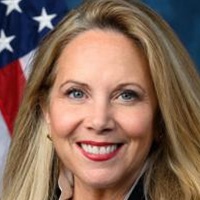
Laura Gillen
Representative
NY
Laura Gillen
Representative
NY
The Access to Family Building Act aims to guarantee that patients can access Assisted Reproductive Technology (ART) services and that healthcare providers can offer them without unreasonable interference. This legislation preempts state and local laws that impose burdens on ART services not required for similar medical procedures or that hinder access without improving safety. The Act establishes the right to access ART and provides robust legal avenues for individuals, providers, and the government to challenge and strike down restrictive regulations.