Legislative Activity
Track Seth's sponsored bills, co-sponsored legislation, and voting record
This Act authorizes the presentation of a Congressional Gold Medal to recognize the American hostages and victims of the October 7, 2023, attacks by Hamas.
Josh Gottheimer
Representative
NJ
Josh Gottheimer
Representative
NJ
The October 7 Gold Medal Act authorizes Congress to award a Congressional Gold Medal to recognize the American hostages and victims of the brutal October 7, 2023, terrorist attacks in Israel. This medal honors their suffering, sacrifice, and the resilience shown by their families. The Secretary of the Treasury will strike the medal, and bronze duplicates may be sold to cover production costs. The official gold medal will ultimately be displayed at the Weitzman National Museum of American Jewish History.
This resolution condemns the October 7th Hamas attacks, demands the immediate and unconditional surrender of Hamas and the release of all hostages, and reaffirms support for Israel's right to self-defense while condemning global antisemitism.
Josh Gottheimer
Representative
NJ
Josh Gottheimer
Representative
NJ
This resolution strongly condemns the brutal October 7th attacks by Hamas, demanding the immediate and unconditional surrender of the terrorist group and the release of all hostages, including Americans. It reaffirms Israel's right to self-defense while urging international action against Hamas and condemning the global surge in antisemitism. The measure serves as a formal statement of U.S. policy and support following the attacks.
This Act establishes the Marine Energy Acceleration Fund to invest one billion dollars in demonstration projects, research, site assessment, and workforce development to advance ocean wave, tidal, and current energy technologies.
Nanette Barragán
Representative
CA
Nanette Barragán
Representative
CA
The Marine Energy Technologies Acceleration Act establishes the Marine Energy Acceleration Fund to boost power generation from ocean waves, tides, and currents. This legislation directs significant funding toward demonstration projects that connect to local power grids and supports research and development to improve technology efficiency and lower costs. Furthermore, the bill mandates efforts to assess promising energy sites, streamline the permitting process, and develop a skilled workforce for the emerging marine energy industry.
The Keep the Heat On Act of 2025 ensures continued funding for the Low-Income Home Energy Assistance Program (LIHEAP) during a federal government shutdown in fiscal year 2026.
Chris Pappas
Representative
NH
Chris Pappas
Representative
NH
The Keep the Heat On Act of 2025 ensures that the Low-Income Home Energy Assistance Program (LIHEAP) continues to provide vital energy assistance to vulnerable households during a federal government shutdown in fiscal year 2026. This legislation authorizes the Treasury Department to immediately release necessary funds to maintain LIHEAP payments at the same rate as the previous fiscal year. The goal is to prevent disruptions in energy assistance for low-income families during periods of lapsed appropriations.
This Act ensures that members of the Armed Forces, DoD civilian employees, and necessary contractors receive pay and allowances for fiscal year 2026 if a full budget has not been enacted by October 1, 2025.
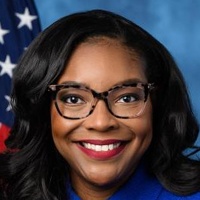
Emilia Sykes
Representative
OH
Emilia Sykes
Representative
OH
The Pay Our Military Act ensures that members of the Armed Forces continue to receive their pay and allowances if a full budget for fiscal year 2026 has not been enacted. This continuing appropriation provides necessary funds for active duty, reserves, and essential civilian support staff. This automatic funding remains in effect until a full appropriation is passed or until January 1, 2027.
The Child Care for Every Community Act establishes a national framework to guarantee universal access to high-quality, regulated early learning programs with mandated national standards and comparable pay for staff.
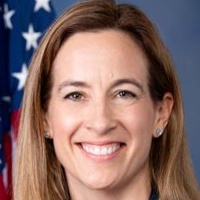
Mikie Sherrill
Representative
NJ
Mikie Sherrill
Representative
NJ
The Child Care for Every Community Act establishes a national framework to guarantee universal access to high-quality, regulated child care and early learning programs for every young child. It mandates federal standards for quality, ensures child care staff receive pay comparable to K-12 employees, and requires local coordination with school systems. Furthermore, the bill protects existing state funding levels and caps family fees based on income.
This Act provides appropriations and mandates contract price adjustments to compensate federal contractor employees for losses incurred due to funding lapses or government shutdowns.
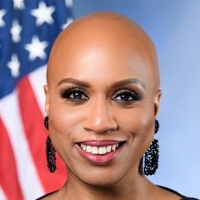
Ayanna Pressley
Representative
MA
Ayanna Pressley
Representative
MA
The Fair Pay for Federal Contractors Act of 2025 ensures that employees of federal contractors are compensated for losses incurred due to government funding lapses or shutdowns. It requires federal agencies to adjust existing contracts to cover reasonable costs associated with furloughs, pay cuts, or mandatory leave taken by contractor employees. The bill appropriates necessary funds to cover these contract price adjustments and mandates public reporting on the compensation provided.
The Pray Safe Act of 2025 establishes a Department of Homeland Security Federal Clearinghouse to publish evidence-based safety and security best practices and information on federal grants for nonprofit organizations, faith-based organizations, and houses of worship.
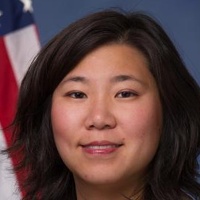
Grace Meng
Representative
NY
Grace Meng
Representative
NY
The Pray Safe Act of 2025 establishes a Federal Clearinghouse within the Department of Homeland Security to publish evidence-based safety and security best practices for nonprofit organizations, faith-based organizations, and houses of worship. This Clearinghouse will centralize information on security recommendations and available federal grant programs to help these entities prevent and respond to threats. The Act also mandates a GAO report evaluating existing federal security grant programs for these organizations.
This resolution officially designates the week of September 22 through September 28, 2025, as National Falls Prevention Awareness Week to raise public awareness and encourage the prevention of falls among older adults.
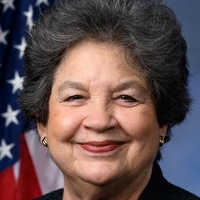
Lois Frankel
Representative
FL
Lois Frankel
Representative
FL
This resolution officially designates the week of September 22 through September 28, 2025, as "National Falls Prevention Awareness Week." The goal is to raise public awareness about the significant dangers of falls among older adults. By highlighting this issue, the measure encourages widespread efforts to promote proven, cost-effective prevention strategies.
The FASTER Act establishes a FEMA grant program to help fire departments implement home safety and fall prevention initiatives for older adults.
Lois Frankel
Representative
FL
Lois Frankel
Representative
FL
The FASTER Act establishes a FEMA grant program to fund fire departments in creating home safety and fall prevention initiatives for older adults. These grants will help departments conduct home safety assessments, install safety modifications like grab bars, and provide related community paramedicine services. The goal is to reduce the high rate of debilitating and costly falls among seniors through proactive community intervention.
This bill reauthorizes the Every Kid Outdoors program, adjusting eligibility to focus on fifth graders and 10-11 year olds, while securing $25 million annually for program operation and targeted outreach.
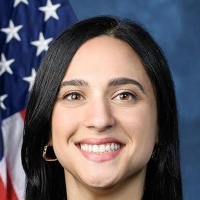
Yassamin Ansari
Representative
AZ
Yassamin Ansari
Representative
AZ
The Every Kid Outdoors Reauthorization Act renews the popular program offering free access to national parks and federal recreation sites for eligible youth. This reauthorization specifically targets fifth graders or 10- and 11-year-old home-schooled learners. The bill authorizes $25 million annually to support the program, including funding for outreach and transportation assistance for underserved communities.
This act increases the tax exclusion limit for dependent care assistance programs to support working families.
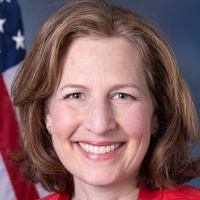
Kim Schrier
Representative
WA
Kim Schrier
Representative
WA
The Improving Child Care for Working Families Act of 2025 significantly increases the tax exclusion limit for dependent care assistance programs. This change raises the maximum exclusion from $\$7,500$ to $\$10,500$ for most taxpayers. The bill also adjusts the limit for married individuals filing separately to $\$5,250$. These provisions apply to dependent care expenses incurred in calendar years beginning after the Act's enactment.
This Act establishes federal grants to fund comprehensive, trauma-informed mental health services and support programs in schools for students facing significant challenges.
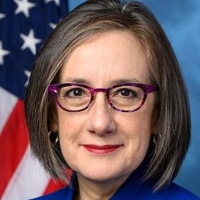
Andrea Salinas
Representative
OR
Andrea Salinas
Representative
OR
The Mental Health Services for Students Act of 2025 establishes a new federal program to provide comprehensive, trauma-informed mental health services and supports in schools through grants and contracts. These funds will support partnerships to implement awareness campaigns, staff training on trauma and suicide risk, and direct student and family treatment. The Secretary must ensure equitable distribution of funding, which is capped at \$2 million per award, with Congress authorized to appropriate \$300 million annually for the initial years.
The No Coffee Tax Act freezes current import tariffs on specified coffee products from countries with normal trade relations at the rate set on January 19, 2025.
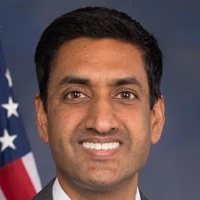
Ro Khanna
Representative
CA
Ro Khanna
Representative
CA
The No Coffee Tax Act aims to prevent any increase in import tariffs on specified coffee products originating from countries with normal trade relations with the U.S. This legislation effectively freezes the import tax rate for items like roasted coffee, decaffeinated coffee, and coffee substitutes at the level set on January 19, 2025. In short, it locks in current tariffs to ensure coffee imports remain tax-stable.
This resolution condemns using federal regulatory power or litigation to suppress lawful political speech critical of a party or the President, warning against authoritarianism.
Yassamin Ansari
Representative
AZ
Yassamin Ansari
Representative
AZ
This resolution strongly condemns attempts to use federal regulatory power or litigation to suppress lawful speech critical of a political party or the President. It reaffirms the fundamental importance of the First Amendment and warns that such actions resemble tactics used by authoritarian regimes. The bill urges government agencies to protect free expression and ensure accountability, not political censorship.
The America’s CHILDREN Act of 2025 establishes a path to permanent residency for certain long-term college graduates who entered the U.S. as dependents of work visa holders and updates age-out protections for dependent children.
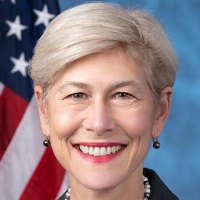
Deborah Ross
Representative
NC
Deborah Ross
Representative
NC
The America’s CHILDREN Act of 2025 establishes a new pathway to permanent residency for certain individuals who entered the U.S. as children, lived here legally for at least eight years as dependents of work visa holders, and subsequently earned a U.S. college degree. The bill also introduces significant "age-out" protections, allowing long-term dependents to retain their original priority dates for visa processing. Furthermore, it clarifies rules for derivative beneficiaries, potentially granting them work authorization in certain dependent statuses.
This House resolution strongly condemns all forms of political violence and demands an end to dehumanizing rhetoric against political opponents.
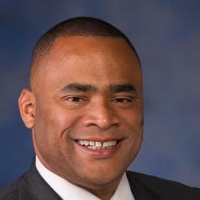
Marc Veasey
Representative
TX
Marc Veasey
Representative
TX
This House Resolution strongly condemns all forms of political violence and threats against elected officials and public figures, regardless of political affiliation. It affirms that disagreements must be resolved through peaceful and democratic means, not intimidation or force. The resolution urges law enforcement to prosecute those who commit or encourage such violence. Finally, it calls on all leaders to cease using dehumanizing rhetoric and promote civil discourse.
This Act conditions eligibility for Edward Byrne Memorial Justice Assistance Grants on prohibiting firearm transfers with licensed dealers identified by the ATF as frequently selling guns used quickly in crimes.
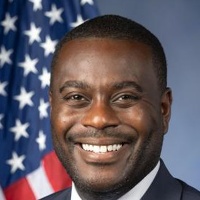
Gabe Amo
Representative
RI
Gabe Amo
Representative
RI
The Responsible Retirement of Law Enforcement Firearms Act of 2025 (RRLEF Act) amends the Edward Byrne Memorial Justice Assistance Grant Program to require state and local agencies to cease firearm transfers with licensed dealers flagged by the ATF. Dealers are placed on a restricted list if a significant number of their traced firearms show a "short time-to-crime." Furthermore, the Act mandates increased public disclosure of firearm tracing data by the ATF, removing previous statutory restrictions on making this information public.
This act eliminates federal income tax on overtime compensation earned by all workers.
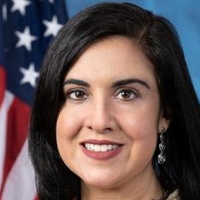
Nicole Malliotakis
Representative
NY
Nicole Malliotakis
Representative
NY
The No Tax on Overtime for All Workers Act amends the tax code to clarify and expand the definition of "qualified overtime compensation." This change ensures that overtime pay earned above a standard rate, whether mandated by the Fair Labor Standards Act or agreed upon beforehand with an employer, is treated favorably for tax purposes. The goal is to incentivize and reward workers for putting in extra hours.
This bill mandates that federally funded higher education institutions update their harassment policies to explicitly cover technology-facilitated harassment and establishes a competitive grant program to fund anti-harassment initiatives.
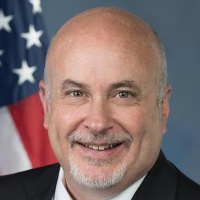
Mark Pocan
Representative
WI
Mark Pocan
Representative
WI
The Tyler Clementi Higher Education Anti-Harassment Act of 2025 mandates that colleges receiving federal funds update their policies to explicitly prohibit and detail procedures for addressing harassment based on protected characteristics, including technology-facilitated abuse. The bill also establishes a competitive grant program, funded up to $50 million annually, to support campus efforts in harassment prevention, training, and support services. This legislation adds new requirements without superseding existing civil rights protections.