Legislative Activity
Track Rich's sponsored bills, co-sponsored legislation, and voting record
This resolution formally recognizes and celebrates the 180th anniversary of the United States Naval Academy, honoring its history, distinguished alumni, and enduring mission to develop leaders for the Navy and Marine Corps.
Sarah Elfreth
Representative
MD
Sarah Elfreth
Representative
MD
This resolution formally recognizes and celebrates the 180th anniversary of the United States Naval Academy. It honors the institution's history, its mission to instill honor and courage in future leaders, and the significant achievements of its distinguished alumni. Congress reaffirms its commitment to supporting the Academy as it continues to prepare leaders for the Navy and Marine Corps.
This Act permanently classifies the entire class of highly potent synthetic opioids known as nitazenes as Schedule I controlled substances to combat overdose deaths.
Eugene Vindman
Representative
VA
Eugene Vindman
Representative
VA
The Nitazene Control Act of 2025 permanently classifies the entire class of highly potent synthetic opioids known as nitazenes (2-Benzylbenzimidazole opioids) as Schedule I controlled substances. This action is taken due to their extreme danger, high potential for abuse, and role in fatal overdoses across the country. By scheduling the entire chemical class at once, the bill aims to proactively stop the emergence of new, dangerous analogs. This permanent scheduling subjects nitazenes to the strictest federal controls, mirroring those applied to fentanyl.
This bill establishes a program to identify and correct the grave markers of Jewish servicemembers mistakenly buried under Latin Crosses in overseas U.S. military cemeteries.
Debbie Wasserman Schultz
Representative
FL
Debbie Wasserman Schultz
Representative
FL
This act establishes the Fallen Servicemembers Religious Heritage Restoration Program to correct historical errors where Jewish service members killed in WWI and WWII were mistakenly buried under non-Jewish grave markers overseas. The American Battle Monuments Commission will contract with a nonprofit organization to identify these "covered members" and contact their survivors over a five-year period. The legislation also extends a deadline related to certain pension payments.
This resolution condemns the assassination of Charlie Kirk, honors his life and legacy as the founder of Turning Point USA, and reaffirms the right to peaceful political expression.
Earl Carter
Representative
GA
Earl Carter
Representative
GA
This resolution formally condemns the political assassination of Charlie Kirk on September 10, 2025, and expresses deep condolences to his family. It honors his life and legacy by recognizing his founding of Turning Point USA and his dedication to engaging young conservatives. Furthermore, the resolution reaffirms the commitment to protecting the right to peaceful assembly and political expression.
This resolution strongly condemns the assassination of Charlie Kirk and calls for national change inspired by his life and tragic death.
Mary Miller
Representative
IL
Mary Miller
Representative
IL
This resolution strongly condemns the assassination of conservative activist Charlie Kirk on September 10, 2025, during his national speaking tour. It honors his life, his founding of Turning Point USA, and his dedication to conservative principles. Ultimately, the document calls for national unity and reaffirms the commitment to protecting the right to peaceful assembly and free expression.
This resolution condemns the assassination of Charlie Kirk and honors his life, legacy, and commitment to civil discourse.
Mike Kennedy
Representative
UT
Mike Kennedy
Representative
UT
This resolution condemns the assassination of conservative activist Charlie Kirk and extends condolences to his family. It honors his life and legacy, recognizing his founding of Turning Point USA and his commitment to encouraging civil discourse on college campuses.
This bill protects firearm licensees from license revocation for self-reported or correctable violations by requiring notice, a chance to fix mistakes, and granting federal courts the power to review revocations *de novo*.
Darrell Issa
Representative
CA
Darrell Issa
Representative
CA
The FIREARM Act aims to protect licensed firearm dealers from overly harsh penalties for minor or self-reported mistakes. It establishes new standards requiring the government to provide notice and an opportunity for dealers to correct violations before license revocation. Furthermore, the bill retroactively applies these protections to licenses previously revoked under a specific 2021 enforcement policy, allowing affected individuals a path to reapply.
This resolution formally condemns the assassination of Charlie Kirk and reaffirms the right to peaceful assembly against political violence.
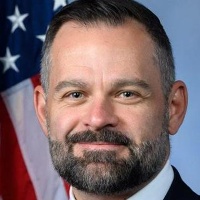
Cory Mills
Representative
FL
Cory Mills
Representative
FL
This resolution formally condemns the horrific political assassination of conservative spokesman Charlie Kirk on September 10, 2025, in Orem, Utah. It expresses deep condolences to his family and recognizes the bravery of the first responders at the scene. Ultimately, the measure reaffirms the fundamental American right to peaceful assembly and stands firmly against political violence.
The RESULTS Act reforms how Medicare determines payment rates for clinical diagnostic laboratory tests by mandating the use of comprehensive, real-world private payor claims data collected from an independent entity.
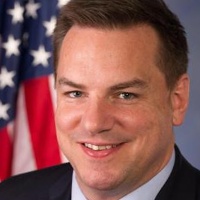
Richard Hudson
Representative
NC
Richard Hudson
Representative
NC
The Reforming and Enhancing Sustainable Updates to Laboratory Testing Services Act of 2025 (RESULTS Act) aims to improve Medicare payment rates for clinical lab tests by mandating the collection of more accurate, real-world payment data directly from large, independent private insurance claims databases. This legislation updates definitions, collection timelines, and calculation methods to ensure Medicare payments for widely available tests reflect current market rates. It also establishes default payment rules if sufficient private payor data cannot be secured.
This Act establishes sanctions against Pakistani officials undermining democracy and human rights, while urging the U.S. government to promote democratic institutions in Pakistan until September 30, 2030.
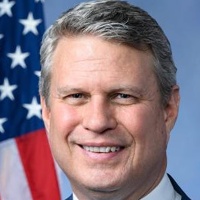
Bill Huizenga
Representative
MI
Bill Huizenga
Representative
MI
The Pakistan Freedom and Accountability Act expresses strong U.S. support for democracy and human rights in Pakistan, citing concerns over military influence and recent election interference. This legislation directs the President to identify and impose sanctions on Pakistani officials responsible for undermining democratic processes or committing serious human rights abuses. The Act emphasizes the need for civilian control over the military and sets an expiration date for its provisions in September 2030.
The Weather Act Reauthorization Act of 2025 comprehensively updates and funds federal weather research, modernizes forecasting infrastructure, integrates commercial data, and improves public communication to enhance severe weather preparedness and mitigation across the nation.

Frank Lucas
Representative
OK
Frank Lucas
Representative
OK
The Weather Act Reauthorization Act of 2025 aims to significantly enhance U.S. weather forecasting, research, and public safety measures across five years. It mandates the modernization of critical infrastructure, including radar systems and data processing, while prioritizing the integration of commercial technology and social science research into actionable, impact-based warnings. The bill focuses on improving predictions for severe events like tornadoes, hurricanes, and droughts, and overhauls how NOAA acquires and utilizes private sector weather data. Ultimately, this legislation seeks to deliver faster, clearer, and more reliable hazard information to protect American lives and property.
This resolution expresses support for designating September 2025 as National Prostate Cancer Awareness Month to promote screening, research, and improved care for this common cancer.
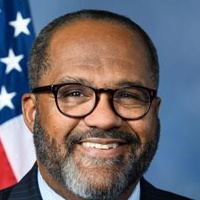
Troy Carter
Representative
LA
Troy Carter
Representative
LA
This resolution expresses strong support for designating September 2025 as National Prostate Cancer Awareness Month to combat this widespread disease. It highlights the critical need for increased public awareness, emphasizing that early detection through screening drastically improves survival rates. The bill encourages greater research efforts and improved access to quality care to reduce the significant impact of prostate cancer on American men.
This act mandates an annual review of defense sales procedures to speed up the transfer of military equipment to allies by identifying items that can move from government-controlled sales to faster direct commercial sales.
Sheri Biggs
Representative
SC
Sheri Biggs
Representative
SC
The Made-in-America Defense Act mandates an annual review of defense items currently restricted to government-to-government Foreign Military Sales (FMS). This review, conducted by the State and Defense Departments, compares FMS transfer times against potential direct commercial sales to allies. The goal is to identify and potentially move items off the "FMS-only list" to speed up delivery of critical defense equipment to partners. A public report detailing findings, delays, and changes to the restricted list must then be submitted to Congress.
This Act mandates annual public reporting on the links between Haitian criminal gangs and political/economic elites, authorizing the President to impose asset freezes and visa bans on those identified.
Gregory Meeks
Representative
NY
Gregory Meeks
Representative
NY
The Haiti Criminal Collusion Transparency Act of 2025 mandates the Secretary of State to annually report on the links between Haitian criminal gangs and the nation's political and economic elites. Based on these findings, the President must impose sanctions, including asset freezes and visa bans, on identified foreign individuals. The law is designed to expose and penalize collusion that threatens U.S. interests and the Haitian people, with provisions set to expire after five years.
This bill establishes priority processing for U.S. defense export licenses to key national security partners while setting strict, expedited decision deadlines for all other commercial sales applications.
Michael Baumgartner
Representative
WA
Michael Baumgartner
Representative
WA
This bill aims to streamline the process for approving commercial sales of U.S. defense items abroad by establishing priority lists for key national security partners. It mandates specific, faster decision timelines for export applications, setting a 45-day review for priority countries and a 60-day review for all others. Furthermore, the legislation requires the Secretary of State to report semi-annually to Congress on any applications that miss these new deadlines.
The GRACE Act prohibits federal education funding for schools or agencies with vaccination requirements unless they provide an unconditional religious exemption without requiring documentation.
W. Steube
Representative
FL
W. Steube
Representative
FL
The GRACE Act prohibits federal education funding for any school or agency that mandates vaccinations unless they provide a religious exemption based solely on an individual's stated sincerely held religious beliefs. This exemption cannot require any proof or documentation to support the religious objection. Consequently, institutions requiring documentation for religious vaccine exemptions risk losing federal education funds.
This joint resolution formally establishes a National Day of Remembrance to honor the thirteen U.S. service members killed in the August 26, 2021, Abbey Gate bombing during the Afghanistan withdrawal.

Max Miller
Representative
OH
Max Miller
Representative
OH
This joint resolution formally honors the thirteen U.S. service members who were killed in the August 26, 2021, bombing at Abbey Gate during the withdrawal from Afghanistan. It recognizes their ultimate sacrifice in service to the nation and expresses deep gratitude to their Gold Star Families. The bill essentially establishes a National Day of Remembrance to ensure their faithful service in the fight for liberty is never forgotten.
This resolution condemns the tragic New York City shooting, honors the victims and brave NYPD officers, and calls for increased support against violence targeting law enforcement.
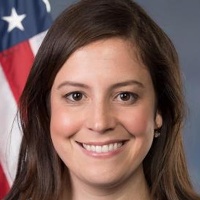
Elise Stefanik
Representative
NY
Elise Stefanik
Representative
NY
This resolution formally condemns the tragic mass shooting in New York City that resulted in the deaths of civilians and NYPD Officer Didarul Islam. It honors the victims and commends the bravery of the New York City Police Department for their response to the attack. Furthermore, the bill takes a stand against all acts of violence directed toward law enforcement officials nationwide.
This Act establishes a legal remedy for service members wrongfully discharged due to non-compliance with the COVID-19 vaccination mandate, allowing them to seek back pay, service time restoration, and retirement benefits through the U.S. Court of Federal Claims.
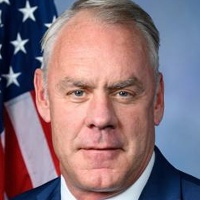
Ryan Zinke
Representative
MT
Ryan Zinke
Representative
MT
The COVID-19 Military Backpay Act of 2025 establishes a legal remedy for service members discharged due to non-compliance with the COVID-19 vaccination mandate. Covered members can sue in the U.S. Court of Federal Claims if their discharge is deemed involuntary or unlawful. If successful, the court must award remedies including back pay for missed training, continuous service credit, and adjustments to retirement eligibility. This legislation ensures that service records and benefits are corrected as if the wrongful discharge never occurred.
The Fairness for Khobar Act of 2025 authorizes lump-sum catch-up payments for victims of the 1983 Beirut barracks bombing and 1996 Khobar Towers bombing who missed out on earlier payments due to incorrect Department of Justice guidance.
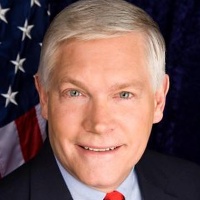
Pete Sessions
Representative
TX
Pete Sessions
Representative
TX
The Fairness for Khobar Act of 2025 ensures that certain victims of the 1983 Beirut barracks bombing and the 1996 Khobar Towers bombing receive overdue lump sum payments. This legislation corrects past injustices where victims were denied payments due to relying on incorrect guidance from the Department of Justice. The Act mandates the Special Master to authorize these catch-up payments using designated reserve funds.