Legislative Activity
Track Rich's sponsored bills, co-sponsored legislation, and voting record
This resolution condemns socialism in all its forms while reaffirming support for election security measures, including the requirement that only U.S. citizens participate in American elections.
Jeff Crank
Representative
CO
Jeff Crank
Representative
CO
This resolution formally condemns socialism in all its forms, asserting that its ideology is incompatible with American values and the U.S. Constitution. It reaffirms the necessity of secure, citizen-only elections and calls for the enactment of the SAVE America Act to prevent noncitizen voting and strengthen election integrity.
This resolution expresses support for designating September 2026 as "National Prostate Cancer Awareness Month" to promote screening, research, and public awareness.
Troy Carter
Representative
LA
Troy Carter
Representative
LA
This resolution expresses support for designating September 2026 as "National Prostate Cancer Awareness Month." It highlights the critical importance of early screening and research in combating the disease, while encouraging public participation in awareness efforts to improve health outcomes for men across the United States.
The Foreign Propaganda Disclosure Act amends the Foreign Agents Registration Act to require monetized social media influencers to register as foreign agents.

Anna Luna
Representative
FL
Anna Luna
Representative
FL
The Foreign Propaganda Disclosure Act amends the Foreign Agents Registration Act (FARA) to explicitly include social media influencers within the definition of foreign agents. This legislation requires influencers with monetized accounts to register with the U.S. government if they are acting on behalf of foreign principals. The bill aims to increase transparency regarding foreign-backed content across social media platforms.
The DEMAND Act of 2026 directs the Department of Defense to integrate foreign military sales projections into industrial base planning to strengthen production capacity and supply chain stability.
Ronny Jackson
Representative
TX
Ronny Jackson
Representative
TX
The DEMAND Act of 2026 mandates that the Department of Defense incorporate projected foreign military sales into its industrial base planning and munitions production strategies. By integrating these international demands, the bill aims to stabilize the defense supply chain, incentivize capital investment, and expand overall production capacity for critical defense articles.
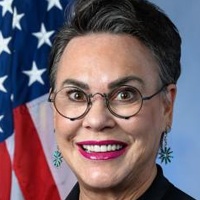
This bill proposes a 10% excise tax on colleges and universities that allow biological males to participate in female intercollegiate athletic programs.
Harriet Hageman
Representative
WY
Harriet Hageman
Representative
WY
This bill proposes a 10% excise tax on colleges and universities that allow biological males to participate in female intercollegiate athletic programs. The legislation prohibits institutions from increasing tuition or mandatory fees to cover the cost of this tax.
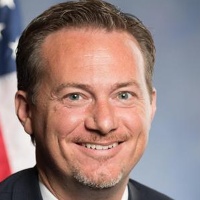
The Permanent CBDC Ban Act prohibits the Federal Reserve from issuing a central bank digital currency.
Michael Cloud
Representative
TX
Michael Cloud
Representative
TX
The Permanent CBDC Ban Act seeks to codify a long-term prohibition on the issuance of a Central Bank Digital Currency (CBDC) by the Federal Reserve. By amending the Federal Reserve Act, this legislation aims to permanently restrict the government from implementing a digital dollar.
This Act directs the Secretary of Defense to establish national airspace corridors for the research, testing, and training of small unmanned aircraft systems and advanced counter-drone technologies.
Ronny Jackson
Representative
TX
Ronny Jackson
Representative
TX
The Small Unmanned Aircraft Systems Operational Test, Evaluation, and Training Corridor Act directs the Secretary of Defense to establish specialized corridors within U.S. airspace for testing and training on drone and counter-drone technologies. This initiative aims to accelerate the development, integration, and deployment of advanced autonomous systems, sensors, and weapon capabilities. By utilizing both new and existing facilities, the Act seeks to streamline the field-readiness of critical defense technologies in realistic operational environments.
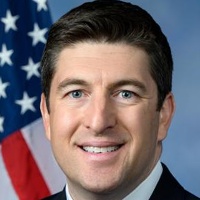
This bill restricts stock trading by Members of Congress and their families while establishing new federal requirements for voters to provide photo identification in federal elections.
Bryan Steil
Representative
WI
Bryan Steil
Representative
WI
The Stop Insider Trading Act restricts Members of Congress, their spouses, and dependent children from purchasing or selling individual stocks to prevent conflicts of interest. Additionally, the bill mandates that voters provide valid photo identification when voting in person or by mail in federal elections.
The D.C. Taxing Authority Review Act requires explicit congressional approval for all District of Columbia laws related to taxes, fees, or Title 47 of the D.C. Code before they can take effect.

James Comer
Representative
KY
James Comer
Representative
KY
The D.C. Taxing Authority Review Act requires explicit congressional approval for any District of Columbia legislation that imposes or increases taxes or fees, or relates to Title 47 of the D.C. Code. Under this bill, such acts will no longer take effect automatically after the standard review period but must instead be passed by a joint resolution of Congress. Additionally, the legislation establishes expedited, one-hour debate limits in the Senate for these specific approval resolutions.
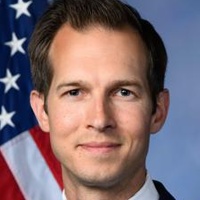
This bill establishes new payment rules and prohibitions for Pharmacy Benefit Managers (PBMs) administering federal employee health plans, including penalties for noncompliance.
Jake Auchincloss
Representative
MA
Jake Auchincloss
Representative
MA
This bill, the Pharmacists Fight Back in Federal Employee Health Benefit Plans Act, establishes new rules for Pharmacy Benefit Managers (PBMs) administering prescription drug benefits for federal employees. It mandates specific reimbursement rates for pharmacies and prohibits PBMs from engaging in anti-competitive practices like steering patients to affiliated pharmacies. The legislation also institutes civil monetary penalties and potential debarment for PBMs that fail to comply with these new requirements.
This act amends Title IX to explicitly define "sex," "female," and "male" based on biological characteristics.
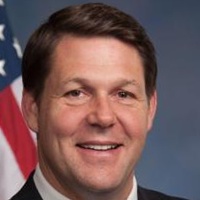
Jodey Arrington
Representative
TX
Jodey Arrington
Representative
TX
The Title IX Clarification Act of 2026 amends Title IX to explicitly define "sex," "female," and "male" based on an individual's biologically determined sex and reproductive system. This legislation clarifies the scope of sex-based protections under federal education law. The changes take effect immediately upon enactment.
This bill clarifies that a franchisor is only considered a joint employer of a franchisee's workers if it exercises substantial, direct, and immediate control over essential terms of employment.
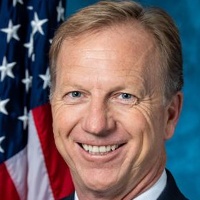
Kevin Hern
Representative
OK
Kevin Hern
Representative
OK
The American Franchise Act aims to protect the traditional franchise business model by clarifying the definition of a "joint employer." This legislation establishes that a franchisor is only considered a joint employer if it exercises "substantial direct and immediate control" over the essential terms of employment for a franchisee's workers. This change specifically targets liability risks associated with maintaining brand standards, ensuring franchisors are not automatically held responsible for local labor practices. The new standard applies prospectively to future legal proceedings.
The Nucleic Acid Standards for Biosecurity Act directs NIST to develop technical standards, research, and industry best practices to improve the security and accuracy of nucleic acid synthesis screening.
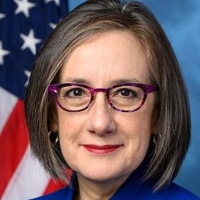
Andrea Salinas
Representative
OR
Andrea Salinas
Representative
OR
The Nucleic Acid Standards for Biosecurity Act directs the National Institute of Standards and Technology (NIST) to develop technical standards and best practices for screening synthetic nucleic acids to mitigate biosecurity risks. By establishing a multi-stakeholder consortium and investing in research, the bill aims to improve the accuracy and security of biomanufacturing and synthetic biology. This legislation ensures that emerging technologies, including artificial intelligence, are managed through robust, consensus-driven safety protocols.
The BRRRRT Act of 2026 mandates the continued operation, sustainment, and preservation of the A-10 Thunderbolt II fleet through fiscal year 2033, prohibiting divestment until a fully capable replacement is fielded and certified.
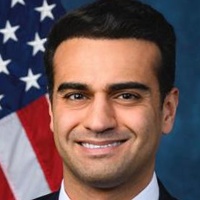
Abraham Hamadeh
Representative
AZ
Abraham Hamadeh
Representative
AZ
The BRRRRT Act of 2026 mandates the continued operation and sustainment of the Air Force’s A-10 Thunderbolt II fleet through fiscal year 2033. The bill prohibits the retirement or divestment of these aircraft unless the Department of Defense certifies that a fully capable replacement is already operational and meeting all mission requirements. Additionally, the legislation requires the preservation of retired aircraft, the maintenance of specialized pilot training programs, and the establishment of programs to document the A-10's combat legacy and explore future autonomous technology integration.
This bill designates the Department of Veterans Affairs multispecialty clinic in Marietta, Georgia, as the "Colonel Michael H. Boyce Department of Veterans Affairs Multispecialty Clinic."

Barry Loudermilk
Representative
GA
Barry Loudermilk
Representative
GA
This bill designates the Department of Veterans Affairs multispecialty clinic in Marietta, Georgia, as the "Colonel Michael H. Boyce Department of Veterans Affairs Multispecialty Clinic." This renaming honors the late Colonel Michael H. Boyce for his distinguished military career and his dedicated service to the Cobb County veterans community.
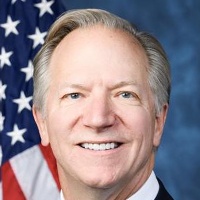
The Chloe Cole Act of 2026 establishes a private right of action allowing individuals to sue healthcare providers for damages resulting from gender-transition medical interventions performed on them as minors.
Robert Onder
Representative
MO
Robert Onder
Representative
MO
The Chloe Cole Act of 2026 establishes a federal private right of action allowing individuals to sue healthcare professionals and institutions for damages related to gender-transition medical interventions performed on them as minors. The bill permits lawsuits regardless of when the intervention occurred and sets a statute of limitations extending 25 years past the individual's 18th birthday. Additionally, it mandates strict liability for such interventions performed after the Act's enactment.
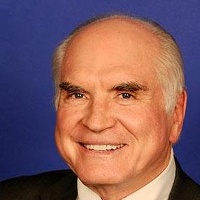
This bill mandates electronic prior authorization, increases transparency through required data reporting, and establishes faster decision timelines for Medicare Advantage plans to improve timely access to care for seniors.
Mike Kelly
Representative
PA
Mike Kelly
Representative
PA
The Improving Seniors’ Timely Access to Care Act of 2025 aims to streamline and modernize the prior authorization process within Medicare Advantage plans. This bill mandates the adoption of electronic prior authorization systems and significantly increases transparency regarding approval rates and decision times starting in 2027. Furthermore, it establishes new enrollee protections and grants the Secretary authority to enforce faster decision timeframes for medical services.
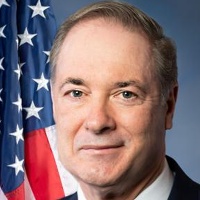
The Patients First Act of 2026 reforms Medicare physician payment systems to ensure more stable, predictable reimbursement for providers while improving patient access to primary care and value-based services.
John Joyce
Representative
PA
John Joyce
Representative
PA
The Patients First Act of 2026 is comprehensive legislation designed to stabilize Medicare physician payments, improve patient access to primary care, and transition the current quality reporting system to a more clinician-led framework. By modernizing reimbursement formulas, reducing financial volatility for providers, and increasing transparency in value-based care models, the bill aims to ensure a more sustainable and predictable healthcare environment. These reforms seek to lower out-of-pocket costs for patients while supporting the long-term viability of medical practices.
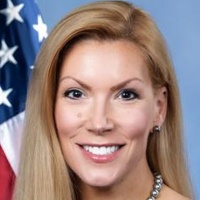
This resolution honors the public service of the late Senator Lindsey Graham, condemns Omar Suleiman for celebrating his death, and supports efforts to address the incompatibility of Sharia Law with American constitutional principles.
Beth Van Duyne
Representative
TX
Beth Van Duyne
Representative
TX
This resolution honors the life and public service of the late Senator Lindsey Graham while formally condemning Omar Suleiman for his public remarks celebrating the Senator's death. Additionally, the bill acknowledges Suleiman’s 2019 invitation to serve as a Guest Chaplain in the U.S. House and reaffirms support for efforts to address the perceived dangers of Sharia Law to American constitutional principles.
The Sunshine Protection Act of 2025 establishes daylight saving time as the permanent, year-round standard time across the United States, while providing states the option to maintain their current standard time.

Vern Buchanan
Representative
FL
Vern Buchanan
Representative
FL
The Sunshine Protection Act of 2025 proposes making daylight saving time the permanent, year-round standard time across the United States. By advancing standard time zones by one hour, the bill eliminates the need for biannual clock changes. Additionally, it provides states that currently observe standard time year-round the option to maintain their existing timekeeping practices.