Legislative Activity
Track Rich's sponsored bills, co-sponsored legislation, and voting record
This resolution supports designating July 21, 2025, as Guam Liberation Day to honor the island's liberation from Japanese occupation and commemorate the sacrifices of both CHamoru civilians and U.S. servicemembers.
James (Jim) Moylan
Representative
GU
James (Jim) Moylan
Representative
GU
This resolution formally supports designating July 21, 2025, as "Guam Liberation Day" to honor the island's history. It recognizes the suffering of the CHamoru people under Japanese occupation and commemorates the sacrifices of U.S. servicemembers during the 1944 liberation campaign. The bill encourages the President to issue a proclamation observing this important anniversary across the nation.
This bill establishes a U.S. policy and reporting requirements to oppose foreign assistance to the Taliban and scrutinize U.S. cash assistance programs and the Afghan Fund.

Tim Burchett
Representative
TN
Tim Burchett
Representative
TN
The "No Tax Dollars for Terrorists Act" establishes a U.S. policy to oppose foreign assistance to the Taliban from other countries and NGOs, requiring the Secretary of State to develop a strategy to discourage such support. The bill mandates several reports detailing foreign aid given to the Taliban and oversight of U.S. cash assistance programs in Afghanistan. Furthermore, it requires recurring reports on the status and controls surrounding the Afghan Fund to prevent Taliban misuse of assets.
This Act prohibits the federal government from funding entities that rate or demonetize domestic organizations based on their lawful speech.
Roger Williams
Representative
TX
Roger Williams
Representative
TX
The Protect the First Amendment Act prohibits the federal government from providing funding, grants, or contracts to specific entities, such as NewsGuard Technologies and the Disinformation Index groups, if they engage in "covered behavior." Covered behavior is defined as rating or demonetizing domestic organizations based on their lawful speech, which these entities claim is misinformation or disinformation. This restriction applies to both for-profit companies and 501(c)(3) nonprofit organizations that engage in these rating activities.
This bill prohibits the Secretary of Defense from contracting for software source code with entities that have specific ties to certain foreign adversaries, such as China.
Patrick Fallon
Representative
TX
Patrick Fallon
Representative
TX
This bill prohibits the Secretary of Defense from awarding or renewing software source code contracts with entities that have specific ties to a "covered country," such as operating AI research facilities or allowing source code access to that nation. The restriction aims to safeguard sensitive technology by limiting defense contracts with certain foreign-linked companies. The Secretary may waive this prohibition if deemed necessary for U.S. national security interests.
This bill updates the dollar threshold that triggers the requirement for the government to notify Congress about certain export sales of defense items.
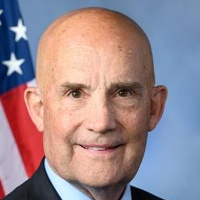
Keith Self
Representative
TX
Keith Self
Representative
TX
The Firearms Congressional Notification Modernization Act updates the threshold for when the government must notify Congress about certain export sales of defense items. This legislation raises the minimum dollar amount that triggers this reporting requirement from $\$1,000,000$ to $\$4,000,000$. The bill modernizes existing notification rules under the Arms Export Control Act.
This bill repeals specific Affordable Care Act provisions that limited Medicare exceptions to the prohibition on certain physician referrals to hospitals.
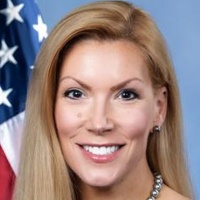
Beth Van Duyne
Representative
TX
Beth Van Duyne
Representative
TX
The Patient Access to Higher Quality Health Care Act of 2025 aims to repeal specific provisions within the Affordable Care Act and related legislation that limited exceptions to the prohibition on certain physician referrals to hospitals under Medicare. This action effectively restores pre-ACA rules regarding physician referrals for hospital services. The bill focuses on modifying existing Medicare regulations concerning physician-hospital relationships.
This resolution supports designating the week of June 9 through June 15, 2025, as National Men's Health Week to raise awareness about preventable health issues and encourage early detection among men and boys.
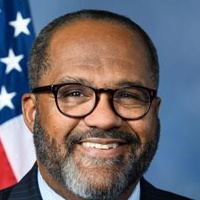
Troy Carter
Representative
LA
Troy Carter
Representative
LA
This resolution supports the designation of the week of June 9 through June 15, 2025, as "National Men's Health Week." It aims to raise national awareness about preventable health issues affecting men and boys, who often delay seeking medical care. The goal is to encourage increased participation in preventive screenings and early detection for serious conditions. Congress formally asks the President to issue a proclamation encouraging nationwide observance of this week.
The SAFE Cities Act establishes a process for identifying and restricting federal funding to local jurisdictions that refuse to take reasonable steps to stop violence and property destruction.
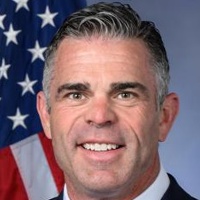
Tony Wied
Representative
WI
Tony Wied
Representative
WI
The SAFE Cities Act establishes a process for the Attorney General to officially designate certain state or local governments as "anarchist jurisdictions" based on their failure to take reasonable steps to stop violence and property destruction. Once designated, these jurisdictions will face restrictions or unfavorable treatment regarding the distribution of federal grants. The criteria focus on local policies that hinder law enforcement's ability to restore order or that involve significant cuts to police funding.
This bill mandates a Department of Defense study, in coordination with the FAA, on the feasibility and cost of equipping all military fixed-wing and rotary-wing aircraft with air-to-air and air-to-ground collision detection systems.
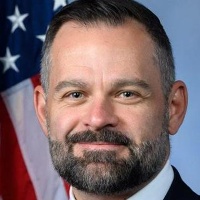
Cory Mills
Representative
FL
Cory Mills
Representative
FL
The CLOUD Aircraft Act mandates the Department of Defense (DoD) to conduct a comprehensive study on the feasibility and cost of equipping all military fixed-wing and rotary-wing aircraft with advanced air-to-air and air-to-ground collision detection systems. This study, conducted in coordination with the FAA, must specifically address aircraft operating frequently in busy domestic airspace. The Secretary of Defense is required to report the findings and recommendations to Congress within 180 days of the Act's enactment.
This resolution officially recognizes and honors the 250th anniversary of the United States Army, celebrating its history, valor, and enduring commitment to national defense.
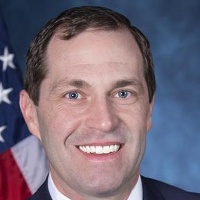
Jason Crow
Representative
CO
Jason Crow
Representative
CO
This resolution formally recognizes and honors the 250th birthday of the United States Army, celebrating its 250 years of service, valor, and dedication to defending American freedom. Congress expresses deep appreciation for the Army's history, its commitment to core values, and its current readiness to meet any future global challenge. The resolution encourages the American public to observe this significant anniversary with appropriate ceremonies.
This bill proposes amending the Constitution to lower the congressional requirement for admitting new states from a two-thirds vote to a simple majority in both the House and the Senate.
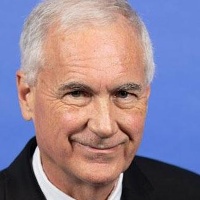
Tom McClintock
Representative
CA
Tom McClintock
Representative
CA
This proposed constitutional amendment seeks to change the process for admitting new states to the Union. It would lower the requirement for Congressional approval from a two-thirds vote in both the House and the Senate to a simple majority in each chamber. If ratified by three-fourths of the states, this would make it easier for new states to join the United States.
This resolution expresses the House's urgent call for the President to appoint a Special Envoy for Sudan to address the devastating conflict, humanitarian crisis, and regional security risks.
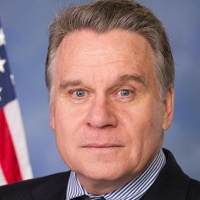
Christopher Smith
Representative
NJ
Christopher Smith
Representative
NJ
This resolution expresses the strong sense of the House urging the President to immediately appoint a dedicated U.S. Special Envoy for Sudan. This high-level diplomat would be tasked with leading urgent U.S. efforts to stop the devastating conflict and massive humanitarian crisis there. The Envoy would focus on high-level diplomacy to secure a ceasefire, ensure aid delivery, and advance U.S. national security interests in the region.
This resolution commemorates the victims of the 1989 Tiananmen Square massacre while condemning the Chinese Communist Party's ongoing suppression of human rights and freedoms in mainland China and Hong Kong.
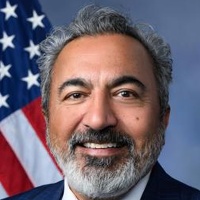
Ami Bera
Representative
CA
Ami Bera
Representative
CA
This resolution formally condemns the Chinese Communist Party for the 1989 Tiananmen Square massacre and its ongoing crackdown on human rights and freedoms in mainland China and Hong Kong. It demands that the PRC cease censorship regarding the massacre and uphold its commitments to Hong Kong's autonomy. Furthermore, the resolution expresses solidarity with victims and calls for accountability regarding abuses in Xinjiang and the suppression of democracy.
This resolution expresses support for designating the month of July as "American Patriotism Month" to honor the nation's history, values, and sacrifices.
Roger Williams
Representative
TX
Roger Williams
Representative
TX
This resolution expresses support for officially designating the month of July as "American Patriotism Month." It recognizes the historical significance of American patriotism and encourages citizens and groups to observe the month with appropriate ceremonies celebrating U.S. history and values. The bill further asks the President to issue a yearly proclamation supporting this designation.
The Patriots Over Politics Act creates a special 90-day window for service members separated solely for refusing the COVID-19 vaccine between August 2021 and January 2023 to transfer their VA education benefits to an eligible dependent.
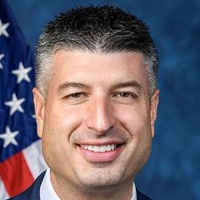
Tom Barrett
Representative
MI
Tom Barrett
Representative
MI
The Patriots Over Politics Act creates a special, limited window for certain service members separated for refusing the COVID-19 vaccine between August 2021 and January 2023 to transfer their unused VA education benefits to an eligible dependent. This transfer option is available for 90 days following the bill's enactment. If transferred to a child, the benefit use is contingent upon the service member having completed at least six years of service.
This bill ensures that the service member's military department, not the Defense Health Agency, retains ultimate accountability and authority over fitness-for-duty decisions throughout the Integrated Disability Evaluation System (IDES) process and grants wounded warriors an additional appeal right.
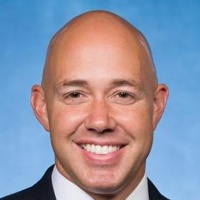
Brian Mast
Representative
FL
Brian Mast
Representative
FL
The Wounded Warrior Bill of Rights Act of 2025 clarifies that the service member's military department, not the Defense Health Agency (DHA), retains ultimate authority over fitness-for-duty decisions during the Integrated Disability Evaluation System (IDES). This ensures service members maintain full due process rights throughout the medical separation process. Furthermore, the bill establishes a new, mandatory appeal right within the military chain of command for those disagreeing with a fitness determination.
This bill mandates that funeral honors details recite the "13 Folds of Honor" during the flag folding ceremony for deceased service members or veterans, unless the next of kin opts out.
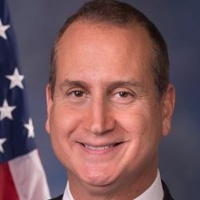
Mario Diaz-Balart
Representative
FL
Mario Diaz-Balart
Representative
FL
This bill mandates that funeral honors details recite a specific statement detailing the symbolism of the 13 Folds of Honor during the presentation of the U.S. flag for a deceased service member or veteran. This ceremony is dedicated to the 13 service members killed in Kabul in 2021. However, the next of kin retains the right to opt out of this specific recitation.
This bill establishes a new excise tax on proceeds received by parties from third-party litigation financing agreements, effective after 2025.
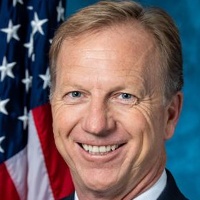
Kevin Hern
Representative
OK
Kevin Hern
Representative
OK
The Tackling Predatory Litigation Funding Act establishes a new federal excise tax on proceeds received from third-party litigation financing agreements. This tax is calculated at the highest income tax rate plus an additional 3.8 percentage points, applied annually to the proceeds received by a "covered party." The bill also institutes specific withholding requirements on payments made to financiers and reclassifies litigation funding proceeds to ensure this new tax structure is applied.
This bill mandates comprehensive federal data collection and reporting on attacks, aggression, and mental wellness to improve law enforcement officer safety and support.
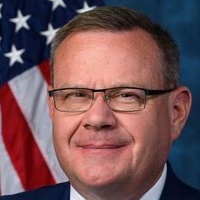
Tim Moore
Representative
NC
Tim Moore
Representative
NC
This bill mandates comprehensive federal reporting to better understand and address violence, aggression, and wellness challenges facing law enforcement officers. It requires the Attorney General to produce detailed reports analyzing attacks on officers, potential new data collection methods for non-criminal aggressive incidents, and the state of officer mental health resources. The goal is to use this improved data to recommend better federal, state, and local responses and support systems for officers.
This Act mandates that health plans cover medically necessary treatment for congenital anomalies or birth defects affecting the eyes, ears, teeth, mouth, or jaw to restore normal function and appearance.
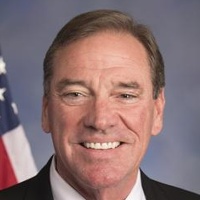
Neal Dunn
Representative
FL
Neal Dunn
Representative
FL
The Ensuring Lasting Smiles Act mandates that group health plans and insurance policies provide comprehensive coverage for medically necessary treatment related to congenital anomalies or birth defects affecting the eyes, ears, teeth, mouth, or jaw. This coverage must include services needed to restore normal function and appearance, including necessary dental and orthodontic support. Plans must apply cost-sharing rules no more restrictive than those for other medical benefits, excluding purely cosmetic procedures.