Legislative Activity
Track Jared's sponsored bills, co-sponsored legislation, and voting record
This bill authorizes the posthumous presentation of a Congressional Gold Medal to James Earl Jones, honoring his contributions to the United States and his work promoting inclusion in film and theatre.
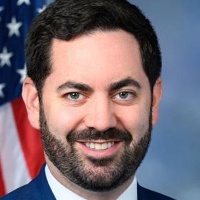
Michael Lawler
Representative
NY
Michael Lawler
Representative
NY
The James Earl Jones Congressional Gold Medal Act directs the Speaker of the House and the President pro tempore of the Senate to arrange for the posthumous presentation of a Congressional Gold Medal to James Earl Jones, honoring his contributions to the United States and his work promoting inclusion in film and theatre. The Secretary of the Treasury will create the gold medal, and bronze duplicates will be made available for sale to the public.
The Congressional Trade Authority Act of 2025 significantly restricts the President's power to adjust imports based on national security by requiring joint agreement from the Secretaries of Defense and Commerce and mandatory Congressional approval for any resulting trade action.
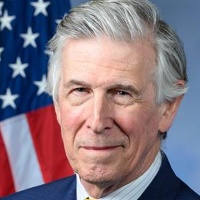
Donald Beyer
Representative
VA
Donald Beyer
Representative
VA
The Congressional Trade Authority Act of 2025 significantly overhauls presidential authority to restrict imports based on national security grounds. This bill shifts the primary investigation role to the Secretary of Defense and mandates that any resulting import adjustments require explicit approval by a Congressional joint resolution to take effect. Furthermore, all new trade restrictions will automatically expire after three years unless Congress renews them.
The HIRE CREDIT Act amends the Internal Revenue Code to include displaced disaster victims in the Work Opportunity Tax Credit program, incentivizing businesses to hire individuals who lost their homes or jobs due to a major disaster declared on or after January 1, 2024.

Jasmine Crockett
Representative
TX
Jasmine Crockett
Representative
TX
The HIRE CREDIT Act amends the Internal Revenue Code to include "displaced disaster victims" in the Work Opportunity Tax Credit program. A "displaced disaster victim" is defined as someone whose residence or employment location within a qualified disaster zone became inoperable due to a major disaster, and who is currently unemployed. This provision applies to individuals hired within one year after the disaster's incident period, starting on or after January 1, 2024, aiming to incentivize employment in communities recovering from emergencies. The act also includes transition rules for disasters where the incident period ended before the enactment of the Act.
The John R. Lewis Voting Rights Advancement Act of 2025 aims to strengthen and update the Voting Rights Act of 1965 by addressing vote dilution and denial, establishing updated criteria for federal oversight of states and political subdivisions with a history of voting rights violations, and promoting transparency in election-related changes.
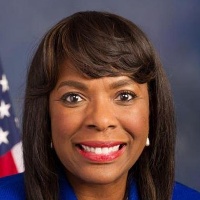
Terri Sewell
Representative
AL
Terri Sewell
Representative
AL
The John R. Lewis Voting Rights Advancement Act of 2025 amends the Voting Rights Act of 1965 to address vote dilution, denial, and abridgment claims, and to update which states and political subdivisions are subject to federal oversight based on a history of voting rights violations. It broadens the types of violations that allow a court to retain jurisdiction over a case, clarifies the Attorney General's authority to assign observers, and ensures transparency in voting-related changes. The Act also authorizes the Attorney General to demand documents and information to enforce voting rights and provides grants to small jurisdictions to assist with notification requirements.
The "Keeping Our Field Offices Open Act" prevents the Social Security Administration from closing or limiting access to field offices, hearing offices, and resident stations, ensuring continued service availability for the public.
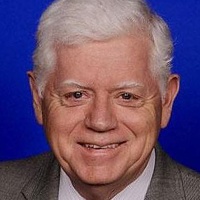
John Larson
Representative
CT
John Larson
Representative
CT
The "Keeping Our Field Offices Open Act" prevents the Social Security Administration (SSA) from closing or consolidating field offices, hearing offices, and resident stations, ensuring continued access to services. It requires the SSA Commissioner to justify any planned closures to Congress with detailed analysis and cost-benefit assessments, considering the impact on vulnerable populations. The bill mandates public notice, hearings, and a final report to Congress before any changes, allowing appeals and maintaining the number of offices at or above the January 20, 2025 level, excluding temporary emergency closures.
The Richard L. Trumka Protecting the Right to Organize Act of 2025 strengthens protections for workers' rights to organize and collectively bargain by modernizing labor laws, addressing unfair labor practices, and enhancing enforcement mechanisms.
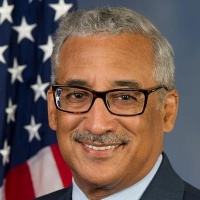
Robert Scott
Representative
VA
Robert Scott
Representative
VA
This bill, the Richard L. Trumka Protecting the Right to Organize Act of 2025, seeks to amend the National Labor Relations Act and other labor laws to strengthen protections for workers' rights to organize and collectively bargain. It aims to modernize labor regulations by clarifying definitions, addressing unfair labor practices, enhancing enforcement, and increasing transparency in labor-management relations. The bill introduces measures such as electronic voting in union elections, strengthens whistleblower protections, and mandates studies on collective bargaining practices. Ultimately, the goal is to ensure fair treatment of workers and promote equitable labor practices.
The "Roberto Clemente Commemorative Coin Act" directs the Treasury to mint coins in 2027 honoring Roberto Clemente, with surcharges benefiting the Roberto Clemente Foundation.
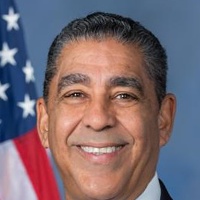
Adriano Espaillat
Representative
NY
Adriano Espaillat
Representative
NY
The Roberto Clemente Commemorative Coin Act directs the Department of Treasury to mint and issue gold, silver, and half-dollar coins in 2027 to commemorate the life and legacy of Roberto Clemente. The coins' designs will represent Clemente's life, including his baseball achievements and humanitarian work. Surcharges from the coin sales will benefit the Roberto Clemente Foundation, supporting their educational programs, youth sports initiatives, disaster relief efforts, and historic preservation projects. The Act ensures that the coin program will not incur any net cost to the United States government.
This bill amends the Robert T. Stafford Disaster Relief and Emergency Assistance Act to include algal blooms as a condition for disaster relief.
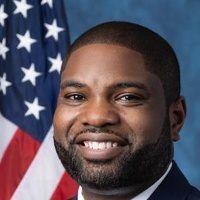
Byron Donalds
Representative
FL
Byron Donalds
Representative
FL
The "Harmful Algal Bloom Disaster Relief Act" amends the Stafford Act to include algal blooms as a condition in which disaster relief and emergency assistance can be given. This change will allow states to receive federal assistance in the event of an algal bloom.
The "Safe Schools Improvement Act" amends the Elementary and Secondary Education Act of 1965, requiring states to establish policies that prevent and prohibit bullying and harassment in schools based on protected characteristics, ensuring a safe and inclusive learning environment for all students.

Linda Sánchez
Representative
CA
Linda Sánchez
Representative
CA
The Safe Schools Improvement Act aims to reduce bullying and harassment in schools by requiring states to establish policies prohibiting such conduct based on various characteristics, including race, sex, religion, and disability. It mandates annual notifications, data collection on incidents, biennial evaluations of programs, and regular reports to Congress to ensure accountability and effectiveness. This act does not infringe on existing nondiscrimination laws or freedom of speech but seeks to create a safer, more inclusive learning environment for all students.
This bill modifies the definition of "qualifying single source drug" under the Social Security Act to include certain advanced drugs using genetically targeted technology for a limited time.
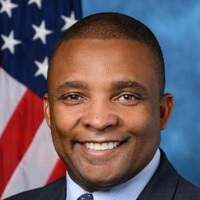
Donald Davis
Representative
NC
Donald Davis
Representative
NC
The "Maintaining Investments in New Innovation Act" amends the Social Security Act's definition of "qualifying single source drug" to include advanced drugs using genetically targeted technology. This update applies to drugs that can modify gene function, potentially impacting drug pricing and access regulations under the Act.
The "Civil Investigative Demand Reform Act of 2025" amends the Consumer Financial Protection Act to reform the process and scope of civil investigative demands issued by the CFPB, including clarifying timelines, requiring specific factual support, allowing for inquiry and judicial review, and setting standards for demands to be set aside.
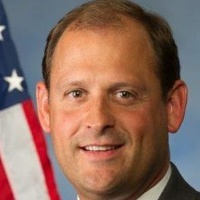
Garland Barr
Representative
KY
Garland Barr
Representative
KY
The "Civil Investigative Demand Reform Act of 2025" amends the Consumer Financial Protection Act of 2010, modifying the process for issuing and challenging civil investigative demands (CIDs) by the CFPB. These modifications include specifying timelines for issuing demands, requiring more detailed information in the demands, and creating a process for attorneys to ask questions about the scope of a demand. The bill also expands the grounds for setting aside a demand and allows for judicial review of the CFPB's denial of a petition to modify or set aside a demand.
The SAFE Act of 2025 amends existing law to include equines (horses) in the prohibition of slaughtering animals for human consumption.
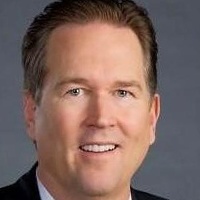
Vern Buchanan
Representative
FL
Vern Buchanan
Representative
FL
The SAFE Act of 2025 amends existing legislation to explicitly prohibit the slaughter of horses for human consumption, reinforcing protections for these animals. This bill seeks to prevent the inhumane treatment of American equines by closing loopholes that allow their slaughter and export for human consumption.
The PAST Act of 2025 significantly strengthens the Horse Protection Act by increasing penalties, banning specific action devices, and mandating licensed inspectors to combat the practice of horse soring.
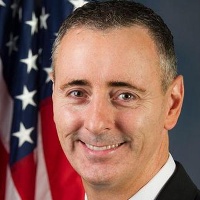
Brian Fitzpatrick
Representative
PA
Brian Fitzpatrick
Representative
PA
The PAST Act of 2025 significantly strengthens the Horse Protection Act to combat the painful practice of soring in specific horse breeds. This bill increases penalties for violations, establishes stricter licensing and oversight for inspectors, and explicitly bans the use of "action devices" designed to cause unnatural gaits. The legislation aims to enhance enforcement, ensure fairer competition, and hold violators accountable through increased fines and disqualifications.
The PLO and PA Terror Payments Accountability Act of 2025 imposes sanctions on foreign individuals, entities, and financial institutions that support terrorism through the Palestine Liberation Organization (PLO) and Palestinian Authority (PA) compensation systems.
Michael Lawler
Representative
NY
Michael Lawler
Representative
NY
The PLO and PA Terror Payments Accountability Act of 2025 aims to hold the Palestine Liberation Organization (PLO) and Palestinian Authority (PA) accountable for providing payments to terrorists and their families by mandating the President to impose sanctions on foreign individuals, entities, and financial institutions involved in facilitating these payments. These sanctions include blocking property, visa restrictions, and prohibiting U.S. bank accounts for foreign financial institutions. The Act will be terminated once the Secretary of State certifies that the PLO and PA have ceased these payments.
The Humane Cosmetics Act of 2025 bans cosmetic animal testing in the U.S., restricts the use of animal testing data, and sets penalties for violations, while also preventing states from enacting conflicting regulations.
Donald Beyer
Representative
VA
Donald Beyer
Representative
VA
The Humane Cosmetics Act of 2025 bans cosmetic animal testing in the U.S. and restricts the use of animal testing data for cosmetic safety, with certain exceptions. It authorizes the Secretary of Health and Human Services to impose civil penalties for non-compliance and preempts states from enacting conflicting regulations. The Act defines key terms related to cosmetic animal testing and cosmetics.
This bill regulates large capacity ammunition feeding devices, making it illegal to import, sell, manufacture, transfer, or possess them, with certain exceptions for law enforcement and other entities, and allows for Byrne grants to be used for buy-back programs.

Diana DeGette
Representative
CO
Diana DeGette
Representative
CO
The "Keep Americans Safe Act" aims to regulate large capacity ammunition feeding devices by making it illegal to import, sell, manufacture, transfer, or possess magazines holding more than 15 rounds, with exceptions for law enforcement, government entities, and devices lawfully possessed before the law's enactment. It also permits the use of Byrne grants for buy-back programs of these devices and mandates that newly manufactured devices be marked with identifying information. Violators of this Act will face penalties under existing provisions of Title 18 of the U.S. Code.
This resolution urges the European Union to formally designate the Islamic Revolutionary Guard Corps (IRGC) as a terrorist organization in response to its history of human rights abuses, regional destabilization, and global terrorism.
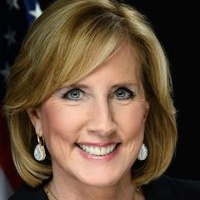
Claudia Tenney
Representative
NY
Claudia Tenney
Representative
NY
This resolution urges the European Union to formally designate the Islamic Revolutionary Guard Corps (IRGC) as a terrorist organization in response to its history of human rights abuses, support for global terrorist proxies, and assassination plots. It calls on the U.S. government to prioritize this diplomatic objective to enhance international security and hold the IRGC accountable for its destabilizing actions.
This resolution condemns the Iranian regime’s terrorism and human rights abuses while affirming support for the Iranian people’s right to establish a democratic, secular, and non-nuclear republic.
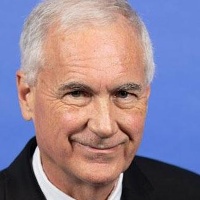
Tom McClintock
Representative
CA
Tom McClintock
Representative
CA
This resolution condemns the Iranian regime for its ongoing human rights abuses, state-sponsored terrorism, and regional instability. It expresses strong support for the Iranian people's struggle for a democratic, secular, and non-nuclear republic. Furthermore, the bill advocates for international accountability for the regime's crimes and calls for the protection of Iranian political refugees.
To award a Congressional Gold Medal to the 761st Tank Battalion, the first Black soldiers to serve in an American armored unit, for their valor and crucial contributions to the Allied victory in Europe.
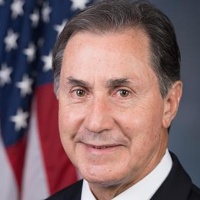
Gary Palmer
Representative
AL
Gary Palmer
Representative
AL
This bill authorizes the Speaker of the House and the President pro tempore of the Senate to award a Congressional Gold Medal to the 761st Tank Battalion, also known as the "Black Panthers," in recognition of their courageous service and crucial contributions during World War II. The medal will be given to the National Museum of African American History and Culture for display, honoring the 761st as the first Black soldiers to serve in an American armored unit and their significant role in the Allied victory in Europe. The bill also allows for the creation and sale of bronze duplicates of the medal to support the United States Mint Public Enterprise Fund.
The American Dream and Promise Act of 2025 provides a pathway to permanent residency for eligible individuals who came to the U.S. as children, or who have Temporary Protected Status (TPS) or Deferred Enforced Departure (DED) status.
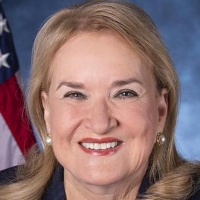
Sylvia Garcia
Representative
TX
Sylvia Garcia
Representative
TX
The American Dream and Promise Act of 2025 provides a pathway to permanent residency for eligible individuals who entered the United States as children and those with Temporary Protected Status (TPS) or Deferred Enforced Departure (DED). Title I, the Dream Act of 2025, establishes conditional permanent residency for eligible individuals who entered the U.S. as children. Title II, the American Promise Act of 2025, allows the Secretary of Homeland Security or the Attorney General to grant permanent resident status to eligible individuals from TPS or DED countries. Title III outlines general provisions, such as background checks, application processes, and fee exemptions, applicable to all seeking to adjust their status under this Act.