
Legislative Activity
Track Frank's sponsored bills, co-sponsored legislation, and voting record
This act officially designates Postal Service police officers as federal agents with authority over Postal Service property and establishes penalties for violating property rules set by the Postmaster General.
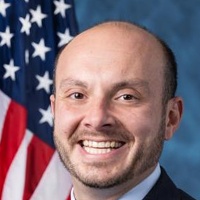
Andrew Garbarino
Representative
NY
Andrew Garbarino
Representative
NY
The Postal Police Reform Act of 2025 officially designates Postal Service police officers as federal law enforcement agents under Title 18 of the U.S. Code. This legislation grants the Postmaster General the authority to establish and enforce rules for protecting Postal Service property. Violations of these new rules may result in federal fines or imprisonment up to 30 days.
This Act establishes a statutory right to access Assisted Reproductive Technology (ART) services and prohibits overly burdensome state or local regulations that interfere with that access.
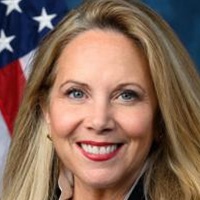
Laura Gillen
Representative
NY
Laura Gillen
Representative
NY
The Access to Family Building Act aims to guarantee that patients can access Assisted Reproductive Technology (ART) services and that healthcare providers can offer them without unreasonable interference. This legislation preempts state and local laws that impose burdens on ART services not required for similar medical procedures or that hinder access without improving safety. The Act establishes the right to access ART and provides robust legal avenues for individuals, providers, and the government to challenge and strike down restrictive regulations.
This Act converts Transportation Security Administration (TSA) personnel to standard federal employment rules under Title 5, establishes transition protections, mandates workforce reviews, and addresses labor relations and employee safety.
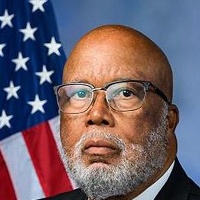
Bennie Thompson
Representative
MS
Bennie Thompson
Representative
MS
The Rights for the Transportation Security Administration Workforce Act transitions TSA personnel to standard federal employment rules under Title 5 of the U.S. Code by a set date no later than December 31, 2025. This mandates the freezing of current personnel policies during the transition while protecting current employee pay and benefits. The bill also requires extensive reviews by the Comptroller General on hiring, diversity, and workplace safety, and mandates consultation with employee representatives regarding labor relations. Finally, it ensures that screening agents retain collective bargaining rights and addresses specific concerns for Federal Air Marshals.
This Act eliminates the waiting periods for Social Security disability benefits and Medicare coverage for individuals diagnosed with metastatic breast cancer.
Andrew Garbarino
Representative
NY
Andrew Garbarino
Representative
NY
The Metastatic Breast Cancer Access to Care Act aims to improve support for individuals diagnosed with metastatic breast cancer. This bill eliminates the standard waiting period for receiving Social Security disability insurance benefits and waives the 24-month waiting period for Medicare coverage. These changes ensure immediate access to crucial financial and healthcare support upon diagnosis.
The Caring for Survivors Act of 2025 increases dependency and indemnity compensation for surviving spouses and lowers the required period of total disability rating before death for survivors to qualify for certain benefits.
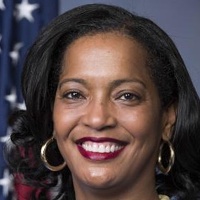
Jahana Hayes
Representative
CT
Jahana Hayes
Representative
CT
The Caring for Survivors Act of 2025 aims to increase financial support for surviving spouses of veterans. This bill raises the monthly Dependency and Indemnity Compensation (DIC) payment rate for surviving spouses. Additionally, it lowers the required duration of total disability rating before death from ten years to five years for survivors to qualify for certain DIC benefits. If the disability period was between five and ten years, the benefit amount will be proportionally adjusted.
This bill allows investors to defer taxes on capital gain dividends from mutual funds when those dividends are automatically reinvested until the shares are sold or the investor passes away.
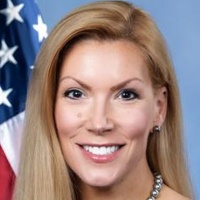
Beth Van Duyne
Representative
TX
Beth Van Duyne
Representative
TX
This bill, the Generating Retirement Ownership through Long-Term Holding Act, allows individual investors to defer paying taxes on capital gain dividends from mutual funds if those dividends are automatically reinvested into more fund shares. Taxes on these deferred gains are only due when the investor sells the shares or upon death. This provision aims to encourage long-term investment in mutual funds by providing immediate tax relief on reinvested earnings.
The REDI Act allows medical and dental interns and residents to defer both principal and interest payments on their student loans while in training.
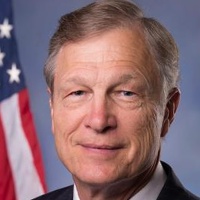
Brian Babin
Representative
TX
Brian Babin
Representative
TX
The Resident Education Deferred Interest (REDI) Act amends federal student loan regulations to provide a specific deferment for medical and dental residents. This allows borrowers currently serving in an internship or residency program to pause principal payments and prevent interest accrual on their student loans during that training period.
The Credit for Caring Act of 2025 establishes a new, partially refundable federal income tax credit for working family caregivers covering qualified expenses exceeding \$2,000, up to a \$5,000 annual limit.
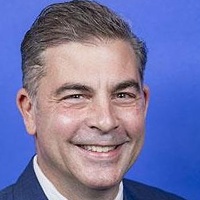
Mike Carey
Representative
OH
Mike Carey
Representative
OH
The Credit for Caring Act of 2025 establishes a new, non-refundable federal income tax credit for working family caregivers who incur significant expenses caring for a relative with long-term care needs. Eligible caregivers can claim a credit equal to 30% of qualified expenses exceeding \$2,000, up to a maximum annual credit of \$5,000. The bill specifies detailed requirements for the care recipient's needs, the types of allowable expenses, and includes income phase-out limits for claiming the benefit.
The American Teacher Act establishes federal grants to incentivize states to set a minimum annual teacher salary of $60,000 and provide inflation adjustments for teacher pay.
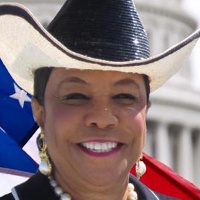
Frederica Wilson
Representative
FL
Frederica Wilson
Representative
FL
The American Teacher Act aims to address critical teacher shortages by establishing federal grants to help states raise the minimum annual salary for full-time teachers to \$60,000, adjusted for inflation. States must submit sustainability plans to ensure these minimums continue after the initial four-year grant period ends. The bill also provides funds for cost-of-living adjustments and a national campaign to enhance the value and diversity of the teaching profession.
This bill significantly increases federal loan limits for farm ownership, operating, and microloans, updates inflation calculations for rural programs, and establishes conditions for refinancing distressed guaranteed loans into direct FSA loans.
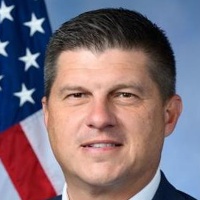
Brad Finstad
Representative
MN
Brad Finstad
Representative
MN
The Producer and Agricultural Credit Enhancement Act of 2025 significantly increases the maximum loan amounts available through federal farm ownership and operating loan programs, effective in fiscal year 2025. The bill also updates the calculation method for inflation adjustments in rural development programs and raises the cap for agricultural microloans from $\$50,000$ to $\$100,000$. Finally, it establishes conditions under which distressed FSA guaranteed loans may be refinanced into direct loans, provided the operation has a reasonable chance of success.
This act amends the tax code to give businesses the option to immediately deduct or amortize (spread out over at least five years) their research and experimental expenditures.
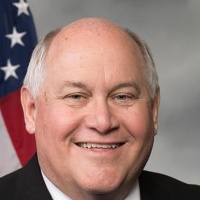
Ron Estes
Representative
KS
Ron Estes
Representative
KS
The American Innovation and R&D Competitiveness Act of 2025 revises how businesses treat research and experimental (R&E) expenditures for tax purposes. Taxpayers can now choose between immediately deducting R&E costs or amortizing them over a period of at least 60 months. This legislation also makes technical adjustments to ensure consistency between immediate deductions and claiming the research tax credit.
This act extends the current Medicare transition payment rates for durable medical equipment in non-competitive bidding areas until the end of 2025.
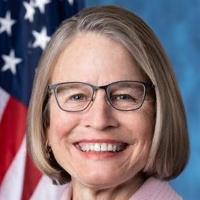
Mariannette Miller-Meeks
Representative
IA
Mariannette Miller-Meeks
Representative
IA
The DMEPOS Relief Act of 2025 extends the current Medicare transition payment rates for durable medical equipment in non-competitive bidding areas through the end of 2025. This action delays the implementation of new payment regulations until January 1, 2026. The Secretary of Health and Human Services is directed to maintain existing payment structures in these specific areas for the remainder of the year.
The HERO Act establishes a national data system for tracking public safety officer suicides, funds peer-support mental health programs for fire and EMS personnel, supports wellness programs for healthcare providers, and develops educational resources and best practices for treating first responder mental health issues.
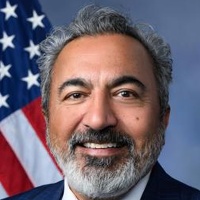
Ami Bera
Representative
CA
Ami Bera
Representative
CA
The HERO Act establishes a national system to track suicides among public safety officers to better understand prevention needs. It also creates grant programs to fund peer-support and wellness programs for fire, EMS, and healthcare workers. Finally, the bill mandates the development of educational resources to improve mental health treatment for first responders dealing with trauma and PTSD.
This bill establishes federal civil and criminal penalties for sharing non-consensual, digitally altered intimate images (deepfakes) of identifiable individuals.
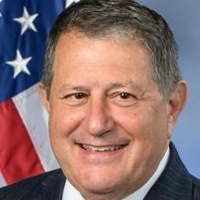
Joseph Morelle
Representative
NY
Joseph Morelle
Representative
NY
The Preventing Deepfakes of Intimate Images Act establishes a federal civil right of action allowing victims to sue those who share non-consensual, intimate digital depictions (deepfakes) of them, providing for significant monetary damages and court orders. Additionally, the bill creates a new federal crime for sharing or threatening to share such images with intent to harass or cause harm, carrying penalties up to ten years in prison for serious offenses. The law strictly defines consent and intimate depictions, while offering limited liability protections to online service providers who cooperate in removing the content.
The "Do No Harm Act" clarifies that the Religious Freedom Restoration Act cannot be used to bypass federal laws protecting against discrimination, ensuring equal opportunity, or safeguarding access to healthcare and other essential services.
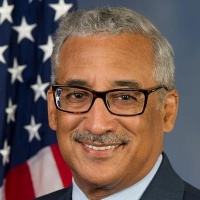
Robert Scott
Representative
VA
Robert Scott
Representative
VA
The "Do No Harm Act" amends the Religious Freedom Restoration Act of 1993 to ensure religious freedom is not used to justify discrimination or harm. It clarifies that the Act does not override federal laws protecting against discrimination, ensuring equal opportunity, or safeguarding access to healthcare and other essential services. This amendment confirms that the Religious Freedom Restoration Act applies only when the government is a party in a judicial proceeding.
The "Pay Our Troops Act of 2025" ensures continued pay and allowances for members of the Armed Forces, essential DOD civilians, and contractors during funding gaps until January 1, 2026, or when regular appropriations are enacted.
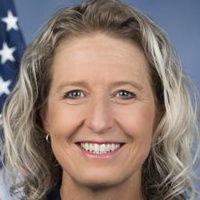
Jennifer Kiggans
Representative
VA
Jennifer Kiggans
Representative
VA
The "Pay Our Troops Act of 2025" ensures that members of the Armed Forces, essential Department of Defense civilians, and contractors continue to receive pay and allowances during periods when regular funding is disrupted. This act provides necessary appropriations to cover these costs for fiscal year 2025. The Act's provisions will terminate upon the enactment of regular appropriations, a continuing resolution that provides funding for the same purpose, or on January 1, 2026.
The End Veteran Homelessness Act of 2025 aims to prioritize case management for vulnerable homeless veterans, expand and clarify rules for the HUD-VASH rental assistance program, and mandate detailed annual reporting on program effectiveness and staffing.
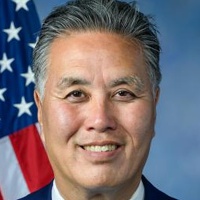
Mark Takano
Representative
CA
Mark Takano
Representative
CA
The End Veteran Homelessness Act of 2025 aims to improve support for homeless and at-risk veterans by prioritizing vulnerable individuals for VA case management services. It mandates detailed annual reporting on the HUD-VASH program's effectiveness, staffing, and voucher utilization. Furthermore, the bill expands eligibility for rental assistance and protects veterans from eviction if they initially refuse case management services. Finally, it requires the GAO to conduct a comprehensive review of HUD-VASH participants and case management quality.
The John R. Lewis Voting Rights Advancement Act of 2025 aims to strengthen and update the Voting Rights Act of 1965 by addressing vote dilution and denial, establishing updated criteria for federal oversight of states and political subdivisions with a history of voting rights violations, and promoting transparency in election-related changes.
Terri Sewell
Representative
AL
Terri Sewell
Representative
AL
The John R. Lewis Voting Rights Advancement Act of 2025 amends the Voting Rights Act of 1965 to address vote dilution, denial, and abridgment claims, and to update which states and political subdivisions are subject to federal oversight based on a history of voting rights violations. It broadens the types of violations that allow a court to retain jurisdiction over a case, clarifies the Attorney General's authority to assign observers, and ensures transparency in voting-related changes. The Act also authorizes the Attorney General to demand documents and information to enforce voting rights and provides grants to small jurisdictions to assist with notification requirements.
The "Keeping Our Field Offices Open Act" prevents the Social Security Administration from closing or limiting access to field offices, hearing offices, and resident stations, ensuring continued service availability for the public.
John Larson
Representative
CT
John Larson
Representative
CT
The "Keeping Our Field Offices Open Act" prevents the Social Security Administration (SSA) from closing or consolidating field offices, hearing offices, and resident stations, ensuring continued access to services. It requires the SSA Commissioner to justify any planned closures to Congress with detailed analysis and cost-benefit assessments, considering the impact on vulnerable populations. The bill mandates public notice, hearings, and a final report to Congress before any changes, allowing appeals and maintaining the number of offices at or above the January 20, 2025 level, excluding temporary emergency closures.
The Richard L. Trumka Protecting the Right to Organize Act of 2025 strengthens protections for workers' rights to organize and collectively bargain by modernizing labor laws, addressing unfair labor practices, and enhancing enforcement mechanisms.
Robert Scott
Representative
VA
Robert Scott
Representative
VA
This bill, the Richard L. Trumka Protecting the Right to Organize Act of 2025, seeks to amend the National Labor Relations Act and other labor laws to strengthen protections for workers' rights to organize and collectively bargain. It aims to modernize labor regulations by clarifying definitions, addressing unfair labor practices, enhancing enforcement, and increasing transparency in labor-management relations. The bill introduces measures such as electronic voting in union elections, strengthens whistleblower protections, and mandates studies on collective bargaining practices. Ultimately, the goal is to ensure fair treatment of workers and promote equitable labor practices.