Legislative Activity
Track Blake's sponsored bills, co-sponsored legislation, and voting record
This Act codifies the Six Assurances made to Taiwan and establishes a mandatory Congressional review process for any executive action that would alter U.S. policy regarding arms sales, mediation, or Taiwan's sovereignty status.
Raja Krishnamoorthi
Representative
IL
Raja Krishnamoorthi
Representative
IL
The Six Assurances to Taiwan Act codifies the historical U.S. commitments known as the Six Assurances, reinforcing the foundation of U.S. policy toward Taiwan. It explicitly states that the U.S. has not agreed to set a date for ending arms sales or to consult with Beijing on those sales. Furthermore, the Act establishes a mandatory Congressional review process before the President can pause arms sales or take actions that significantly alter the U.S. position on Taiwan's sovereignty. This legislation aims to ensure stability in the Taiwan Strait by upholding these long-standing policy guidelines.
This act reforms the Department of Defense's minimum capital investment calculation for certain depots by updating the look-back period from three fiscal years to the preceding, current, and following fiscal years.

Chris Deluzio
Representative
PA
Chris Deluzio
Representative
PA
The Depot Investment Reform Act of 2025 updates how the Department of Defense calculates the minimum capital investment required for certain depots. This reform shortens the look-back period for these investment calculations from three preceding fiscal years to only the preceding, current, and following fiscal years. This change aims to ensure investment levels are based on more current financial data.
This resolution establishes a bipartisan Commission to study and recommend ways for Congress to better integrate evidence and data into the lawmaking process.
William Timmons
Representative
SC
William Timmons
Representative
SC
This resolution establishes the **Commission on Evidence-Based Policymaking** to guide Congress on using solid research and data when creating new laws. The Commission will study how to improve the federal government's use of data to ensure policies are based on what actually works. It will deliver a final report with recommendations to Congress by the end of the 119th Congress.
This Act mandates that health plans cover medically necessary treatment for congenital anomalies or birth defects affecting the eyes, ears, teeth, mouth, or jaw to restore normal function and appearance.
Neal Dunn
Representative
FL
Neal Dunn
Representative
FL
The Ensuring Lasting Smiles Act mandates that group health plans and insurance policies provide comprehensive coverage for medically necessary treatment related to congenital anomalies or birth defects affecting the eyes, ears, teeth, mouth, or jaw. This coverage must include services needed to restore normal function and appearance, including necessary dental and orthodontic support. Plans must apply cost-sharing rules no more restrictive than those for other medical benefits, excluding purely cosmetic procedures.
This Act establishes a bipartisan Fiscal Commission tasked with developing and reporting legislative recommendations to reduce the national debt, followed by an expedited congressional process for considering those recommendations.
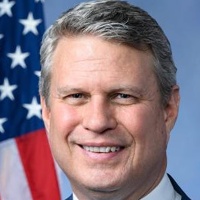
Bill Huizenga
Representative
MI
Bill Huizenga
Representative
MI
The Fiscal Commission Act establishes a bipartisan commission tasked with developing legislative recommendations to improve the nation's long-term fiscal health, aiming to reduce the national debt ratio to 100% of GDP by 2039. This Commission, composed of appointed members from both chambers of Congress and outside experts, must submit its final report and proposed legislation within a specific timeframe. The Act also creates an expedited, amendment-free process for Congress to consider and vote on any resulting "implementing bills."
This Act streamlines the transition of medically disqualified service members into DoD civilian roles while also connecting non-qualifying individuals with defense industry career opportunities.
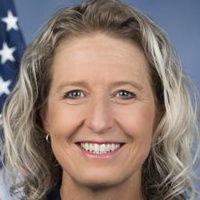
Jennifer Kiggans
Representative
VA
Jennifer Kiggans
Representative
VA
The Defense Workforce Integration Act of 2025 aims to streamline the transition of separating service members into civilian Department of Defense (DoD) roles, particularly for those medically disqualified from service. It also establishes a new program to connect medically ineligible individuals with career opportunities in the defense industrial base and related national security sectors. Furthermore, the bill mandates that the Navy inform separating personnel about career opportunities within the Military Sealift Command. The DoD must report to Congress within one year on the implementation of these integration and information-sharing provisions.
This bill establishes procedures for attributing errors and liabilities between employers and third-party payroll tax payors when filing payroll taxes.
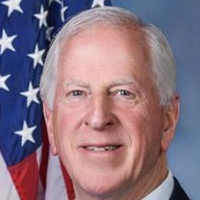
Mike Thompson
Representative
CA
Mike Thompson
Representative
CA
This bill establishes new procedures for the IRS when errors occur in payroll tax filings made by third-party payors, such as Professional Employer Organizations (PEOs). It clarifies the responsibility for resulting tax liabilities or penalties based on whether the payor relied on erroneous information provided by the employer. The legislation aims to fairly allocate responsibility between the employer and the third-party payor when mistakes happen during tax certification and filing.
The Shipbuilding and Harbor Infrastructure for Prosperity and Security for America Act of 2025 establishes a centralized maritime authority, creates a dedicated funding trust, strengthens sealift capability, mandates increased use of U.S.-flagged vessels, invests heavily in domestic shipbuilding, and enhances workforce development and tax incentives for the maritime industry.
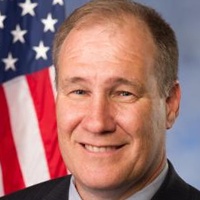
Trent Kelly
Representative
MS
Trent Kelly
Representative
MS
The **Shipbuilding and Harbor Infrastructure for Prosperity and Security for America Act of 2025** is a comprehensive bill designed to revitalize the U.S. maritime industry and secure critical supply chains. It establishes new centralized oversight for maritime policy, creates a dedicated Maritime Security Trust Fund financed by new vessel taxes, and mandates significant federal investment in domestic shipbuilding and workforce development. The legislation also imposes stricter cargo preference rules and tax incentives to ensure U.S.-flagged vessels dominate international commerce and defense sealift operations.
This Act promotes private employee ownership by extending tax deferrals for S corporation ESOP sales, ensuring ESOP-owned businesses retain small business status, and establishing new Treasury and Labor offices to provide assistance and advocacy.

Mike Kelly
Representative
PA
Mike Kelly
Representative
PA
The Promotion and Expansion of Private Employee Ownership Act of 2025 aims to significantly boost employee ownership in S corporations through Employee Stock Ownership Plans (ESOPs). The bill extends key tax deferral benefits for stock sales to ESOPs and removes a major restriction on this tax treatment. Furthermore, it establishes new government offices and an Advocate for Employee Ownership to provide technical assistance and resolve disputes, while ensuring ESOP-owned businesses retain small business status for federal programs.
This act officially recognizes accounting education as part of a well-rounded curriculum to improve access to accounting programs, especially for underrepresented students.

Young Kim
Representative
CA
Young Kim
Representative
CA
The Accounting STEM Pursuit Act of 2025 officially recognizes accounting education as a vital component of a well-rounded K-12 curriculum. This legislation amends federal education law to ensure accounting is counted within core curriculum planning frameworks. The Act specifically directs states and districts to improve access to quality accounting programs, with a focus on increasing opportunities for underrepresented students.
The SOAR Act of 2025 reforms Medicare oxygen benefits by removing competitive bidding, establishing specific supplier responsibilities, enhancing fraud protection through electronic documentation, and enshrining patient rights for supplemental oxygen recipients.
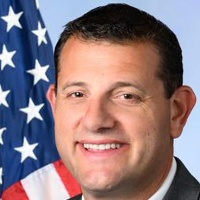
David Valadao
Representative
CA
David Valadao
Representative
CA
The SOAR Act of 2025 aims to significantly reform Medicare access to supplemental oxygen by removing it from the competitive bidding program and establishing new payment rates. The bill also mandates clearer documentation requirements for medical necessity using electronic templates and restores clinical judgment in claim audits. Finally, it establishes specific rights for oxygen beneficiaries and improves reimbursement for respiratory therapists.
This bill removes the current restriction preventing direct charitable rollovers from Individual Retirement Accounts (IRAs) to Donor Advised Funds (DAFs).

Adrian Smith
Representative
NE
Adrian Smith
Representative
NE
The IRA Charitable Rollover Facilitation and Enhancement Act of 2025 removes the current restriction preventing individuals from making direct charitable rollovers from their Individual Retirement Accounts (IRAs) to Donor Advised Funds (DAFs). This change immediately allows IRA owners to transfer retirement assets directly to DAFs for charitable purposes. The bill simplifies and enhances charitable giving options for IRA holders.
This Act makes the existing tax credit for adoption expenses fully refundable, allowing taxpayers to receive the excess credit amount as a refund for tax years beginning after December 31, 2025.

Danny Davis
Representative
IL
Danny Davis
Representative
IL
The Adoption Tax Credit Refundability Act of 2025 makes the existing tax credit for adoption expenses fully refundable, meaning taxpayers can receive the excess credit amount as a refund. This is achieved by renumbering the credit section and updating related tax code references. The bill also mandates new regulations for verifying adoptions via standardized affidavits. These changes will apply to tax years beginning after December 31, 2025.
This Act clarifies that the federal income tax exemption for certain tax-exempt organizations does not count as "Federal financial assistance."
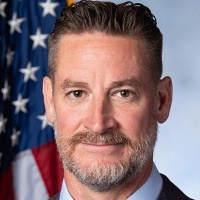
W. Steube
Representative
FL
W. Steube
Representative
FL
The Safeguarding Charity Act clarifies that the federal income tax exemption granted to many tax-exempt organizations, such as charities and social welfare groups, will no longer be counted as "Federal financial assistance." This change specifically redefines federal aid for the purpose of applying various federal laws and regulations moving forward. The Act ensures that the value of existing tax breaks is excluded from future calculations of government assistance received by these entities.
This Act expands Medicare coverage to include audiology services provided directly by qualified audiologists starting in 2027, removing physician supervision and referral requirements.

Gus Bilirakis
Representative
FL
Gus Bilirakis
Representative
FL
The Medicare Audiology Access Improvement Act of 2025 expands Medicare coverage for audiology services, beginning in 2027. This legislation allows qualified audiologists to provide diagnostic and treatment services without physician referral or supervision, as permitted by state law. The bill also specifies payment rates and includes audiologists in coverage for Rural Health Clinics and Federally Qualified Health Centers.
The Affordable Housing Credit Improvement Act of 2025 updates state allocation formulas, reforms tenant eligibility and credit determination rules, and enhances assistance for Native American and rural housing projects.
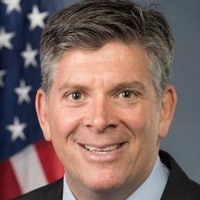
Darin LaHood
Representative
IL
Darin LaHood
Representative
IL
The Affordable Housing Credit Improvement Act of 2025 updates federal housing tax credit allocations to reflect current economic realities and boosts minimum state allotments. It reforms tenant eligibility rules to stabilize tenancy and enhance protections for vulnerable residents, including victims of abuse. The bill also provides disaster relief for property owners, increases incentives for housing the extremely low-income, and directs greater resources toward Native American and rural housing needs. Finally, it streamlines administrative processes and signals a future focus on data transparency and discouraging restrictive local zoning.
This Act mandates the transfer of the cleaned-up Moab UMTRA project site to Grand County, Utah, while reserving necessary water rights and restricting future private transfer of the land.

Mike Kennedy
Representative
UT
Mike Kennedy
Representative
UT
The Moab UMTRA Project Transition Act of 2025 directs the Secretary of Energy to transfer ownership of the completed Uranium Mill Tailings Remedial Action (UMTRA) site in Moab, Utah, to Grand County, Utah, upon substantial cleanup completion. This transfer must respect necessary safety restrictions and ensure the U.S. government retains essential water rights for ongoing remediation activities. Furthermore, the agreement prohibits Grand County from selling or transferring the land to private entities in the future.
This Act updates public disclosure requirements for cargo information on manifests for all arriving ships, vehicles, and aircraft entering the United States.

David Schweikert
Representative
AZ
David Schweikert
Representative
AZ
The Manifest Modernization Act of 2025 updates federal requirements for public disclosure of cargo manifest information for all incoming ships, vehicles, and aircraft. This bill mandates that manifests include more specific details, such as the Harmonized Tariff Schedule subheading and precise country of origin data for all cargo. These new disclosure standards will take effect thirty days after the Act is signed into law.
This act mandates the FAA to create and annually update a public list of medications deemed safe for pilots and air traffic controllers to use while maintaining their medical certification.
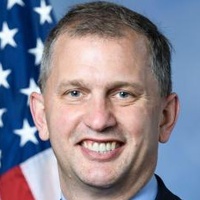
Sean Casten
Representative
IL
Sean Casten
Representative
IL
The Aviation Medication Transparency Act of 2025 mandates the Federal Aviation Administration (FAA) to create and maintain a public list of medications deemed safe for pilots and air traffic controllers to use while maintaining their medical certification. This list must be developed in consultation with relevant industry and labor groups. The FAA is required to update this comprehensive list annually, ensuring airmen and their doctors have clear guidance on medication approval status and necessary waiting periods.
This Act imposes sweeping, mandatory sanctions, tariffs, and investment prohibitions on the Russian Federation and its affiliates until Russia negotiates a lasting peace with Ukraine.
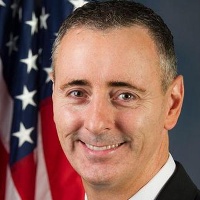
Brian Fitzpatrick
Representative
PA
Brian Fitzpatrick
Representative
PA
The Sanctioning Russia Act of 2025 imposes sweeping economic penalties on the Russian Federation in response to its aggression against Ukraine. This legislation mandates severe, immediate sanctions against key Russian officials, financial institutions, and energy sector entities, including asset freezes and trade prohibitions. Furthermore, the Act dramatically increases import duties on Russian goods and requires the President to review and reimpose these measures until Russia negotiates a lasting peace with Ukraine.