Legislative Activity
Track Gregory's sponsored bills, co-sponsored legislation, and voting record
This Act urges China to control precursor chemical trafficking while expanding U.S. sanctions against Chinese entities and officials involved in opioid production and distribution.
Garland Barr
Representative
KY
Garland Barr
Representative
KY
The Stop Chinese Fentanyl Act of 2025 urges the Chinese government to enhance controls over precursor chemicals used in fentanyl production through cooperation, stricter shipping rules, and "know-your-customer" requirements. The bill also expands the definition of a "foreign opioid trafficker" under existing sanctions law to specifically target certain Chinese entities and officials who facilitate or fail to stop illicit opioid trafficking. Furthermore, it imposes new reporting and regulatory standards on the President when using emergency economic powers related to international drug trafficking. Finally, the Act explicitly prohibits using the sanctions authorized by this law to block the importation of general goods.
This resolution expresses the House's support for continuing federal commitment to the repopulation and recovery of the endangered red wolf across the nation.

Valerie Foushee
Representative
NC
Valerie Foushee
Representative
NC
This resolution expresses the strong support of the House of Representatives for the continued federal commitment to the recovery of the critically endangered red wolf population. It recognizes the vital role of ongoing partnership efforts between various institutions in protecting this unique North American species. The bill specifically highlights the importance of maintaining recovery programs and establishing wildlife corridors to ensure the red wolf's survival.
This Act establishes a new tax credit for businesses investing in projects to protect their qualifying waterfront properties from natural disasters.

Chellie Pingree
Representative
ME
Chellie Pingree
Representative
ME
This bill establishes the Working Waterfront Disaster Mitigation Tax Credit to incentivize businesses to protect their waterfront properties from natural hazards. Taxpayers can claim a credit equal to 30% of qualified investments in projects that meet specific building code and mitigation standards, up to a $300,000 annual limit. This credit is designed to support businesses reliant on navigable waters, provided they meet certain gross receipts thresholds.
The USTRx Act establishes a Chief Pharmaceutical Trade Negotiator to combat unfair foreign drug pricing practices and ensure high-income countries pay their fair share for U.S.-developed medicines.
Jodey Arrington
Representative
TX
Jodey Arrington
Representative
TX
The Use Sovereignty To reduce Rx (USTRx) Act establishes a new Chief Pharmaceutical Trade Negotiator within the Office of the United States Trade Representative to combat unfair foreign drug pricing policies. This legislation mandates annual reviews of high-income countries to identify practices that disadvantage U.S. pharmaceutical innovation and requires the development of formal response plans to ensure foreign nations pay their fair share of drug development costs.
The SAVES Act establishes a VA pilot program to award grants to nonprofits providing service dogs and veterinary insurance to eligible veterans managing specific service-connected conditions.
Morgan Luttrell
Representative
TX
Morgan Luttrell
Representative
TX
The SAVES Act establishes a Department of Veterans Affairs (VA) pilot program to award grants to nonprofit organizations that provide service dogs to eligible veterans. These grants, up to $\$2,000,000$ each, will fund the training and provision of service dogs for veterans with qualifying conditions like PTSD or TBI. The bill also extends the expiration date for certain limits on veterans' pension payments until February 2033.
This act establishes a new two-part test under the Fair Labor Standards Act and the National Labor Relations Act to determine when an individual is classified as an independent contractor rather than an employee.
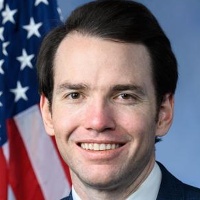
Kevin Kiley
Representative
CA
Kevin Kiley
Representative
CA
The Modern Worker Empowerment Act establishes a new, two-part test under federal law to determine if a worker is an independent contractor rather than an employee. This test focuses on the degree of control exercised over the work's details and whether the worker has the risks and opportunities of entrepreneurship. The Act applies this updated classification standard to both the Fair Labor Standards Act and the National Labor Relations Act.
The Veterans’ ACCESS Act of 2025 improves veteran health care by establishing clear eligibility standards for community care, mandating timely mental health treatment, and streamlining administrative processes to ensure faster, more transparent access to services.
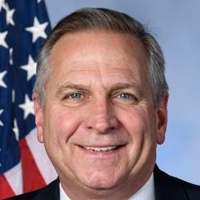
Mike Bost
Representative
IL
Mike Bost
Representative
IL
The Veterans’ ACCESS Act of 2025 strengthens the Veterans Community Care Program by establishing clear, enforceable standards for care eligibility and wait times while streamlining the referral process. The legislation also overhauls access to residential mental health and substance abuse treatment, ensuring veterans receive timely, localized care with robust oversight. Additionally, it mandates the development of digital tools and pilot programs to reduce bureaucratic hurdles and improve transparency across the VA healthcare system.
This bill establishes a federal right for producers to sell covered livestock and their derived products across state lines, preempting state and local regulations on the raising of animals outside their jurisdiction.
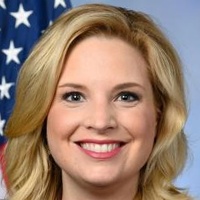
Ashley Hinson
Representative
IA
Ashley Hinson
Representative
IA
The Save Our Bacon Act establishes a federal right for producers to move and sell products derived from covered livestock across state lines, ensuring a single national market. This legislation prevents individual states from imposing unique production standards on livestock or products raised outside their borders. Essentially, it standardizes regulations to ensure free interstate commerce for meat and dairy products, excluding those primarily derived from egg-laying animals.
This bill amends federal law to include violations related to rioting within the definition of racketeering activity.
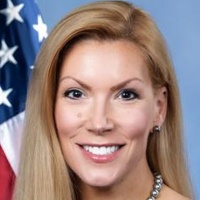
Beth Van Duyne
Representative
TX
Beth Van Duyne
Representative
TX
This bill amends federal law to explicitly include violations related to rioting within the definition of "racketeering activity." By adding this specific crime to the list under Title 18, Section 1961(1), the legislation makes participation in such activities subject to serious federal racketeering charges. This change treats rioting violations similarly to other established offenses like bribery or extortion for the purposes of federal prosecution.
The Prompt and Fair Pay Act mandates that Medicare Advantage plans pay providers at least as much as Original Medicare and establishes strict, enforceable deadlines for prompt payment of clean claims.

Lloyd Doggett
Representative
TX
Lloyd Doggett
Representative
TX
The Prompt and Fair Pay Act establishes new rules for Medicare Advantage (MA) plans to ensure providers receive fair compensation and timely payments. Starting in 2027, MA plans must pay doctors and suppliers at least as much as Original Medicare for the same services. Additionally, the Act mandates enforceable deadlines for MA plans to pay clean claims—within 14 days for electronic submissions and 30 days for others—and requires detailed notification for any claim that is not considered "clean."
This Act prohibits the Federal Reserve from directly or indirectly issuing a Central Bank Digital Currency (CBDC) and bars the Fed from developing or using one for monetary policy without explicit Congressional authorization.
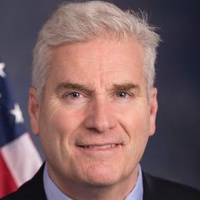
Tom Emmer
Representative
MN
Tom Emmer
Representative
MN
The Anti-CBDC Surveillance State Act strictly prohibits the Federal Reserve from directly or indirectly issuing a Central Bank Digital Currency (CBDC) to individuals. This legislation prevents the Fed from developing, testing, or implementing any digital currency that functions as a direct liability of the Federal Reserve. Furthermore, Congress asserts that any authority to create such a digital asset must explicitly come from Congress itself.
This act enhances protections for Medicare beneficiaries receiving orthotic and prosthetic care by ensuring required training accompanies direct shipments and expanding exemptions within competitive acquisition programs.
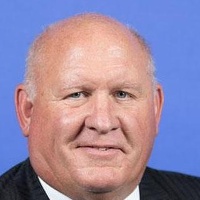
Glenn Thompson
Representative
PA
Glenn Thompson
Representative
PA
The Medicare Orthotics and Prosthetics Patient-Centered Care Act aims to enhance protections for Medicare beneficiaries receiving custom braces and artificial limbs. This bill ensures that payment will not be made for certain devices shipped directly to a patient without required training from a qualified practitioner. Additionally, it expands exemptions from competitive bidding for certain providers and clarifies access to replacement custom orthotic devices.
The SHIELD Act amends federal unemployment rules to prohibit benefits for individuals unemployed due to active participation in or direct stake in a labor dispute or strike.
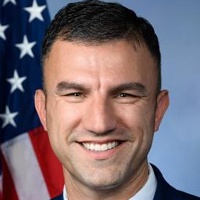
Rudy Yakym
Representative
IN
Rudy Yakym
Representative
IN
The Securing Help for Involuntary Employment Loss and Displacement Act (SHIELD Act) revises federal requirements for state unemployment programs regarding labor disputes. This bill mandates that states deny regular unemployment benefits to individuals unemployed due to a strike or labor dispute in which they actively participated or had a direct stake. The new federal conditions take effect in two years, though states may adopt them sooner.
This Act prohibits lawsuits claiming discrimination based solely on the unintended, disproportionate statistical effect (disparate impact) of employment or housing practices.
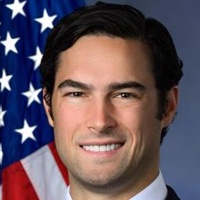
Brandon Gill
Representative
TX
Brandon Gill
Representative
TX
The Restoring Equal Opportunity Act aims to eliminate "disparate-impact liability" across major federal laws. This bill prohibits lawsuits claiming discrimination based solely on the unintended, disproportionate negative effect of a rule or practice. Consequently, it removes the ability to challenge employment and housing practices unless discriminatory intent can be proven. The Act also nullifies specific prior regulatory approvals related to civil rights enforcement.
This act requires the CBO to score the long-term budget savings resulting from preventive healthcare measures when requested by key committee leaders.
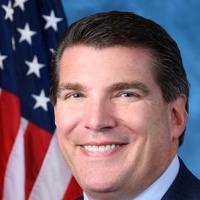
Jay Obernolte
Representative
CA
Jay Obernolte
Representative
CA
The Preventive Health Savings Act requires the Congressional Budget Office (CBO) to score the long-term budget savings resulting from preventive healthcare measures when requested by key congressional leaders. If savings are found, the CBO must include an estimate of these future reductions in its budget projections for the legislation. However, these supplementary savings estimates cannot be used to satisfy standard budget enforcement rules.
This bill authorizes the creation and sale of commemorative coins for the 2028 Los Angeles and 2034 Salt Lake City Olympic and Paralympic Games to help fund the events, with all surcharges going to the respective organizing committees after covering production costs.
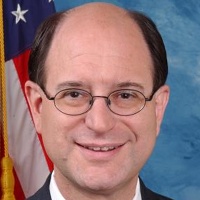
Brad Sherman
Representative
CA
Brad Sherman
Representative
CA
This Act authorizes the Secretary of the Treasury to mint and sell special commemorative coins for the 2028 Los Angeles Olympic and Paralympic Games and the 2034 Salt Lake City Winter Olympic and Paralympic Games. The coins will feature designs celebrating American athletes and the Games themselves. All surcharges collected from the sale of these coins will be directed to the respective organizing committees to help fund the events and related youth sports programs. The entire program must be conducted at no cost to the U.S. Government.
The PBM Reform Act of 2025 mandates sweeping changes to increase transparency, ensure fair pharmacy access in Medicare, and prohibit abusive spread pricing in Medicaid by holding Pharmacy Benefit Managers accountable for their financial dealings.
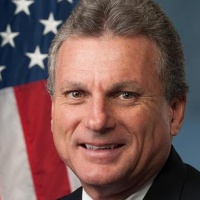
Earl Carter
Representative
GA
Earl Carter
Representative
GA
The Pharmacy Benefit Manager Reform Act of 2025 aims to increase transparency and accountability across the prescription drug supply chain. It mandates fairer pharmacy network access for Medicare beneficiaries and imposes strict new financial reporting and service fee requirements on Pharmacy Benefit Managers (PBMs) working with Medicare and private health plans. Furthermore, the bill establishes new federal mechanisms to accurately track drug acquisition costs in Medicaid and explicitly bans the practice of "spread pricing" in state Medicaid contracts.
The Qualified to Serve Act establishes consistent, transparent medical accession standards for military service, prohibits disqualification for certain childhood medical conditions, and mandates annual reporting on medical waivers.
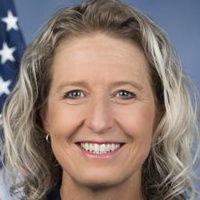
Jennifer Kiggans
Representative
VA
Jennifer Kiggans
Representative
VA
The Qualified to Serve Act aims to standardize and clarify medical accession standards for individuals joining the Armed Forces. It prohibits disqualification based on certain medical conditions diagnosed before age 13, provided specific conditions regarding subsequent treatment and current fitness are met. The bill also mandates formal review and national security waiver processes for medical disqualifications and requires annual reporting on disqualifications and waivers to Congress.
This resolution expresses Congress's strong belief that "The Star-Spangled Banner" must be performed in public using the original English lyrics written by Francis Scott Key.
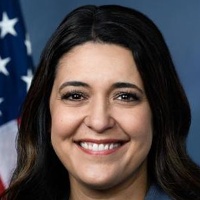
Stephanie Bice
Representative
OK
Stephanie Bice
Representative
OK
This resolution expresses the sense of Congress that any public performance of "The Star-Spangled Banner" must adhere strictly to the original English lyrics written by Francis Scott Key. It affirms the importance of preserving the historical integrity and unifying symbolism of the national anthem. The bill strongly encourages adherence to the original text as written in 1814.
This Act mandates the State Department to develop a comprehensive U.S. strategy to counter gang violence, restore stability, and support Haitian-led solutions in Haiti.
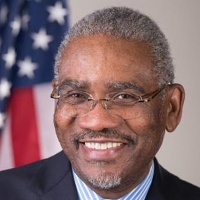
Gregory Meeks
Representative
NY
Gregory Meeks
Representative
NY
The SAK PASE in Haiti Act of 2025 mandates the Secretary of State to develop a comprehensive U.S. strategy to address the escalating security, economic, and humanitarian crises in Haiti. This strategy must focus on bolstering Haitian security forces, countering illicit gang support, promoting economic opportunity, and ensuring Haitian leadership in the solutions. The Secretary is required to report annually to Congress for five years on the implementation and progress of this coordinated international effort.