Legislative Activity
Track Carol's sponsored bills, co-sponsored legislation, and voting record
This act mandates Medicare coverage for FDA-approved early detection screening tests for Alzheimer's disease and related dementias beginning in 2028.
Vern Buchanan
Representative
FL
Vern Buchanan
Representative
FL
The Alzheimer’s Screening and Prevention Act of 2025 (ASAP Act) amends Medicare to cover early detection screening tests for Alzheimer's disease and related dementias starting in 2028. This coverage applies to FDA-cleared tests, including genomic sequencing and other equivalent diagnostic methods, designed to detect pre-symptomatic or early-stage conditions. The bill ensures these screenings are added to the list of covered medical services under Medicare.
This resolution supports the goals of National Rural Health Day by recognizing the vital role of rural communities and committing to policies that improve rural healthcare access and affordability.

Diana Harshbarger
Representative
TN
Diana Harshbarger
Representative
TN
This resolution officially recognizes and supports the goals of National Rural Health Day to honor the vital role of rural communities and their healthcare providers. It acknowledges the unique challenges faced by rural residents, such as limited access to care and hospital closures. The bill expresses a commitment to advancing policies that improve the accessibility and affordability of healthcare in rural America.
This bill transfers administrative jurisdiction of specific federal land parcels between the Department of the Interior and U.S. Customs and Border Protection in Harpers Ferry, West Virginia.
Riley Moore
Representative
WV
Riley Moore
Representative
WV
This bill facilitates an exchange of federal land in Harpers Ferry, West Virginia, between the Department of the Interior (DOI) and U.S. Customs and Border Protection (CBP). Approximately 25 acres will transfer from DOI to CBP for use by its Advanced Training Center, while about 71.51 acres will transfer from CBP back to DOI for inclusion in the Harpers Ferry National Historical Park. The transfers require no monetary compensation, and any land no longer needed by CBP must revert to the National Park Service.
This bill mandates the U.S. Trade Representative to take action to ensure Mexico complies with its USMCA energy trade obligations to protect American commerce.
Jodey Arrington
Representative
TX
Jodey Arrington
Representative
TX
The Mexican Energy Trade Enforcement Act mandates the U.S. Trade Representative (USTR) to take specific actions to compel Mexico to comply with its energy trade obligations under the USMCA. The USTR must either request a dispute resolution panel or require non-discriminatory market access for U.S. energy companies. This legislation aims to protect U.S. commerce from Mexican policies that favor state-owned energy companies.
This bill establishes the Ohio River Basin Restoration Program within the EPA to fund projects focused on the large-scale protection and restoration of the Ohio River Basin.
Morgan McGarvey
Representative
KY
Morgan McGarvey
Representative
KY
The Ohio River Restoration Program Act establishes a new program within the EPA dedicated to the large-scale protection and restoration of the Ohio River Basin. This program will be managed by a dedicated office and guided by an advisory council to develop and implement a comprehensive action plan. Funds will be authorized through 2030 to support eligible activities such as improving water quality, restoring habitats, and increasing community resilience.
This resolution supports designating a week in October 2025 as "Coal Week" to recognize the vital contributions of the coal industry and its workers to the nation's economy and security.

Mike Kennedy
Representative
UT
Mike Kennedy
Representative
UT
This resolution officially supports designating the week beginning October 19, 2025, as "Coal Week." It recognizes the vital contributions of the coal industry and its workers to the nation's economy and national security. The measure also commends the progress made in reducing coal-related emissions through advanced technologies.
This resolution officially designates the week of September 22 through September 28, 2025, as National Falls Prevention Awareness Week to raise public awareness and encourage the prevention of falls among older adults.
Lois Frankel
Representative
FL
Lois Frankel
Representative
FL
This resolution officially designates the week of September 22 through September 28, 2025, as "National Falls Prevention Awareness Week." The goal is to raise public awareness about the significant dangers of falls among older adults. By highlighting this issue, the measure encourages widespread efforts to promote proven, cost-effective prevention strategies.
This resolution honors the life and legacy of Charles "Charlie" James Kirk, condemns his assassination as political violence, and calls for a renewed commitment to civil discourse and American founding principles.

Mike Johnson
Representative
LA
Mike Johnson
Representative
LA
This resolution honors the life and legacy of Charles "Charlie" James Kirk, founder of Turning Point USA. It strongly condemns his assassination as an act of political violence. The bill calls for a renewed national commitment to civil discourse and the founding principles of the United States.
The GRID Power Act directs the Federal Energy Regulatory Commission to rapidly update interconnection rules to prioritize and expedite the connection of dispatchable power projects that enhance grid reliability and resilience.
Troy Balderson
Representative
OH
Troy Balderson
Representative
OH
The GRID Power Act directs the Federal Energy Regulatory Commission (FERC) to rapidly update rules governing how new power plants connect to the electric grid. This legislation mandates that FERC prioritize and streamline the interconnection process for dispatchable power projects that demonstrably improve grid reliability and resilience. The goal is to ensure that necessary, dependable power sources can connect quickly while maintaining public input and regular review of the new procedures.
This bill establishes the Presidents Council on Sports, Fitness, and Nutrition to advise the President on promoting youth physical activity and combating childhood obesity.
Gregory Murphy
Representative
NC
Gregory Murphy
Representative
NC
The Make America's Youth Healthy Again Act of 2025 establishes a new Presidents Council on Sports, Fitness, and Nutrition. This Council will advise the President on promoting physical activity and setting new national fitness goals for American youth. Its key responsibilities include recommending the return of the Presidential Fitness Award and developing strategies to combat childhood obesity. The Council is set to operate for two years unless the President extends its term.
This bill establishes stricter, mandatory prompt payment deadlines and penalties for Medicare Advantage organizations when paying clean claims submitted by healthcare providers.
Jodey Arrington
Representative
TX
Jodey Arrington
Representative
TX
The Medicare Advantage Prompt Pay Act establishes stricter deadlines for Medicare Advantage organizations to pay clean claims submitted by doctors and suppliers. This legislation mandates that MA plans must pay at least 95% of electronic claims within 14 days and other clean claims within 30 days, starting January 1, 2027. Failure to meet these new prompt payment requirements will result in mandatory interest payments to providers and potential civil monetary penalties of up to $25,000 per violation for the MA organization. The Act also requires MA plans to begin reporting detailed data on their payment timeliness to the Secretary.
This Act mandates that new passenger motor vehicles sold in the U.S. must include standard equipment capable of receiving AM broadcast radio signals.

Gus Bilirakis
Representative
FL
Gus Bilirakis
Representative
FL
The AM Radio for Every Vehicle Act of 2025 mandates that the Secretary of Transportation establish a rule requiring AM broadcast radio receivers to be installed as standard equipment in new passenger motor vehicles. This requirement aims to ensure public access to AM radio signals, which are often used for emergency alerts. The bill also directs a GAO study on the effectiveness of AM radio within the national emergency alert system compared to other technologies. Finally, the Act preempts state and local laws on this matter and includes a sunset provision eight years after enactment.
This bill ensures Medicare coverage for certain breakthrough medical devices during a four-year transitional period while accelerating the final coverage decision process.
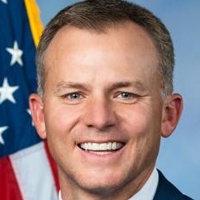
Blake Moore
Representative
UT
Blake Moore
Representative
UT
This Act, the Ensuring Patient Access to Critical Breakthrough Products Act, aims to speed up Medicare coverage for innovative, FDA-approved "breakthrough devices." It establishes a process for manufacturers to gain a four-year transitional coverage period for these devices, ensuring patients have timely access while long-term coverage decisions are finalized. The bill also allocates funding to CMS to manage these expedited reviews and allows for oversight of provider billing practices related to these new technologies.
This bill amends the Social Security Act to provide Medicare coverage for FDA-approved multi-cancer early detection screening tests starting in 2028.
Jodey Arrington
Representative
TX
Jodey Arrington
Representative
TX
The Nancy Gardner Sewell Medicare Multi-Cancer Early Detection Screening Coverage Act amends the Social Security Act to provide Medicare Part B coverage for multi-cancer early detection screening tests starting January 1, 2028. This legislation establishes clear criteria for qualifying tests and outlines payment structures to ensure beneficiaries have access to these advanced diagnostic tools. Importantly, this coverage is designed to complement, rather than replace, existing Medicare-covered cancer screenings.
This resolution strongly condemns the assassination of Charlie Kirk and calls for national change inspired by his life and tragic death.
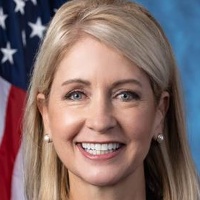
Mary Miller
Representative
IL
Mary Miller
Representative
IL
This resolution strongly condemns the assassination of conservative activist Charlie Kirk on September 10, 2025, during his national speaking tour. It honors his life, his founding of Turning Point USA, and his dedication to conservative principles. Ultimately, the document calls for national unity and reaffirms the commitment to protecting the right to peaceful assembly and free expression.
This bill amends Medicare rules to classify blood culture contamination as a hospital-acquired condition, setting a maximum contamination rate of 1% for hospital performance standards starting in fiscal year 2026.
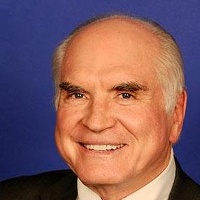
Mike Kelly
Representative
PA
Mike Kelly
Representative
PA
The Diagnostic Accuracy in Sepsis Act of 2025 amends Medicare rules to classify blood culture contamination as a hospital-acquired condition. This change requires the Secretary to set a standard for blood contamination rates at or below one percent for fiscal year 2026 and beyond. The bill aims to improve diagnostic accuracy and accountability regarding hospital-acquired infections.
The RESULTS Act reforms how Medicare determines payment rates for clinical diagnostic laboratory tests by mandating the use of comprehensive, real-world private payor claims data collected from an independent entity.
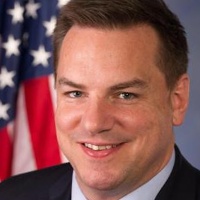
Richard Hudson
Representative
NC
Richard Hudson
Representative
NC
The Reforming and Enhancing Sustainable Updates to Laboratory Testing Services Act of 2025 (RESULTS Act) aims to improve Medicare payment rates for clinical lab tests by mandating the collection of more accurate, real-world payment data directly from large, independent private insurance claims databases. This legislation updates definitions, collection timelines, and calculation methods to ensure Medicare payments for widely available tests reflect current market rates. It also establishes default payment rules if sufficient private payor data cannot be secured.
The RESTORE Act of 2025 removes federal restrictions that prevent individuals with certain drug-related convictions from accessing TANF and SNAP benefits, and expands SNAP eligibility for those nearing release from incarceration.

Steve Cohen
Representative
TN
Steve Cohen
Representative
TN
The RESTORE Act of 2025 aims to improve re-entry support by removing barriers to essential aid for individuals with past drug-related convictions. This legislation voids state restrictions that prevent eligible individuals from receiving Temporary Assistance for Needy Families (TANF) and Supplemental Nutrition Assistance Program (SNAP) benefits based on these convictions. Additionally, it allows individuals scheduled for release within 30 days to be counted in SNAP household determinations.
The FEMA Act of 2025 establishes FEMA as an independent, cabinet-level agency and enacts sweeping reforms across public assistance, individual aid, and mitigation programs to speed up recovery and increase transparency.
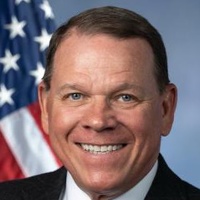
Sam Graves
Representative
MO
Sam Graves
Representative
MO
The FEMA Act of 2025 establishes the Federal Emergency Management Agency (FEMA) as an independent, cabinet-level agency to lead a unified, all-hazards approach to national emergency management. The bill enacts sweeping reforms across Public Assistance, Individual Assistance, and Mitigation programs to accelerate recovery, streamline funding, and reduce bureaucratic hurdles for disaster survivors and communities. Furthermore, it mandates significant new transparency measures, including public data reporting and GAO oversight, to ensure accountability for federal disaster spending.
This bill establishes a mandatory supply fee paid by Medicare drug plans to long-term care pharmacies for specific prescriptions in 2026 and 2027, while also mandating a GAO study on the financial sustainability of the current payment system.
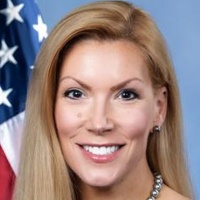
Beth Van Duyne
Representative
TX
Beth Van Duyne
Representative
TX
This Act establishes a mandatory supply fee for Medicare drug plans to pay long-term care pharmacies for specific prescriptions dispensed in 2026 and 2027. The bill mandates a $30 fee per prescription in 2026, increasing in 2027, with penalties for non-payment. Additionally, the GAO is required to study the financial sustainability of the current payment structure for these essential pharmacies. This legislation aims to ensure continued access to medications for patients in long-term care settings.