Legislative Activity
Track John's sponsored bills, co-sponsored legislation, and voting record
This bill establishes a new category of tax-exempt scholarship grants for organizations that repay student loans for individuals who live and work in qualifying communities.
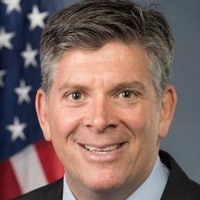
Darin LaHood
Representative
IL
Darin LaHood
Representative
IL
This Act establishes a new tax exclusion for "post-graduation scholarship grants" used to repay student loans. These grants must be provided by specific charitable organizations to individuals who agree to live and work in designated underserved communities. The legislation ensures these loan repayments are not counted as taxable income for the recipient, similar to traditional scholarships.
This Act establishes the United States-Israel Defense Technology Cooperation Initiative to accelerate joint research, development, and integration of defense technologies between the two nations.
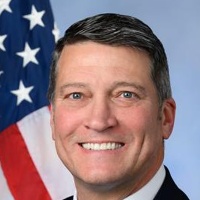
Ronny Jackson
Representative
TX
Ronny Jackson
Representative
TX
This bill establishes the United States-Israel Defense Technology Cooperation Initiative to accelerate joint research, development, and integration of critical defense technologies. The initiative focuses on key areas like AI, missile defense, and counter-drone systems to enhance the security and technological edge of both nations. It mandates regular reporting to Congress on progress and authorizes funding for fiscal years 2027 through 2029.
The CBW Fentanyl Act mandates presidential investigations and escalating sanctions against foreign governments and individuals involved in the development or distribution of chemical and biological weapons, including specific fentanyl precursors.
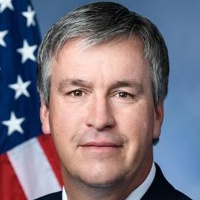
Barry Moore
Representative
AL
Barry Moore
Representative
AL
The Countering Beijing's Weaponization of Fentanyl (CBW) Act amends the Chemical and Biological Weapons Control and Warfare Elimination Act of 1991 to mandate investigations and escalating sanctions against foreign governments and officials involved in the development or distribution of chemical and biological weapons, including specific fentanyl precursors. The bill establishes strict reporting requirements for the President and provides a framework for imposing severe economic and trade penalties on countries that fail to address such harmful activities.
This Act prohibits online platforms from displaying fraudulent paid advertisements if they accepted payment and failed to take reasonable steps to prevent them, while also establishing new enforcement mechanisms.
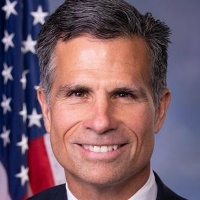
Daniel Meuser
Representative
PA
Daniel Meuser
Representative
PA
The Safeguarding Consumers from Advertising Misconduct Act (SCAM Act) holds online platforms accountable for displaying fraudulent or deceptive paid advertisements. It mandates that platforms implement strict advertiser verification procedures and actively detect and remove scam ads. This legislation establishes a private right of action for injured consumers and clarifies that existing Section 230 immunity does not apply to violations of this Act.
This act establishes a program allowing distressed rural health care facilities to utilize existing USDA rural development loans for financial relief and necessary improvements.
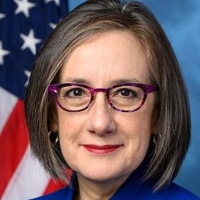
Andrea Salinas
Representative
OR
Andrea Salinas
Representative
OR
The Rural Health Care Facilities Revitalization Act establishes a new program allowing eligible rural health care facilities to access existing USDA rural development loans for vital financial relief and necessary facility improvements. This assistance can be used for debt refinancing, updating telehealth systems, and covering operating expenses, provided it preserves local access to care and improves the facility's financial standing. The bill also allows for waivers of certain requirements for facilities in areas facing persistent poverty or distress.
This bill establishes U.S. policy to oppose international financial institution loans for projects that use or risk using forced labor, particularly in the Xinjiang Uyghur Autonomous Region.
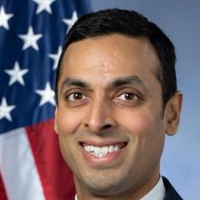
Suhas Subramanyam
Representative
VA
Suhas Subramanyam
Representative
VA
The No Funds for Forced Labor Act aims to prevent U.S. support for international financial institution loans that fund projects involving forced labor, particularly in the Xinjiang Uyghur Autonomous Region. It directs the Treasury Secretary to use U.S. influence to oppose such loans and requires annual reporting on these efforts. Congress asserts that international financial institutions should not fund entities credibly accused of using forced labor.
This bill authorizes the minting of special $2.50 commemorative coins for the 250th anniversary of the Declaration of Independence and mandates a study on the feasibility of issuing a $2.50 coin for general circulation.
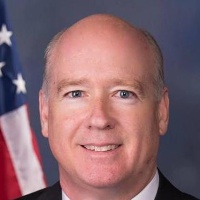
Robert Aderholt
Representative
AL
Robert Aderholt
Representative
AL
This act establishes the "$2.50 for America's 250th Act" to commemorate the 250th anniversary of the Declaration of Independence. It authorizes the Treasury to mint and issue special commemorative gold, silver, and clad $2.50 coins featuring designs from the 1926 Sesquicentennial coin. Additionally, the bill mandates a study on the feasibility of minting and issuing a $2.50 coin for wide circulation.
This bill expands the authority, modifies the structure, and clarifies the functions of the Federal Acquisition Security Council to enhance the security of government procurement against risks posed by foreign adversaries.
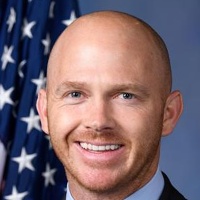
William Timmons
Representative
SC
William Timmons
Representative
SC
This bill significantly reforms the Federal Acquisition Security Council (FASC) by expanding its authority and moving it to the Executive Office of the President. It establishes new definitions and processes for addressing national security risks posed by certain suppliers, allowing the Council to issue binding "recommended" and "designated" exclusion orders against sources of concern. The legislation also creates a dedicated Program Office to support the Council's expanded functions in securing the federal supply chain.
This bill establishes a commission to investigate the history and ongoing impacts of U.S. federal Indian boarding school policies, mandates the search for burial sites, and strengthens repatriation laws for associated cultural items.
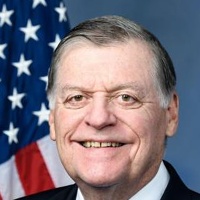
Tom Cole
Representative
OK
Tom Cole
Representative
OK
The Truth and Healing Commission on Indian Boarding School Policies Act of 2026 establishes a commission to investigate the history and ongoing impacts of U.S. Indian boarding school policies. This legislation mandates the gathering of survivor testimony and the search for student burial sites across the country. It also creates advisory committees to ensure Native communities guide the process and clarifies existing laws to facilitate the repatriation and respectful reburial of cultural items. Ultimately, the Act aims to provide a formal record, promote healing, and recommend necessary policy changes to Congress.
This bill establishes federal standards for voter identification, registration, election administration, and mail-in ballot procedures for federal elections.
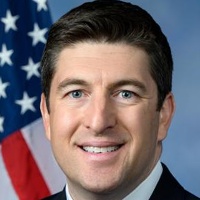
Bryan Steil
Representative
WI
Bryan Steil
Representative
WI
The Make Elections Great Again Act establishes new federal standards for voter identification, citizenship verification for registration, and statewide voter list maintenance for federal elections. It also standardizes election administration by mandating paper ballots, banning ranked-choice voting, and implementing strict new rules for requesting and returning mail-in ballots. The bill aims to increase election integrity through enhanced documentation and procedural uniformity across states.
This bill mandates proof of U.S. citizenship for federal voter registration and requires photo identification showing citizenship status for voting in federal elections.
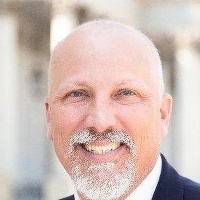
Chip Roy
Representative
TX
Chip Roy
Representative
TX
The Safeguard American Voter Eligibility Act (SAVE America Act) mandates that individuals must provide documentary proof of U.S. citizenship to register to vote in federal elections. It also establishes a federal requirement for voters to present a photo ID indicating U.S. citizenship when casting a ballot in federal elections. The bill outlines specific acceptable forms of proof and requires states to implement verification programs to ensure only citizens are registered and voting.
This bill amends the Clean Air Act to provide national security-based waivers and alternative offset flexibility for air permitting requirements for advanced manufacturing and critical mineral facilities.
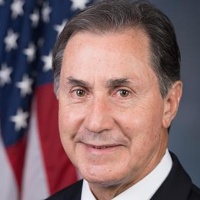
Gary Palmer
Representative
AL
Gary Palmer
Representative
AL
The Air Permitting Improvements to Protect National Security Act of 2025 aims to streamline air permitting for critical manufacturing and mineral facilities. It allows the President to issue national security waivers for emission offset requirements for these vital facilities. Additionally, it provides states with flexibility to approve alternative offset measures or impose emissions fees for qualifying advanced manufacturing and critical mineral projects.
This resolution commemorates the Dalai Lama's 90th birthday as a "Day of Compassion" while reaffirming U.S. support for Tibetan human rights, religious freedom, and the Tibetan people's right to choose their own religious leaders without interference from China.
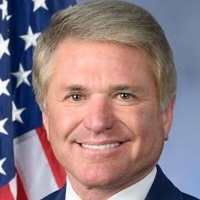
Michael McCaul
Representative
TX
Michael McCaul
Representative
TX
This resolution commemorates the 90th birthday of the Dalai Lama by designating July 6, 2025, as a "Day of Compassion." It strongly reaffirms U.S. support for the human rights, religious freedom, and cultural preservation of the Tibetan people. Furthermore, the resolution asserts that the selection of the next Dalai Lama is solely the right of the Tibetan Buddhist community, rejecting any interference by the People's Republic of China.
The AI OVERWATCH Act establishes a strict licensing requirement for exporting advanced integrated circuits to designated countries of concern while creating exemptions for trusted U.S. entities and mandating a comprehensive national security review for all approved transfers.
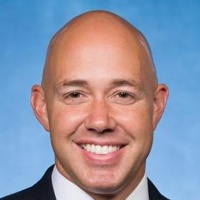
Brian Mast
Representative
FL
Brian Mast
Representative
FL
The AI OVERWATCH Act establishes strict new licensing requirements for exporting advanced integrated circuits to designated countries of concern, including China and Russia. This legislation mandates detailed national security certifications to Congress before any license can be approved for these high-performance technologies. Furthermore, the bill creates an exemption process for trusted U.S. companies while terminating existing licenses for these sensitive exports.
The SECURE Minerals Act of 2026 establishes a government corporation to build and manage a national stockpile of critical minerals, aiming to secure U.S. supply chains and reduce foreign dependence.
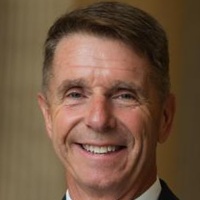
Robert Wittman
Representative
VA
Robert Wittman
Representative
VA
The SECURE Minerals Act of 2026 establishes the Strategic Resilience Reserve Corporation to secure U.S. supply chains for critical minerals. This new entity will manage a national stockpile, finance domestic and allied production, and reduce reliance on foreign adversaries. The Act mandates supply chain targets, rigorous oversight, and public transparency for all operations.
The SAFE KIDS Act voids surrogacy agreements between U.S. surrogates and prospective parents from designated foreign entities of concern, while penalizing brokers who facilitate such arrangements.
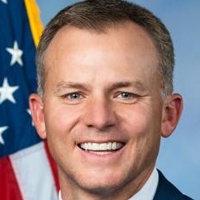
Blake Moore
Representative
UT
Blake Moore
Representative
UT
The SAFE KIDS Act addresses national security concerns by invalidating surrogacy agreements between U.S. surrogates and prospective parents from designated "foreign entities of concern." This legislation voids such contracts and imposes penalties on surrogacy brokers who facilitate these arrangements. The bill ensures that custody decisions for children born under these void agreements are based solely on the child's best interests under state law.
This bill establishes controls on the remote access of sensitive items by foreign persons under the Export Control Reform Act of 2018, requiring consultation with Congress before new regulations are issued.

Michael Lawler
Representative
NY
Michael Lawler
Representative
NY
The Remote Access Security Act amends the Export Control Reform Act of 2018 to establish new controls on the remote access of sensitive U.S. items by foreign persons. This legislation grants the Secretary of Commerce authority to regulate such access when it poses a serious risk to national security. Furthermore, the bill mandates that the Secretary consult with key congressional committees before issuing new regulations on remote access controls.
This bill modifies deposits into the Crime Victims Fund by excluding certain False Claims Act recoveries and mandates an Inspector General audit of the Fund's sustainability.
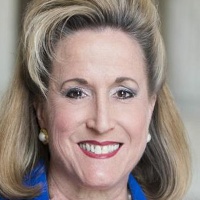
Ann Wagner
Representative
MO
Ann Wagner
Representative
MO
This bill amends the Victims of Crime Act of 1984 to temporarily exclude certain False Claims Act recoveries from being deposited into the Crime Victims Fund through fiscal year 2029. It also mandates a comprehensive audit by the Department of Justice Inspector General on the Fund's sustainability and the impact of recent legislative changes. The resulting report will provide recommendations for improving the Fund's effectiveness and oversight.
This act removes the gray wolf from the endangered and threatened wildlife list and prohibits judicial review of that decision.
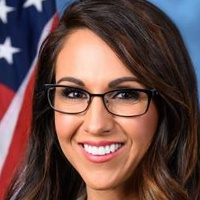
Lauren Boebert
Representative
CO
Lauren Boebert
Representative
CO
The Pet and Livestock Protection Act officially removes the gray wolf from the federal list of endangered and threatened wildlife. This legislation mandates the reissuance of the November 3, 2020, final rule concerning the gray wolf's delisting within 60 days of enactment. Furthermore, the reissuance of this rule is explicitly barred from judicial review.
This bill establishes an annual preventative health evaluation for veterans with spinal cord injuries or disorders to assess their needs, including access to new assistive technologies like spinal cord neuromodulation.
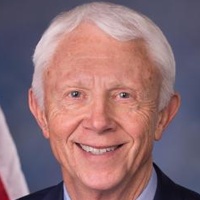
Jack Bergman
Representative
MI
Jack Bergman
Representative
MI
The Veterans Spinal Trauma Access to New Devices (STAND) Act mandates an annual preventative health evaluation for veterans with spinal cord injuries or disorders. This comprehensive assessment will cover risks, pain management, nutrition, and the need for advanced assistive technologies, including neuromodulation devices. The VA is required to consult with specialists and manufacturers when developing implementation guidelines. Furthermore, the Secretary must report biennially to Congress on the utilization and outcomes of these evaluations and assistive technologies.