This bill establishes U.S. policy to oppose international financial institution loans for projects that use or risk using forced labor, particularly in the Xinjiang Uyghur Autonomous Region.
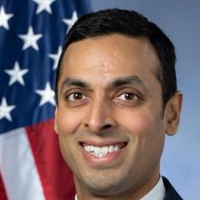
Suhas Subramanyam
Representative
VA-10
The No Funds for Forced Labor Act aims to prevent U.S. support for international financial institution loans that fund projects involving forced labor, particularly in the Xinjiang Uyghur Autonomous Region. It directs the Treasury Secretary to use U.S. influence to oppose such loans and requires annual reporting on these efforts. Congress asserts that international financial institutions should not fund entities credibly accused of using forced labor.
No Funds for Forced Labor Act Targets International Loans: New U.S. Vetting Requirements for Global Projects
The No Funds for Forced Labor Act sets a firm U.S. policy to block international financing from reaching projects that rely on forced labor. Specifically, the bill directs the U.S. Treasury to instruct its directors at major international financial institutions—like the World Bank or the IMF—to vote against any loan or guarantee for projects that carry a 'significant risk' of using forced labor. It places a particular bullseye on the Xinjiang Uyghur Autonomous Region of China, requiring an automatic 'no' vote for any project involving state-owned or state-influenced entities in that area. Beyond just voting, the bill demands that these global banks provide a project-specific explanation of how they are vetting for labor abuses and what they are doing to fix any issues they find.
Cleaning Up the Global Supply Chain
For the average person, this bill is about making sure your tax dollars—which help fund these international banks—aren't inadvertently supporting modern-day slavery. If you’ve ever worried that the cheap goods in your home were made by someone working under duress, this legislation aims to cut that problem off at the source: the funding. By requiring the U.S. to use its 'voice and vote' to oppose these loans, the bill creates a financial gatekeeper. For example, a massive infrastructure project in a region known for labor abuses would now face a high hurdle to get the green light if it can't prove its workers are there by choice. This isn't just about moral high ground; it’s about ensuring that ethical businesses don't have to compete with entities that drive costs down through exploitation.
Receipts and Responsibilities
Transparency is a major focus here, as the bill mandates an annual report from the Secretary of the Treasury for the next five years. This report must be made public and will detail every project approved by an international bank where forced labor was a possible risk, along with what U.S. officials did to convince other countries to join their opposition. While the bill uses the strict definition of forced labor from the Tariff Act of 1930—which includes convict and indentured labor—the real-world challenge lies in the phrase 'credibly accused.' Because the bill leaves some room for interpretation on what counts as a credible accusation, the effectiveness of the law will largely depend on how aggressively the Treasury Department investigates these claims.
The Diplomatic Heavy Lift
While the U.S. carries a lot of weight in these international institutions, it doesn't act alone. Section 3 of the bill emphasizes that the U.S. must work with global allies to make this stick. For a small business owner in the U.S. who plays by the rules, this could eventually lead to a more level playing field globally. However, the immediate impact will be felt by the international banks themselves, which will have to overhaul their auditing processes to meet these new, stricter U.S. expectations. If these institutions can't provide the 'project-specific explanation' required by the bill, they risk losing U.S. support for their most ambitious projects, potentially shifting how global development is funded for years to come.