Legislative Activity
Track Tracey's sponsored bills, co-sponsored legislation, and voting record
This act establishes grants and loans administered by the Secretary of Agriculture to help eligible entities increase domestic fertilizer and nutrient alternative manufacturing, processing, and storage capacity.
Eric Sorensen
Representative
IL
Eric Sorensen
Representative
IL
The Homegrown Fertilizer Act establishes a program within the USDA to provide grants and loans to eligible entities for expanding domestic fertilizer and nutrient alternative manufacturing, processing, and storage. Priority is given to projects that improve production methods, increase capacity for U.S. agriculture, and enhance market competition. Recipients must comply with regulations and repay funds if the facility is sold to a major market share holder within ten years of completion.
This Act repeals the federal beneficial ownership information reporting requirements for domestic persons and entities, limiting them only to foreign individuals and foreign-connected companies, and mandates the deletion of existing domestic data.
Warren Davidson
Representative
OH
Warren Davidson
Representative
OH
The Repealing Big Brother Overreach Act significantly narrows the federal beneficial ownership information reporting requirements. This legislation limits reporting obligations exclusively to foreign individuals and foreign-connected companies. Furthermore, it mandates the deletion of all previously collected data pertaining to domestic persons and entities.
The Medicare Advantage Improvement Act of 2026 mandates faster authorization decisions, stricter oversight, and aligns coverage criteria with traditional Medicare to improve timely care and accountability for Medicare Advantage plans.

John Joyce
Representative
PA
John Joyce
Representative
PA
The Medicare Advantage Improvement Act of 2026 aims to enhance timely access to care and improve oversight for Medicare Advantage (MA) enrollees. The bill mandates faster decision-making for prior authorization requests, establishes strict compliance scoring with financial penalties for non-compliant plans, and requires MA plans to use the same medical necessity criteria as traditional Medicare. Furthermore, it protects providers by limiting retroactive denials for pre-approved services and ensuring prompt payment for those services.
This bill designates April 19 through April 25, 2026, as National Crime Victims' Rights Week to honor victims, survivors, and the organizations that support them.

Jim Costa
Representative
CA
Jim Costa
Representative
CA
This resolution officially designates April 19 through April 25, 2026, as National Crime Victims' Rights Week. It recognizes the lasting impact of crime on victims and survivors while honoring the efforts of organizations that support them. The bill reaffirms Congress's commitment to strengthening victims' rights and services nationwide.
This bill requires the Center for Medicare and Medicaid Innovation to test a bundled payment model for providing comprehensive, accountable produce and nutrition services to eligible individuals with chronic diseases.
Lloyd Smucker
Representative
PA
Lloyd Smucker
Representative
PA
The Accountable Produce is Medicine Act of 2026 requires the Center for Medicare and Medicaid Innovation to test a new bundled payment model for treating chronic diseases using food and related services. This model will fund selected programs that provide comprehensive "Accountable Produce is Medicine" services, including tailored nutrition, care coordination, and monitoring, to eligible high-risk individuals. The goal is to improve health outcomes and demonstrate cost savings within Medicare, Medicaid, and CHIP.
This bill mandates comprehensive safety upgrades for civilian and military aviation, focusing on collision avoidance technology, air traffic control training, and enhanced airspace transparency, particularly around high-traffic airports.
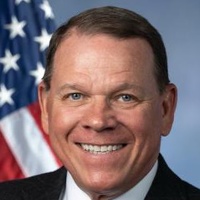
Sam Graves
Representative
MO
Sam Graves
Representative
MO
The Airspace Location and Enhanced Risk Transparency Act of 2026 mandates significant safety upgrades across both civilian and military aviation to prevent midair collisions. It requires the FAA to implement advanced collision avoidance systems and new air traffic controller training, while also compelling the Department of Defense to equip most military helicopters with transponders for increased visibility. The bill establishes new transparency measures, including public tracking of safety rule implementation and enhanced reporting on near-miss incidents, particularly around major airports like Reagan National.
This bill mandates that House members personally reimburse the Treasury for sexual harassment settlements and requires them to publicly disclose the details of these payments before the House.
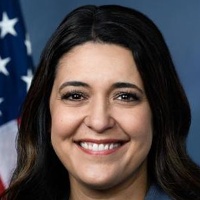
Stephanie Bice
Representative
OK
Stephanie Bice
Representative
OK
This bill mandates that House Members, Delegates, and Resident Commissioners personally reimburse the U.S. Treasury for any sexual harassment settlements or awards paid on their behalf. It establishes a strict 90-day repayment timeline and enforces transparency by requiring Members to appear before the House for a public disclosure of the claim. Failure to comply with these reimbursement or disclosure requirements results in significant penalties, including the suspension of official duties for current Members and the loss of floor privileges for former Members.
This bill establishes the American Cowboy Commemorative Commission to plan and execute nationwide activities celebrating the cultural and historical legacy of the American cowboy in honor of the Nation's 250th anniversary.
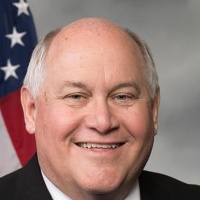
Ron Estes
Representative
KS
Ron Estes
Representative
KS
This bill establishes the American Cowboy Commemorative Commission to honor the historical and cultural contributions of the American cowboy and historic cattle trails. The Commission is tasked with planning and coordinating nationwide activities to celebrate this legacy in conjunction with the Nation’s 250th anniversary. Through these efforts, the legislation seeks to recognize the vital role cowboys played in shaping American history.
This bill authorizes the President to deny U.S. port entry to vessels transiting facilities in Western Hemisphere free-trade partner countries that have expropriated property from U.S. citizens.
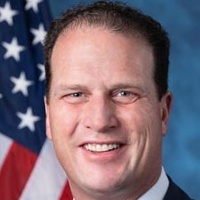
August Pfluger
Representative
TX
August Pfluger
Representative
TX
The Defending American Property Abroad Act of 2026 authorizes the President to deny U.S. port entry to vessels that utilize foreign ports in Western Hemisphere free-trade partner countries that have unlawfully expropriated property from U.S. citizens. This legislation aims to protect American assets abroad by restricting access to U.S. markets for vessels operating through seized facilities. The bill includes provisions for lifting these restrictions once the property is returned, compensated for, or the dispute is otherwise resolved.
This resolution supports the designation of 2026 as the "International Year of Rangelands and Pastoralists" to honor the economic, ecological, and cultural importance of rangelands and the stewards who manage them.

Celeste Maloy
Representative
UT
Celeste Maloy
Representative
UT
This resolution supports the United Nations' designation of 2026 as the "International Year of Rangelands and Pastoralists." It recognizes the vital economic, social, and ecological contributions of American rangelands and the dedicated land managers who steward them. Furthermore, it encourages national efforts to promote education, research, and sustainable management practices for these essential landscapes.
The Words Matter Act of 2025 updates federal law by replacing the terms "mentally retarded" and "mental retardation" with "intellectual disability" or "individuals with intellectual disabilities" without altering existing rights or benefits.

Pete Sessions
Representative
TX
Pete Sessions
Representative
TX
The Words Matter Act of 2025 mandates a comprehensive update across all federal laws, replacing the outdated terms "mentally retarded" and "mental retardation" with "intellectual disability" or "individuals with intellectual disabilities." This change is strictly a linguistic update intended to align federal statutes with current, respectful terminology. The Act explicitly states that this language revision does not alter eligibility for benefits, rights, or responsibilities under any existing federal program. Agencies are required to update their regulations to reflect this new terminology while maintaining a record of the previous language used.
This bill protects the tax-exempt status of religious organizations and prohibits federal discrimination against religious employers who make hiring decisions based on their faith-based standards.

Blake Moore
Representative
UT
Blake Moore
Representative
UT
The Fair Treatment of Religious Organizations Act of 2026 prevents the IRS from considering an organization's beliefs on marriage, sexuality, or gender identity when determining its tax-exempt status. Additionally, the bill prohibits federal agencies from discriminating against religious employers who receive federal financial assistance and make hiring decisions based on their religious standards.
This resolution commemorates the 100th anniversary of the Sporting Arms and Ammunition Manufacturers' Institute (SAAMI) and honors its century-long commitment to establishing safety and technical standards for the firearms industry.
Pat Harrigan
Representative
NC
Pat Harrigan
Representative
NC
This resolution commemorates the 100th anniversary of the Sporting Arms and Ammunition Manufacturers' Institute, Inc. (SAAMI). It honors the organization’s century-long commitment to establishing technical and safety standards that ensure the reliable interoperability of firearms and ammunition. Furthermore, it recognizes SAAMI’s ongoing contributions to public safety, industry innovation, and responsible firearm practices.
The Airmen Certificate Accessibility Act authorizes the FAA to issue and accept digital airman certificates alongside traditional physical versions.

Tim Burchett
Representative
TN
Tim Burchett
Representative
TN
The Airmen Certificate Accessibility Act modernizes aviation regulations by allowing pilots to present their airman certificates in either physical or digital formats. The bill mandates that the FAA establish official rules and authentication requirements for these digital credentials by November 30, 2028.
This resolution designates March 24, 2026, as "National Agriculture Day" to celebrate the vital role of the agricultural industry in the United States.
Mark Alford
Representative
MO
Mark Alford
Representative
MO
This resolution expresses support for designating March 24, 2026, as "National Agriculture Day." It celebrates the essential role of the agricultural sector and recognizes its status as one of the most impactful industries in the United States.
The ISLET Act classifies human cadaveric islets as organs rather than drugs or biological products to streamline their regulation and improve access to life-saving transplantation.

Ralph Norman
Representative
SC
Ralph Norman
Representative
SC
The ISLET Act classifies human cadaveric islets as organs rather than drugs or biological products, streamlining their regulation under the Public Health Service Act. This legislation mandates that the Secretary of Health and Human Services update federal regulations to reflect this change, ensuring more efficient access to life-saving endocrine transplantation.
This bill prohibits federal agencies from banning the use of lead ammunition and tackle on federal lands and waters unless specific, evidence-based criteria and state-level coordination requirements are met.

Robert Wittman
Representative
VA
Robert Wittman
Representative
VA
The Protecting Access for Hunters and Anglers Act prevents federal agencies from banning the use of lead ammunition and tackle on federal lands and waters open to hunting and fishing. Exceptions to this rule are only permitted if specific, site-based field data proves lead is causing a wildlife population decline and the action is approved by or consistent with state wildlife policies.
This Act establishes new federal standards and requirements for states issuing commercial driver's licenses (CDLs) to individuals who are not residents of that issuing state, particularly focusing on drivers from foreign countries and U.S. territories.

David Rouzer
Representative
NC
David Rouzer
Representative
NC
The Non-Domiciled CDL Integrity Act establishes new federal standards for states issuing Commercial Driver's Licenses (CDLs) to individuals who do not reside in that state. This bill sets specific, strict requirements for foreign nationals seeking a CDL, including proof of lawful status and job-related visas, while also outlining distinct procedures for applicants residing in U.S. territories. The legislation mandates enhanced record-keeping and reporting by states to the Secretary of Transportation regarding these non-domiciled licenses.
The Enhanced Iran Sanctions Act of 2025 mandates broad economic and immigration sanctions on foreign individuals, entities, and financial institutions that support Iran’s nuclear, missile, drone, or terrorist activities, while specifically targeting the country's petroleum and petrochemical sectors.
Michael Lawler
Representative
NY
Michael Lawler
Representative
NY
The Enhanced Iran Sanctions Act of 2025 strengthens U.S. policy by imposing mandatory sanctions on foreign persons and financial institutions that support Iran’s nuclear, ballistic missile, drone, and terrorist activities. The bill specifically targets Iran’s petroleum and petrochemical sectors to cut off funding for these malign programs. Additionally, it expands the State Department’s "Rewards for Justice" program to incentivize the reporting of individuals who evade these sanctions.
This bill revokes FDA approval for the abortion drug mifepristone and establishes federal liability for manufacturers against women harmed by its use.

Diana Harshbarger
Representative
TN
Diana Harshbarger
Representative
TN
This bill, the Safeguarding Women from Chemical Abortion Act, immediately revokes the FDA's approval of mifepristone for terminating pregnancies. It also establishes a federal civil right of action allowing individuals harmed by the drug to sue manufacturers for damages. The legislation ensures that shipping or selling mifepristone across state lines for abortion purposes becomes a violation of federal law.