
Legislative Activity
Track Summer's sponsored bills, co-sponsored legislation, and voting record
This bill prohibits the removal of Federal employees during a lapse in discretionary appropriations, ensuring job security for civil servants during government shutdowns.
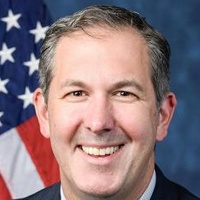
Johnny Olszewski
Representative
MD
Johnny Olszewski
Representative
MD
This bill prohibits federal agencies from removing civil service employees during any lapse in discretionary appropriations, commonly known as a government shutdown. If an employee is terminated in violation of this rule during a shutdown, they will have the option to be reinstated with full back pay once funding resumes. This measure aims to protect federal workers from job loss caused by budget impasses.
This joint resolution directs the President to remove U.S. Armed Forces from hostilities against certain designated groups and states unless Congress authorizes the use of force, while preserving the right to self-defense.
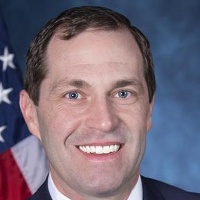
Jason Crow
Representative
CO
Jason Crow
Representative
CO
This joint resolution directs the President to remove U.S. Armed Forces from hostilities initiated after February 20, 2025, against designated terrorist groups or drug trafficking organizations without prior Congressional authorization. It asserts Congress's constitutional power to declare war and finds recent military strikes against vessels lacked proper justification. The bill allows for continued use of forces for self-defense or authorized counternarcotics support, but explicitly states drug trafficking alone does not constitute an armed attack.
The Safe Step Act mandates that group health plans using medication step therapy establish clear, timely exception processes for patients and doctors when required drugs are medically inappropriate or ineffective.
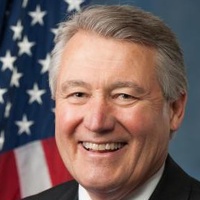
Rick Allen
Representative
GA
Rick Allen
Representative
GA
The Safe Step Act establishes mandatory, transparent exception processes for health plans that use "step therapy" protocols for prescription drugs. This ensures patients or their doctors can quickly request coverage for a prescribed medication when specific clinical criteria are met, such as previous treatment failure or risk of harm. Plans must decide on standard requests within 72 hours and urgent requests within 24 hours, and approved exceptions must last for at least one year. Furthermore, insurers must report detailed data annually on exception requests, approvals, and denials to the Secretary of Health and Human Services.
This bill establishes federal oversight, led by the FTC, requiring large entities to conduct impact assessments and report on high-stakes "covered algorithms" to ensure fairness and mitigate consumer harm.
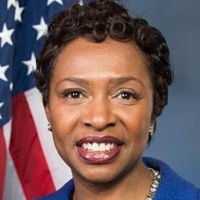
Yvette Clarke
Representative
NY
Yvette Clarke
Representative
NY
The Algorithmic Accountability Act of 2025 establishes federal oversight for large entities using complex automated systems, or "covered algorithms," that impact critical consumer decisions like employment or housing. It mandates that these entities conduct rigorous, ongoing impact assessments to test for bias, privacy risks, and performance issues. The Federal Trade Commission (FTC) is tasked with creating detailed regulations and enforcing compliance, including requiring covered entities to submit annual summary reports detailing their assessment findings. This Act ensures that significant algorithmic decisions are scrutinized for fairness and transparency without overriding stricter state or local regulations.
This resolution condemns using federal regulatory power or litigation to suppress lawful political speech critical of a party or the President, warning against authoritarianism.

Yassamin Ansari
Representative
AZ
Yassamin Ansari
Representative
AZ
This resolution strongly condemns attempts to use federal regulatory power or litigation to suppress lawful speech critical of a political party or the President. It reaffirms the fundamental importance of the First Amendment and warns that such actions resemble tactics used by authoritarian regimes. The bill urges government agencies to protect free expression and ensure accountability, not political censorship.
The Future Generations Protection Act mandates zero greenhouse gas emissions from new power plants, bans hydraulic fracturing starting in 2029, and restricts crude oil and natural gas exports while prioritizing a just transition away from fossil fuels.

Janice Schakowsky
Representative
IL
Janice Schakowsky
Representative
IL
The Future Generations Protection Act aims to combat climate change by immediately banning greenhouse gas emissions from new power plants and halting the approval of most new Liquefied Natural Gas (LNG) terminals. It also establishes a nationwide ban on hydraulic fracturing starting in 2029 and generally prohibits the export of domestically produced crude oil and natural gas, with limited exceptions for oil swaps and historical trade relationships. Furthermore, the Act mandates that the energy transition prioritize environmental justice, fairness for fossil fuel workers, and strong labor union involvement.
This bill mandates that federally funded higher education institutions update their harassment policies to explicitly cover technology-facilitated harassment and establishes a competitive grant program to fund anti-harassment initiatives.
Mark Pocan
Representative
WI
Mark Pocan
Representative
WI
The Tyler Clementi Higher Education Anti-Harassment Act of 2025 mandates that colleges receiving federal funds update their policies to explicitly prohibit and detail procedures for addressing harassment based on protected characteristics, including technology-facilitated abuse. The bill also establishes a competitive grant program, funded up to $50 million annually, to support campus efforts in harassment prevention, training, and support services. This legislation adds new requirements without superseding existing civil rights protections.
This House resolution strongly condemns all forms of political violence and demands an end to dehumanizing rhetoric against political opponents.

Marc Veasey
Representative
TX
Marc Veasey
Representative
TX
This House Resolution strongly condemns all forms of political violence and threats against elected officials and public figures, regardless of political affiliation. It affirms that disagreements must be resolved through peaceful and democratic means, not intimidation or force. The resolution urges law enforcement to prosecute those who commit or encourage such violence. Finally, it calls on all leaders to cease using dehumanizing rhetoric and promote civil discourse.
This Act conditions eligibility for Edward Byrne Memorial Justice Assistance Grants on prohibiting firearm transfers with licensed dealers identified by the ATF as frequently selling guns used quickly in crimes.
Gabe Amo
Representative
RI
Gabe Amo
Representative
RI
The Responsible Retirement of Law Enforcement Firearms Act of 2025 (RRLEF Act) amends the Edward Byrne Memorial Justice Assistance Grant Program to require state and local agencies to cease firearm transfers with licensed dealers flagged by the ATF. Dealers are placed on a restricted list if a significant number of their traced firearms show a "short time-to-crime." Furthermore, the Act mandates increased public disclosure of firearm tracing data by the ATF, removing previous statutory restrictions on making this information public.
This bill mandates that the wealthiest Americans pay annual taxes on the unrealized gains of their covered assets and removes several existing tax deferral mechanisms for these "applicable taxpayers."

Steve Cohen
Representative
TN
Steve Cohen
Representative
TN
The Billionaires Income Tax Act fundamentally changes how the wealthiest Americans are taxed by eliminating the ability to defer taxes on investment gains, requiring annual recognition of appreciation on covered assets. This legislation treats transfers like gifts or death as taxable sales and imposes stricter tax rules across various investment and compensation scenarios for "applicable taxpayers." Ultimately, the bill aims to ensure immediate taxation on wealth accumulation for high-net-worth individuals and associated entities starting in 2026.
This bill mandates dedicated, funded resources for specialized 988 Suicide Prevention Lifeline services for LGBTQ+ youth.
Raja Krishnamoorthi
Representative
IL
Raja Krishnamoorthi
Representative
IL
The **988 LGBTQ+ Youth Access Act of 2025** addresses the high rates of suicide risk among LGBTQ youth by strengthening specialized support through the national crisis hotline. This bill mandates that dedicated resources and services, such as a specific dialing option, must be maintained for LGBTQ individuals contacting 988. Furthermore, it requires that at least 9 percent of appropriated funds for the hotline be specifically reserved to ensure these specialized services for LGBTQ youth remain fully operational.
This bill amends the Social Security Act to provide Medicare coverage for FDA-approved multi-cancer early detection screening tests starting in 2028.
Jodey Arrington
Representative
TX
Jodey Arrington
Representative
TX
The Nancy Gardner Sewell Medicare Multi-Cancer Early Detection Screening Coverage Act amends the Social Security Act to provide Medicare Part B coverage for multi-cancer early detection screening tests starting January 1, 2028. This legislation establishes clear criteria for qualifying tests and outlines payment structures to ensure beneficiaries have access to these advanced diagnostic tools. Importantly, this coverage is designed to complement, rather than replace, existing Medicare-covered cancer screenings.
This constitutional amendment grants Congress and the states the authority to regulate campaign contributions and expenditures, and to establish public financing systems for political campaigns.
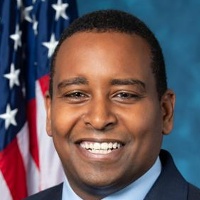
Joe Neguse
Representative
CO
Joe Neguse
Representative
CO
This constitutional amendment seeks to grant Congress and the states the authority to regulate contributions and expenditures in political campaigns. It specifically allows for the establishment of public financing systems to offset the influence of private money in elections. The amendment ensures that any regulations enacted must not infringe upon the freedom of the press.
The FAMILY Act establishes a national paid family and medical leave insurance program administered by the Social Security Administration, providing benefits for caregiving related to serious health conditions or victims of violence.

Rosa DeLauro
Representative
CT
Rosa DeLauro
Representative
CT
The FAMILY Act establishes a national Paid Family and Medical Leave Insurance program administered by a new office within the Social Security Administration. This program provides monthly benefits to eligible individuals who take time off for qualified caregiving reasons, including serious health conditions or victims of violence. The Act also sets forth detailed eligibility requirements, benefit calculation formulas, and job protection guarantees for employees utilizing the leave. Finally, it creates a funding mechanism to support existing state-level paid leave programs that meet federal standards.
The FAIR Act of 2025 invalidates pre-dispute arbitration agreements and joint-action waivers for employment, consumer, antitrust, and civil rights claims, while preserving the right to voluntary arbitration after a dispute arises.

Henry Johnson
Representative
GA
Henry Johnson
Representative
GA
The FAIR Act of 2025 invalidates pre-dispute arbitration agreements and class action waivers for employment, consumer, antitrust, and civil rights claims. This law restores the right for individuals to pursue these disputes in court or through collective legal action. The provisions apply to all covered disputes arising on or after the date the Act is enacted.
This bill establishes the National Infrastructure Bank to finance major U.S. infrastructure projects while granting the Bank and its investors favorable federal tax exemptions.
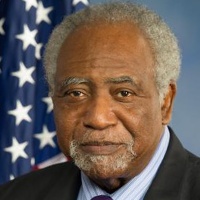
Danny Davis
Representative
IL
Danny Davis
Representative
IL
The National Infrastructure Bank Act of 2025 establishes a new, mixed-ownership federal corporation chartered to finance major infrastructure projects across the nation. This legislation authorizes the Bank to raise substantial capital and issue significant loans to spur economic growth while prioritizing projects in disadvantaged communities. Furthermore, the bill grants the Bank and its specific investors favorable tax exemptions to encourage participation and operation.
This act establishes a pathway to permanent residency for certain immigrant workers who provided essential services following the September 11th terrorist attacks.

Alexandria Ocasio-Cortez
Representative
NY
Alexandria Ocasio-Cortez
Representative
NY
The 9/11 Immigrant Worker Freedom Act establishes a pathway for certain individuals who provided essential services during the rescue and cleanup efforts following the September 11th terrorist attacks to adjust their status to lawful permanent residents. This relief is available to workers and volunteers who meet specific service hour requirements at the World Trade Center, Pentagon, or Shanksville sites, or those who maintained contaminated vehicles. The bill also mandates fee waivers for eligible applicants and protects their privacy regarding public benefit usage and future immigration enforcement actions.
This bill posthumously awards a Congressional Gold Medal to honor the groundbreaking civil rights achievements of Constance Baker Motley and authorizes the production and sale of bronze duplicates.
Rosa DeLauro
Representative
CT
Rosa DeLauro
Representative
CT
This bill, the Congressional Tribute to Constance Baker Motley Act of 2025, posthumously awards the Congressional Gold Medal to the pioneering civil rights attorney and federal judge, Constance Baker Motley. The legislation recognizes her historic achievements, including her role in *Brown v. Board of Education* and her service as the first African-American woman appointed as a federal judge. The Secretary of the Treasury is authorized to strike the medal, and provisions are made for selling bronze duplicates to cover production costs.
This act increases the corporate tax rate for companies whose CEO-to-worker pay ratio exceeds 50 to 1, based on a five-year average calculation.
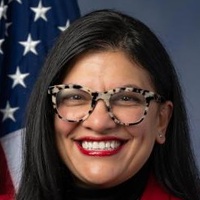
Rashida Tlaib
Representative
MI
Rashida Tlaib
Representative
MI
The Tax Excessive CEO Pay Act of 2025 imposes a federal income tax penalty on corporations whose CEO-to-worker pay ratio exceeds 50-to-1, calculated using a five-year average. If the ratio is too high, the standard 21% corporate tax rate will increase according to a specified penalty table. This measure applies to tax years beginning after December 31, 2025, with exceptions for smaller companies below a $100 million revenue threshold.
This Act establishes sanctions against Pakistani officials undermining democracy and human rights, while urging the U.S. government to promote democratic institutions in Pakistan until September 30, 2030.
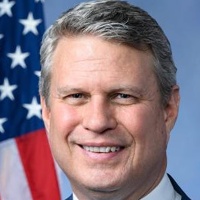
Bill Huizenga
Representative
MI
Bill Huizenga
Representative
MI
The Pakistan Freedom and Accountability Act expresses strong U.S. support for democracy and human rights in Pakistan, citing concerns over military influence and recent election interference. This legislation directs the President to identify and impose sanctions on Pakistani officials responsible for undermining democratic processes or committing serious human rights abuses. The Act emphasizes the need for civilian control over the military and sets an expiration date for its provisions in September 2030.