Legislative Activity
Track Summer's sponsored bills, co-sponsored legislation, and voting record
This bill redefines coordinated spending by Super PACs as direct contributions to candidates and prohibits federal officials from fundraising for political committees that accept non-compliant donations.
Delia Ramirez
Representative
IL
Delia Ramirez
Representative
IL
The Stop Super PAC-Candidate Coordination Act tightens campaign finance rules by redefining "coordinated expenditures" made with a candidate as direct contributions, subject to strict limits and severe penalties for violations. It also explicitly bans federal candidates and officeholders from soliciting funds for any political committee that accepts non-compliant donations. These changes aim to prevent candidates from indirectly influencing or benefiting from outside spending by Super PACs.
This bill eliminates the minimum contribution threshold, requiring political committees to report the name of every donor in federal elections.
Delia Ramirez
Representative
IL
Delia Ramirez
Representative
IL
The Campaign Transparency Act eliminates the existing dollar threshold for reporting donor names to political committees in federal elections. This change mandates that political committees must now disclose the identity of any individual who makes a contribution, regardless of the amount. Consequently, all donations, no matter how small, will be publicly reported starting immediately upon the Act's enactment.
This act modifies the Family and Medical Leave Act (FMLA) to establish specific eligibility criteria and leave calculation methods for paraprofessionals and other essential education support staff.
Sean Casten
Representative
IL
Sean Casten
Representative
IL
This bill, the ESP, Paraprofessional, and Education Support Staff Family Leave Act, updates eligibility requirements for certain school employees under the Family and Medical Leave Act (FMLA). It adjusts how paraprofessionals and education support staff meet the required hours of service by using a percentage of expected monthly hours worked during the school year. Furthermore, the bill mandates clear guidelines for calculating FMLA leave entitlement for these employees to account for non-standard school schedules.
This bill formally integrates Puerto Rico into the federal Supplemental Nutrition Assistance Program (SNAP) structure, outlining a transition plan away from its current block grant system.
Pablo José Hernández Rivera
Representative
PR
Pablo José Hernández Rivera
Representative
PR
The Puerto Rico Nutrition Assistance Fairness Act aims to integrate Puerto Rico into the federal Supplemental Nutrition Assistance Program (SNAP) structure, aligning it with other territories like Guam. The bill mandates a transition period where Puerto Rico must submit a plan of operation to the Secretary of Agriculture for approval to join SNAP. During this transition, existing block grant funding may continue for up to five years while the territory moves toward full participation under federal SNAP rules.
The Closing the Meal Gap Act of 2025 updates food assistance calculations by basing benefits on a "low-cost food plan," adjusts medical expense deductions, eliminates the cap on shelter expense deductions, and removes the time limit for receiving benefits.
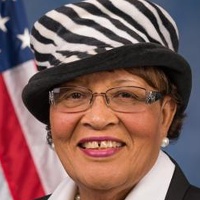
Alma Adams
Representative
NC
Alma Adams
Representative
NC
The Closing the Meal Gap Act of 2025 updates federal food assistance by basing benefit calculations on a new, higher "low-cost food plan" standard. It also modifies income calculations by removing the cap on excess shelter deductions and establishing a standardized, inflation-adjusted medical expense deduction. Finally, this Act completely eliminates the time limit restrictions previously placed on receiving food assistance benefits.
The Tipped Worker Protection Act phases out the lower minimum wage for tipped employees, establishes stricter rules for tip retention and pooling via employee vote, and redefines what constitutes a tip.
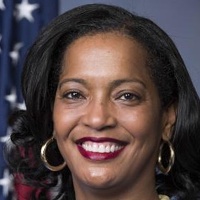
Jahana Hayes
Representative
CT
Jahana Hayes
Representative
CT
The Tipped Worker Protection Act aims to eliminate the lower minimum wage for tipped employees by phasing out the tip credit system, ensuring all workers eventually receive the standard federal minimum wage. The bill also establishes strict new rules regarding tip pooling, mandates employee voting to create or change pooling systems, and prohibits employers from keeping any portion of employee tips. Furthermore, it clarifies what constitutes a tip, including certain mandatory service charges, and updates penalties for illegal tip retention.
This Act bans Members of Congress and their immediate families from trading or owning specific investments while in office, requiring divestment within 90 to 180 days or facing significant financial penalties.

Chip Roy
Representative
TX
Chip Roy
Representative
TX
The Restore Trust in Congress Act establishes strict new rules prohibiting Members of Congress and their immediate families from owning or trading specific financial assets, referred to as "covered investments," while in office. Covered individuals must divest existing prohibited holdings within a set timeframe or face significant financial penalties, including fines and forfeiture of profits. The legislation aims to eliminate conflicts of interest arising from personal financial trading while serving in federal office.
This act prohibits discrimination in federal jury service based on disability or age, ensuring individuals are not excluded if they can perform the essential functions of jury duty with reasonable accommodation.
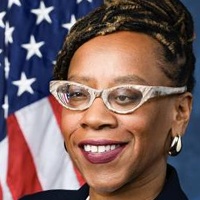
Lateefah Simon
Representative
CA
Lateefah Simon
Representative
CA
This Act prohibits discrimination against individuals based on disability or age in federal jury service. It amends federal law to ensure that a disability cannot be used as a basis for exclusion from a jury unless the individual cannot perform the essential functions of service even with a reasonable accommodation. The legislation updates existing jury qualification standards to reflect this nondiscrimination principle.
The MORE Act seeks to federally decriminalize cannabis, expunge past non-violent federal cannabis convictions, establish reinvestment programs, and open up SBA access for cannabis-related businesses.
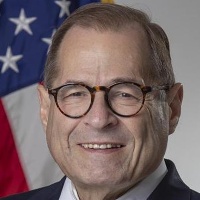
Jerrold Nadler
Representative
NY
Jerrold Nadler
Representative
NY
The Marijuana Opportunity Reinvestment and Expungement (MORE) Act seeks to federally decriminalize cannabis by removing it from the Controlled Substances Act, which will retroactively apply to past offenses. The bill establishes an Opportunity Trust Fund, financed by new cannabis taxes, to reinvest in communities harmed by prohibition. Furthermore, it mandates the expungement of non-violent federal cannabis convictions and opens up Small Business Administration (SBA) programs to legitimate cannabis businesses.
This Act directs the U.S. Postal Service to issue a special semipostal stamp to raise funds for Lyme disease and tick-borne illness research at the National Institute of Allergy and Infectious Diseases.
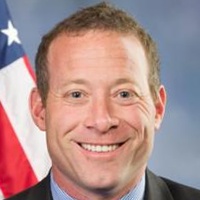
Josh Gottheimer
Representative
NJ
Josh Gottheimer
Representative
NJ
The Stamp Out Lyme Disease Act directs the U.S. Postal Service to issue a special semipostal stamp to raise funds for Lyme disease research. All proceeds from the sale of this stamp will be directed to the National Institute of Allergy and Infectious Diseases (NIAID). This measure aims to support research into tick-borne illnesses, acknowledging the significant public health and financial burden of Lyme disease in the United States.
This Act establishes a pilot program to provide grants to states for creating electronic services that identify ticks, assess disease risk, and offer public guidance.
Josh Gottheimer
Representative
NJ
Josh Gottheimer
Representative
NJ
The Tick Identification Pilot Program Act of 2025 establishes a pilot program to provide grants to states for creating electronic tick identification services. These state programs will allow residents to submit photos of ticks for review by qualified biologists within 72 hours. The goal is to rapidly inform the public about the tick species, potential disease risk, and necessary next steps to combat tick-borne illnesses.
This resolution terminates the President's declared crime emergency in the District of Columbia, asserting that the emergency is unwarranted and the legal basis for federal MPD control is flawed.
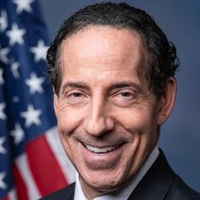
Jamie Raskin
Representative
MD
Jamie Raskin
Representative
MD
This resolution terminates the President's August 11, 2025, declaration of a crime emergency in the District of Columbia. Congress asserts that the President lacks the legal authority under the D.C. Home Rule Act to take operational control of the Metropolitan Police Department. Furthermore, the bill notes that local violent crime rates have been declining significantly.
This Act prohibits grocery stores from price gouging, using personal surveillance data to set individualized prices, and mandates disclosure of facial recognition use, while banning electronic shelf labels in larger stores.
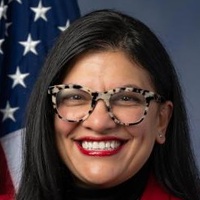
Rashida Tlaib
Representative
MI
Rashida Tlaib
Representative
MI
The Stop Price Gouging in Grocery Stores Act of 2025 aims to protect consumers by prohibiting grocery stores from charging "grossly excessive" prices for food items. The bill also bans stores from adjusting prices based on personal tracking data, such as facial recognition, and requires clear signage if facial recognition technology is used. Furthermore, it mandates that large physical grocery stores must use printed signs instead of electronic shelf labels for displaying prices.
The Land of the Free Act of 2025 repeals the provision of the Immigration and Nationality Act that made certain protected speech activities grounds for deportability.
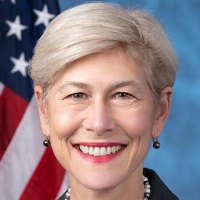
Deborah Ross
Representative
NC
Deborah Ross
Representative
NC
The Land of the Free Act of 2025 repeals a section of the Immigration and Nationality Act that previously made certain protected speech activities grounds for making an alien deportable. This legislation removes a specific restriction, ensuring that engaging in protected speech will no longer be a basis for removal from the United States under that provision.
This act mandates that employers provide employees with at least two hours of paid leave to vote in federal elections, with the employer determining the specific time the leave is taken.
Nikema Williams
Representative
GA
Nikema Williams
Representative
GA
The Time Off to Vote Act mandates that employers provide employees with at least two consecutive hours of paid leave to vote in federal elections. Employers retain control over when this paid leave is taken, which can include early voting periods if permitted by state law. This Act prohibits employers from penalizing employees for utilizing this required voting leave.
This bill updates voting rights requirements by expanding language assistance definitions, creating incentive grants for voluntary translation services, and mandating a study on lowering language assistance thresholds.
Nikema Williams
Representative
GA
Nikema Williams
Representative
GA
The Expanding the VOTE Act updates language assistance requirements under the Voting Rights Act by modernizing the definition of "voting materials" to include digital information. It also establishes new state responsibilities for providing language assistance and creates a grant program to incentivize voluntary language support beyond current mandates. Furthermore, the bill includes special provisions for unwritten American Indian and Alaska Native languages and mandates a study on lowering thresholds for language assistance coverage.
The Help America Run Act allows federal candidates to use campaign funds for essential personal living expenses like childcare and health insurance to enable working Americans to run for office.
Nikema Williams
Representative
GA
Nikema Williams
Representative
GA
The Help America Run Act aims to make it easier for everyday Americans to run for office by allowing campaign funds to cover essential living expenses. Specifically, the bill permits campaign committees to use funds for necessary personal services like childcare and elder care, which helps candidates who are not independently wealthy. This change is intended to increase the diversity of candidates and ensure elected officials better reflect the general population.
This Act establishes a new federal program to provide dedicated, long-term funding to states for improving election administration, security, and accessibility, managed by a new federal office.
Nikema Williams
Representative
GA
Nikema Williams
Representative
GA
The Sustaining Our Democracy Act establishes a new federal program to provide annual grants to states for improving election administration, security, and accessibility, managed by a newly created Office of Democracy Advancement and Innovation. This funding is supported by a dedicated ten-year Trust Fund to ensure stable resources for election infrastructure upgrades. The bill imposes strict rules on how states can use the money, including prohibitions against purchasing insecure voting machines or restricting basic voter support. If states fail to comply, the federal Director can bypass state government to fund local election subdivisions directly.
The Election Mail Act mandates same-day processing for incoming absentee ballots, requires intelligent mail barcodes on federal election mail, establishes delivery standards and free postage for completed ballots, and sets a national seven-day grace period for accepting postmarked federal mail-in ballots after Election Day.
Nikema Williams
Representative
GA
Nikema Williams
Representative
GA
The Election Mail Act aims to ensure the timely and secure delivery of federal election mail through the U.S. Postal Service. It mandates same-day processing of received absentee ballots and requires the use of intelligent mail barcodes for tracking mailed ballots starting in 2026. Furthermore, the bill establishes protections against operational changes that would slow election mail delivery and sets a national standard to count mail-in ballots postmarked by Election Day if received within seven days after the election.
The Youth Voting Rights Act establishes new federal protections and requirements to expand and enforce voting access for young citizens, including pre-registration for 16- and 17-year-olds, mandatory on-campus polling places, and validation of student IDs.
Nikema Williams
Representative
GA
Nikema Williams
Representative
GA
The Youth Voting Rights Act aims to strengthen voting access for young Americans by enforcing the 26th Amendment. This bill mandates that public colleges facilitate voter registration, allows 16- and 17-year-olds to pre-register for federal elections, and requires on-campus polling locations. It also establishes grants to encourage youth civic engagement and strengthens protections against age-based barriers in voting, including ID rules and absentee voting.