Legislative Activity
Track Michael's sponsored bills, co-sponsored legislation, and voting record
The Invest to Protect Act of 2025 establishes a Department of Justice grant program to fund training, mental health resources, and recruitment/retention bonuses for small local law enforcement agencies.
Josh Gottheimer
Representative
NJ
Josh Gottheimer
Representative
NJ
The Invest to Protect Act of 2025 establishes a new, streamlined grant program within the Department of Justice to support small local and Tribal law enforcement agencies (under 175 officers). These funds are specifically designated for officer training, mental health resources, and recruitment/retention bonuses. The law mandates a rapid application process and includes strict accountability measures, such as audits and public reporting of bonuses. Congress is authorized to appropriate up to $50 million annually for this program through fiscal year 2031.
This Act mandates the high-resolution surveying and mapping of the Great Lakes lakebeds by NOAA, with data to be made publicly available by the end of 2030.

Lisa McClain
Representative
MI
Lisa McClain
Representative
MI
The Great Lakes Mapping Act of 2025 mandates a high-resolution survey and mapping of the Great Lakes lakebeds, to be completed by December 31, 2030. Led by NOAA, this effort requires collaboration with state and regional partners to collect and catalog detailed bathymetric data. The resulting high-resolution map and associated data must be made publicly available as it is completed and fully released within 180 days of project completion.
This Act officially recognizes peer support specialists, establishes a new Office of Recovery within SAMHSA led by someone with lived experience, and mandates a report on state criminal background check processes for these specialists.
Andrea Salinas
Representative
OR
Andrea Salinas
Representative
OR
The PEER Support Act aims to formally recognize and strengthen the profession of peer support specialists who use their lived experience to help others in recovery. The bill establishes a new Office of Recovery within SAMHSA, led by an individual with lived recovery experience. Furthermore, it mandates the official classification of peer support specialist roles in the federal job system and directs a review of state criminal background check processes for these specialists.
This Act establishes federal minimum standards for public employee collective bargaining rights, allowing states to maintain their own laws if they meet or exceed these standards, otherwise the Federal Labor Relations Authority will enforce federal rules.
Donald Norcross
Representative
NJ
Donald Norcross
Representative
NJ
The Public Service Freedom to Negotiate Act of 2025 establishes federal minimum standards for collective bargaining rights for public employees across the nation. It requires the Federal Labor Relations Authority (FLRA) to review state laws to ensure they substantially provide these minimum rights, including the right to organize and bargain collectively. If a state fails to meet these standards, the FLRA will administer federal labor relations rules for the uncovered employees. The Act also prohibits strikes or lockouts that would measurably disrupt emergency or public safety services.
The Affordable Housing Credit Improvement Act of 2025 updates state allocation formulas, reforms tenant eligibility and credit determination rules, and enhances assistance for Native American and rural housing projects.
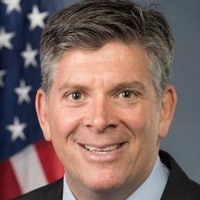
Darin LaHood
Representative
IL
Darin LaHood
Representative
IL
The Affordable Housing Credit Improvement Act of 2025 updates federal housing tax credit allocations to reflect current economic realities and boosts minimum state allotments. It reforms tenant eligibility rules to stabilize tenancy and enhance protections for vulnerable residents, including victims of abuse. The bill also provides disaster relief for property owners, increases incentives for housing the extremely low-income, and directs greater resources toward Native American and rural housing needs. Finally, it streamlines administrative processes and signals a future focus on data transparency and discouraging restrictive local zoning.
This bill mandates a study on the prevalence of liver fluke-related cancer among Vietnam veterans and extends a current limitation on certain pension payments.
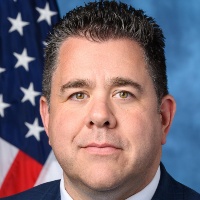
Nicolas LaLota
Representative
NY
Nicolas LaLota
Representative
NY
This Act mandates a comprehensive study, conducted by the VA in partnership with the CDC, to determine the prevalence of cholangiocarcinoma (liver cancer) among veterans who served in the Vietnam theater. The study will compare cancer rates in this veteran population against the general U.S. population and report findings to Congress. Additionally, the bill extends a current limitation on certain veteran pension payments until the end of 2031.
This Act allows employees to fully deduct union dues above the line and restores the itemized deduction for certain other job-related business expenses.
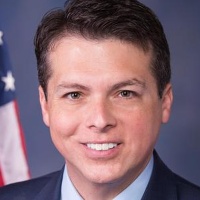
Brendan Boyle
Representative
PA
Brendan Boyle
Representative
PA
The Tax Fairness for Workers Act restores key federal tax deductions for employees, effective after 2024. This legislation makes union dues fully deductible "above the line," meaning they reduce Adjusted Gross Income without itemizing. Additionally, it allows itemizers to deduct certain other job-related business expenses that were previously limited.
This act authorizes $20 million annually through fiscal year 2030 for the NINDS to supplement research specifically focused on unruptured brain aneurysms across diverse populations.
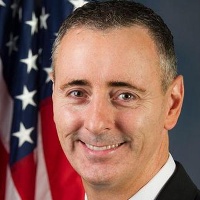
Brian Fitzpatrick
Representative
PA
Brian Fitzpatrick
Representative
PA
The Ellie Helton, Lisa Colagrossi, Kristen Shafer Englert, Teresa Anne Lawrence, and Jennifer Sedney Focused Research Act, or "Ellies Law," addresses the high incidence and devastating impact of brain aneurysms in the U.S. The bill authorizes $20 million annually from Fiscal Year 2026 through 2030 for the National Institute of Neurological Disorders and Stroke (NINDS). This dedicated funding is specifically intended to supplement existing research efforts focused on unruptured intracranial aneurysms across diverse populations.
This Act directs the National Science Foundation to prioritize research on the role of adverse childhood experiences and toxic stress in youth suicide prevention.
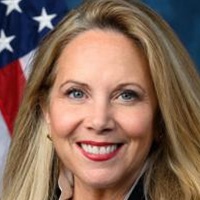
Laura Gillen
Representative
NY
Laura Gillen
Representative
NY
The Youth Suicide Prevention Research Act updates the National Science Foundation's research priorities to better address childhood suicide. This legislation specifically mandates the NSF to focus new research efforts on understanding the roles of adverse childhood experiences (ACEs) and toxic stress in youth suicide risk.
This bill streamlines security vetting for international STEM graduate students and creates a new pathway to lawful permanent residency for those holding advanced U.S. STEM degrees with qualifying job offers.
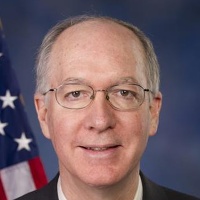
Bill Foster
Representative
IL
Bill Foster
Representative
IL
The Keep STEM Talent Act of 2025 aims to strengthen security vetting for international graduate students in STEM fields while creating a new pathway to permanent residency for those who earn advanced STEM degrees in the U.S. The bill mandates pre-admission applications and enhanced background checks for incoming STEM graduate students. Furthermore, it establishes a streamlined green card category for advanced STEM degree holders with qualifying job offers, allowing them to pursue permanent residency without jeopardizing their current student status.
This bill establishes a Department of Veterans Affairs program to designate and fund at least five geographically dispersed "Innovative Therapies Centers of Excellence" to research and provide cutting-edge treatments like MDMA and Psilocybin for conditions such as PTSD and chronic pain.
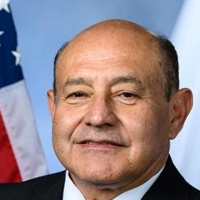
J. Correa
Representative
CA
J. Correa
Representative
CA
This bill establishes the Innovative Therapies Centers of Excellence Act of 2025, directing the Department of Veterans Affairs (VA) to designate at least five medical facilities as specialized hubs for cutting-edge treatments. These Centers of Excellence must focus on research, training partnerships, and clinical evaluation of innovative therapies for covered conditions like PTSD and chronic pain. The legislation specifically names substances such as MDMA and Psilocybin as part of the therapies to be explored, supported by dedicated annual funding.
This bill repeals the requirement for financial institutions to collect and report specific data on small business loans to reduce compliance costs and improve small business access to credit.
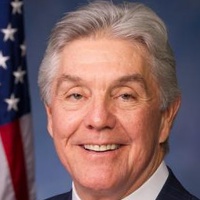
Roger Williams
Representative
TX
Roger Williams
Representative
TX
The 1071 Repeal to Protect Small Business Lending Act aims to eliminate the mandatory data collection and reporting requirements for small business loans previously established under Section 704B of the Equal Credit Opportunity Act. Proponents argue that these regulations impose unnecessary compliance costs on lenders, potentially hindering small business access to credit. This bill repeals those specific reporting mandates to reduce regulatory burdens on financial institutions.
This Act promotes new bank formation by phasing in capital standards, adjusting business plan review timelines, offering temporary leverage ratio relief for rural institutions, expanding agricultural lending authority, and mandating a study on barriers to new bank creation.
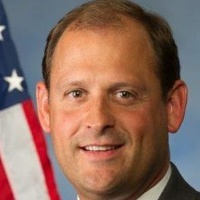
Garland Barr
Representative
KY
Garland Barr
Representative
KY
The Promoting New Bank Formation Act aims to encourage the creation of new banks by providing regulatory relief for newly insured institutions. This includes a three-year phase-in period for new capital standards and streamlined processes for adjusting initial business plans. The Act also establishes temporary, favorable capital requirements for new rural depository institutions and expands lending authority for Federal savings associations to include agricultural loans. Finally, it mandates a study on barriers to new bank formation, especially in underserved areas.
The IDEA Full Funding Act establishes mandatory, increasing funding levels for the Individuals with Disabilities Education Act (IDEA) from 2026 through 2035, contingent upon offsetting budget cuts.
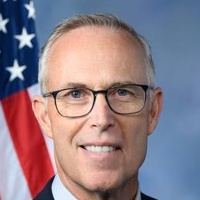
Jared Huffman
Representative
CA
Jared Huffman
Representative
CA
The IDEA Full Funding Act establishes mandatory, increasing funding levels for the Individuals with Disabilities Education Act (IDEA) programs through fiscal year 2035. This legislation sets specific appropriation targets based on student counts and national average spending to ensure greater financial support for special education services. Furthermore, the bill requires that these new IDEA appropriations adhere to "cut-as-you-go" budget offset rules.
This act mandates the FAA to create and annually update a public list of medications deemed safe for pilots and air traffic controllers to use while maintaining their medical certification.
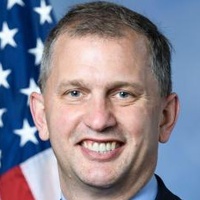
Sean Casten
Representative
IL
Sean Casten
Representative
IL
The Aviation Medication Transparency Act of 2025 mandates the Federal Aviation Administration (FAA) to create and maintain a public list of medications deemed safe for pilots and air traffic controllers to use while maintaining their medical certification. This list must be developed in consultation with relevant industry and labor groups. The FAA is required to update this comprehensive list annually, ensuring airmen and their doctors have clear guidance on medication approval status and necessary waiting periods.
This bill adjusts Medicare Advantage payment rates to compensate local areas that experienced significant, sudden increases in their hospital wage indexes due to reclassification, ensuring payment neutrality overall.

Claudia Tenney
Representative
NY
Claudia Tenney
Representative
NY
The Protecting Options for Seniors Act of 2025 addresses significant under-projection of Medicare Advantage (MA) local area growth caused by recent wage index reclassifications. This bill mandates a specific adjustment to MA payment rates starting in 2026 for areas experiencing rapid wage index increases exceeding 20 percent. While providing targeted financial boosts to these areas, the Act ensures the overall national benchmark average remains neutral. Furthermore, it requires increased transparency by mandating the separate reporting of Part A and Part B payments to area hospitals in annual public notices.
The STABLE Act of 2025 establishes a comprehensive federal framework to regulate payment stablecoin issuers through strict reserve, transparency, and operational requirements while clarifying that these stablecoins are not securities.
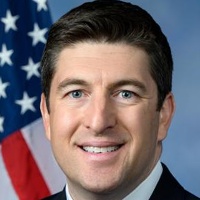
Bryan Steil
Representative
WI
Bryan Steil
Representative
WI
The STABLE Act of 2025 establishes a comprehensive federal framework for regulating payment stablecoins, requiring issuers to maintain 1:1 reserves in safe assets and adhere to strict transparency and anti-money laundering standards. The bill strictly limits issuance to approved entities, whether federally or state-qualified, and clarifies that these dollar-backed digital assets are not considered securities. Furthermore, it mandates robust consumer protection rules, ensuring customer assets are segregated and prioritized in bankruptcy proceedings.
The Reentry Act of 2025 allows inmates to receive Medicaid assistance during the 30 days preceding their release and mandates a comprehensive report on healthcare standards within correctional facilities.
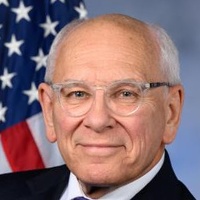
Paul Tonko
Representative
NY
Paul Tonko
Representative
NY
The Reentry Act of 2025 allows incarcerated individuals to receive medical assistance through Medicaid during the 30 days immediately preceding their release. This legislation also mandates a comprehensive report from MACPAC analyzing current healthcare standards within correctional facilities. The report will examine the impact of this coverage change and offer recommendations for improving healthcare access for those transitioning back into the community.
The PLAN for School Safety Act of 2025 establishes a grant program to fund regional centers that provide schools with evidence-based consultation and support for developing and implementing comprehensive safety and mental health plans.
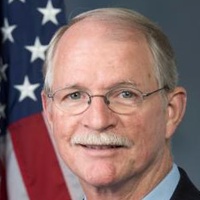
John Rutherford
Representative
FL
John Rutherford
Representative
FL
The PLAN for School Safety Act of 2025 establishes a new federal grant program to create regional School Safety Development Centers. These centers will provide personalized, research-backed consultation and technical assistance to schools on developing and implementing comprehensive safety and mental health plans. The program prioritizes support for rural, Tribal, and low-resource communities, while explicitly prohibiting the use of funds for firearm training.
The EASE Act of 2025 mandates the testing of a new model to improve specialty healthcare access for rural and underserved Medicare and Medicaid beneficiaries using digital tools and coordinated care.
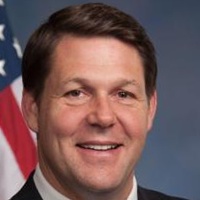
Jodey Arrington
Representative
TX
Jodey Arrington
Representative
TX
The EASE Act of 2025 mandates that the Center for Medicare and Medicaid Innovation (CMMI) test a new model to improve access to specialty health services. This "Specialty Health Care Services Access Model" will utilize digital tools, like telehealth, to connect eligible Medicare, Medicaid, and CHIP beneficiaries in rural or underserved areas with necessary specialty care. The model must be tested through a network of qualified, experienced, and primarily rural-based nonprofit providers.