Legislative Activity
Track Nicolas's sponsored bills, co-sponsored legislation, and voting record
This Act allows urbanized area formula grant funds to be used for public transportation operating costs, contingent upon recipients certifying and maintaining their local spending efforts.
Michael Lawler
Representative
NY
Michael Lawler
Representative
NY
The Transit Funding Flexibility Act amends federal law to allow Urbanized Area Formula grant funds to be used more flexibly for public transportation operating costs. It removes specific population-based restrictions on grant eligibility. Crucially, recipients must now annually certify they will maintain their local spending effort for federally funded equipment and facilities, or face a mandatory 13% reduction in future federal funding.
This bill establishes a mandatory supply fee paid by Medicare drug plans to long-term care pharmacies for specific prescriptions in 2026 and 2027, while also mandating a GAO study on the financial sustainability of the current payment system.
Beth Van Duyne
Representative
TX
Beth Van Duyne
Representative
TX
This Act establishes a mandatory supply fee for Medicare drug plans to pay long-term care pharmacies for specific prescriptions dispensed in 2026 and 2027. The bill mandates a $30 fee per prescription in 2026, increasing in 2027, with penalties for non-payment. Additionally, the GAO is required to study the financial sustainability of the current payment structure for these essential pharmacies. This legislation aims to ensure continued access to medications for patients in long-term care settings.
This bill penalizes companies that move call center jobs overseas while requiring transparency about agent location and AI use during customer service communications.
Kristen McDonald Rivet
Representative
MI
Kristen McDonald Rivet
Representative
MI
The Keep Call Centers in America Act of 2025 aims to incentivize keeping customer service jobs in the U.S. by penalizing companies that move call centers overseas with loss of federal grants and contracts. The bill also mandates transparency, requiring businesses to disclose an agent's physical location or the use of AI during customer service communications. Furthermore, it ensures that all call center work performed under a federal contract must be completed within the United States.
This Act establishes the "Local Farmers Feeding Our Communities" program to strengthen local food security by funding agreements that support local producers and distribute fresh food to communities.
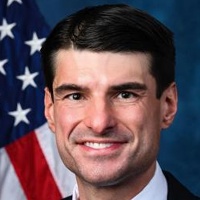
Robert Bresnahan
Representative
PA
Robert Bresnahan
Representative
PA
The Local Farmers Feeding our Communities Act establishes a new program to support local food producers and strengthen regional food security. This initiative requires the Secretary of Agriculture to fund agreements that ensure nutritious, locally sourced food is purchased and distributed widely, prioritizing small and beginning farmers. Funds must be used to buy minimally processed local products and provide technical assistance to producers. The program is backed by mandatory funding starting in Fiscal Year 2026.
This bill mandates a long-term study and creation of a health registry to investigate the neurological and mental health effects of G-force stress and flight operations on military aviators.
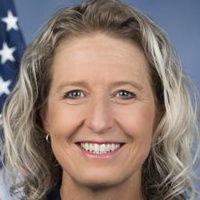
Jennifer Kiggans
Representative
VA
Jennifer Kiggans
Representative
VA
The Warrior Impact from Neurological and G-Force Stress Act (WINGS Act) mandates a comprehensive, long-term study by the VA to investigate the physical and mental health effects of military flight operations, particularly high G-forces, on aviators. This research will examine links between flight stress and conditions like TBI, cognitive decline, and mental health issues, comparing aviators to other service members. The bill also requires the creation of a dedicated Military Aviator Neurohealth Registry to track this data over time.
This Act eliminates age restrictions and simplifies premium requirements for adult children covered under the TRICARE Young Adult program.
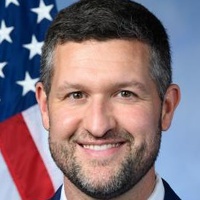
Patrick Ryan
Representative
NY
Patrick Ryan
Representative
NY
The Health Care Fairness for Military Families Act of 2025 significantly improves the TRICARE Young Adult (TYA) program for military dependents. This legislation eliminates the age restriction for TYA eligibility and removes the separate premium requirement for coverage. These changes aim to provide broader and simpler healthcare access for adult children of service members.
This bill mandates a comprehensive study to investigate potential links between military rotary-wing operations and increased cancer prevalence or mortality among pilots and support personnel.
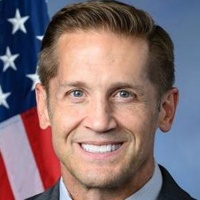
Rich McCormick
Representative
GA
Rich McCormick
Representative
GA
The ROTOR Act mandates a comprehensive study to investigate cancer prevalence and mortality rates among military rotary-wing pilots and aviation support personnel. This research, conducted by the Defense Health Agency in partnership with the NIH and NCI, will first compare cancer rates in these service members against the general population. If elevated rates are found, a second phase will seek to identify potential toxic exposures or environmental factors linked to helicopter operations that may be causing the increased risk.
This bill establishes a new system for distributing up to 2,000 additional Medicare-funded residency positions annually from 2026 through 2032, prioritizing hospitals serving underserved areas, and mandates a study on strategies to increase workforce diversity.
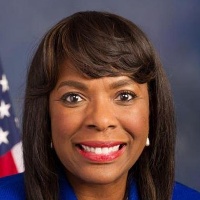
Terri Sewell
Representative
AL
Terri Sewell
Representative
AL
The Resident Physician Shortage Reduction Act of 2025 establishes a structured process for distributing up to 2,000 additional, federally funded residency positions annually between fiscal years 2026 and 2032. This distribution prioritizes hospitals serving in underserved areas, those already training above their limit, and those committed to primary care and general surgery training. The bill also mandates a study and report by the Comptroller General on effective strategies to increase diversity within the health professional workforce.
This Act increases penalties for health plans and insurers that violate surprise billing rules, imposes severe financial penalties for late payments after dispute resolution, and mandates more frequent and detailed transparency reporting on enforcement actions.
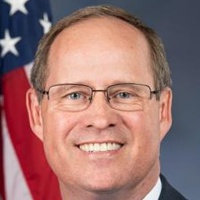
Gregory Murphy
Representative
NC
Gregory Murphy
Representative
NC
The No Surprises Act Enforcement Act significantly increases financial penalties for group health plans and insurance issuers that violate balance billing protections. It establishes steep fines, including up to $\$10,000$ per affected individual for serious non-compliance. Furthermore, the bill imposes severe penalties, including triple the disputed amount plus interest, for failing to make required payments promptly after an Independent Dispute Resolution (IDR) determination. Finally, it mandates more frequent and detailed transparency reporting on enforcement actions and violations.
The SAVES Act establishes a VA pilot program to award grants to nonprofits providing service dogs and veterinary insurance to eligible veterans managing specific service-connected conditions.
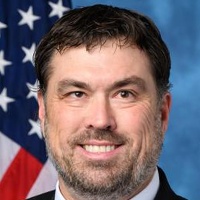
Morgan Luttrell
Representative
TX
Morgan Luttrell
Representative
TX
The SAVES Act establishes a Department of Veterans Affairs (VA) pilot program to award grants to nonprofit organizations that provide service dogs to eligible veterans. These grants, up to $\$2,000,000$ each, will fund the training and provision of service dogs for veterans with qualifying conditions like PTSD or TBI. The bill also extends the expiration date for certain limits on veterans' pension payments until February 2033.
This bill establishes a federal grant program to help low-income households pay for their drinking water and sewer services.
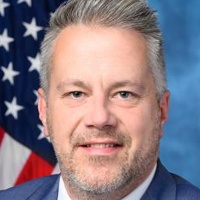
Eric Sorensen
Representative
IL
Eric Sorensen
Representative
IL
This bill establishes the Low-Income Household Water Assistance Program to provide grants to states and tribes. These funds will help public water systems cover the water and sewer bills for eligible low-income households. The program aims to supplement existing aid by assisting families whose income is at or below 150% of the poverty level or 60% of the state median income. Funding is authorized at $500 million annually from fiscal years 2026 through 2030.
This Act prioritizes federal research and development funding for controlling the invasive Spotted Lanternfly and extends key agricultural research programs through 2030.
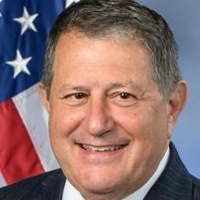
Joseph Morelle
Representative
NY
Joseph Morelle
Representative
NY
The Spotted Lanternfly Research and Development Act prioritizes federal funding for research and extension programs specifically aimed at controlling the invasive Spotted Lanternfly. This legislation ensures that developing effective tools and treatments against this pest becomes a high-priority initiative. Additionally, the Act extends the authorization for several existing high-priority agricultural research programs until 2030.
This Act establishes a Department of Veterans Affairs grant program to fund facility repairs and technology upgrades for Veterans Service Organizations.
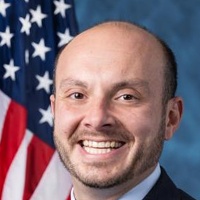
Andrew Garbarino
Representative
NY
Andrew Garbarino
Representative
NY
The Saving Vet Halls Act of 2025 establishes a new grant program administered by the Department of Veterans Affairs. This program provides funding to Veterans Service Organizations (VSOs) specifically for repairing facilities and upgrading technology. Grants are capped at $\$75,000$ or the total project cost (whichever is higher), and organizations receiving funds are ineligible to reapply for five years. The legislation authorizes $\$10$ million to support these essential improvements for VSOs.
This bill expedites security assistance to Middle Eastern and North African partners who normalize relations with Israel and cooperate against Iranian threats, while safeguarding Israel's qualitative military edge.
Michael Lawler
Representative
NY
Michael Lawler
Representative
NY
The Abraham Accords Defense Against Terror Act expedites security assistance and defense sales to Middle Eastern and North African countries that have normalized relations with Israel and cooperate against Iranian threats. This process requires a shortened 15-day congressional notification period from the President for approved transfers. Furthermore, the State Department must submit regular, public reports detailing the security strategy, threat assessments, and progress in countering Iranian proxies. Crucially, the Act ensures that these provisions do not undermine Israel's qualitative military edge.
This act allows eligible veterans to use their educational assistance benefits, up to \$500 per exam, to pay for standardized tests and assessments that grant college credit.
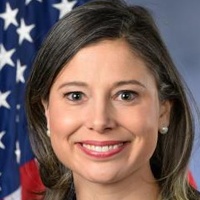
Maggie Goodlander
Representative
NH
Maggie Goodlander
Representative
NH
The Military Learning for Credit Act of 2025 allows eligible veterans to use their existing educational assistance benefits to pay for specific exams and assessments designed to earn college credit. This provision caps the benefit usage at \$500 per covered test, including DSST and CLEP exams. Using these benefits for testing will count against the veteran's total entitlement time, calculated based on the cost of the exam.
This bill amends the Family and Medical Leave Act to explicitly qualify time taken for an employee's own organ donation surgery as a serious health condition.
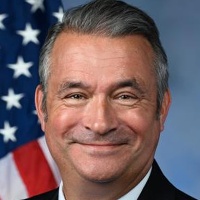
Don Bacon
Representative
NE
Don Bacon
Representative
NE
This bill amends the Family and Medical Leave Act (FMLA) to explicitly clarify that time taken off for an employee's own organ donation surgery qualifies as a serious health condition. This ensures both private and federal sector workers receive FMLA protection for recovery from organ donation. The legislation also specifies how federal employees must substitute existing paid leave when taking FMLA time for this purpose.
This Act prohibits insurance companies from discriminating against living organ donors when issuing life, disability, or long-term care policies and mandates the updating of educational materials regarding donation risks and insurance implications.
Don Bacon
Representative
NE
Don Bacon
Representative
NE
The Living Donor Protection Act of 2025 prohibits life, disability, and long-term care insurance companies from denying coverage or increasing premiums solely because an individual is a living organ donor. This legislation ensures that living donors are not financially penalized for their altruistic act. Additionally, the bill requires the Secretary of HHS to update educational materials to accurately reflect the insurance protections afforded to living donors.
This bill directs the U.S. Postal Service to assign single, unique ZIP Codes to 66 specific communities across the nation.
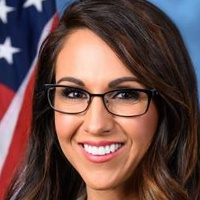
Lauren Boebert
Representative
CO
Lauren Boebert
Representative
CO
This bill directs the United States Postal Service (USPS) to assign a single, unique ZIP Code to 66 specific communities across numerous states. The USPS is required to complete this designation process within 270 days of the law's enactment. This measure aims to ensure these designated towns and areas each have their own distinct postal code.
This act mandates the FDA to study the human health impacts of microplastic exposure through food and water and report recommendations to Congress.
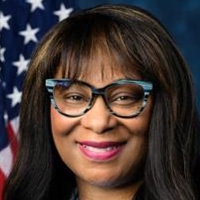
Janelle Bynum
Representative
OR
Janelle Bynum
Representative
OR
The Microplastics Safety Act mandates the FDA to conduct a comprehensive study on the human health impacts of microplastic exposure through food and water. This research must specifically investigate risks to children's health, endocrine function, cancer, and reproduction. Following the study, the FDA is required to report its findings and recommend necessary legislative or regulatory actions to Congress.
The Uncheck the Box Act prohibits political committees from automatically enrolling donors into recurring contribution plans without their explicit, affirmative consent and mandates clear disclosure and cancellation procedures for all recurring donations.
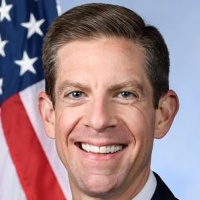
Mike Levin
Representative
CA
Mike Levin
Representative
CA
The Uncheck the Box Act prohibits political committees from automatically enrolling donors into recurring contribution plans based on pre-checked boxes or inaction. Donors must provide explicit, affirmative consent to establish any recurring donation. Furthermore, committees accepting these funds must provide clear receipts detailing future payments and easily accessible cancellation instructions.