Legislative Activity
Track Susie's sponsored bills, co-sponsored legislation, and voting record
This bill excludes certain Social Security benefits reinstated by the Social Security Fairness Act of 2023 from federal income tax for payments received between late 2024 and the end of 2025.
Lance Gooden
Representative
TX
Lance Gooden
Representative
TX
The No Tax on Restored Benefits Act aims to prevent certain Social Security benefits from being subject to federal income tax for a limited time. This legislation specifically excludes payments resulting from changes made by the Social Security Fairness Act of 2023. The exclusion applies to benefits paid for months between the end of 2024 and the beginning of 2026.
This act ensures that a veteran's pension, awarded before death but paid after, goes to their surviving family or estate according to a specified order of priority.
Elise Stefanik
Representative
NY
Elise Stefanik
Representative
NY
The Ernest Peltz Accrued Veterans Benefits Act establishes a clear process for paying a veteran's pension that was awarded by the VA before their death but issued afterward. This legislation prioritizes payment to the veteran's spouse, children, or dependent parents before the estate. The bill also makes a minor extension to the expiration date of certain existing pension payment restrictions.
This bill seeks to disapprove and nullify the Department of Veterans Affairs' final rule regarding "Reproductive Health Services."
Julia Brownley
Representative
CA
Julia Brownley
Representative
CA
This resolution seeks to disapprove the Department of Veterans Affairs' final rule concerning "Reproductive Health Services" issued in September 2024. If enacted, this disapproval, made under the Congressional Review Act, would prevent the VA rule from taking legal effect.
This act modernizes Lake Tahoe Basin land programs to include the Washoe Tribe in land acquisition and management, allowing federal funds to be used for both acquisition and ongoing land management activities.
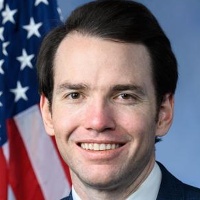
Kevin Kiley
Representative
CA
Kevin Kiley
Representative
CA
The Santini-Burton Modernization Act of 2026 updates existing law to better support environmental protection and cultural preservation in the Lake Tahoe Basin. This bill specifically includes the Washoe Tribe of Nevada and California in land acquisition and management programs, recognizing the Basin as their homeland. It also expands the use of federal funds to cover land management activities and authorizes the Tribe to acquire culturally significant lands.
This act expands burial allowance eligibility for veterans who die at home while receiving VA hospice care immediately following VA or contracted hospital or nursing home care.
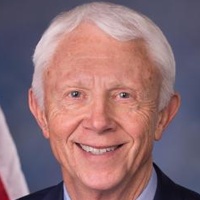
Jack Bergman
Representative
MI
Jack Bergman
Representative
MI
The Gerald's Law Act expands eligibility for a veteran's burial allowance. It now covers survivors whose veteran died at home while receiving VA hospice care, provided that care immediately followed a stay in a VA hospital or nursing home. This change ensures benefits for veterans transitioning from facility care to end-of-life care at home.
This Act mandates an annual report detailing China's advanced artificial intelligence capabilities, supply chains, and the effectiveness of U.S. export controls.
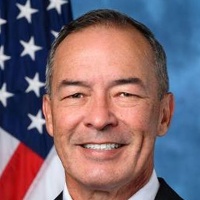
James (Jim) Moylan
Representative
GU
James (Jim) Moylan
Representative
GU
The China AI Power Report Act mandates the Secretary of Commerce to deliver an annual, detailed report to Congress for three years assessing China's advanced artificial intelligence capabilities and supply chains. This legislation emphasizes the need for dynamic U.S. export controls to counter China's evolving technological advancements and protect national security. The comprehensive report must cover everything from advanced AI chips and fabrication facilities to AI models, funding, and the effectiveness of current U.S. restrictions.
This bill redirects federal enforcement funding to significantly increase resources for local police departments through the COPS Hiring Program and the Byrne JAG Program.
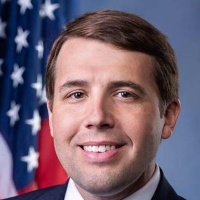
Chris Pappas
Representative
NH
Chris Pappas
Representative
NH
This bill, the PUBLIC SAFETY Act, redirects $2 billion from U.S. Immigration and Customs Enforcement (ICE) to significantly boost the COPS Hiring Program to support local law enforcement. It also allocates an additional $45 billion to the Edward Byrne Memorial Justice Assistance Grant (JAG) Program for local criminal justice initiatives. The legislation aims to increase federal funding available directly to local police departments for hiring and operations.
The WATCH Act mandates quarterly inspections and compliance certifications for foreign laboratories receiving U.S. federal funding for animal research.
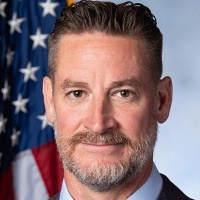
W. Steube
Representative
FL
W. Steube
Representative
FL
The Worldwide Animal Testing Compliance and Harmonization (WATCH) Act of 2026 mandates quarterly inspections and certification for foreign laboratories receiving U.S. federal funding for animal research. The bill ensures these facilities adhere to established animal welfare standards, with provisions to suspend or revoke funding for those that fail to maintain compliance.
The Purple Heart Freedom to Work Act allows Purple Heart recipients to return to the workforce without losing their Social Security Disability Insurance benefits by adjusting earnings thresholds and implementing a gradual benefit offset.
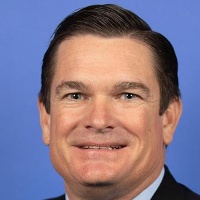
Austin Scott
Representative
GA
Austin Scott
Representative
GA
The Purple Heart Freedom to Work Act supports veterans by allowing Purple Heart recipients to return to the workforce without losing their Social Security Disability Insurance (SSDI) benefits. The bill increases the earnings threshold for "substantial gainful activity" and implements a gradual benefit reduction rather than a total cutoff, ensuring veterans can work while maintaining financial security.
This bill impeaches Secretary of Homeland Security Kristi Lynn Arnold Noem for high crimes and misdemeanors, citing willful refusal to comply with oversight law, violating the Impoundment Control Act, directing unlawful ICE misconduct, and misusing federal funds for personal gain.
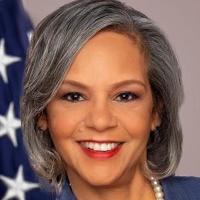
Robin Kelly
Representative
IL
Robin Kelly
Representative
IL
This resolution initiates impeachment proceedings against Secretary of Homeland Security Kristi Lynn Arnold Noem for high crimes and misdemeanors. The articles of impeachment charge her with willfully refusing to comply with Congressional oversight laws and violating the Impoundment Control Act by improperly withholding funds. Further articles allege she directed widespread misconduct by ICE agents that violated federal law and constitutional rights, and misused taxpayer funds for personal gain through improper contracting.
This bill expresses support for the Iranian people protesting for a free and democratic Iran while condemning the Islamic Republic's violent repression.
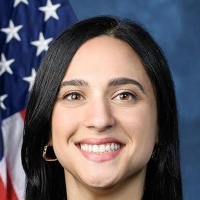
Yassamin Ansari
Representative
AZ
Yassamin Ansari
Representative
AZ
This resolution expresses strong support for the Iranian people protesting for freedom, democracy, and basic human rights against the repressive Islamic Republic. It condemns the regime's brutal crackdown on demonstrators and demands an end to violence and the release of political prisoners. Furthermore, it urges the U.S. government to work with allies to deter further lethal violence against protesters.
This act mandates an annual joint hearing where the Comptroller General presents an objective analysis of the federal government's financial audit findings to the Budget Committees.
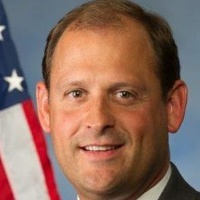
Garland Barr
Representative
KY
Garland Barr
Representative
KY
The Fiscal State of the Nation Act mandates an annual joint hearing where the Comptroller General presents the findings of the federal government's financial audit to the Budget Committees. This presentation must objectively analyze the nation's financial position and sustainability measures based on the Treasury Secretary's report. The hearing ensures public review of the government's fiscal health, open to all members of Congress.
This bill establishes controls on the remote access of sensitive items by foreign persons under the Export Control Reform Act of 2018, requiring consultation with Congress before new regulations are issued.
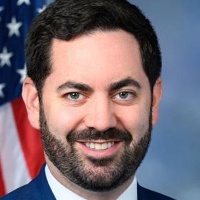
Michael Lawler
Representative
NY
Michael Lawler
Representative
NY
The Remote Access Security Act amends the Export Control Reform Act of 2018 to establish new controls on the remote access of sensitive U.S. items by foreign persons. This legislation grants the Secretary of Commerce authority to regulate such access when it poses a serious risk to national security. Furthermore, the bill mandates that the Secretary consult with key congressional committees before issuing new regulations on remote access controls.
This bill modifies deposits into the Crime Victims Fund by excluding certain False Claims Act recoveries and mandates an Inspector General audit of the Fund's sustainability.
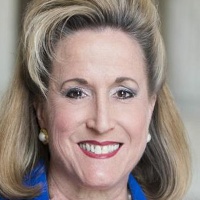
Ann Wagner
Representative
MO
Ann Wagner
Representative
MO
This bill amends the Victims of Crime Act of 1984 to temporarily exclude certain False Claims Act recoveries from being deposited into the Crime Victims Fund through fiscal year 2029. It also mandates a comprehensive audit by the Department of Justice Inspector General on the Fund's sustainability and the impact of recent legislative changes. The resulting report will provide recommendations for improving the Fund's effectiveness and oversight.
This act authorizes eligible public libraries to become passport acceptance facilities and retain the associated execution fees.
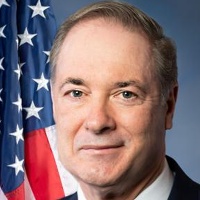
John Joyce
Representative
PA
John Joyce
Representative
PA
The Community Passport Services Access Act authorizes eligible public libraries to serve as official passport acceptance facilities. This allows these libraries to collect and retain the associated execution fee for processing passport applications. The bill ensures that libraries already performing this function can continue to do so.
This resolution recognizes the 15th anniversary of the 2011 Tucson shooting, honoring the victims, survivors, and the ongoing advocacy of Gabby Giffords.
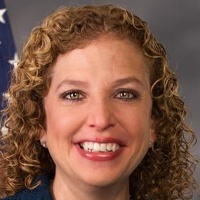
Debbie Wasserman Schultz
Representative
FL
Debbie Wasserman Schultz
Representative
FL
This resolution commemorates the 15th anniversary of the tragic January 8, 2011, Tucson shooting, honoring the six lives lost and the thirteen injured. It specifically commends the courage and ongoing advocacy of gun violence survivor and former Congresswoman Gabby Giffords. The resolution also recognizes the resilience of the community and reaffirms a commitment to ending political violence.
This bill reinstates the rule limiting the deduction of gambling losses to the amount of gambling gains for taxable years beginning after December 31, 2025.

Max Miller
Representative
OH
Max Miller
Representative
OH
The FULL HOUSE Act aims to reinstate a specific rule for deducting gambling losses under the Internal Revenue Code. This change limits the deduction of wagering losses to the exact amount of a taxpayer's gambling winnings, preventing deductions for net losses. This provision is set to take effect for taxable years beginning after December 31, 2025.
This act allows Byrne JAG funds to be used for programs that help individuals with speech, hearing, or developmental disabilities communicate effectively with law enforcement during traffic stops.
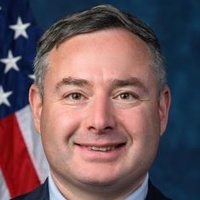
Eugene Vindman
Representative
VA
Eugene Vindman
Representative
VA
The Blue Envelope Awareness Act amends federal law to allow states and local governments to use Byrne Justice Assistance Grant (JAG) funds for "blue envelope programs." These programs assist individuals with speech, hearing, or developmental disabilities by providing them with a blue envelope to present disability documentation during traffic stops. The funding also supports necessary training for law enforcement officers on interacting effectively with these individuals.
This bill establishes an annual preventative health evaluation for veterans with spinal cord injuries or disorders to assess their needs, including access to new assistive technologies like spinal cord neuromodulation.
Jack Bergman
Representative
MI
Jack Bergman
Representative
MI
The Veterans Spinal Trauma Access to New Devices (STAND) Act mandates an annual preventative health evaluation for veterans with spinal cord injuries or disorders. This comprehensive assessment will cover risks, pain management, nutrition, and the need for advanced assistive technologies, including neuromodulation devices. The VA is required to consult with specialists and manufacturers when developing implementation guidelines. Furthermore, the Secretary must report biennially to Congress on the utilization and outcomes of these evaluations and assistive technologies.
This bill imposes comprehensive sanctions on Russia for its war against Ukraine while permanently extending the U.S. sanctions authority against Iran.
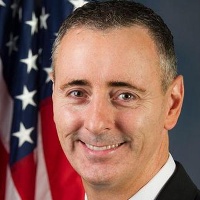
Brian Fitzpatrick
Representative
PA
Brian Fitzpatrick
Representative
PA
The Peace Through Strength Against Russia Act of 2025 imposes comprehensive sanctions on Russia's financial, military, and energy sectors in response to its war against Ukraine. This legislation cuts off major Russian banks from the U.S. financial system and bans new American investment in Russia. Additionally, the bill makes the existing sanctions authority against Iran permanent by removing its expiration date.