Legislative Activity
Track Barry's sponsored bills, co-sponsored legislation, and voting record
The Financial Integrity and Regulation Management Act prohibits federal banking agencies from using "reputational risk" as a factor in supervising, examining, or taking enforcement actions against depository institutions.
Garland Barr
Representative
KY
Garland Barr
Representative
KY
The Financial Integrity and Regulation Management (FIRM) Act prohibits federal banking agencies from using "reputational risk" as a factor in supervising, examining, or rating financial institutions. This legislation aims to ensure that bank oversight focuses strictly on financial safety and soundness, rather than public perception or political considerations. Agencies must remove all references to reputational risk from their guidance and report back to Congress on their compliance within 180 days.
This bill restructures the Consumer Financial Protection Bureau (CFPB) from a single-director agency into an independent commission-led agency with specific expertise and political balance requirements.
Bill Huizenga
Representative
MI
Bill Huizenga
Representative
MI
This bill, the Bureau of Consumer Financial Protection Commission Act, restructures the Consumer Financial Protection Bureau (CFPB) by replacing its single Director leadership with an independent, five-member commission appointed by the President and confirmed by the Senate. The legislation updates numerous federal laws to replace references to the "Director" with the "Commission" or "Bureau" to reflect this new governance structure. The commission will oversee the agency's core rulemaking and enforcement authority, with a Chair selected from among its members to manage day-to-day operations.
This Act restricts federal subpoena power over insurance data, enhances confidentiality protections for data shared by the Federal Insurance Office, and limits the Office of Financial Research's ability to subpoena insurance companies while imposing new requirements on financial regulators when collecting data from them.
Scott Fitzgerald
Representative
WI
Scott Fitzgerald
Representative
WI
The Insurance Data Protection Act aims to adjust federal regulatory authority over insurance data by limiting the subpoena power of the Office of Financial Research against insurance companies. It also strengthens confidentiality protections for data shared with and held by the Federal Insurance Office and other financial regulators. Furthermore, the bill mandates that financial regulators must seek existing data from other sources before directly collecting information from insurance companies, ensuring data privacy is maintained.
This resolution condemns Hamas for its brutal October 7th terrorist attacks on Israel and demands the immediate release of all remaining hostages.

Haley Stevens
Representative
MI
Haley Stevens
Representative
MI
This resolution strongly condemns Hamas for its premeditated and brutal terrorist attacks against Israel on October 7, 2023. It details the resulting casualties and the ongoing hostage crisis, emphasizing the severe mistreatment of those held captive. The bill demands that Hamas immediately release all remaining hostages and allow them safe return.
This Act establishes robust federal protections and enforcement mechanisms against discrimination for healthcare entities that decline to participate in abortion, sterilization, or assisted suicide procedures, while also granting individuals a private right of action to sue for violations.
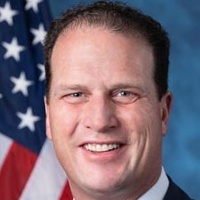
August Pfluger
Representative
TX
August Pfluger
Representative
TX
The Conscience Protection Act of 2025 aims to strengthen federal protections for healthcare providers and entities that refuse to participate in abortion, sterilization, or assisted suicide based on moral or religious objections. It prohibits discrimination against these entities by any recipient of federal funding, including state and local governments. Furthermore, the bill establishes stronger enforcement mechanisms within HHS and grants individuals and entities a private right of action to sue for violations of these conscience laws in federal court.
This joint resolution disapproves the Department of Energy's submitted rule establishing new energy conservation standards for walk-in coolers and freezers.
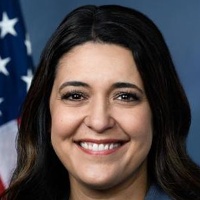
Stephanie Bice
Representative
OK
Stephanie Bice
Representative
OK
This joint resolution expresses the disapproval of Congress regarding a specific rule submitted by the Department of Energy (DOE) concerning energy conservation standards for walk-in coolers and freezers. By utilizing the Congressional Review Act, this measure nullifies the DOE's recently published rule, preventing it from taking effect. Essentially, Congress is overturning the new energy efficiency requirements for commercial refrigeration units.
This bill disapproves the Department of Energy's submitted rule establishing new energy conservation standards for consumer gas-fired instantaneous water heaters.
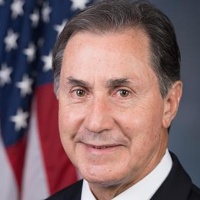
Gary Palmer
Representative
AL
Gary Palmer
Representative
AL
This bill seeks to formally reject a recent rule submitted by the Department of Energy (DOE) concerning new energy conservation standards for consumer gas-fired instantaneous water heaters. By invoking congressional disapproval, the legislation immediately cancels the DOE's proposed efficiency standards. In essence, Congress is overriding the DOE's attempt to implement these specific new regulations for tankless gas water heaters.
The SAFE Home Act prohibits adoption and foster care agencies receiving federal funds from discriminating against prospective parents based on their refusal to affirm a child's gender identity through medical treatment or documentation changes, defining "sex" as biological sex.

Mary Miller
Representative
IL
Mary Miller
Representative
IL
The SAFE Home Act amends federal foster care and adoption assistance programs to prohibit agencies receiving federal funds from discriminating against prospective parents based on their views regarding a child's biological sex, gender identity, or medical treatment. Specifically, placement decisions cannot be based on whether a parent aligns care with the child's biological sex or refuses to support medical interventions or documentation changes that conflict with biological sex. The Act defines "sex" strictly as biological sex for the purposes of these placement rules.
This resolution recognizes the vital contributions of linemen, often acting as first responders, and supports designating April 18, 2025, as "National Lineman Appreciation Day."
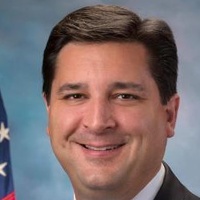
David Rouzer
Representative
NC
David Rouzer
Representative
NC
This resolution officially recognizes the vital and dangerous work performed by power linemen who maintain our electrical infrastructure and ensure public safety. It highlights their crucial role as first responders, often working in hazardous conditions after disasters. Furthermore, the resolution supports the designation of April 18, 2025, as "National Lineman Appreciation Day" to formally honor their service.
The Safeguard American Voter Eligibility (SAVE) Act mandates that individuals registering to vote in federal elections must present documentary proof of U.S. citizenship.

Chip Roy
Representative
TX
Chip Roy
Representative
TX
The Safeguard American Voter Eligibility Act (SAVE Act) significantly amends federal law to require individuals registering to vote in federal elections to present documentary proof of U.S. citizenship. This legislation mandates that states actively clean their voter rolls and cooperate with federal agencies to verify citizenship status. It establishes new criminal penalties for officials who fail to enforce these documentation requirements.
This act requires the Postal Service to submit major service changes to the Postal Regulatory Commission for review and an advisory opinion before implementation, subject to Congressional oversight.
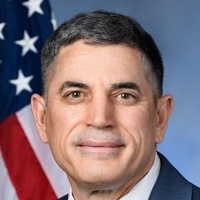
Andrew Clyde
Representative
GA
Andrew Clyde
Representative
GA
The Postal Service Transparency and Review Act requires the U.S. Postal Service to submit any proposed significant changes to mail service to the Postal Regulatory Commission (PRC) for review at least 180 days in advance. The USPS cannot spend money or implement the change until the PRC issues an advisory opinion. Furthermore, Congress retains the authority to disapprove of the proposed change through a joint resolution following the PRC's review.
The Transportation Freedom Act incentivizes domestic auto manufacturing with tax breaks, repeals recent EPA emissions rules, eliminates state authority to set stricter emission standards, and mandates a feasibility-based process for setting future national fuel economy and greenhouse gas standards.
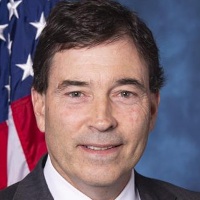
Troy Balderson
Representative
OH
Troy Balderson
Representative
OH
The Transportation Freedom Act seeks to bolster domestic auto manufacturing through significant tax incentives tied to high-wage American jobs and strong worker benefits. Simultaneously, the bill repeals recent EPA and NHTSA rules regarding multipollutant emissions and fuel economy standards for light, medium, and heavy-duty vehicles. Furthermore, it centralizes emission control by eliminating the authority of individual states to set standards stricter than the federal level. Finally, it mandates the establishment of new, feasibility-based fuel economy and greenhouse gas standards for future model years, explicitly prohibiting mandates for electric-only vehicle sales.
This Act expands Medicare coverage to include audiology services provided directly by qualified audiologists starting in 2027, removing physician supervision and referral requirements.

Gus Bilirakis
Representative
FL
Gus Bilirakis
Representative
FL
The Medicare Audiology Access Improvement Act of 2025 expands Medicare coverage for audiology services, beginning in 2027. This legislation allows qualified audiologists to provide diagnostic and treatment services without physician referral or supervision, as permitted by state law. The bill also specifies payment rates and includes audiologists in coverage for Rural Health Clinics and Federally Qualified Health Centers.
Recognizes the life, achievements, and legacy of Henry Louis "Hank" Aaron as a baseball legend, civil rights icon, and symbol of American determination.
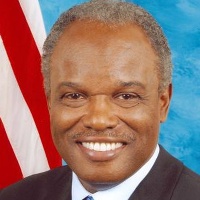
David Scott
Representative
GA
David Scott
Representative
GA
This bill honors the life and legacy of Henry Louis "Hank" Aaron, recognizing his achievements as a baseball player, his impact as a civil rights figure, and his embodiment of the American spirit. It acknowledges his overcoming of adversity and his status as one of the greatest athletes in U.S. history.
The Religious Workforce Protection Act extends nonimmigrant status and provides job flexibility for religious workers caught in long green card backlogs, while also waiving the one-year foreign residence requirement for those who left due to the R-1 visa time limit.

Mike Carey
Representative
OH
Mike Carey
Representative
OH
The Religious Workforce Protection Act aims to support religious workers facing long green card backlogs by allowing extensions of their nonimmigrant status beyond the usual five-year limit until their permanent residency application is processed. It also modifies job flexibility rules for certain delayed applicants and exempts religious workers who left the U.S. due to the five-year R-1 visa limit from the mandatory one-year foreign residence requirement before reapplying.
The End Kidney Deaths Act establishes a \$50,000 federal tax credit over five years for individuals who make non-directed living kidney donations between 2027 and 2036.

Nicole Malliotakis
Representative
NY
Nicole Malliotakis
Representative
NY
The End Kidney Deaths Act establishes a new federal tax credit for individuals who make non-directed living kidney donations. Eligible donors will receive an annual \$10,000 tax credit for five consecutive years, totaling a potential \$50,000 benefit. This provision is designed to incentivize altruistic donation while ensuring the credit is not considered payment for the organ.
This bill repeals the requirement for financial institutions to collect and report specific data on small business loans to reduce compliance costs and improve small business access to credit.
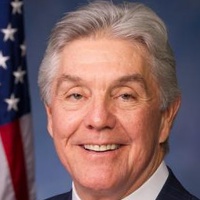
Roger Williams
Representative
TX
Roger Williams
Representative
TX
The 1071 Repeal to Protect Small Business Lending Act aims to eliminate the mandatory data collection and reporting requirements for small business loans previously established under Section 704B of the Equal Credit Opportunity Act. Proponents argue that these regulations impose unnecessary compliance costs on lenders, potentially hindering small business access to credit. This bill repeals those specific reporting mandates to reduce regulatory burdens on financial institutions.
This Act promotes new bank formation by phasing in capital standards, adjusting business plan review timelines, offering temporary leverage ratio relief for rural institutions, expanding agricultural lending authority, and mandating a study on barriers to new bank creation.
Garland Barr
Representative
KY
Garland Barr
Representative
KY
The Promoting New Bank Formation Act aims to encourage the creation of new banks by providing regulatory relief for newly insured institutions. This includes a three-year phase-in period for new capital standards and streamlined processes for adjusting initial business plans. The Act also establishes temporary, favorable capital requirements for new rural depository institutions and expands lending authority for Federal savings associations to include agricultural loans. Finally, it mandates a study on barriers to new bank formation, especially in underserved areas.
This bill drastically tightens and expands U.S. sanctions against Iran across its leadership, military, and economy while severely restricting the President's authority to lift these restrictions.
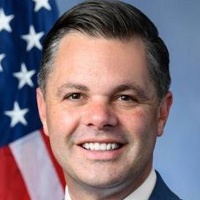
Zachary (Zach) Nunn
Representative
IA
Zachary (Zach) Nunn
Representative
IA
The Maximum Pressure Act dramatically tightens and expands U.S. sanctions against Iran across its military, missile, and economic sectors, codifying existing restrictions and severely limiting the President's authority to grant sanctions relief. It mandates immediate sanctions on top Iranian officials and increases penalties for international parties aiding Iran's weapons programs. Furthermore, the bill enhances oversight by requiring numerous detailed reports to Congress regarding Iran's terrorism financing, nuclear timeline, and economic influence, while also redirecting certain frozen Iranian funds to victims of state-sponsored terrorism.
This bill rescinds specific financial waivers and licenses related to Iran and prohibits the President from reauthorizing similar permissions for accessing certain Iranian funds.
August Pfluger
Representative
TX
August Pfluger
Representative
TX
This bill mandates the immediate rescission of specific waivers and licenses that previously allowed certain international money transfers related to Iran. It explicitly prohibits the President from reissuing similar permissions or granting new licenses that would allow the Iranian government access to restricted financial accounts. In essence, this legislation closes specific financial pathways previously opened concerning Iran.