Legislative Activity
Track Brian's sponsored bills, co-sponsored legislation, and voting record
The United States Reciprocal Trade Act authorizes the President to impose reciprocal tariffs on foreign goods when trading partners maintain higher tariff or nontariff barriers than those applied by the United States.
Riley Moore
Representative
WV
Riley Moore
Representative
WV
The United States Reciprocal Trade Act empowers the President to impose reciprocal tariffs on foreign goods when trading partners maintain significantly higher tariffs or nontariff barriers than those applied by the U.S. This legislation aims to address trade imbalances and protect American producers by providing the executive branch with tools to negotiate fairer market access. The Act includes requirements for congressional consultation and public notice, while also establishing a process for Congress to disapprove specific tariff actions.
This bill proposes renaming the Washington Dulles International Airport in Virginia to the "Donald J. Trump International Airport."
Addison McDowell
Representative
NC
Addison McDowell
Representative
NC
This bill proposes renaming the Washington Dulles International Airport in Virginia to the "Donald J. Trump International Airport." Upon enactment, all official U.S. documents, maps, and records referencing the airport would be updated to reflect this new designation.
The Main Street Tax Certainty Act makes the 20% pass-through business income deduction permanent by removing its scheduled expiration after 2025.
Lloyd Smucker
Representative
PA
Lloyd Smucker
Representative
PA
The Main Street Tax Certainty Act makes the 20% pass-through business income deduction permanent. By removing the current 2025 expiration date, this legislation ensures long-term tax relief for owners of qualified pass-through entities.
This bill proposes a constitutional amendment to permanently set the number of Supreme Court justices at nine, requiring ratification by three-fourths of the states within seven years.

Dusty Johnson
Representative
SD
Dusty Johnson
Representative
SD
This bill proposes a constitutional amendment to fix the number of Supreme Court justices at nine. For this amendment to be valid, three-fourths of the state legislatures must ratify it within seven years of its submission.
The PARTS Act of 2025 amends the definition of "firearm silencer" and "firearm muffler" to include certain parts and devices used to diminish the sound of a firearm.
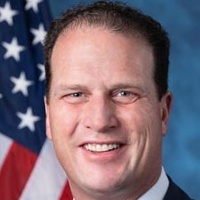
August Pfluger
Representative
TX
August Pfluger
Representative
TX
The "Protecting Americans Right To Silence Act of 2025" or the "PARTS Act of 2025" amends the definition of "firearm silencer" and "firearm muffler" under federal law. The updated definition includes any device designed to silence or muffle a portable firearm, whether attached directly or through other devices. It also includes the primary housing or structure for sound-reduction components of such devices.
The Birthright Citizenship Act of 2025 limits automatic birthright citizenship to children born in the U.S. to at least one parent who is a U.S. citizen, a lawful permanent resident, or an alien serving in the U.S. armed forces.
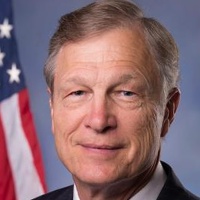
Brian Babin
Representative
TX
Brian Babin
Representative
TX
The Birthright Citizenship Act of 2025 proposes to limit automatic birthright citizenship to children born in the United States who have at least one parent who is a U.S. citizen, a lawful permanent resident, or an alien serving in the U.S. armed forces. This legislation would exclude children born to parents without legal status or those on temporary visas from receiving automatic citizenship. These changes would apply only to individuals born on or after the date of the Act's enactment.
The AMERICANS Act provides remedies, reinstatement, and record expungement for military service members who faced adverse actions or discharge due to the COVID-19 vaccine mandate.
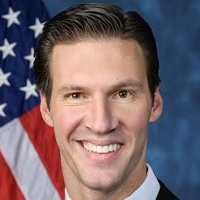
Pat Harrigan
Representative
NC
Pat Harrigan
Representative
NC
The AMERICANS Act of 2025 provides relief to military service members who faced discharge or adverse action due to the COVID-19 vaccine mandate. The bill mandates the correction of service records, offers pathways for reinstatement and back pay, and prohibits future COVID-19 vaccine mandates without explicit Congressional authorization. Additionally, it establishes clear exemption processes for deployment and ensures equal professional treatment for unvaccinated personnel.
This bill authorizes the presentation of a Congressional Gold Medal to Muhammad Ali in recognition of his extraordinary athletic achievements and humanitarian contributions to the United States.

André Carson
Representative
IN
André Carson
Representative
IN
The Muhammad Ali Congressional Gold Medal Act authorizes the presentation of a Congressional Gold Medal to Muhammad Ali in recognition of his extraordinary athletic achievements and lifelong humanitarian contributions. The bill directs the Secretary of the Treasury to design and strike the medal for presentation to his wife, Lonnie Ali, and authorizes the production and sale of bronze duplicates.
The SHOW UP Act of 2025 mandates that executive agencies revert to pre-pandemic telework policies and requires rigorous certification before any future expansion of remote work.

James Comer
Representative
KY
James Comer
Representative
KY
The SHOW UP Act of 2025 requires executive agencies to revert their telework policies to pre-pandemic levels by December 31, 2019. Any future expansion of telework must be supported by a comprehensive impact study and certified by the Office of Personnel Management to ensure it improves mission performance and reduces agency costs.
The Qualified Immunity Act of 2025 codifies existing legal protections for law enforcement officers and their employing agencies against civil liability when constitutional rights were not clearly established at the time of the alleged violation.

Virginia Foxx
Representative
NC
Virginia Foxx
Representative
NC
The Qualified Immunity Act of 2025 codifies existing legal protections for law enforcement officers, shielding them from individual liability when their conduct does not violate clearly established law. The bill further ensures that if an officer is found not liable under these standards while acting within the scope of their employment, their employing agency is also protected from liability.
This bill reclassifies silencers under federal tax law, removes federal registration requirements for legally transferred silencers, preempts state taxation and registration of silencers in commerce, and mandates the destruction of existing federal silencer registration records.

Ben Cline
Representative
VA
Ben Cline
Representative
VA
The Hearing Protection Act aims to remove silencers from the purview of the National Firearms Act (NFA) by treating them similarly to standard firearms under federal tax law. This legislation preempts certain state and local taxes and registration requirements related to silencers involved in interstate commerce. Furthermore, the bill mandates the destruction of existing federal silencer registration records and updates federal marking requirements for manufacturers.
The Disaster Reforestation Act amends the tax code to allow timber owners to claim larger casualty loss deductions for destroyed timber, provided they commit to replanting the affected land within five years.
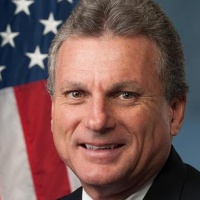
Earl Carter
Representative
GA
Earl Carter
Representative
GA
The Disaster Reforestation Act amends the Internal Revenue Code to provide tax relief for timber owners whose uncut timber is destroyed by natural disasters, pests, or disease. It allows owners to deduct the appraised value of lost timber—including pre-merchantable stands—provided they commit to reforesting the land within five years. This measure supports active timber businesses by ensuring tax deductions more accurately reflect the economic loss caused by casualty events.
This bill honors the life, achievements, and legacy of President Jimmy Carter, recognizing his dedication to public service, human rights, and global peace. It acknowledges his lasting impact as a leader and statesman.
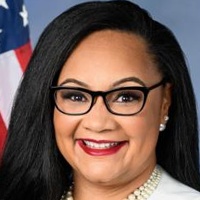
Nikema Williams
Representative
GA
Nikema Williams
Representative
GA
This bill honors the life, achievements, and legacy of Jimmy Carter, recognizing his service as a naval officer, farmer, state senator, Governor, and President. It also acknowledges his post-presidency work promoting peace, democracy, and human rights through the Carter Center, as well as his dedication to Habitat for Humanity. The bill expresses condolences to his family upon his passing and celebrates his lasting impact as a leader and statesman.
The Legal Workforce Act mandates that all U.S. employers use a phased-in electronic verification system to confirm the employment eligibility of all new and existing employees.
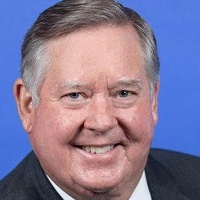
Ken Calvert
Representative
CA
Ken Calvert
Representative
CA
The Legal Workforce Act mandates that all U.S. employers use a new, electronic verification system to confirm the work eligibility of every new hire. This legislation replaces the existing E-Verify program with a phased-in, mandatory process that requires employers to verify both identity and work authorization for all employees. Additionally, the bill increases penalties for hiring unauthorized workers, establishes new fraud prevention measures, and preempts state laws to create a uniform national employment verification policy.
The Laken Riley Act mandates the detention of certain undocumented immigrants charged with theft-related crimes and empowers state attorneys general to sue federal officials for failures in enforcing immigration laws.
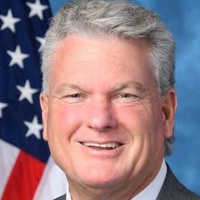
Mike Collins
Representative
GA
Mike Collins
Representative
GA
The Laken Riley Act mandates the detention of undocumented immigrants who are charged with or convicted of theft-related offenses. Additionally, the bill empowers state attorneys general to sue federal officials for failures in enforcing immigration detention, removal, and parole laws.
This bill proposes a constitutional amendment to limit members of the House of Representatives to three terms and Senators to two terms, with specific provisions for partial terms. Terms served before the amendment's ratification would not be counted towards these limits, and the amendment must be ratified within seven years to be valid.
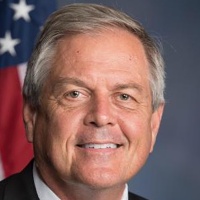
Ralph Norman
Representative
SC
Ralph Norman
Representative
SC
This bill proposes a constitutional amendment to limit the number of terms a member of Congress can serve. Representatives would be limited to 3 terms and Senators to 2 terms, with specific rules for partial terms. Terms served before the amendment's ratification would not be counted. The amendment must be ratified by three-fourths of the states within seven years to be valid.
The FIND Act prohibits federal agencies from contracting with entities that discriminate against the firearm and ammunition industry, ensuring fair access to government contracts for these businesses. Contractors must certify they do not discriminate against firearm entities, with violations leading to contract termination.
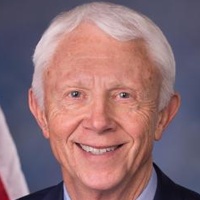
Jack Bergman
Representative
MI
Jack Bergman
Representative
MI
The FIND Act prohibits federal agencies from contracting with entities that discriminate against the firearm and ammunition industry. It requires federal contractors to certify they do not discriminate against firearm entities and prohibits them from awarding subcontracts to entities that do not provide a similar certification. Violations of these clauses will result in contract termination. The act defines "discriminate" as making judgments or refusing/limiting services based on biased criteria, rather than case-by-case evaluations, empirical data, financial risk, or legal non-compliance.
The Stopping Border Surges Act implements stricter asylum eligibility requirements, accelerates deportation timelines for unaccompanied minors, and mandates family detention to deter unauthorized border crossings.

Andy Biggs
Representative
AZ
Andy Biggs
Representative
AZ
The Stopping Border Surges Act proposes comprehensive reforms to U.S. immigration policy by tightening asylum eligibility and accelerating the processing of unaccompanied minors. The bill mandates stricter screening standards, expands detention authority for families, and limits legal protections for those seeking asylum. Ultimately, the legislation aims to deter fraudulent claims and expedite removals through more restrictive border and interior enforcement measures.