Legislative Activity
Track Brian's sponsored bills, co-sponsored legislation, and voting record
This bill modifies the definition of "qualifying single source drug" under the Social Security Act to include certain advanced drugs using genetically targeted technology for a limited time.
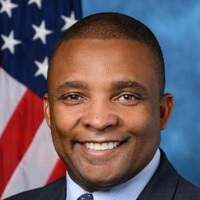
Donald Davis
Representative
NC
Donald Davis
Representative
NC
The "Maintaining Investments in New Innovation Act" amends the Social Security Act's definition of "qualifying single source drug" to include advanced drugs using genetically targeted technology. This update applies to drugs that can modify gene function, potentially impacting drug pricing and access regulations under the Act.
The Law Enforcement Protection and Privacy Act of 2025 protects law enforcement and firearm licensee information by amending FOIA, penalizing unauthorized disclosures, and allowing private lawsuits for damages.
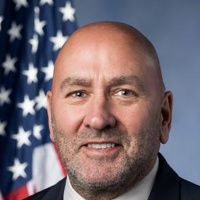
Clay Higgins
Representative
LA
Clay Higgins
Representative
LA
The Law Enforcement Protection and Privacy Act of 2025 amends FOIA to protect sensitive firearms data, penalizes unauthorized disclosures of protected information by non-federal entities, and grants licensees the right to sue for damages resulting from such disclosures. It establishes financial penalties for improper disclosures and allows harmed parties to seek compensation in court. The act defines key terms and ensures that other legal remedies remain available.
The SAFE Act of 2025 amends existing law to include equines (horses) in the prohibition of slaughtering animals for human consumption.

Vern Buchanan
Representative
FL
Vern Buchanan
Representative
FL
The SAFE Act of 2025 amends existing legislation to explicitly prohibit the slaughter of horses for human consumption, reinforcing protections for these animals. This bill seeks to prevent the inhumane treatment of American equines by closing loopholes that allow their slaughter and export for human consumption.
The "Grown in America Act of 2025" establishes a tax credit for businesses that use domestically produced agricultural commodities in their products, aiming to incentivize the use of American-grown ingredients.
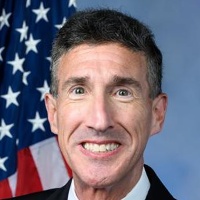
David Kustoff
Representative
TN
David Kustoff
Representative
TN
The "Grown in America Act of 2025" introduces a tax credit for businesses that use domestic agricultural commodities in their products for human consumption. This credit, capped at $100,000,000, aims to incentivize the use of U.S.-produced agricultural inputs by offering a tax benefit based on the percentage of domestic agricultural commodities used. The percentage of domestic inputs required to receive the full credit increases over time, with the Secretary of Agriculture maintaining a list of agricultural commodities that cannot be produced domestically. These provisions will be effective for taxable years starting after December 31, 2025.
This bill renames the U.S. National Poultry Research Center in Athens, Georgia, to the "Abit Massey Poultry Research Center".
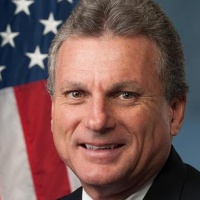
Earl Carter
Representative
GA
Earl Carter
Representative
GA
This bill renames the U.S. National Poultry Research Center in Athens, Georgia, as the "Abit Massey Poultry Research Center." Any reference to the U.S. National Poultry Research Center will now refer to the Abit Massey Poultry Research Center.
To award a Congressional Gold Medal to the 761st Tank Battalion, the first Black soldiers to serve in an American armored unit, for their valor and crucial contributions to the Allied victory in Europe.
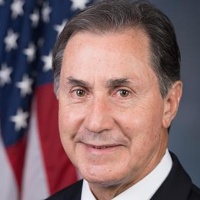
Gary Palmer
Representative
AL
Gary Palmer
Representative
AL
This bill authorizes the Speaker of the House and the President pro tempore of the Senate to award a Congressional Gold Medal to the 761st Tank Battalion, also known as the "Black Panthers," in recognition of their courageous service and crucial contributions during World War II. The medal will be given to the National Museum of African American History and Culture for display, honoring the 761st as the first Black soldiers to serve in an American armored unit and their significant role in the Allied victory in Europe. The bill also allows for the creation and sale of bronze duplicates of the medal to support the United States Mint Public Enterprise Fund.
This resolution condemns the Iranian regime’s terrorism and human rights abuses while affirming support for the Iranian people’s right to establish a democratic, secular, and non-nuclear republic.
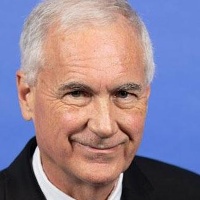
Tom McClintock
Representative
CA
Tom McClintock
Representative
CA
This resolution condemns the Iranian regime for its ongoing human rights abuses, state-sponsored terrorism, and regional instability. It expresses strong support for the Iranian people's struggle for a democratic, secular, and non-nuclear republic. Furthermore, the bill advocates for international accountability for the regime's crimes and calls for the protection of Iranian political refugees.
This bill equalizes the negotiation period for drug price negotiations under the Drug Price Negotiation Program by extending the period for small-molecule drugs from 7 years to 11 years, matching that of biologic drugs.
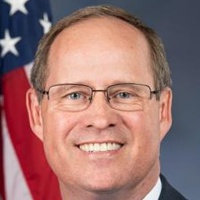
Gregory Murphy
Representative
NC
Gregory Murphy
Representative
NC
This bill amends the Social Security Act to equalize the negotiation period for drug price negotiations under the Drug Price Negotiation Program. It changes the negotiation period for small-molecule drugs from 7 years to 11 years, matching the period already in place for biologic drugs. This adjustment aims to create parity in negotiation timelines between different types of medications, effective as if included in the original legislation.
This bill authorizes the creation of a Congressional Gold Medal to posthumously honor President Jimmy Carter for his dedicated service to the Nation, to be presented to the Carter Center.
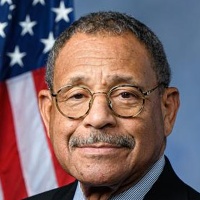
Sanford Bishop
Representative
GA
Sanford Bishop
Representative
GA
The "President Jimmy Carter Congressional Gold Medal Act" authorizes the posthumous presentation of a Congressional Gold Medal to former President Jimmy Carter in recognition of his dedicated service to the Nation. This medal, created by the Secretary of the Treasury, will be given to the Carter Center in Atlanta, Georgia, following the award ceremony. The Act also permits the creation and sale of bronze duplicates of the gold medal to the public and authorizes the United States Mint to use its Public Enterprise Fund to cover the costs of producing the medals.
This resolution expresses Congressional opposition to imposing new performance fees or royalties on local radio stations and businesses for broadcasting or playing music.
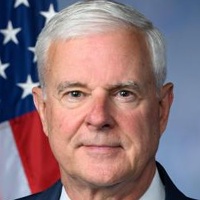
Steve Womack
Representative
AR
Steve Womack
Representative
AR
The Local Radio Freedom Act expresses Congressional opposition to imposing new performance fees, taxes, or royalties on local radio stations and businesses for playing music. It argues that the current system of free airplay provides essential promotional value to artists and that new fees would threaten the financial viability of local broadcasters and the vital community services they provide.
The United States-Israel Defense Partnership Act of 2025 bolsters defense cooperation between the U.S. and Israel through joint programs, funding increases, and extended authorities related to countering unmanned systems, anti-tunnel technology, emerging technologies, and war reserve stockpiles, while also exploring Israel's inclusion in the national technology and industrial base and assessing integrated air and missile defense in the CENTCOM region.
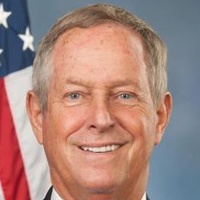
Joe Wilson
Representative
SC
Joe Wilson
Representative
SC
The United States-Israel Defense Partnership Act of 2025 seeks to bolster the defense relationship between the United States and Israel through joint initiatives and increased cooperation. It establishes programs to counter unmanned systems, extend anti-tunnel and counter-UAS cooperation, and promote collaboration in emerging technologies like AI and cybersecurity. The act also mandates the establishment of a Defense Innovation Unit office in Israel and assesses integrated air and missile defense in the U.S. Central Command region. Finally, it explores Israel's potential inclusion in the national technology and industrial base.
The SAFE for America Act of 2025 eliminates the diversity visa program, effective October 1, 2025.
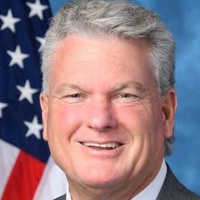
Mike Collins
Representative
GA
Mike Collins
Representative
GA
The SAFE for America Act of 2025 eliminates the Diversity Visa Program, which makes visas available to persons from countries with low rates of immigration to the United States. This is achieved through repealing subsection (c) of Section 203 of the Immigration and Nationality Act. The Act also makes corresponding technical amendments to other sections of the Immigration and Nationality Act to reflect this change. These changes would take effect beginning October 1, 2025.
The "National Right-to-Work Act" prohibits mandatory union membership as a condition of employment, protecting employees' rights to choose whether or not to join or support a labor union.
Joe Wilson
Representative
SC
Joe Wilson
Representative
SC
The "National Right-to-Work Act" amends both the National Labor Relations Act and the Railway Labor Act to protect an employee's right to choose whether or not to join or support a labor union. It eliminates the possibility of mandatory union membership or dues payments as a condition of employment, ensuring that employees cannot be forced to join or support a union against their will.
This joint resolution seeks to disapprove and nullify the Environmental Protection Agency’s rule regarding the phasedown and management of hydrofluorocarbons.
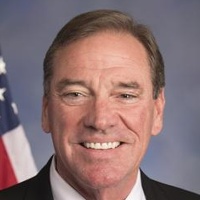
Neal Dunn
Representative
FL
Neal Dunn
Representative
FL
This joint resolution seeks to invoke the Congressional Review Act to disapprove and nullify the Environmental Protection Agency’s recent rule regarding the phasedown and management of hydrofluorocarbons. If enacted, the rule would have no force or effect, effectively blocking the EPA's regulatory framework for these substances.
This bill repeals a scheduled decrease in tax deductions for income from foreign-derived intangible assets, maintaining the deduction at a higher level to encourage U.S. innovation and competitiveness.
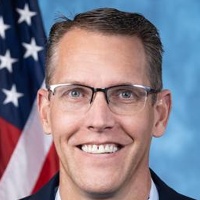
Randy Feenstra
Representative
IA
Randy Feenstra
Representative
IA
The "Growing and Preserving Innovation in America Act of 2025" amends the Internal Revenue Code to eliminate a scheduled decrease in the deduction for foreign-derived intangible income. This change maintains the deduction at a higher level, supporting companies that generate income from intellectual property developed and used abroad. The act is effective immediately upon enactment.
The Fair Access to Banking Act prohibits large financial institutions and payment networks from denying services to law-abiding businesses based on subjective, non-financial, or political criteria.
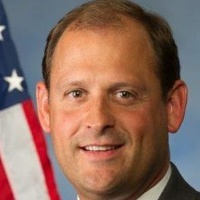
Garland Barr
Representative
KY
Garland Barr
Representative
KY
The Fair Access to Banking Act prohibits large financial institutions and payment networks from denying services to law-abiding businesses based on subjective, politically motivated, or reputational criteria. The bill mandates that financial institutions use impartial, quantitative, risk-based standards to evaluate customers rather than category-based exclusions. To ensure compliance, the legislation establishes enforcement mechanisms through federal regulators and provides a legal pathway for businesses to sue for damages if they are unfairly denied access to financial services.
This bill directs the Department of Education to consider the International Holocaust Remembrance Alliance's definition of antisemitism when evaluating discrimination complaints under Title VI of the Civil Rights Act of 1964, while also protecting First Amendment rights.

Michael Lawler
Representative
NY
Michael Lawler
Representative
NY
The Antisemitism Awareness Act of 2025 requires the Department of Education to consider the International Holocaust Remembrance Alliance's definition of antisemitism when evaluating discrimination complaints under Title VI of the Civil Rights Act of 1964, concerning race, color, and national origin. This aims to address rising antisemitism in educational settings. The Act clarifies that it does not expand the Department of Education's authority, change existing discrimination standards, reduce existing rights, or infringe upon First Amendment rights.
The Dismantle DEI Act of 2025 immediately rescinds federal diversity, equity, and inclusion (DEI) mandates across executive offices, contracting, grants, and education, while banning related training and imposing penalties for non-compliance.
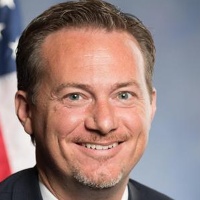
Michael Cloud
Representative
TX
Michael Cloud
Representative
TX
The Dismantle DEI Act of 2025 aims to immediately rescind diversity, equity, and inclusion (DEI) mandates across the federal government, including shutting down related offices and banning specific ideological training for federal personnel and contractors. The bill prohibits the use of federal funds for DEI activities by grant recipients and mandates that federal advisory committees cease all such practices or face termination. Furthermore, it establishes strong enforcement mechanisms, allowing individuals to sue violators and seek financial penalties for non-compliance.
The IGO Anti-Boycott Act expands existing anti-boycott regulations to include international governmental organizations and mandates an annual public report on all such boycott activities.
Michael Lawler
Representative
NY
Michael Lawler
Representative
NY
The IGO Anti-Boycott Act expands existing federal law to prohibit participation in boycotts fostered or imposed by international governmental organizations, not just those by foreign countries. Additionally, the bill mandates that the President submit and publish an annual report detailing all international boycotts covered by these restrictions.
The Illegitimate Court Counteraction Act sanctions individuals assisting the International Criminal Court (ICC) in investigating, arresting, or prosecuting protected persons, including U.S. citizens and allies, and rescinds funding for the ICC.

Chip Roy
Representative
TX
Chip Roy
Representative
TX
The Illegitimate Court Counteraction Act imposes sanctions on individuals and their families who assist the International Criminal Court (ICC) in investigating, arresting, detaining, or prosecuting "protected persons," which include U.S. citizens, military personnel, government officials, and citizens/residents of U.S. allies not consenting to the ICC. It requires the President to block the property of those who aid the ICC, deny them entry into the U.S., and rescinds any funds for the ICC. The bill allows for waivers of these sanctions if vital to U.S. national security and termination of sanctions if the ICC ceases action against protected persons.