
Legislative Activity
Track Harriet's sponsored bills, co-sponsored legislation, and voting record
The Regulation Reduction Act of 2025 mandates that federal agencies repeal at least three existing regulations for every new rule issued, ensuring that the costs of new major rules are fully offset by the elimination of previous ones.
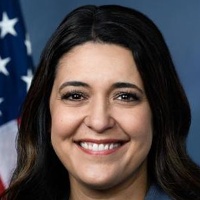
Stephanie Bice
Representative
OK
Stephanie Bice
Representative
OK
The Regulation Reduction Act of 2025 mandates that federal agencies repeal at least three existing regulations before issuing any new rule. For major rules, the legislation further requires that the cost of the new regulation be offset by the cost savings of the repealed rules. Additionally, the bill directs agencies to conduct a comprehensive review to identify and eliminate outdated, duplicative, or ineffective regulatory burdens.
This bill proposes the full repeal of the National Firearms Act, eliminating federal taxes, registration requirements, and transfer restrictions on items such as silencers and short-barreled firearms.
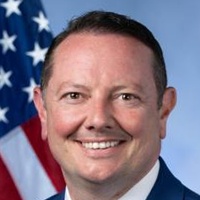
Eric Burlison
Representative
MO
Eric Burlison
Representative
MO
The "Repeal the NFA Act" proposes the complete elimination of the National Firearms Act (NFA). This legislation would remove federal taxes, registration requirements, and transfer restrictions currently imposed on items such as machine guns, short-barreled rifles, short-barreled shotguns, and silencers.
The Border Safety and Security Act of 2025 authorizes the Secretary of Homeland Security to suspend the entry of inadmissible aliens at U.S. borders when detention capacity is unavailable or operational control is compromised.

Chip Roy
Representative
TX
Chip Roy
Representative
TX
The Border Safety and Security Act of 2025 authorizes the Secretary of Homeland Security to suspend the entry of inadmissible aliens at U.S. borders to maintain operational control. It mandates a suspension of entry whenever the government lacks the capacity to properly detain or monitor these individuals. Additionally, the bill empowers state attorneys general to sue the federal government to enforce these border security requirements.
The Preserving Safe Communities by Ending Swatting Act of 2025 strengthens federal criminal penalties and establishes civil liability for individuals who knowingly convey false information to trigger emergency responses.
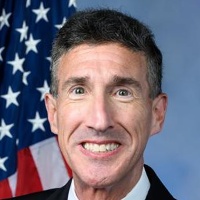
David Kustoff
Representative
TN
David Kustoff
Representative
TN
The Preserving Safe Communities by Ending Swatting Act of 2025 strengthens federal law to combat "swatting" by increasing criminal penalties for those who knowingly report false information to trigger emergency responses. The bill also establishes civil liability, requiring perpetrators to reimburse public safety agencies and organizations for the costs incurred during these emergency deployments.
The REMAIN in Mexico Act of 2025 mandates the implementation of the Migrant Protection Protocols, requiring asylum seekers to wait in Mexico while their claims are processed.

Brandon Gill
Representative
TX
Brandon Gill
Representative
TX
The REMAIN in Mexico Act of 2025 mandates that the Secretary of Homeland Security reinstate the Migrant Protection Protocols (MPP). This legislation requires that asylum seekers be returned to Mexico to await their U.S. immigration proceedings, effectively codifying the 2019 policy guidance into law.
This bill mandates the formal abolishment of the Bureau of Alcohol, Tobacco, Firearms and Explosives (ATF).
Eric Burlison
Representative
MO
Eric Burlison
Representative
MO
The Abolish the ATF Act is a legislative proposal that mandates the immediate dissolution of the Bureau of Alcohol, Tobacco, Firearms and Explosives. This bill seeks to formally terminate the agency and eliminate its federal oversight functions.
The Regulations from the Executive in Need of Scrutiny (REINS) Act of 2025 increases congressional accountability by requiring federal agencies to obtain legislative approval for all "major" rules before they can take effect.

Katherine Cammack
Representative
FL
Katherine Cammack
Representative
FL
The Regulations from the Executive in Need of Scrutiny (REINS) Act of 2025 aims to increase federal regulatory accountability by requiring Congress to approve any "major" rule before it can take effect. Under this legislation, rules with a significant economic impact require a joint resolution of approval from both chambers of Congress to become law. By shifting this authority back to the legislative branch, the Act seeks to ensure greater transparency and oversight of the federal rulemaking process.
The "WHO Withdrawal Act" withdraws the United States from the World Health Organization, prohibits funding to the WHO, and repeals the act that authorized U.S. participation.

Andy Biggs
Representative
AZ
Andy Biggs
Representative
AZ
The WHO Withdrawal Act withdraws the United States from the World Health Organization (WHO) upon enactment. It also prohibits any federal funds from being used to support the WHO or any successor organization. Finally, the act repeals the Act of June 14, 1948, which previously authorized U.S. participation and funding of the WHO.
The Federal Reserve Transparency Act of 2025 mandates a comprehensive audit of the Federal Reserve System by the Comptroller General, ensuring greater transparency and accountability. This act requires a detailed report to Congress with findings and recommendations, while also repealing audit limitations.

Thomas Massie
Representative
KY
Thomas Massie
Representative
KY
The Federal Reserve Transparency Act of 2025 mandates a comprehensive audit of the Federal Reserve System by the Comptroller General within one year. Following the audit, a detailed report must be submitted to Congress, including findings and recommendations. This act aims to increase transparency and accountability within the Federal Reserve System by repealing audit limitations.
Constitutional amendment requiring a supermajority vote in Congress to increase the national debt, mandating a specific purpose be stated in the law. The amendment would take effect ten years after ratification.

Tom McClintock
Representative
CA
Tom McClintock
Representative
CA
This proposed constitutional amendment requires a supermajority vote (three-fourths) in both the House and Senate to pass any law that increases the national debt. Any such law must also specify the exact reason for increasing the debt. The amendment would take effect ten years after ratification.