Legislative Activity
Track Harriet's sponsored bills, co-sponsored legislation, and voting record
The STOP Improper Licensing Act mandates federal audits of state non-domiciled commercial driver's license procedures and establishes enforcement measures, including funding penalties, for states that fail to comply with federal eligibility requirements.
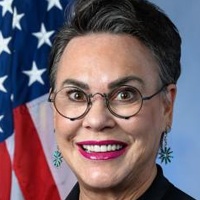
Harriet Hageman
Representative
WY
Harriet Hageman
Representative
WY
The STOP Improper Licensing Act mandates federal audits of state procedures for issuing non-domiciled commercial driver's licenses to ensure compliance with legal presence requirements. The bill establishes a framework for identifying and correcting improper licensing practices, including the authority to withhold federal funding from states that fail to address substantial noncompliance.
This bill proposes a 10% excise tax on colleges and universities that allow biological males to participate in female intercollegiate athletic programs.
Harriet Hageman
Representative
WY
Harriet Hageman
Representative
WY
This bill proposes a 10% excise tax on colleges and universities that allow biological males to participate in female intercollegiate athletic programs. The legislation prohibits institutions from increasing tuition or mandatory fees to cover the cost of this tax.
This bill renames the National Historic Trails Interpretive Center in Casper, Wyoming, as the "Barbara L. Cubin National Historic Trails Interpretive Center."
Harriet Hageman
Representative
WY
Harriet Hageman
Representative
WY
This bill officially renames the National Historic Trails Interpretive Center in Casper, Wyoming, to the "Barbara L. Cubin National Historic Trails Interpretive Center." It also mandates that all official federal records, maps, and documents be updated to reflect this new designation.
This resolution seeks to overturn the EPA’s decision to grant California a waiver allowing the state to enforce its own greenhouse gas emission standards for new motor vehicles.
Harriet Hageman
Representative
WY
Harriet Hageman
Representative
WY
This resolution exercises congressional disapproval of an EPA rule that granted California a waiver to enforce its own greenhouse gas emission standards for motor vehicles. By nullifying this decision, the bill seeks to invalidate the EPA's authorization of California’s independent vehicle emission regulations.
This resolution urges the FCC to modernize the video content ratings system to provide parents with clear, consistent, and objective information across all platforms to make informed viewing decisions for their children.
Harriet Hageman
Representative
WY
Harriet Hageman
Representative
WY
This resolution expresses the sense of the House that parents need clear, accurate, and useful information about video programming content across all platforms to make informed decisions for their children. It calls on the FCC to modernize the current ratings system to ensure consistency, specificity, and transparency across broadcast, cable, and streaming services. The bill emphasizes that any updated system must include meaningful input from parents and public advocates, not just industry representatives.
This bill mandates a de novo trial of the facts by a reviewing court when an agency seeks to impose a sanction.
Harriet Hageman
Representative
WY
Harriet Hageman
Representative
WY
This bill amends the Administrative Procedure Act to require federal courts to conduct a **de novo trial of the facts** when reviewing agency actions that seek to impose a sanction. This means judges must independently review and decide all relevant factual questions, rather than deferring to the agency's factual findings. Consequently, agency actions imposing sanctions can be overturned if the underlying facts are not adequately supported, even if formal procedures were followed.
This bill establishes a right for citizens to sue federal employees who violate First Amendment rights through actions related to the censorship or interference with artificial intelligence.
Harriet Hageman
Representative
WY
Harriet Hageman
Representative
WY
The Preventing AI Censorship Act establishes a private right of action allowing U.S. citizens to sue federal employees who violate First Amendment rights through actions related to artificial intelligence. This includes coercing AI providers to suppress viewpoints or directly interfering with an individual's lawful use of AI based on protected expression. The bill aims to prevent government censorship in the development and use of artificial intelligence technologies.
This bill amends the Administrative Procedure Act to allow courts to set aside agency actions if the supporting evidence is not the product of reliable scientific principles and methods.
Harriet Hageman
Representative
WY
Harriet Hageman
Representative
WY
This bill amends the Administrative Procedure Act to allow courts to set aside federal agency decisions if the supporting evidence is not based on reliable scientific principles and methods. It grants judges the authority to review and reject agency actions based on the scientific soundness of the evidence used.
This bill prohibits liability against energy businesses for damages or relief related to the use of their products, effectively banning climate-related lawsuits in federal and state courts.
Harriet Hageman
Representative
WY
Harriet Hageman
Representative
WY
This bill, the Stop Climate Shakedowns Act of 2026, prohibits federal and state courts from hearing lawsuits seeking damages or relief against energy companies for harms related to climate change. It voids existing state laws that impose liability on energy businesses for climate-related issues, asserting that the regulation of emissions falls under exclusive federal jurisdiction. The Act aims to protect the energy industry from litigation and ensure affordable, reliable energy.
This bill establishes a task force to study the use of AI speech-to-text and automatic speech recognition technologies in U.S. courts and provide recommendations to ensure their use protects constitutional rights and the accuracy of official court records.
Harriet Hageman
Representative
WY
Harriet Hageman
Representative
WY
The Research and Oversight of AI in Courts Act of 2026 establishes a task force to evaluate the use of AI-driven speech-to-text and transcription technologies within the U.S. judicial system. This body will assess the impact of these tools on court record accuracy, cybersecurity, and constitutional rights. Ultimately, the task force will provide Congress with comprehensive recommendations to ensure that the integration of these technologies maintains the integrity of legal proceedings.
This bill establishes a 10-year installment plan for the payment of bonus bids on federal coal leases.
Harriet Hageman
Representative
WY
Harriet Hageman
Representative
WY
This bill amends the Mineral Leasing Act to establish a mandatory 10-year installment plan for coal lease bonus payments. Under this system, winning bidders must pay their total bonus in ten equal annual installments, with the first payment due at the time of the bid submission.
This bill expands the leasing authority for the Confederated Tribes of the Chehalis Reservation to allow 99-year leases of their trust lands to other federally recognized Indian Tribes.
Harriet Hageman
Representative
WY
Harriet Hageman
Representative
WY
This bill expands the leasing authority for the Confederated Tribes of the Chehalis Reservation. It allows the tribe to lease its trust lands for up to 99 years not only to the U.S. or the State of Washington, but also to any other federally recognized Indian tribe.
This bill nullifies the 2001 Roadless Area Conservation rule and mandates that the Secretary of Agriculture construct necessary roads on National Forest System lands for restoration and fire mitigation purposes.
Harriet Hageman
Representative
WY
Harriet Hageman
Representative
WY
This bill seeks to nullify the 2001 "Roadless Area Conservation" rule, effectively removing existing federal restrictions on road construction within National Forest System lands. It mandates that the Secretary of Agriculture construct new roads to facilitate forest restoration, hazardous fuels reduction, and improved watershed health. All such construction projects would remain subject to existing environmental laws, including the National Environmental Policy Act.
The SAFE Act mandates a GAO study on "chameleon carriers" and requires the FMCSA to develop an advanced automated tool to detect them during the DOT registration process.
Harriet Hageman
Representative
WY
Harriet Hageman
Representative
WY
The Safety and Accountability in Freight Enforcement (SAFE) Act aims to combat "chameleon carriers" who evade safety regulations and enforcement actions. It mandates a GAO study on the prevalence and impact of these carriers and requires the FMCSA to develop an advanced automated tool to detect them during the DOT registration process. The bill ensures human oversight remains in final registration decisions and establishes reporting requirements on the tool's effectiveness.
This act amends federal law to explicitly make national grasslands eligible for grazing leases and permits.
Harriet Hageman
Representative
WY
Harriet Hageman
Representative
WY
The Grasslands Grazing Act of 2025 amends federal law to explicitly make national grasslands eligible for grazing leases and permits. This is achieved by updating terminology within the Federal Land Policy and Management Act of 1976 to include these lands under existing grazing authorization structures. The act clarifies eligibility without altering other existing laws governing these lands.
This bill establishes a streamlined notice process for mineral exploration activities disturbing 25 acres or less on public lands.
Harriet Hageman
Representative
WY
Harriet Hageman
Representative
WY
The Domestic Opportunities for Resource Exploration (Domestic ORE) Act establishes a streamlined notice process for mineral exploration activities on public lands that disturb 25 acres or less. Operators must submit a notice to the relevant Secretary 15 days prior to starting work. The activity can proceed if the notice is complete, the acreage limit is met, and adequate financial assurance is provided.
This bill revokes the tax-exempt status of organizations that provide or fund abortions, with exceptions for life-saving procedures or cases of rape or incest.
Harriet Hageman
Representative
WY
Harriet Hageman
Representative
WY
This bill proposes to amend the Internal Revenue Code to revoke the tax-exempt status of any organization that provides or funds abortions. This revocation would apply unless the abortion is necessary to save the life of the mother or results from rape or incest. Organizations that lose this status would also no longer be eligible for tax-deductible charitable contributions.
This act establishes a private right of action for parents to sue schools directly for violations of federal education privacy laws like FERPA and PPRA.
Harriet Hageman
Representative
WY
Harriet Hageman
Representative
WY
The Parental Rights Relief Act amends federal education privacy laws, specifically FERPA and PPRA, to strengthen parental rights. This legislation establishes a dedicated review process within the Department of Education for handling related complaints within 90 days. Crucially, it grants parents the right to file a direct civil lawsuit against schools for violations of these privacy acts.
This bill establishes a sunset provision, causing Section 230 of the Communications Act of 1934 to expire at the end of 2026 unless reformed.
Harriet Hageman
Representative
WY
Harriet Hageman
Representative
WY
This bill, the "Sunset To Reform Section 230 Act," establishes a sunset provision for Section 230 of the Communications Act of 1934. This means that Section 230 will automatically expire at the end of 2026 unless Congress acts to reform or reauthorize it before that date.
This bill establishes the ROUTE Act, creating a limited exception allowing CDL holders aged 18-20 to operate commercial vehicles in interstate commerce within a 150-air-mile radius under strict working hour and location restrictions.
Harriet Hageman
Representative
WY
Harriet Hageman
Representative
WY
The Responsible Opportunity for Under-21 Trucking Engagement (ROUTE) Act creates a limited exception allowing eligible drivers aged 18 to 20, who already hold an intrastate CDL, to operate commercial motor vehicles in interstate commerce. This operation is strictly confined to a 150 air-mile radius of their normal reporting location. The bill mandates specific rest and duty hour requirements for these younger drivers.