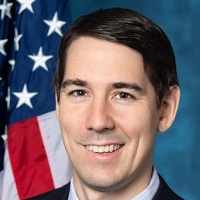
Legislative Activity
Track Josh's sponsored bills, co-sponsored legislation, and voting record
This Act ensures that veterans living in rural areas have dedicated access to patient advocates at VA medical facilities.

John Moolenaar
Representative
MI
John Moolenaar
Representative
MI
The Veterans Patient Advocacy Act ensures that veterans living in rural areas have reliable access to patient advocates at VA medical facilities. This requires the VA to assign advocates specifically to community-based outpatient clinics in rural locations. The Secretary of Veterans Affairs must implement these changes within two years, followed by a GAO review of the implementation progress.
This Act converts Transportation Security Administration (TSA) personnel to standard federal employment rules under Title 5, establishes transition protections, mandates workforce reviews, and addresses labor relations and employee safety.
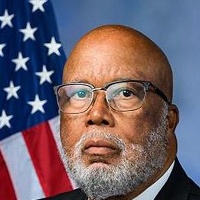
Bennie Thompson
Representative
MS
Bennie Thompson
Representative
MS
The Rights for the Transportation Security Administration Workforce Act transitions TSA personnel to standard federal employment rules under Title 5 of the U.S. Code by a set date no later than December 31, 2025. This mandates the freezing of current personnel policies during the transition while protecting current employee pay and benefits. The bill also requires extensive reviews by the Comptroller General on hiring, diversity, and workplace safety, and mandates consultation with employee representatives regarding labor relations. Finally, it ensures that screening agents retain collective bargaining rights and addresses specific concerns for Federal Air Marshals.
The Caring for Survivors Act of 2025 increases dependency and indemnity compensation for surviving spouses and lowers the required period of total disability rating before death for survivors to qualify for certain benefits.
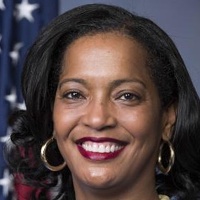
Jahana Hayes
Representative
CT
Jahana Hayes
Representative
CT
The Caring for Survivors Act of 2025 aims to increase financial support for surviving spouses of veterans. This bill raises the monthly Dependency and Indemnity Compensation (DIC) payment rate for surviving spouses. Additionally, it lowers the required duration of total disability rating before death from ten years to five years for survivors to qualify for certain DIC benefits. If the disability period was between five and ten years, the benefit amount will be proportionally adjusted.
This act allows State homes caring for veterans to choose between direct reimbursement or direct furnishing of high-cost medications.
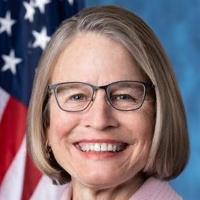
Mariannette Miller-Meeks
Representative
IA
Mariannette Miller-Meeks
Representative
IA
The Providing Veterans Essential Medications Act allows State homes caring for veterans to choose how they receive reimbursement for very high-cost medications. State homes can opt to be reimbursed directly for the medication's cost or have the Secretary of the VA furnish the drug directly. This provision applies only when the cost of a specific medication exceeds a defined threshold relative to the standard monthly payment for that veteran's care.
The MATCH IT Act of 2025 mandates the creation of national standards and data requirements to improve the accuracy of patient record matching across healthcare systems, aiming to reduce safety risks and administrative costs.
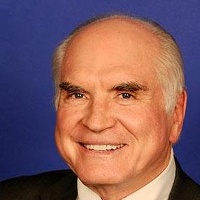
Mike Kelly
Representative
PA
Mike Kelly
Representative
PA
The MATCH IT Act of 2025 aims to significantly improve patient safety and reduce healthcare costs by establishing national standards for accurate patient identification across health systems. This bill mandates the creation of clear definitions and minimum data sets necessary to achieve a near-perfect patient match rate. Furthermore, it introduces voluntary incentives through Medicare to encourage providers to adopt these new, higher standards for linking patient records.
This act amends the tax code to give businesses the option to immediately deduct or amortize (spread out over at least five years) their research and experimental expenditures.
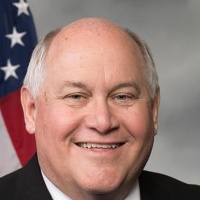
Ron Estes
Representative
KS
Ron Estes
Representative
KS
The American Innovation and R&D Competitiveness Act of 2025 revises how businesses treat research and experimental (R&E) expenditures for tax purposes. Taxpayers can now choose between immediately deducting R&E costs or amortizing them over a period of at least 60 months. This legislation also makes technical adjustments to ensure consistency between immediate deductions and claiming the research tax credit.
This act amends the Veterans Community Care Program to recognize nurse registries as eligible providers of covered services for veterans.
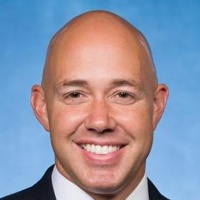
Brian Mast
Representative
FL
Brian Mast
Representative
FL
The Veterans Homecare Choice Act of 2025 expands options for veterans accessing care through the Veterans Community Care Program. This bill specifically recognizes state-licensed nurse registries as eligible providers of covered services. By including nurse registries, the Act broadens the network of organizations that can furnish necessary home health and supportive services to eligible veterans.
The HERO Act establishes a national data system for tracking public safety officer suicides, funds peer-support mental health programs for fire and EMS personnel, supports wellness programs for healthcare providers, and develops educational resources and best practices for treating first responder mental health issues.
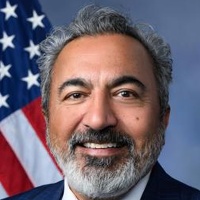
Ami Bera
Representative
CA
Ami Bera
Representative
CA
The HERO Act establishes a national system to track suicides among public safety officers to better understand prevention needs. It also creates grant programs to fund peer-support and wellness programs for fire, EMS, and healthcare workers. Finally, the bill mandates the development of educational resources to improve mental health treatment for first responders dealing with trauma and PTSD.
This bill establishes permanent, higher base pay rates, incident response premium pay, and mandatory rest and recuperation leave for federal wildland firefighters.
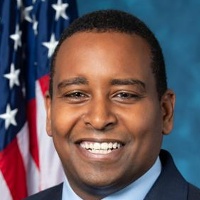
Joe Neguse
Representative
CO
Joe Neguse
Representative
CO
The Wildland Firefighter Paycheck Protection Act of 2025 establishes permanent, higher base pay rates for federal wildland firefighters based on their GS grade. It also creates a significant daily premium pay bonus for time spent responding to qualifying wildfire incidents. Finally, the bill mandates new paid rest and recuperation leave for firefighters following deployment to ensure proper recovery.
The "Do No Harm Act" clarifies that the Religious Freedom Restoration Act cannot be used to bypass federal laws protecting against discrimination, ensuring equal opportunity, or safeguarding access to healthcare and other essential services.
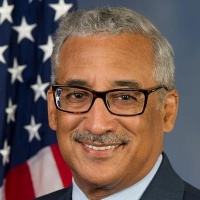
Robert Scott
Representative
VA
Robert Scott
Representative
VA
The "Do No Harm Act" amends the Religious Freedom Restoration Act of 1993 to ensure religious freedom is not used to justify discrimination or harm. It clarifies that the Act does not override federal laws protecting against discrimination, ensuring equal opportunity, or safeguarding access to healthcare and other essential services. This amendment confirms that the Religious Freedom Restoration Act applies only when the government is a party in a judicial proceeding.
This bill increases the annual stipend for educational costs for veterans under the Post-9/11 Educational Assistance Program and adjusts it annually for inflation.
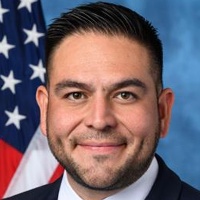
Gabriel (Gabe) Vasquez
Representative
NM
Gabriel (Gabe) Vasquez
Representative
NM
The Veteran Education Assistance Adjustment Act increases the annual stipend for books, supplies, and equipment for veterans under the Post-9/11 Educational Assistance Program from $1,000 to $1,400. Beginning in 2026, this stipend will be subject to annual increases based on the Consumer Price Index.
The bill requires the Department of Veterans Affairs to provide guidance and resources to entities applying for grants to support homeless veterans.
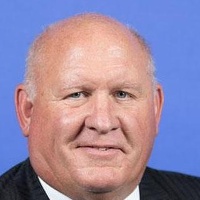
Glenn Thompson
Representative
PA
Glenn Thompson
Representative
PA
The "Simplifying Veterans Assistance Act of 2025" aims to improve the grant application process for entities seeking to provide comprehensive services to homeless veterans. It requires the Department of Veterans Affairs to provide clear guidance, best practices, and informational sessions to potential applicants. This will help ensure that more organizations can effectively access resources to support homeless veterans.
The LIONs Act of 2025 increases the maximum loan amounts for 7(a) loans to $7,500,000 and for development company loans to $10,000,000.

Shri Thanedar
Representative
MI
Shri Thanedar
Representative
MI
The LIONs Act of 2025 increases the maximum loan amounts for both 7(a) loans and development company loans, aiming to provide greater financial support to small businesses. Specifically, it raises the 7(a) loan limit to $7,500,000 and the development company loan limit to $10,000,000.
The Richard L. Trumka Protecting the Right to Organize Act of 2025 strengthens protections for workers' rights to organize and collectively bargain by modernizing labor laws, addressing unfair labor practices, and enhancing enforcement mechanisms.
Robert Scott
Representative
VA
Robert Scott
Representative
VA
This bill, the Richard L. Trumka Protecting the Right to Organize Act of 2025, seeks to amend the National Labor Relations Act and other labor laws to strengthen protections for workers' rights to organize and collectively bargain. It aims to modernize labor regulations by clarifying definitions, addressing unfair labor practices, enhancing enforcement, and increasing transparency in labor-management relations. The bill introduces measures such as electronic voting in union elections, strengthens whistleblower protections, and mandates studies on collective bargaining practices. Ultimately, the goal is to ensure fair treatment of workers and promote equitable labor practices.
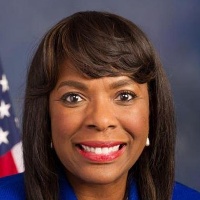
The John R. Lewis Voting Rights Advancement Act of 2025 aims to strengthen and update the Voting Rights Act of 1965 by addressing vote dilution and denial, establishing updated criteria for federal oversight of states and political subdivisions with a history of voting rights violations, and promoting transparency in election-related changes.
Terri Sewell
Representative
AL
Terri Sewell
Representative
AL
The John R. Lewis Voting Rights Advancement Act of 2025 amends the Voting Rights Act of 1965 to address vote dilution, denial, and abridgment claims, and to update which states and political subdivisions are subject to federal oversight based on a history of voting rights violations. It broadens the types of violations that allow a court to retain jurisdiction over a case, clarifies the Attorney General's authority to assign observers, and ensures transparency in voting-related changes. The Act also authorizes the Attorney General to demand documents and information to enforce voting rights and provides grants to small jurisdictions to assist with notification requirements.
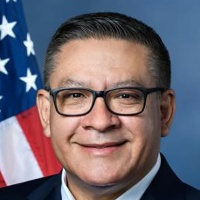
The Child Care Workforce Act aims to improve child care quality and affordability by increasing child care worker wages through a pilot grant program for States, Indian Tribes, and Tribal organizations.
Salud Carbajal
Representative
CA
Salud Carbajal
Representative
CA
The Child Care Workforce Act aims to improve child care quality and affordability by establishing a pilot program that provides grants to states, Indian Tribes, and Tribal organizations to increase the wages of child care workers. These grants will be used to supplement the wages of eligible child care workers, with the goal of attracting and retaining qualified professionals, enhancing their well-being, and expanding access to affordable child care options. The program will be evaluated for its effectiveness, and a report will be submitted to Congress.
The "Child Care Availability and Affordability Act" aims to make child care more accessible and affordable by expanding employer-provided child care credits, increasing tax-free dependent care assistance, and enhancing the household and dependent care tax credit.
Salud Carbajal
Representative
CA
Salud Carbajal
Representative
CA
The Child Care Availability and Affordability Act aims to improve access to affordable child care by expanding employer-provided child care credits, increasing tax-free dependent care assistance, and creating a refundable household and dependent care tax credit. The employer provided child care credit is increased from 25% to 50% of qualified expenses, and the maximum credit amount is raised from $150,000 to $500,000. The amount of tax-free employer-provided dependent care assistance is increased from $5,000 to $7,500. A new tax credit is created for employment-related expenses paid for household and dependent care, with the applicable percentage starting at 50% and decreasing based on income, and the maximum creditable expenses are $5,000 for one qualifying individual and $8,000 for two or more.
The "Safe Schools Improvement Act" amends the Elementary and Secondary Education Act of 1965, requiring states to establish policies that prevent and prohibit bullying and harassment in schools based on protected characteristics, ensuring a safe and inclusive learning environment for all students.

Linda Sánchez
Representative
CA
Linda Sánchez
Representative
CA
The Safe Schools Improvement Act aims to reduce bullying and harassment in schools by requiring states to establish policies prohibiting such conduct based on various characteristics, including race, sex, religion, and disability. It mandates annual notifications, data collection on incidents, biennial evaluations of programs, and regular reports to Congress to ensure accountability and effectiveness. This act does not infringe on existing nondiscrimination laws or freedom of speech but seeks to create a safer, more inclusive learning environment for all students.
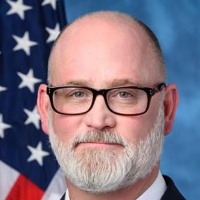
This bill amends the Child Nutrition Act of 1966 to set maximum monthly allowances for milk under the WIC program.
Derrick Van Orden
Representative
WI
Derrick Van Orden
Representative
WI
This bill amends the Child Nutrition Act of 1966 to establish maximum monthly allowances for milk provided under the Special Supplemental Nutrition Program for Women, Infants, and Children (WIC). It sets specific limits on the amount of milk that can be included in food packages IV, V, VI, and VII.
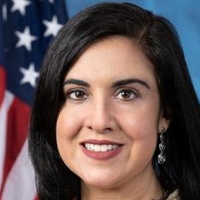
Makes permanent the exclusion of employer student loan payments from an employee's gross income.
Nicole Malliotakis
Representative
NY
Nicole Malliotakis
Representative
NY
The "Employer Participation in Repayment Act" permanently extends the tax exclusion for employer-provided student loan repayment assistance. This allows employers to contribute to their employees' student loan debt without the contribution being considered taxable income for the employee. This provision was previously set to expire before January 1, 2026, but is now a permanent part of the tax code. The change is applicable for payments made after the enactment of this law.