Legislative Activity
Track Clay's sponsored bills, co-sponsored legislation, and voting record
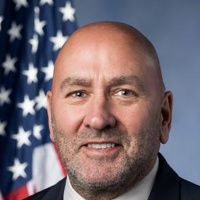
This Act requires candidates for office who hold dual citizenship to disclose that status on their official campaign paperwork.

Thomas Massie
Representative
KY
Thomas Massie
Representative
KY
The Dual Loyalty Disclosure Act mandates that candidates running for office must disclose any dual citizenship they hold with a foreign country on their official campaign paperwork. This new requirement ensures voters are aware of a candidate's foreign citizenship status. The disclosure must be included after the principal campaign committee is established.
This act updates executive branch reorganization authority by expanding presidential objectives, redefining covered entities, removing certain restrictions, and extending the relevant deadlines to 2026.

James Comer
Representative
KY
James Comer
Representative
KY
The Reorganizing Government Act of 2025 updates the laws governing presidential executive reorganization plans. This bill expands the objectives for these plans to include reducing federal employees and eliminating burdensome regulations. It also extends the authority for the President to submit reorganization plans to Congress until the end of 2026.
This bill establishes national reciprocity for concealed carry permits, allowing individuals legally permitted to carry in their home state to carry a handgun in any other state that allows concealed carry.
Richard Hudson
Representative
NC
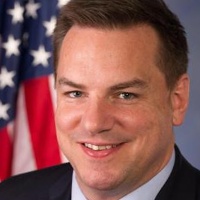
Richard Hudson
Representative
NC
The Constitutional Concealed Carry Reciprocity Act of 2025 establishes a national standard for carrying concealed handguns across state lines. This act allows individuals legally permitted to carry in their home state to carry concealed in any other state that allows its residents to carry concealed firearms. The law does not override private property restrictions or prohibitions on government property, but it provides protections and legal recourse for those traveling in compliance with the new federal standard.
This bill shifts federal childcare funding toward parental choice via certificates, prioritizes relative caregivers, and repeals the dependent care tax credit.
Riley Moore
Representative
WV
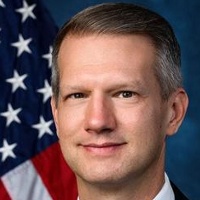
Riley Moore
Representative
WV
The Respect Parents’ Childcare Choices Act significantly reforms federal childcare funding by shifting subsidies toward direct parental vouchers, known as child care certificates, to increase parental choice. It also boosts support and payment rates for relative caregivers while removing burdensome regulations. Furthermore, the bill repeals the existing tax credit for dependent care expenses and establishes new pilot programs focused on preventing fraud and encouraging relative caregiving.
This bill revises physician self-referral rules to create a special exemption for certain rural, physician-owned hospitals and removes expansion restrictions for existing physician-owned hospitals.
H. Griffith
Representative
VA
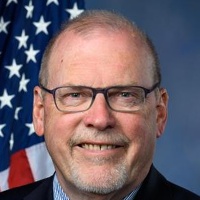
H. Griffith
Representative
VA
The Physician Led and Rural Access to Quality Care Act revises physician self-referral rules to improve healthcare access in underserved areas. Specifically, it creates a new exception allowing physician self-referrals to hospitals located in designated rural areas that meet specific distance requirements. Furthermore, the bill removes existing restrictions that previously limited the expansion of services at physician-owned hospitals.
The Major Richard Star Act ensures that military retirees with combat-related disabilities can concurrently receive their full military retirement pay and VA disability compensation without reduction.

Gus Bilirakis
Representative
FL
Gus Bilirakis
Representative
FL
The Major Richard Star Act ensures that military retirees with combat-related disabilities can receive both their military retirement pay and VA disability compensation concurrently without reduction. This law removes previous restrictions that caused military retirement pay to be offset by VA disability payments for these specific cases. The changes take effect on the first day of the month following the Act's enactment.
The HELPER Act of 2025 establishes a new FHA mortgage insurance program offering 100% financing with an upfront premium and no monthly premiums for eligible first responders, educators, and law enforcement officers.
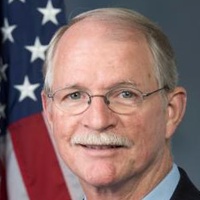
John Rutherford
Representative
FL
John Rutherford
Representative
FL
The HELPER Act of 2025 establishes a new FHA mortgage insurance program to assist first responders, educators, and law enforcement officers in purchasing homes. This program offers eligible first-time homebuyers 100% financing with no down payment required. Instead of monthly premiums, borrowers pay an upfront FHA insurance premium at closing.
The LAND Act restricts foreign purchases of U.S. agricultural land by applying reciprocal ownership rules based on the buyer's home country and establishes a Task Force to monitor and report on these transactions.
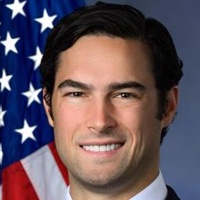
Brandon Gill
Representative
TX
Brandon Gill
Representative
TX
The Land And National Defense Act (LAND Act) imposes strict reciprocal restrictions on foreign entities purchasing U.S. agricultural land, mirroring the limitations a U.S. citizen would face when buying land in the purchaser's home country. It establishes a new Task Force, chaired by the Secretary of Agriculture, to monitor and report on foreign ownership compliance. Furthermore, sellers are required to report all agricultural land sales to foreign purchasers to the Secretary of Agriculture.
The DHS Biodetection Improvement Act mandates a report and strategy for the Department of Homeland Security's utilization of Department of Energy national laboratories for biodetection research and development.
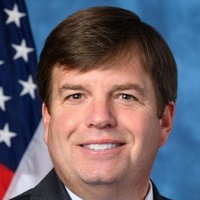
Dale Strong
Representative
AL
Dale Strong
Representative
AL
The DHS Biodetection Improvement Act requires the Secretary of Homeland Security to assess and report on the Department of Homeland Security's (DHS) utilization of Department of Energy (DOE) national laboratories and sites for research and development related to DHS missions. This includes identifying biodetection technologies, developing acquisition plans for BioWatch jurisdictions, evaluating technology gaps, and assisting in developing program requirements for future DHS biodetection programs. The Secretary must submit an initial assessment and strategy within 180 days of enactment, followed by an update within one year, to the House and Senate Homeland Security Committees.
This Act prevents the President and the Secretary of HHS from using emergency declarations to impose gun control measures and prohibits federal disaster rules from restricting the possession or transfer of firearms, ammunition, and related accessories.
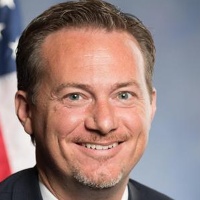
Michael Cloud
Representative
TX
Michael Cloud
Representative
TX
The Protecting the Right to Keep and Bear Arms Act of 2025 restricts the President and the Secretary of Health and Human Services from using emergency declarations to enact gun control measures. This bill specifically prevents the use of the National Emergencies Act and the Public Health Service Act for imposing new firearm restrictions. Furthermore, it amends disaster relief law to prohibit federal disaster declarations from banning the possession, sale, or transfer of firearms, ammunition, or related accessories.
The "Subterranean Border Defense Act" mandates annual reports on efforts to counter illegal cross-border tunnels.
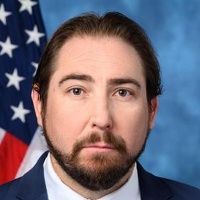
Eli Crane
Representative
AZ
Eli Crane
Representative
AZ
The Subterranean Border Defense Act mandates annual reports on efforts to counter illicit cross-border tunnel operations.
The "Securing the Cities Improvement Act" enhances the Securing the Cities program by refining eligibility criteria, establishing performance metrics, and increasing congressional oversight to better protect against nuclear and radiological threats.
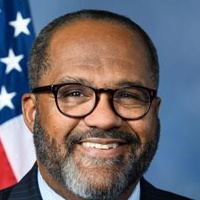
Troy Carter
Representative
LA
Troy Carter
Representative
LA
The Securing the Cities Improvement Act amends the Homeland Security Act of 2002, modifying the STC program's eligibility criteria to focus on preparedness, threat levels, and potential consequences of nuclear or radiological attacks. It mandates the establishment of performance metrics and increased congressional oversight of the STC program. The Act requires a report to Congress detailing the program's participation, performance, and planned changes within two years.
The SHIELD Against CCP Act establishes a working group within the Department of Homeland Security to counter threats posed by the Chinese Communist Party related to terrorism, cybersecurity, border and port security, and transportation security.
Dale Strong
Representative
AL
Dale Strong
Representative
AL
The "SHIELD Against CCP Act" establishes a working group within the Department of Homeland Security to counter threats posed by the Chinese Communist Party (CCP) related to terrorism, cybersecurity, border and port security, and transportation security. This group will examine and report on the Department's efforts, account for dedicated resources, identify policy gaps, and facilitate cooperation, while also sharing information with federal, state, and local partners. The Secretary of Homeland Security must submit annual reports to Congress for five years, assessing CCP threats and the activities of the working group. The working group will terminate seven years after its establishment.
The "45Q Repeal Act of 2025" eliminates the tax credit for carbon oxide sequestration and updates related sections of the tax code, but maintains considerations for captured carbon dioxide in emissions calculations for electricity production.
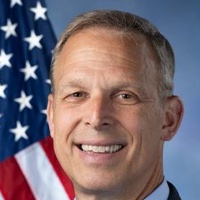
Scott Perry
Representative
PA
Scott Perry
Representative
PA
The "45Q Repeal Act of 2025" eliminates the carbon oxide sequestration credit (Section 45Q) from the Internal Revenue Code starting in 2026. It also updates related sections of the tax code to reflect this repeal. An amendment to Section 45Y(b)(2)(D) ensures captured carbon dioxide that is securely stored or utilized will not be included in a facility's emissions calculations, and directs the Secretary to establish regulations for secure geological storage of qualified carbon oxide.
This bill allows homeowners to exclude from their gross income any payments they receive from state programs designed to help them improve their property to mitigate damage from disasters like windstorms, earthquakes, or wildfires.
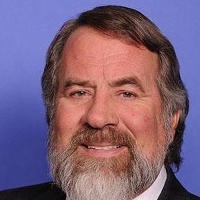
Doug LaMalfa
Representative
CA
Doug LaMalfa
Representative
CA
The Disaster Mitigation and Tax Parity Act of 2025 allows individuals to exclude from their gross income any payments or benefits they receive from state-based catastrophe loss mitigation programs designed to help homeowners protect their properties from disasters such as windstorms, earthquakes, or wildfires. These payments will not affect the property's basis, and the exclusion is applicable retroactively for taxable years starting after December 31, 2020, allowing individuals to claim the exclusion retroactively.
This resolution formally censures Representative Al Green of Texas for disrupting the 2024 State of the Union address and violating House decorum.
Eli Crane
Representative
AZ
Eli Crane
Representative
AZ
This resolution formally censures Representative Al Green of Texas for disrupting the 2024 State of the Union address. The measure asserts that his actions breached congressional decorum and undermined the dignity of the House. As part of the censure, Representative Green is required to appear in the well of the House to have the resolution read aloud.
The "Federal Firearms Licensee Protection Act of 2025" increases penalties for stealing firearms from licensed dealers, manufacturers, or importers, especially during burglaries or robberies, and clarifies related definitions.
John Rutherford
Representative
FL
John Rutherford
Representative
FL
The "Federal Firearms Licensee Protection Act of 2025" increases penalties for stealing firearms from licensed dealers. It sets stricter punishments, including up to 20 years in prison, for violating laws related to firearm theft. The act also mandates minimum prison sentences of 3 years for burglaries and 5 years for robberies targeting licensed firearm businesses.
This resolution condemns the Iranian regime’s terrorism and human rights abuses while affirming support for the Iranian people’s right to establish a democratic, secular, and non-nuclear republic.
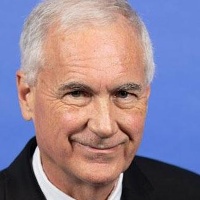
Tom McClintock
Representative
CA
Tom McClintock
Representative
CA
This resolution condemns the Iranian regime for its ongoing human rights abuses, state-sponsored terrorism, and regional instability. It expresses strong support for the Iranian people's struggle for a democratic, secular, and non-nuclear republic. Furthermore, the bill advocates for international accountability for the regime's crimes and calls for the protection of Iranian political refugees.
This resolution disapproves and nullifies the Bureau of Ocean Energy Management’s rule regarding the Protection of Marine Archaeological Resources.
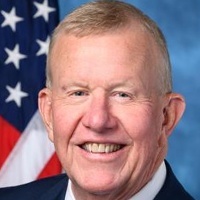
Mike Ezell
Representative
MS
Mike Ezell
Representative
MS
This resolution seeks to exercise congressional disapproval of the Bureau of Ocean Energy Management’s "Protection of Marine Archaeological Resources" rule. If passed, the measure would nullify the rule, rendering it unenforceable.
The Cyber PIVOTT Act establishes a CISA-led program providing full scholarships, internships, and skills-based training at community and technical colleges to build a qualified, service-oriented cybersecurity workforce.
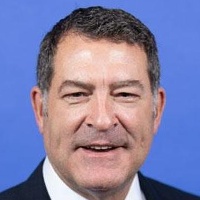
Mark Green
Representative
TN
Mark Green
Representative
TN
The Cyber PIVOTT Act establishes a CISA-led program to build a skilled cybersecurity workforce by providing full scholarships, internships, and hands-on training to students at community colleges and technical schools. Participants receive comprehensive financial support in exchange for a two-year service obligation in a cyber-related role within government or critical infrastructure. The bill aims to rapidly scale the cyber talent pipeline through partnerships with educational institutions and targeted federal recruitment initiatives.