Legislative Activity
Track Bill's sponsored bills, co-sponsored legislation, and voting record
This resolution condemns the assassination of Charlie Kirk and honors his life, legacy, and commitment to civil discourse.
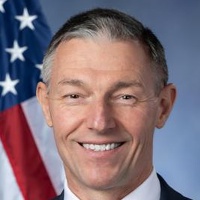
Mike Kennedy
Representative
UT
Mike Kennedy
Representative
UT
This resolution condemns the assassination of conservative activist Charlie Kirk and extends condolences to his family. It honors his life and legacy, recognizing his founding of Turning Point USA and his commitment to encouraging civil discourse on college campuses.
This resolution formally condemns the assassination of Charlie Kirk and reaffirms the right to peaceful assembly against political violence.
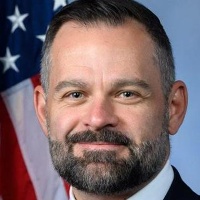
Cory Mills
Representative
FL
Cory Mills
Representative
FL
This resolution formally condemns the horrific political assassination of conservative spokesman Charlie Kirk on September 10, 2025, in Orem, Utah. It expresses deep condolences to his family and recognizes the bravery of the first responders at the scene. Ultimately, the measure reaffirms the fundamental American right to peaceful assembly and stands firmly against political violence.
The RESULTS Act reforms how Medicare determines payment rates for clinical diagnostic laboratory tests by mandating the use of comprehensive, real-world private payor claims data collected from an independent entity.
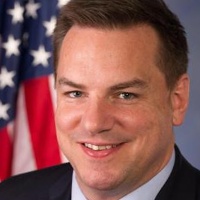
Richard Hudson
Representative
NC
Richard Hudson
Representative
NC
The Reforming and Enhancing Sustainable Updates to Laboratory Testing Services Act of 2025 (RESULTS Act) aims to improve Medicare payment rates for clinical lab tests by mandating the collection of more accurate, real-world payment data directly from large, independent private insurance claims databases. This legislation updates definitions, collection timelines, and calculation methods to ensure Medicare payments for widely available tests reflect current market rates. It also establishes default payment rules if sufficient private payor data cannot be secured.
This Act limits the sharing of consumer reports requested in connection with a residential mortgage loan to prevent unauthorized access to homebuyers' sensitive financial information.
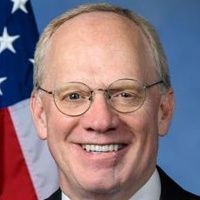
John Rose
Representative
TN
John Rose
Representative
TN
The Homebuyers Privacy Protection Act limits how consumer reporting agencies can share a consumer's report when it is requested in connection with a residential mortgage loan. Reports can only be shared with entities directly involved in the consumer's current mortgage or those providing a firm offer of credit or insurance. The Act also mandates a study by the GAO regarding the use and impact of "trigger leads" derived from credit checks.
The FEMA Act of 2025 establishes FEMA as an independent, cabinet-level agency and enacts sweeping reforms across public assistance, individual aid, and mitigation programs to speed up recovery and increase transparency.
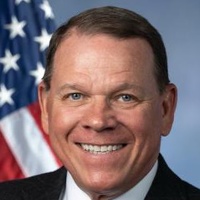
Sam Graves
Representative
MO
Sam Graves
Representative
MO
The FEMA Act of 2025 establishes the Federal Emergency Management Agency (FEMA) as an independent, cabinet-level agency to lead a unified, all-hazards approach to national emergency management. The bill enacts sweeping reforms across Public Assistance, Individual Assistance, and Mitigation programs to accelerate recovery, streamline funding, and reduce bureaucratic hurdles for disaster survivors and communities. Furthermore, it mandates significant new transparency measures, including public data reporting and GAO oversight, to ensure accountability for federal disaster spending.
This bill establishes priority processing for U.S. defense export licenses to key national security partners while setting strict, expedited decision deadlines for all other commercial sales applications.
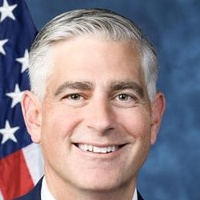
Michael Baumgartner
Representative
WA
Michael Baumgartner
Representative
WA
This bill aims to streamline the process for approving commercial sales of U.S. defense items abroad by establishing priority lists for key national security partners. It mandates specific, faster decision timelines for export applications, setting a 45-day review for priority countries and a 60-day review for all others. Furthermore, the legislation requires the Secretary of State to report semi-annually to Congress on any applications that miss these new deadlines.
This joint resolution formally establishes a National Day of Remembrance to honor the thirteen U.S. service members killed in the August 26, 2021, Abbey Gate bombing during the Afghanistan withdrawal.

Max Miller
Representative
OH
Max Miller
Representative
OH
This joint resolution formally honors the thirteen U.S. service members who were killed in the August 26, 2021, bombing at Abbey Gate during the withdrawal from Afghanistan. It recognizes their ultimate sacrifice in service to the nation and expresses deep gratitude to their Gold Star Families. The bill essentially establishes a National Day of Remembrance to ensure their faithful service in the fight for liberty is never forgotten.
The Enduring Welcome Act of 2025 establishes a permanent Office of the Coordinator for Afghan Relocation Efforts within the State Department to streamline and support the resettlement of Afghan allies and their families.
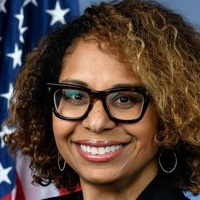
Sydney Kamlager-Dove
Representative
CA
Sydney Kamlager-Dove
Representative
CA
The Enduring Welcome Act of 2025 establishes a permanent Office of the Coordinator for Afghan Relocation Efforts within the State Department to streamline and support the resettlement of Afghan allies. This Act mandates the creation of a secure, centralized database to track all applicants, beneficiaries, and relocation progress, ensuring accountability to Congress. The Coordinator will manage interagency efforts, resolve family reunification roadblocks, and provide integration support for covered persons. This entire framework is set to automatically expire five years after enactment unless otherwise specified.
This Act limits the Consumer Financial Protection Bureau's authority over entities already regulated by state insurance regulators concerning their insurance business activities.
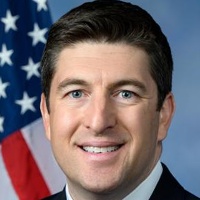
Bryan Steil
Representative
WI
Bryan Steil
Representative
WI
The Business of Insurance Regulatory Reform Act of 2025 clarifies the authority of the Consumer Financial Protection Bureau (CFPB) concerning entities already regulated by state insurance departments. This bill limits the CFPB's ability to enforce federal consumer protection laws against state-regulated entities acting within the business of insurance. The legislation prioritizes and supports the enforcement power of state insurance regulators over the CFPB in these specific areas.
This Act establishes the Great Lakes Mass Marking Program Act of 2025 to fund and formalize a science-based effort to tag hatchery fish for improved Great Lakes fishery management and research.

Debbie Dingell
Representative
MI
Debbie Dingell
Representative
MI
The Great Lakes Mass Marking Program Act of 2025 establishes a dedicated, science-based program within the U.S. Fish and Wildlife Service to systematically mark hatchery-stocked fish in the Great Lakes. This effort aims to accurately assess the effectiveness of stocking practices and fishery management plans in the region. The Act authorizes $2.7 million annually through 2030 to support this crucial collaborative effort with state and tribal partners.
This bill amends the Family and Medical Leave Act to explicitly qualify time taken for an employee's own organ donation surgery as a serious health condition.
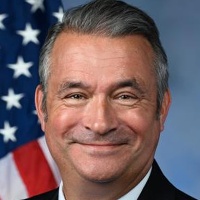
Don Bacon
Representative
NE
Don Bacon
Representative
NE
This bill amends the Family and Medical Leave Act (FMLA) to explicitly clarify that time taken off for an employee's own organ donation surgery qualifies as a serious health condition. This ensures both private and federal sector workers receive FMLA protection for recovery from organ donation. The legislation also specifies how federal employees must substitute existing paid leave when taking FMLA time for this purpose.
This Act prohibits insurance companies from discriminating against living organ donors when issuing life, disability, or long-term care policies and mandates the updating of educational materials regarding donation risks and insurance implications.
Don Bacon
Representative
NE
Don Bacon
Representative
NE
The Living Donor Protection Act of 2025 prohibits life, disability, and long-term care insurance companies from denying coverage or increasing premiums solely because an individual is a living organ donor. This legislation ensures that living donors are not financially penalized for their altruistic act. Additionally, the bill requires the Secretary of HHS to update educational materials to accurately reflect the insurance protections afforded to living donors.
This bill eliminates the 190-day lifetime limit on inpatient psychiatric hospital services covered by Medicare, effective January 1, 2027.
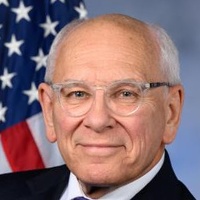
Paul Tonko
Representative
NY
Paul Tonko
Representative
NY
The Medicare Mental Health Inpatient Equity Act of 2025 eliminates the outdated 190-day lifetime limit for inpatient psychiatric hospital services covered by Medicare. This crucial change ensures that beneficiaries will no longer face a cap on the total number of days Medicare will cover for necessary inpatient psychiatric care. The provision takes effect for services received on or after January 1, 2027.
The Burma GAP Act establishes U.S. policy to hold the Burmese military accountable for genocide against the Rohingya, appoints a Special Representative, and mandates comprehensive support for the protection, justice, and durable solutions for the Rohingya people.
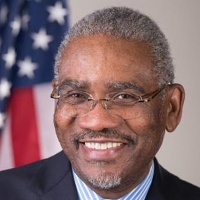
Gregory Meeks
Representative
NY
Gregory Meeks
Representative
NY
The Burma Genocide Accountability and Protection Act (Burma GAP Act) establishes a comprehensive U.S. policy to address the ongoing atrocities against the Rohingya people in Myanmar. The bill mandates the appointment of a Special Representative for Burma, increases humanitarian and protection support for refugees, and prioritizes accountability for genocide and crimes against humanity. Furthermore, it commits the U.S. to isolating the military junta until civilian rule is restored.
This Act prohibits the Federal Reserve from directly or indirectly issuing a Central Bank Digital Currency (CBDC) and bars the Fed from developing or using one for monetary policy without explicit Congressional authorization.
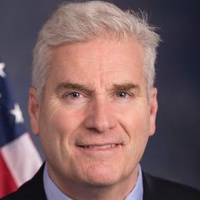
Tom Emmer
Representative
MN
Tom Emmer
Representative
MN
The Anti-CBDC Surveillance State Act strictly prohibits the Federal Reserve from directly or indirectly issuing a Central Bank Digital Currency (CBDC) to individuals. This legislation prevents the Fed from developing, testing, or implementing any digital currency that functions as a direct liability of the Federal Reserve. Furthermore, Congress asserts that any authority to create such a digital asset must explicitly come from Congress itself.
The Digital Asset Market Clarity Act establishes comprehensive regulatory frameworks for digital commodities under the CFTC and SEC, clarifies the status of digital assets, preserves self-custody rights, and explicitly prohibits the Federal Reserve from issuing a Central Bank Digital Currency (CBDC).
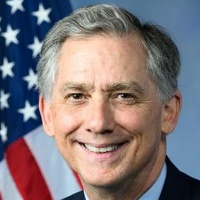
J. Hill
Representative
AR
J. Hill
Representative
AR
The Digital Asset Market Clarity Act establishes a comprehensive regulatory framework for digital assets, primarily focusing on defining and regulating "digital commodities" under the CFTC and SEC. It creates registration pathways for exchanges and intermediaries, clarifies rules for asset sales, protects individual self-custody rights, and explicitly prohibits the Federal Reserve from issuing a Central Bank Digital Currency (CBDC). Overall, the bill aims to bring clarity and consumer safeguards to the digital asset market while encouraging technological innovation.
This bill mandates the State Department to develop and deliver a comprehensive strategy to counter Iranian and Hezbollah influence operations across Latin America.
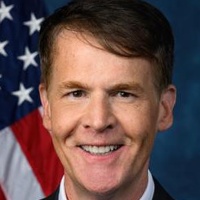
Jefferson Shreve
Representative
IN
Jefferson Shreve
Representative
IN
The BANNED in Latin America Act mandates the Secretary of State to develop a comprehensive strategy to counter Iranian and Hezbollah influence operations across Latin America. This plan must detail actions against cultural centers, restrict the activities of Iranian agents, and boost intelligence gathering on these networks. Furthermore, the strategy will outline measures to disrupt Iranian and Hezbollah media platforms and address radicalization efforts within university networks.
This bill reauthorizes funding for monitoring, assessing, and researching the Great Lakes Basin through fiscal year 2030.

Mike Quigley
Representative
IL
Mike Quigley
Representative
IL
This bill, the Great Lakes Fishery Research Reauthorization Act, extends the authorization for federal funding dedicated to monitoring, assessing, and researching the Great Lakes Basin. It pushes the current funding expiration date from 2025 to the end of fiscal year 2030. This ensures continued support for vital Great Lakes protection and study programs for an additional five years.
This bill authorizes the creation and sale of commemorative coins for the 2028 Los Angeles and 2034 Salt Lake City Olympic and Paralympic Games to help fund the events, with all surcharges going to the respective organizing committees after covering production costs.
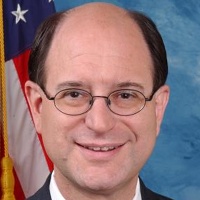
Brad Sherman
Representative
CA
Brad Sherman
Representative
CA
This Act authorizes the Secretary of the Treasury to mint and sell special commemorative coins for the 2028 Los Angeles Olympic and Paralympic Games and the 2034 Salt Lake City Winter Olympic and Paralympic Games. The coins will feature designs celebrating American athletes and the Games themselves. All surcharges collected from the sale of these coins will be directed to the respective organizing committees to help fund the events and related youth sports programs. The entire program must be conducted at no cost to the U.S. Government.
This resolution expresses support for designating July 10th as Journeyman Lineworkers Recognition Day to honor the dangerous and essential service provided by these workers, especially during crises.

Linda Sánchez
Representative
CA
Linda Sánchez
Representative
CA
This resolution expresses support for designating July 10th as Journeyman Lineworkers Recognition Day. It honors the essential and dangerous work performed by these skilled professionals, especially their heroic efforts in restoring power after major disasters. The day serves to recognize their service and remember those who have lost their lives performing this vital work.