Legislative Activity
Track Laura's sponsored bills, co-sponsored legislation, and voting record
This Act mandates the creation of a high school curriculum, developed by the U.S. Holocaust Memorial Museum, detailing the antisemitism surrounding the Hamas October 7, 2023, terrorist attacks against Israel.
Josh Gottheimer
Representative
NJ
Josh Gottheimer
Representative
NJ
The October 7 Remembrance Education Act mandates the creation of a high school curriculum focused on the Hamas terrorist attacks against Israel on October 7, 2023. This educational tool must detail the attacks, explore the history of antisemitism leading up to them, and address the spread of related antisemitic rhetoric in the U.S. afterward. The curriculum will be developed by the Director of the U.S. Holocaust Memorial Museum and must adhere to established definitions of antisemitism.
This resolution condemns the October 7th Hamas attacks, demands the immediate and unconditional surrender of Hamas and the release of all hostages, and reaffirms support for Israel's right to self-defense while condemning global antisemitism.
Josh Gottheimer
Representative
NJ
Josh Gottheimer
Representative
NJ
This resolution strongly condemns the brutal October 7th attacks by Hamas, demanding the immediate and unconditional surrender of the terrorist group and the release of all hostages, including Americans. It reaffirms Israel's right to self-defense while urging international action against Hamas and condemning the global surge in antisemitism. The measure serves as a formal statement of U.S. policy and support following the attacks.
This Act authorizes the presentation of a Congressional Gold Medal to recognize the American hostages and victims of the October 7, 2023, attacks by Hamas.
Josh Gottheimer
Representative
NJ
Josh Gottheimer
Representative
NJ
The October 7 Gold Medal Act authorizes Congress to award a Congressional Gold Medal to recognize the American hostages and victims of the brutal October 7, 2023, terrorist attacks in Israel. This medal honors their suffering, sacrifice, and the resilience shown by their families. The Secretary of the Treasury will strike the medal, and bronze duplicates may be sold to cover production costs. The official gold medal will ultimately be displayed at the Weitzman National Museum of American Jewish History.
This bill directs NASA and NOAA to expand civilian space cooperation with Taiwan and report annually to Congress on those efforts.
J. Hill
Representative
AR
J. Hill
Representative
AR
The Taiwan and American Space Assistance Act of 2025 directs NASA and NOAA to expand civilian space cooperation with Taiwan. This legislation mandates the initiation of discussions to collaborate on non-military space activities, including satellite programs and weather monitoring. The relevant agencies must report annually to Congress for five years on the progress and scope of this partnership.
The Pray Safe Act of 2025 establishes a Department of Homeland Security Federal Clearinghouse to publish evidence-based safety and security best practices and information on federal grants for nonprofit organizations, faith-based organizations, and houses of worship.
Grace Meng
Representative
NY
Grace Meng
Representative
NY
The Pray Safe Act of 2025 establishes a Federal Clearinghouse within the Department of Homeland Security to publish evidence-based safety and security best practices for nonprofit organizations, faith-based organizations, and houses of worship. This Clearinghouse will centralize information on security recommendations and available federal grant programs to help these entities prevent and respond to threats. The Act also mandates a GAO report evaluating existing federal security grant programs for these organizations.
This bill officially designates the United States Postal Service facility at 47 Echo Avenue in Miller Place, New York, as the "Christopher Pendergast Post Office Building."
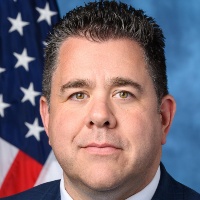
Nicolas LaLota
Representative
NY
Nicolas LaLota
Representative
NY
This bill officially designates the United States Postal Service facility located at 47 Echo Avenue in Miller Place, New York, as the "Christopher Pendergast Post Office Building." The legislation ensures that all official government records and documents reflect this new name for the location.
This bill officially renames the Department of Veterans Affairs medical center in Northport, New York, as the Navy (SEAL) Lieutenant Michael P. Murphy VA Medical Center to honor his Medal of Honor service.
Nicolas LaLota
Representative
NY
Nicolas LaLota
Representative
NY
This bill officially renames the Department of Veterans Affairs medical center in Northport, New York, in honor of Navy SEAL Lieutenant Michael P. Murphy. The renaming recognizes his ultimate sacrifice and heroism during Operation Red Wings in Afghanistan, for which he was posthumously awarded the Medal of Honor. This designation will serve as a permanent tribute to his legacy of courage and service.
This bill officially renames the United States Postal Service facility at 240 Main Street in Northport, New York, as the "Coast Guard Petty Officer 3rd Class Nate Bruckenthal Post Office Building."
Nicolas LaLota
Representative
NY
Nicolas LaLota
Representative
NY
This bill officially renames the United States Postal Service facility at 240 Main Street in Northport, New York. The building will now be known as the "Coast Guard Petty Officer 3rd Class Nate Bruckenthal Post Office Building." This action ensures all official records reflect the new designation honoring Petty Officer Bruckenthal.
This Act establishes grant programs to fund law enforcement efforts against online fentanyl sales, public awareness campaigns about fentanyl dangers, and protective equipment for officers.
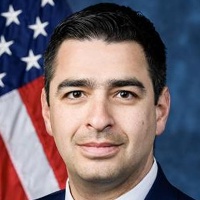
Gabe Evans
Representative
CO
Gabe Evans
Representative
CO
The Combatting Fentanyl Poisonings Act of 2025 establishes several new grant programs managed by the Attorney General to address the fentanyl crisis. These grants will fund local law enforcement efforts to stop social media drug sales, support non-profit organizations in running public awareness campaigns, and equip officers to safely handle fentanyl exposure. The Act specifically allocates funds for enforcement, education, and officer protection related to the dangers of fentanyl.
This bill officially designates the United States Postal Service facility at 170 Main Street in Westhampton Beach, New York, as the "Jolly 51 Memorial Post Office Building."
Nicolas LaLota
Representative
NY
Nicolas LaLota
Representative
NY
This bill officially renames the United States Postal Service facility at 170 Main Street in Westhampton Beach, New York. The building will henceforth be known as the "Jolly 51 Memorial Post Office Building." This designation ensures all federal references to the location use the new memorial name.
The Safe Step Act mandates that group health plans using medication step therapy establish clear, timely exception processes for patients and doctors when required drugs are medically inappropriate or ineffective.
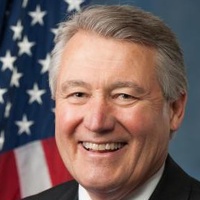
Rick Allen
Representative
GA
Rick Allen
Representative
GA
The Safe Step Act establishes mandatory, transparent exception processes for health plans that use "step therapy" protocols for prescription drugs. This ensures patients or their doctors can quickly request coverage for a prescribed medication when specific clinical criteria are met, such as previous treatment failure or risk of harm. Plans must decide on standard requests within 72 hours and urgent requests within 24 hours, and approved exceptions must last for at least one year. Furthermore, insurers must report detailed data annually on exception requests, approvals, and denials to the Secretary of Health and Human Services.
This Act mandates the modernization and expansion of the NOAA Weather Radio system to ensure reliable, uninterrupted hazard alerts for all residents via both traditional radio and digital platforms.
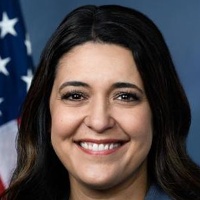
Stephanie Bice
Representative
OK
Stephanie Bice
Representative
OK
The NOAA Weather Radio Modernization Act of 2025 aims to significantly upgrade and expand the national weather alert system to ensure reliable, uninterrupted access for all Americans, regardless of location. This legislation mandates the modernization of existing infrastructure, including transitioning to newer communication technologies and expanding transmitter coverage to underserved rural and tribal areas. Furthermore, the Act requires a comprehensive assessment to improve data dissemination and ensure the system remains resilient against various threats.
The MAP Roads Act establishes a pilot program to provide federal grants to states for digitizing and publicly mapping their county road systems to improve access and safety.
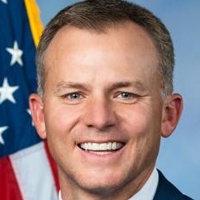
Blake Moore
Representative
UT
Blake Moore
Representative
UT
The MAP Roads Act establishes a pilot program to help states digitally map their unmapped county roads, aiming to improve rural business, safety, and navigation. The Secretary of Transportation will award grants to states that commit to creating a centralized, public repository for this standardized road data. Participating states must ensure the collected data is publicly accessible and updated annually. This grant authority is set to expire in 2031.
This act eliminates federal income tax on overtime compensation earned by all workers.
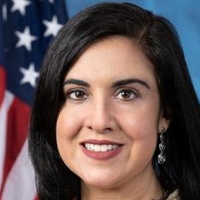
Nicole Malliotakis
Representative
NY
Nicole Malliotakis
Representative
NY
The No Tax on Overtime for All Workers Act amends the tax code to clarify and expand the definition of "qualified overtime compensation." This change ensures that overtime pay earned above a standard rate, whether mandated by the Fair Labor Standards Act or agreed upon beforehand with an employer, is treated favorably for tax purposes. The goal is to incentivize and reward workers for putting in extra hours.
The SHINE for Autumn Act of 2025 establishes federal grants for states to improve stillbirth surveillance, data collection, and risk factor research while mandating the development of standardized educational guidelines on stillbirth.
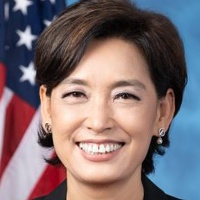
Young Kim
Representative
CA
Young Kim
Representative
CA
The SHINE for Autumn Act of 2025 aims to significantly improve federal support for state-level stillbirth research and data collection. It authorizes grants for states to enhance surveillance, track risk factors, and build local capacity for analyzing stillbirth data, provided the information remains de-identified. Furthermore, the bill mandates the development of standardized guidelines and educational materials regarding stillbirth awareness and risk factors, developed in consultation with experts and bereaved families.
This Act mandates that new passenger motor vehicles sold in the U.S. must include standard equipment capable of receiving AM broadcast radio signals.

Gus Bilirakis
Representative
FL
Gus Bilirakis
Representative
FL
The AM Radio for Every Vehicle Act of 2025 mandates that the Secretary of Transportation establish a rule requiring AM broadcast radio receivers to be installed as standard equipment in new passenger motor vehicles. This requirement aims to ensure public access to AM radio signals, which are often used for emergency alerts. The bill also directs a GAO study on the effectiveness of AM radio within the national emergency alert system compared to other technologies. Finally, the Act preempts state and local laws on this matter and includes a sunset provision eight years after enactment.
This bill amends the Social Security Act to provide Medicare coverage for FDA-approved multi-cancer early detection screening tests starting in 2028.
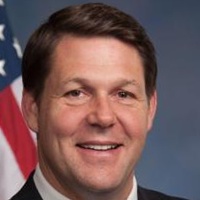
Jodey Arrington
Representative
TX
Jodey Arrington
Representative
TX
The Nancy Gardner Sewell Medicare Multi-Cancer Early Detection Screening Coverage Act amends the Social Security Act to provide Medicare Part B coverage for multi-cancer early detection screening tests starting January 1, 2028. This legislation establishes clear criteria for qualifying tests and outlines payment structures to ensure beneficiaries have access to these advanced diagnostic tools. Importantly, this coverage is designed to complement, rather than replace, existing Medicare-covered cancer screenings.
The Stop CMV Act of 2025 establishes a framework for voluntary newborn screening for congenital Cytomegalovirus (CMV), provides federal funding for state implementation and data collection, and expands research efforts.
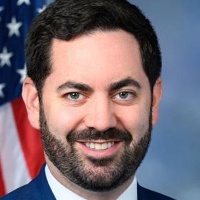
Michael Lawler
Representative
NY
Michael Lawler
Representative
NY
The Stop CMV Act of 2025 aims to establish a national framework for screening newborns for congenital Cytomegalovirus (CMV). This legislation authorizes federal funding for states to implement testing programs and improve data collection systems related to CMV. Furthermore, the bill mandates the expansion of research efforts through the NIH to improve CMV diagnostics, prevention, and treatment.
This Act ensures the automatic continuation of pay for active duty military personnel and essential civilian support staff if Congress fails to pass a budget for fiscal year 2026.
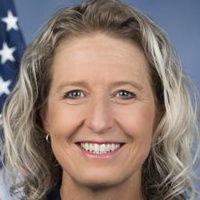
Jennifer Kiggans
Representative
VA
Jennifer Kiggans
Representative
VA
The Pay Our Troops Act of 2026 ensures that active duty military personnel and essential civilian support staff continue to receive their pay if Congress has not yet passed the full budget for fiscal year 2026. This act provides automatic continuing appropriations from the Treasury to prevent a lapse in military salaries due to budget delays. The funding automatically terminates once a new budget or continuing resolution is passed, or on January 1, 2027, whichever comes first.
This bill mandates key federal agencies to coordinate housing research and submit a joint report to Congress outlining policy solutions for improving housing affordability and availability.
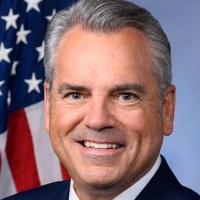
Mark Alford
Representative
MO
Mark Alford
Representative
MO
The Saving the American Dream Act mandates that key federal housing agencies collaborate to share research and data through a formal agreement. This legislation requires these agencies to jointly submit a comprehensive report to Congress outlining policy solutions for improving housing finance coordination, reducing mortgage costs, and addressing barriers to new home construction. The goal is to ensure federal housing policy is based on coordinated, evidence-based analysis.