Legislative Activity
Track Laura's sponsored bills, co-sponsored legislation, and voting record
This bill establishes a program to identify and correct the grave markers of Jewish servicemembers mistakenly buried under Latin Crosses in overseas U.S. military cemeteries.
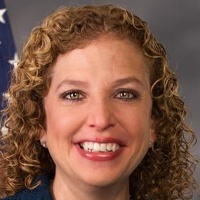
Debbie Wasserman Schultz
Representative
FL
Debbie Wasserman Schultz
Representative
FL
This act establishes the Fallen Servicemembers Religious Heritage Restoration Program to correct historical errors where Jewish service members killed in WWI and WWII were mistakenly buried under non-Jewish grave markers overseas. The American Battle Monuments Commission will contract with a nonprofit organization to identify these "covered members" and contact their survivors over a five-year period. The legislation also extends a deadline related to certain pension payments.
This Act requires the Government Accountability Office to review the effectiveness and coordination of the EPA's technical assistance programs for clean water infrastructure projects.
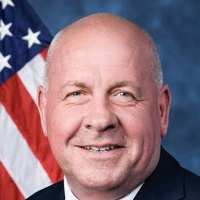
David Taylor
Representative
OH
David Taylor
Representative
OH
The Water Resources Technical Assistance Review Act directs the Government Accountability Office (GAO) to conduct a comprehensive review of the technical assistance the Environmental Protection Agency (EPA) provides for clean water infrastructure projects. This review will examine what assistance is available, how partners are selected, and whether the aid effectively meets community needs without duplication. Following the report, the EPA Administrator must submit annual plans to Congress detailing steps taken to implement the GAO's recommendations.
This bill extends the special rule allowing low emission and energy efficient vehicles access to HOV lanes until the end of 2026 and mandates a study on the effectiveness of this provision.
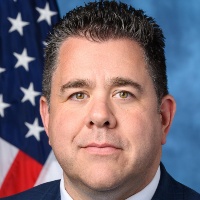
Nicolas LaLota
Representative
NY
Nicolas LaLota
Representative
NY
This bill extends the special rule allowing low emission and energy-efficient vehicles access to High Occupancy Vehicle (HOV) lanes until December 31, 2026. It also mandates a study by the Secretary of Transportation to evaluate the effectiveness of this provision on reducing traffic congestion.
This bill establishes September 11th as a legal public holiday known as the September 11 Day of Remembrance.
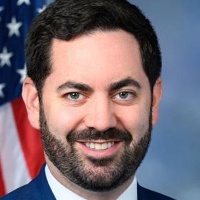
Michael Lawler
Representative
NY
Michael Lawler
Representative
NY
This bill, the **September 11 Day of Remembrance Act**, officially designates September 11th as a legal public holiday. This amendment updates federal law to recognize September 11th as the "September 11 Day of Remembrance," observed annually. Consequently, federal employees will observe this day as a recognized federal holiday.
This act ensures that essential Border Patrol Agents and Customs Officers receive their salaries during a government shutdown in fiscal year 2026.
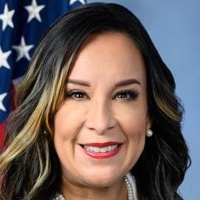
Mónica De La Cruz
Representative
TX
Mónica De La Cruz
Representative
TX
The Pay Our Border Patrol and Customs Agents Act ensures that essential U.S. Border Patrol Agents and Customs and Border Protection officers who must work during a government shutdown in fiscal year 2026 will receive their salaries. This legislation appropriates necessary funds from the Treasury to cover these payments during the lapse in appropriations. The goal is to guarantee that critical border security personnel are paid even if the government temporarily closes.
This bill reauthorizes funding for programs supporting the mental health and treatment of officers in crisis for an additional five years, from 2025 through 2029.
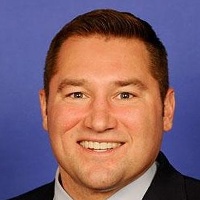
Guy Reschenthaler
Representative
PA
Guy Reschenthaler
Representative
PA
The Reauthorizing Support and Treatment for Officers in Crisis Act of 2025 extends crucial federal funding for programs supporting law enforcement officers in crisis. This bill specifically reauthorizes existing support and treatment initiatives for an additional five years, running from 2025 through 2029. It ensures continued resources are available for officers needing mental health and wellness assistance.
The Weather Act Reauthorization Act of 2025 comprehensively updates and funds federal weather research, modernizes forecasting infrastructure, integrates commercial data, and improves public communication to enhance severe weather preparedness and mitigation across the nation.
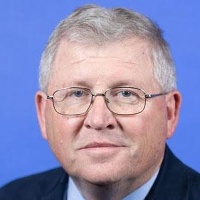
Frank Lucas
Representative
OK
Frank Lucas
Representative
OK
The Weather Act Reauthorization Act of 2025 aims to significantly enhance U.S. weather forecasting, research, and public safety measures across five years. It mandates the modernization of critical infrastructure, including radar systems and data processing, while prioritizing the integration of commercial technology and social science research into actionable, impact-based warnings. The bill focuses on improving predictions for severe events like tornadoes, hurricanes, and droughts, and overhauls how NOAA acquires and utilizes private sector weather data. Ultimately, this legislation seeks to deliver faster, clearer, and more reliable hazard information to protect American lives and property.
The PART Act establishes new federal requirements for marking catalytic converters, creates a grant program for VIN stamping, tightens record-keeping for used parts dealers, and increases criminal penalties for theft and trafficking of catalytic converters.
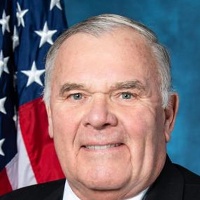
James Baird
Representative
IN
James Baird
Representative
IN
The PART Act aims to combat catalytic converter theft by requiring new vehicles to have traceable identifying markers on these parts. It establishes a federal grant program to help entities stamp identifying numbers onto existing converters. Furthermore, the bill imposes strict record-keeping requirements on businesses that buy used converters and creates new federal criminal penalties for stealing or trafficking stolen catalytic converters.
The FROST Act modifies the definition of eligible airport facilities under federal aviation programs by removing the specific inclusion of deicing equipment storage.
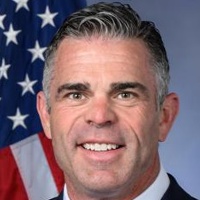
Tony Wied
Representative
WI
Tony Wied
Representative
WI
The Facility for Runway Operations and Safe Transportation (FROST) Act modifies federal definitions for airport facilities under aviation programs. Specifically, it removes the explicit inclusion of storage facilities for deicing equipment and fluids from the definition of eligible airport facilities for federal funding. This change impacts how certain aviation grants are allocated by adjusting what infrastructure qualifies for support.
This Act establishes a plan to connect transitioning service members and veterans with jobs in the port, ocean, rail, and truck supply chain industries.
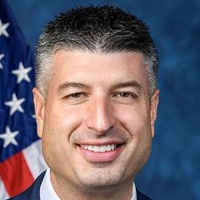
Tom Barrett
Representative
MI
Tom Barrett
Representative
MI
The TRANSPORT Jobs Act mandates the creation of a "Veteran to Supply Chain Employee Action Plan" to facilitate the transition of service members and veterans into jobs within the port, ocean, rail, and truck supply chain industries. This plan will identify barriers to employment and recommend concrete steps for federal agencies to better connect veterans' skills with industry needs. The goal is to increase the hiring and retention of veterans in critical supply chain roles.
The Quiet Communities Act of 2025 reestablishes the EPA's Office of Noise Abatement and Control to combat noise pollution through research, technical assistance, and funding for state and local programs.
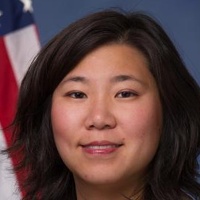
Grace Meng
Representative
NY
Grace Meng
Representative
NY
The Quiet Communities Act of 2025 addresses the growing public health crisis caused by noise pollution by reestablishing the Environmental Protection Agency's (EPA) Office of Noise Abatement and Control. This office will be tasked with researching noise impacts, supporting state and local noise control efforts through technical assistance and grants, and conducting a specific study on aircraft noise. The Act authorizes \$25 million annually through Fiscal Year 2030 to fund these critical national noise reduction initiatives.
This Act pauses scheduled Medicare home health payment reductions for 2026 and 2027 to ensure continued beneficiary access to services.
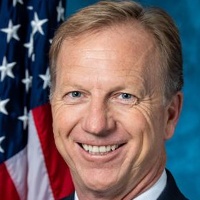
Kevin Hern
Representative
OK
Kevin Hern
Representative
OK
The Home Health Stabilization Act of 2025 aims to ensure continued access to Medicare home health services by pausing automatic payment reductions scheduled for 2026 and 2027. This is achieved by mandating a positive adjustment to the standard payment rate to fully offset proposed cuts. Furthermore, the bill clarifies that these temporary payment increases will not negatively impact future rate calculations for providers.
This act limits electric utility companies to requesting a retail rate increase only once per year.
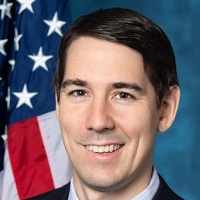
Josh Harder
Representative
CA
Josh Harder
Representative
CA
The Stop the Rate Hikes Act limits electric utilities to requesting a retail rate increase only once per year. This measure aims to provide consumers with greater stability by restricting how frequently utility companies can seek to raise electricity rates.
The FEMA Act of 2025 establishes FEMA as an independent, cabinet-level agency and enacts sweeping reforms across public assistance, individual aid, and mitigation programs to speed up recovery and increase transparency.
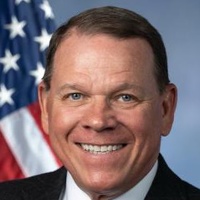
Sam Graves
Representative
MO
Sam Graves
Representative
MO
The FEMA Act of 2025 establishes the Federal Emergency Management Agency (FEMA) as an independent, cabinet-level agency to lead a unified, all-hazards approach to national emergency management. The bill enacts sweeping reforms across Public Assistance, Individual Assistance, and Mitigation programs to accelerate recovery, streamline funding, and reduce bureaucratic hurdles for disaster survivors and communities. Furthermore, it mandates significant new transparency measures, including public data reporting and GAO oversight, to ensure accountability for federal disaster spending.
This Act urges China to control precursor chemical trafficking while expanding U.S. sanctions against Chinese entities and officials involved in opioid production and distribution.
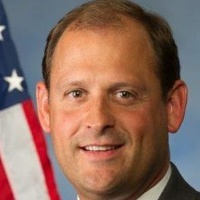
Garland Barr
Representative
KY
Garland Barr
Representative
KY
The Stop Chinese Fentanyl Act of 2025 urges the Chinese government to enhance controls over precursor chemicals used in fentanyl production through cooperation, stricter shipping rules, and "know-your-customer" requirements. The bill also expands the definition of a "foreign opioid trafficker" under existing sanctions law to specifically target certain Chinese entities and officials who facilitate or fail to stop illicit opioid trafficking. Furthermore, it imposes new reporting and regulatory standards on the President when using emergency economic powers related to international drug trafficking. Finally, the Act explicitly prohibits using the sanctions authorized by this law to block the importation of general goods.
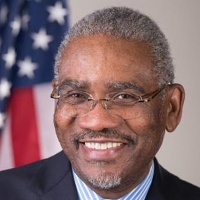
This Act mandates annual public reporting on the links between Haitian criminal gangs and political/economic elites, authorizing the President to impose asset freezes and visa bans on those identified.
Gregory Meeks
Representative
NY
Gregory Meeks
Representative
NY
The Haiti Criminal Collusion Transparency Act of 2025 mandates the Secretary of State to annually report on the links between Haitian criminal gangs and the nation's political and economic elites. Based on these findings, the President must impose sanctions, including asset freezes and visa bans, on identified foreign individuals. The law is designed to expose and penalize collusion that threatens U.S. interests and the Haitian people, with provisions set to expire after five years.
This Act updates Medicaid rules to modify how states calculate Disproportionate Share Hospital (DSH) payment adjustments and allows states to retroactively use unspent federal DSH funds for prior years.
Nicolas LaLota
Representative
NY
Nicolas LaLota
Representative
NY
The Save our Safety-Net Hospitals Act of 2025 modifies how states calculate Disproportionate Share Hospital (DSH) payments under Medicaid to ensure hospitals receive appropriate supplemental funding. This bill updates eligibility criteria by changing which patient costs are included in the DSH calculation formula. Furthermore, it allows states to use previously unspent federal DSH funds to increase payments for certain past rate years, provided they adhere to existing allotment caps.
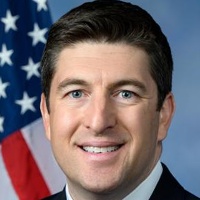
This Act mandates the Center for Mental Health Services to develop and implement a national strategy addressing the impact of new technologies on children's mental health.
Bryan Steil
Representative
WI
Bryan Steil
Representative
WI
The Protecting Young Minds Online Act mandates the Center for Mental Health Services to develop and implement a national strategy. This strategy will specifically address the impact of new technologies, such as social media, on the mental health of children. The goal is to equip local communities with the resources needed to manage these effects.
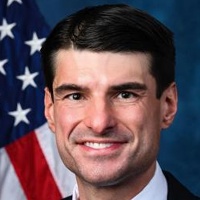
This Act establishes the "Local Farmers Feeding Our Communities" program to strengthen local food security by funding agreements that support local producers and distribute fresh food to communities.
Robert Bresnahan
Representative
PA
Robert Bresnahan
Representative
PA
The Local Farmers Feeding our Communities Act establishes a new program to support local food producers and strengthen regional food security. This initiative requires the Secretary of Agriculture to fund agreements that ensure nutritious, locally sourced food is purchased and distributed widely, prioritizing small and beginning farmers. Funds must be used to buy minimally processed local products and provide technical assistance to producers. The program is backed by mandatory funding starting in Fiscal Year 2026.
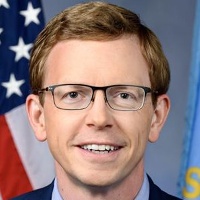
This bill prohibits the Department of Transportation from using, procuring, or contracting for LiDAR technology originating from specified foreign adversaries.
Dusty Johnson
Representative
SD
Dusty Johnson
Representative
SD
The Securing Infrastructure from Adversaries Act of 2025 prohibits the Department of Transportation (DOT) from procuring or contracting for the use of certain foreign-made LiDAR technology identified in related defense legislation. This ban applies to purchases, contracts, and the use of federal loan or grant funds for this restricted technology, generally beginning in mid-2026. The Secretary of Transportation may only waive this prohibition if it is certified to be in the national interest of the United States. Certain safety testing and regulatory exemption activities remain exempt from these restrictions.