The Pray Safe Act of 2025 establishes a Department of Homeland Security Federal Clearinghouse to publish evidence-based safety and security best practices and information on federal grants for nonprofit organizations, faith-based organizations, and houses of worship.
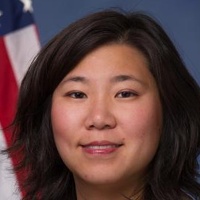
Grace Meng
Representative
NY-6
The Pray Safe Act of 2025 establishes a Federal Clearinghouse within the Department of Homeland Security to publish evidence-based safety and security best practices for nonprofit organizations, faith-based organizations, and houses of worship. This Clearinghouse will centralize information on security recommendations and available federal grant programs to help these entities prevent and respond to threats. The Act also mandates a GAO report evaluating existing federal security grant programs for these organizations.
DHS to Launch Federal Clearinghouse on Safety and Security for Nonprofits and Houses of Worship Within 270 Days
If you’ve ever had to manage security for a local church bake sale, a community center event, or a small nonprofit office, you know the struggle is real. Finding reliable, up-to-date security guidance that doesn't cost an arm and a leg is tough, and figuring out which federal grants you might qualify for is often a full-time job. The Pray Safe Act of 2025 aims to fix that.
This bill tasks the Department of Homeland Security (DHS) with establishing a Federal Clearinghouse on Safety and Security Best Practices for Nonprofit Organizations, Faith-based Organizations, and Houses of Worship. This online resource must be up and running within 270 days of the bill’s enactment. The main goal is simple: create a single federal hub where these organizations can find evidence-based security recommendations and a comprehensive, centralized list of all available federal grant programs to help them pay for those security upgrades. Think of it as the government finally creating a single, easy-to-read manual for staying safe, whether you’re worried about a natural disaster or a security threat.
The New Playbook: Evidence-Based Security
One of the most important parts of this Act is the focus on using evidence-based standards (SEC. 3). DHS must develop tiers for best practices, prioritizing recommendations based on strong or moderate evidence from experimental studies. This is a big deal because it means the advice provided should actually be proven to work, rather than just sounding good. The recommendations must cover everything from event planning and facility hardening (like better locks or cameras) to incident response and recovery. For a busy community leader, this means less guessing and more certainty that the security measures they implement—like running a tabletop exercise or updating their emergency checklist—are actually effective.
Grant Hunting Made Easier
For many smaller organizations, the biggest hurdle to security isn't knowing what to do, but affording it. The bill addresses this directly by requiring the Clearinghouse to be a one-stop shop for federal grant information (SEC. 3). This centralized grants overview must include direct links to applications, user guides, and answers to frequently asked questions. Federal agencies and even states are required to submit information about their relevant grant programs to DHS for inclusion. For the local soup kitchen or after-school program, this means they won't have to wade through a dozen different government websites just to find out if they qualify for funding to install a new security system.
Who Gets to Use It? And the Catch
While this resource is clearly beneficial, there’s a slight wrinkle in the definitions (SEC. 2). A “Nonprofit organization” is defined as a tax-exempt group that the Secretary of Homeland Security determines is “at risk of a terrorist attack or other threat.” This determination gives DHS a lot of discretion in deciding who is eligible for the full suite of resources and grant information. While most houses of worship and community centers would likely qualify, that subjective judgment call could create ambiguity for smaller or less traditional organizations. Furthermore, the best practices tiers include a category for “promising evidence,” which is less rigorous than the “strong” or “moderate” evidence tiers. While helpful for innovation, it means some recommended measures might be based on less-than-solid proof.
In a nod to accountability, the Act includes a crucial Rule of Construction and Sunset provision (SEC. 3). First, it explicitly states that nothing in the Act waives or modifies existing federal civil rights laws, including the Americans with Disabilities Act (ADA). Second, and perhaps most critically for its long-term viability, the entire Act is set to expire four years after enactment. This means that unless Congress actively renews it, this centralized resource—and the infrastructure built to support it—will disappear in 2029. For now, though, the Pray Safe Act promises to deliver a much-needed, streamlined resource for organizations focused on serving the public while keeping their doors safely open.