Legislative Activity
Track Laura's sponsored bills, co-sponsored legislation, and voting record
This bill authorizes Congress to award Congressional Gold Medals to the 1980 U.S. Men's Olympic Ice Hockey team for their historic "Miracle on Ice" victory.
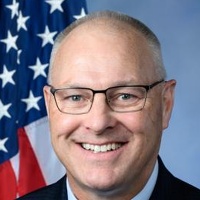
Pete Stauber
Representative
MN
Pete Stauber
Representative
MN
This bill, the Miracle on Ice Congressional Gold Medal Act, officially authorizes Congress to award Congressional Gold Medals to the 1980 U.S. Men's Olympic Ice Hockey Team for their historic "Miracle on Ice" victory. The medals will be struck by the Treasury and permanently displayed at specific national sports museums. The Act also permits the sale of duplicate bronze medals to cover production costs.
This act nullifies a recent Executive Order regarding federal labor relations and ensures existing collective bargaining agreements remain in effect.
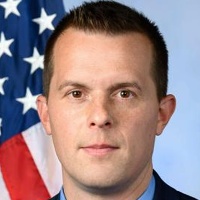
Jared Golden
Representative
ME
Jared Golden
Representative
ME
The Protect America's Workforce Act nullifies a specific Executive Order issued in March 2025 concerning exclusions from federal labor-management relations programs. This legislation ensures that any existing collective bargaining agreements between federal agencies and employee unions remain fully in effect until their stated expiration dates. The Act also prohibits the use of federal funds to implement the overturned Executive Order.
The Fit Vets Act establishes a three-year pilot program to provide eligible veterans enrolled in VA healthcare access to the SilverSneakers fitness program or a comparable senior exercise program.
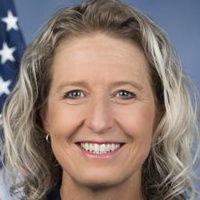
Jennifer Kiggans
Representative
VA
Jennifer Kiggans
Representative
VA
The Fit Vets Act establishes a three-year pilot program to provide eligible veterans enrolled in VA health care access to the SilverSneakers fitness program or a similar senior exercise program. The Department of Veterans Affairs will evaluate the program's participation, costs, and impact on veteran health outcomes. Following the pilot's conclusion, the Secretary must report findings and recommendations to Congress regarding making the program permanent.
The FAIR Vets Act increases the dollar thresholds for sole-source federal contracts awarded to service-disabled veteran-owned small businesses.
Jennifer Kiggans
Representative
VA
Jennifer Kiggans
Representative
VA
The FAIR Vets Act modernizes federal contracting by significantly increasing the dollar thresholds for sole-source contracts awarded to service-disabled veteran-owned small businesses. This change raises the maximum contract value for both manufacturing and non-manufacturing sectors. The goal is to improve access to federal contracts for these veteran-owned businesses.
This bill establishes the Veterans Transition Talent Hub program to directly connect employers with veterans and separating service members seeking employment.
Jennifer Kiggans
Representative
VA
Jennifer Kiggans
Representative
VA
The Veterans Career Connection Act establishes the Veterans Transition Talent Hub within the Department of Veterans Affairs. This program aims to directly connect employers with veterans and separating service members by creating a searchable database of their skills and employment preferences. The goal is to streamline the transition from military service to civilian employment.
This bill officially designates the United States Postal Service facility at 86 Main Street in Haverstraw, New York, as the Paul Piperato Post Office Building.
Michael Lawler
Representative
NY
Michael Lawler
Representative
NY
This bill officially designates the United States Postal Service facility located at 86 Main Street in Haverstraw, New York, as the "Paul Piperato Post Office Building." This action ensures the facility will be known by this name in all official federal records and documents moving forward.
This bill officially renames the United States Postal Service facility in Holmes, New York, as the Sheriff Adrian Butch Anderson Post Office Building.
Michael Lawler
Representative
NY
Michael Lawler
Representative
NY
This bill officially designates the United States Postal Service facility located at 298 Route 292 in Holmes, New York, as the "Sheriff Adrian Butch Anderson Post Office Building." This change ensures all federal records and documents will use the new official name for this location.
This bill officially renames the U.S. Postal Service facility in Avon, New York, as the Officer Anthony Mazurkiewicz Memorial Post Office Building.
Claudia Tenney
Representative
NY
Claudia Tenney
Representative
NY
This bill officially designates the United States Postal Service facility located at 80 Prospect Street in Avon, New York, as the **Officer Anthony Mazurkiewicz Memorial Post Office Building**. This action ensures the facility will bear this name in all federal records and references moving forward.
This bill establishes criminal penalties for willful violations of the Telephone Consumer Protection Act (TCPA) and increases civil fines for providing inaccurate caller ID information.
David Kustoff
Representative
TN
David Kustoff
Representative
TN
The Deter Obnoxious, Nefarious, and Outrageous Telephone Calls Act of 2025, or the DO NOT Call Act, establishes new criminal penalties for willful violations of the Telephone Consumer Protection Act (TCPA). This legislation also significantly increases the civil fines associated with providing inaccurate caller ID information. These measures aim to deter illegal and unwanted telemarketing and robocalls.
This Act establishes a multi-agency Task Force to develop and implement a comprehensive strategy to dismantle transnational criminal syndicates operating forced-labor scam centers, particularly those targeting Americans with cryptocurrency fraud.
Jefferson Shreve
Representative
IN
Jefferson Shreve
Representative
IN
The Dismantle Foreign Scam Syndicates Act establishes a high-level Task Force, chaired by the Secretary of State, to develop and execute a comprehensive U.S. strategy against transnational criminal organizations running massive online scams, often utilizing victims of human trafficking in Southeast Asia. This strategy must focus on disrupting these operations, sanctioning responsible parties, and providing support for rescued victims. The bill authorizes $30 million over two years to fund these efforts and requires annual reporting to Congress on progress and impact.
This Act establishes mandatory shipping safety fairways along the Atlantic Coast, based on the Coast Guard's 2024 proposed rule, with a required minimum width taking effect in late 2026.
David Rouzer
Representative
NC
David Rouzer
Representative
NC
The Atlantic Coast Shipping Safety Act mandates the establishment of federal shipping safety fairways along the Atlantic Coast. This legislation requires the Coast Guard to issue final regulations, based on their 2024 proposal, establishing minimum fairway widths by December 31, 2026. These safety measures aim to enhance maritime safety in nearshore and offshore areas.
This Act mandates reports on Houthi indoctrination, humanitarian aid obstruction, and human rights abuses, while authorizing sanctions against Houthi members involved in these activities.
Darrell Issa
Representative
CA
Darrell Issa
Representative
CA
The Houthi Human Rights Accountability Act aims to counter the Houthis' extremist indoctrination and regional destabilization efforts by requiring comprehensive reports on their abuses and interference with humanitarian aid. The bill mandates annual reviews to determine if Houthi members are eligible for sanctions under existing U.S. laws for human rights violations or hostage-taking. This legislation will remain in effect for five years unless extended by Congress.
The Mikaela Naylon Give Kids a Chance Act primarily focuses on enhancing pediatric drug research, ensuring completion of pediatric study requirements, extending incentives for rare pediatric disease treatments, and making targeted updates to FDA and organ transplant network operations.
Michael McCaul
Representative
TX
Michael McCaul
Representative
TX
The Mikaela Naylon Give Kids a Chance Act focuses primarily on improving pediatric drug development and ensuring patient access to necessary treatments. This legislation mandates new research requirements for molecularly targeted pediatric cancer drugs, strengthens FDA enforcement of pediatric study completion, and extends incentives for developing drugs for rare pediatric diseases. Additionally, the bill updates organ transplant network functions and establishes an Abraham Accords Office within the FDA to enhance international regulatory cooperation.
This bill expands Medicare drug price negotiation to private insurance, applies inflation rebates to commercial drugs, and establishes annual out-of-pocket limits for prescription drugs under private health insurance.
Frank Pallone
Representative
NJ
Frank Pallone
Representative
NJ
The Lowering Drug Costs for American Families Act aims to significantly reduce prescription drug expenses for consumers. It expands the federal drug price negotiation program to cover more drugs and extends negotiated prices to most private health insurance plans. Furthermore, the bill applies inflation rebates to the commercial market and establishes new annual out-of-pocket spending caps for prescription drugs under private insurance starting in 2027. It also sets specific, lower cost-sharing requirements for covered insulin products.
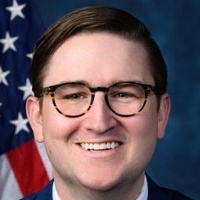
This Act establishes an interagency task force to combat foreign robocalls, modifies FCC review frequency, introduces a bond requirement for the Robocall Mitigation Database, and grants immunity for private efforts to trace unlawful robocall origins.
Addison McDowell
Representative
NC
Addison McDowell
Representative
NC
The Foreign Robocall Elimination Act establishes an interagency taskforce to study and recommend strategies for combating unlawful robocalls originating from outside the United States. It also grants the FCC authority to require providers to post a bond to ensure integrity in the Robocall Mitigation Database. Furthermore, the bill provides legal immunity for private consortiums tracing the origin of these illegal calls and allows for the publication of non-cooperative providers.
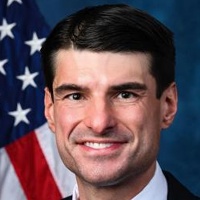
This act modernizes water infrastructure by defining and funding the adoption of intelligent technologies for improved water and wastewater management.
Robert Bresnahan
Representative
PA
Robert Bresnahan
Representative
PA
The Water Infrastructure Modernization Act of 2025 updates federal water pollution control grants to prioritize and fund "intelligent water infrastructure technology." This technology utilizes real-time monitoring, AI, and advanced sensors to improve the efficiency, reliability, and resilience of water and wastewater systems. The bill modifies grant uses to specifically cover the implementation of these smart technologies and increases the authorization of appropriations.
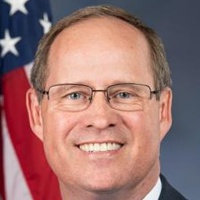
This Act mandates a comprehensive review of veteran overdose deaths over the preceding five years to inform future prevention strategies, particularly those involving non-prescription opioids.
Gregory Murphy
Representative
NC
Gregory Murphy
Representative
NC
The Veterans Heroin Overdose Prevention Examination Act, or Veterans HOPE Act, mandates the Department of Veterans Affairs (VA) to conduct a comprehensive review of veteran overdose deaths over the preceding five years. This review must analyze prescription history, medications present at death, and contributing factors, especially focusing on deaths involving non-prescription opioids like heroin and fentanyl. The findings, including recommendations for improving veteran safety, will be reported to Congress and made publicly available.
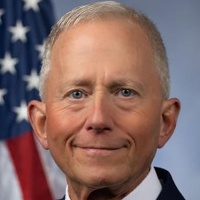
This Act expands federal transportation funding to mandate the purchase, deployment, and planning for Automated External Defibrillators (AEDs) in various transportation facilities across the nation.
Jefferson Van Drew
Representative
NJ
Jefferson Van Drew
Representative
NJ
The Public Access to Defibrillation in Transportation Facilities Act of 2025 aims to increase the availability of Automated External Defibrillators (AEDs) in public transportation settings. The bill expands federal grant programs to allow funds to be used for purchasing AEDs and developing emergency response plans at these facilities. Furthermore, it directs the Secretary of Transportation to issue recommendations and guidelines for AED deployment and emergency planning at interstate transportation facilities. This legislation seeks to improve response times to sudden cardiac arrest in areas frequented by the public.
This bill mandates the designation of the Russian Federation as a state sponsor of terrorism if the Secretary of State cannot certify the safe return and reintegration of Ukrainian children abducted since the 2022 invasion.
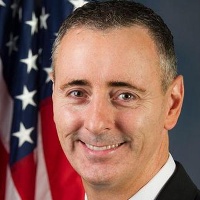
Brian Fitzpatrick
Representative
PA
Brian Fitzpatrick
Representative
PA
This bill mandates the Secretary of State to designate the Russian Federation as a state sponsor of terrorism if Russia fails to ensure the safe return and reintegration of Ukrainian children abducted since the 2022 invasion. The designation triggers existing sanctions unless the Secretary can certify that all forcibly deported children are safely reunited with their families. Removal of this designation requires Russia to cease terrorism support and meet strict criteria regarding the return of all displaced children.
The New York-New Jersey Watershed Protection Act of 2025 establishes a grant program and restoration efforts, funded through 2031, to protect and improve fish and wildlife habitats and water quality in the New York-New Jersey Harbor watershed, prioritizing environmental justice communities.
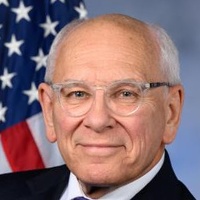
Paul Tonko
Representative
NY
Paul Tonko
Representative
NY
The New York-New Jersey Watershed Protection Act of 2025 establishes a new program to coordinate the restoration and protection of fish and wildlife habitats across the New York-New Jersey Watershed. This legislation creates a competitive grant program to fund local restoration projects, with special consideration for communities facing environmental injustice. The Act authorizes $20 million annually through fiscal year 2031 to support these science-based conservation efforts.