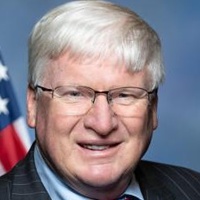
Legislative Activity
Track Glenn's sponsored bills, co-sponsored legislation, and voting record
This bill revises federal anti-discrimination laws, including those covering age, race, sex, and disability, by establishing a "motivating factor" standard of proof that makes it easier for plaintiffs to prove discrimination.
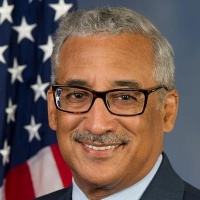
Robert Scott
Representative
VA
Robert Scott
Representative
VA
The Protecting Older Workers Against Discrimination Act of 2025 significantly lowers the standard of proof required for employment discrimination claims under major federal laws like the ADEA, Title VII, and the ADA. It establishes that an illegal factor only needs to be a "motivating factor" in an employer's decision, rather than the sole cause. While this makes it easier to prove discrimination, remedies like damages are limited if the employer can prove they would have made the same decision regardless. These new standards apply immediately to all pending claims upon enactment.
This Act restricts federal subpoena power over insurance data, enhances confidentiality protections for data shared by the Federal Insurance Office, and limits the Office of Financial Research's ability to subpoena insurance companies while imposing new requirements on financial regulators when collecting data from them.
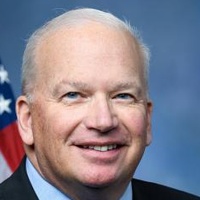
Scott Fitzgerald
Representative
WI
Scott Fitzgerald
Representative
WI
The Insurance Data Protection Act aims to adjust federal regulatory authority over insurance data by limiting the subpoena power of the Office of Financial Research against insurance companies. It also strengthens confidentiality protections for data shared with and held by the Federal Insurance Office and other financial regulators. Furthermore, the bill mandates that financial regulators must seek existing data from other sources before directly collecting information from insurance companies, ensuring data privacy is maintained.
This bill directs the Secretary of Transportation to update the federal definition of a motorcycle to include specific criteria regarding seating, wheels, controls, and speed capability.
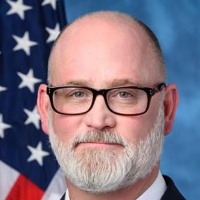
Derrick Van Orden
Representative
WI
Derrick Van Orden
Representative
WI
This bill directs the Secretary of Transportation to update the federal definition of a "motorcycle." The updated definition specifies that a motorcycle is a motor vehicle originally built with an engine, designed for a rider to sit astride a seat or saddle, and capable of speeds over 30 mph. This change ensures federal regulations align with a clearer, standardized description of what constitutes a motorcycle.
This bill disapproves the Department of Energy's submitted rule establishing new energy conservation standards for consumer gas-fired instantaneous water heaters.
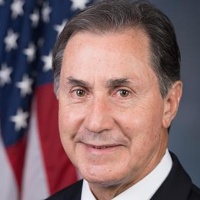
Gary Palmer
Representative
AL
Gary Palmer
Representative
AL
This bill seeks to formally reject a recent rule submitted by the Department of Energy (DOE) concerning new energy conservation standards for consumer gas-fired instantaneous water heaters. By invoking congressional disapproval, the legislation immediately cancels the DOE's proposed efficiency standards. In essence, Congress is overriding the DOE's attempt to implement these specific new regulations for tankless gas water heaters.
This Act mandates that health plans cover medically necessary treatment for congenital anomalies or birth defects affecting the eyes, ears, teeth, mouth, or jaw to restore normal function and appearance.
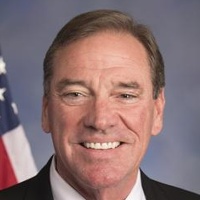
Neal Dunn
Representative
FL
Neal Dunn
Representative
FL
The Ensuring Lasting Smiles Act mandates that group health plans and insurance policies provide comprehensive coverage for medically necessary treatment related to congenital anomalies or birth defects affecting the eyes, ears, teeth, mouth, or jaw. This coverage must include services needed to restore normal function and appearance, including necessary dental and orthodontic support. Plans must apply cost-sharing rules no more restrictive than those for other medical benefits, excluding purely cosmetic procedures.
This Act establishes a bipartisan Fiscal Commission tasked with developing and reporting legislative recommendations to reduce the national debt, followed by an expedited congressional process for considering those recommendations.
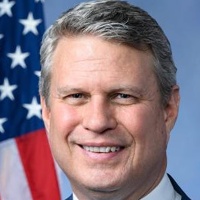
Bill Huizenga
Representative
MI
Bill Huizenga
Representative
MI
The Fiscal Commission Act establishes a bipartisan commission tasked with developing legislative recommendations to improve the nation's long-term fiscal health, aiming to reduce the national debt ratio to 100% of GDP by 2039. This Commission, composed of appointed members from both chambers of Congress and outside experts, must submit its final report and proposed legislation within a specific timeframe. The Act also creates an expedited, amendment-free process for Congress to consider and vote on any resulting "implementing bills."
This Act promotes private employee ownership by extending tax deferrals for S corporation ESOP sales, ensuring ESOP-owned businesses retain small business status, and establishing new Treasury and Labor offices to provide assistance and advocacy.
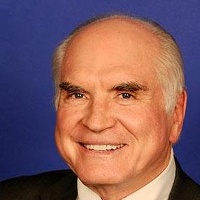
Mike Kelly
Representative
PA
Mike Kelly
Representative
PA
The Promotion and Expansion of Private Employee Ownership Act of 2025 aims to significantly boost employee ownership in S corporations through Employee Stock Ownership Plans (ESOPs). The bill extends key tax deferral benefits for stock sales to ESOPs and removes a major restriction on this tax treatment. Furthermore, it establishes new government offices and an Advocate for Employee Ownership to provide technical assistance and resolve disputes, while ensuring ESOP-owned businesses retain small business status for federal programs.
The VARIANCE Act allows commercial trucks carrying unpackaged, homogeneous dry bulk goods to exceed standard axle weight limits without increasing the overall gross vehicle weight limit.
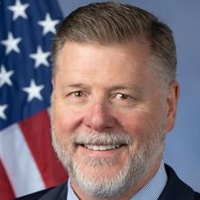
Eric Crawford
Representative
AR
Eric Crawford
Representative
AR
The VARIANCE Act temporarily allows commercial trucks hauling specific dry bulk goods, like grain or gravel, to exceed standard weight limits on individual axles or axle groups by up to 110 percent. This change only applies to axle weight distribution and does not permit trucks to exceed the overall maximum gross vehicle weight limit. The exception is strictly for unpackaged, homogeneous, non-liquid materials transported in specialized trailers.
This Act expands Medicare coverage to include audiology services provided directly by qualified audiologists starting in 2027, removing physician supervision and referral requirements.

Gus Bilirakis
Representative
FL
Gus Bilirakis
Representative
FL
The Medicare Audiology Access Improvement Act of 2025 expands Medicare coverage for audiology services, beginning in 2027. This legislation allows qualified audiologists to provide diagnostic and treatment services without physician referral or supervision, as permitted by state law. The bill also specifies payment rates and includes audiologists in coverage for Rural Health Clinics and Federally Qualified Health Centers.
This Act redefines immediate relatives for immigration, caps family-sponsored visas, and creates a new, non-work, temporary visa for parents of adult U.S. citizens.
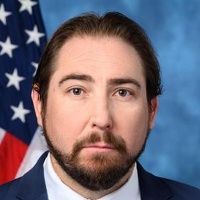
Eli Crane
Representative
AZ
Eli Crane
Representative
AZ
The Nuclear Family Priority Act significantly restructures U.S. family-based immigration by redefining "immediate relatives" to only include spouses and children of U.S. citizens, removing parents from that top category. It also establishes a new, temporary nonimmigrant visa for parents of adult U.S. citizens, which prohibits work and public benefits. Furthermore, the bill revises the annual cap for family-sponsored visas and makes numerous technical amendments across immigration law to align with these changes.
This Act establishes a new federal crime and penalties for intentionally staging motor vehicle collisions involving commercial motor vehicles.
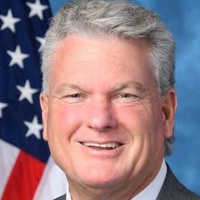
Mike Collins
Representative
GA
Mike Collins
Representative
GA
The Staged Accident Fraud Prevention Act of 2025 establishes a new federal crime targeting individuals who intentionally stage motor vehicle collisions involving commercial motor vehicles. This act sets significant penalties, including up to 20 years in prison for staging an accident, with mandatory minimum sentences for crashes resulting in serious injury or death. The legislation also includes provisions to prevent federal prosecution if the individual has already been tried in a state or local jurisdiction for the same incident.
This bill repeals the requirement for financial institutions to collect and report specific data on small business loans to reduce compliance costs and improve small business access to credit.
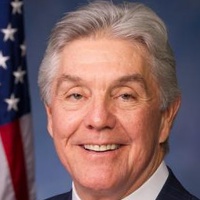
Roger Williams
Representative
TX
Roger Williams
Representative
TX
The 1071 Repeal to Protect Small Business Lending Act aims to eliminate the mandatory data collection and reporting requirements for small business loans previously established under Section 704B of the Equal Credit Opportunity Act. Proponents argue that these regulations impose unnecessary compliance costs on lenders, potentially hindering small business access to credit. This bill repeals those specific reporting mandates to reduce regulatory burdens on financial institutions.
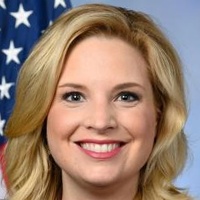
The RIFLE Act eliminates the federal tax on firearm transfers and makes corresponding technical changes to the tax code without affecting CPSC oversight of regulated firearms.
Ashley Hinson
Representative
IA
Ashley Hinson
Representative
IA
The Repealing Illegal Freedom and Liberty Excises Act (RIFLE Act) eliminates the existing federal tax on firearm transfers. This legislation strikes the relevant section from the Internal Revenue Code and makes necessary technical updates to related statutes. Importantly, this Act does not grant the Consumer Product Safety Commission any new authority over regulated firearms.
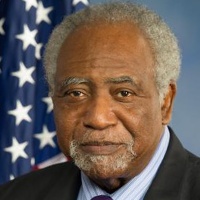
This bill raises the resource limits for Supplemental Security Income (SSI) eligibility starting in 2025 and ties future limits to inflation adjustments.
Danny Davis
Representative
IL
Danny Davis
Representative
IL
The SSI Savings Penalty Elimination Act significantly raises the resource limits for individuals and couples applying for Supplemental Security Income (SSI), starting in 2025. This legislation also mandates that these new resource limits will be automatically adjusted annually to keep pace with inflation. The goal is to allow SSI applicants to save more money without losing eligibility for benefits.
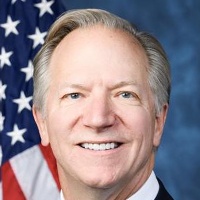
This act establishes new, stringent requirements, including high voter turnout and a majority vote, for a union to become the exclusive representative for a group of workers.
Robert Onder
Representative
MO
Robert Onder
Representative
MO
The Worker Enfranchisement Act establishes stricter requirements for a union to become the exclusive representative for a group of employees. Under the new rules, a union must win a secret ballot election where more than half of the votes cast favor the union, and at least two-thirds of all eligible employees must participate in the vote. These new turnout and majority standards will apply to elections held six months after the Act's enactment.
This Act establishes a competitive grant program to test incentives aimed at increasing the purchase of naturally nutrient-rich dairy products by households using SNAP benefits.

Jim Costa
Representative
CA
Jim Costa
Representative
CA
The Dairy Nutrition Incentive Program Act of 2025 establishes a new federal program to test methods for increasing the purchase of nutrient-rich dairy products by households using SNAP benefits. The Secretary of Agriculture will award competitive grants to eligible entities to implement incentive projects at the point of sale. These projects must prioritize direct incentives that can only be spent on buying more eligible dairy items, and all projects will undergo rigorous independent evaluation. The Act also mandates the transition of existing dairy incentive projects into this new framework without interruption.
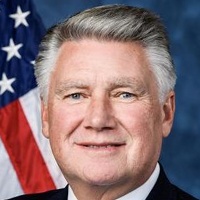
This Act permits 501(c)(3) organizations to make political campaign statements within the ordinary course of their tax-exempt activities, provided the cost is de minimis.
Mark Harris
Representative
NC
Mark Harris
Representative
NC
The Free Speech Fairness Act amends tax law to allow 501(c)(3) organizations to make political campaign statements without jeopardizing their tax-exempt status. This protection applies only if the statement is made as part of the organization's ordinary course of activities and incurs only a de minimis (trivial) cost. This ensures non-profits can speak on political matters related to their mission without penalty, provided spending remains minimal.
The DETERRENT Act mandates increased transparency for colleges regarding foreign gifts and contracts, prohibits most dealings with "countries of concern," and imposes strict investment reporting requirements for large private universities, backed by significant enforcement penalties.
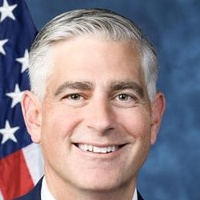
Michael Baumgartner
Representative
WA
Michael Baumgartner
Representative
WA
The DETERRENT Act significantly increases transparency requirements for colleges and universities regarding foreign gifts, contracts, and investments, especially those involving "countries or entities of concern." It mandates detailed public disclosure reports, establishes strict prohibitions and waiver processes for contracts with risky foreign entities, and imposes severe financial penalties for non-compliance. Furthermore, the bill requires specified large private institutions to report their holdings in concerning foreign assets annually.
This bill reforms poverty measurement by mandating detailed data collection and significantly modifies the SNAP program by tightening work requirements, increasing state financial responsibility, and adding new eligibility hurdles.
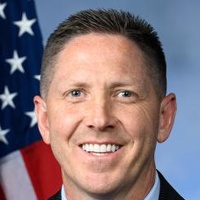
Josh Brecheen
Representative
OK
Josh Brecheen
Representative
OK
The SNAP Reform and Upward Mobility Act of 2025 aims to overhaul poverty measurement by mandating more detailed data collection and establishing new valuation methods for federal benefits. Additionally, the bill significantly modifies the SNAP program by tightening work requirements, increasing state financial responsibility for administration, and imposing new eligibility hurdles for recipients. These changes seek to better reflect economic reality while increasing incentives for employment within the nutrition assistance program.
This bill mandates that Medicare provide equitable reimbursement for the transportation and setup of portable ultrasound equipment, mirroring current payments for portable X-ray services.
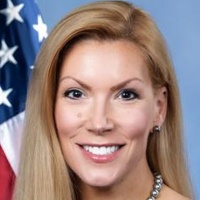
Beth Van Duyne
Representative
TX
Beth Van Duyne
Representative
TX
The Portable Ultrasound Reimbursement Equity Act of 2025 updates Medicare coverage to include diagnostic ultrasound tests. This legislation mandates that Medicare establish separate payments for the transportation and setup of portable ultrasound equipment, mirroring existing payments for portable X-ray services. These changes are set to take effect starting January 1, 2027.