
Legislative Activity
Track Paul's sponsored bills, co-sponsored legislation, and voting record
The PAUSE Act of 2025 immediately halts most new immigration and status adjustments until sweeping changes are made to immigration law, while also imposing a massive fee on H-1B petitions and terminating the OPT and Diversity Visa programs.
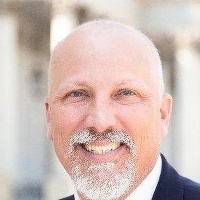
Chip Roy
Representative
TX
Chip Roy
Representative
TX
The PAUSE Act of 2025 immediately halts the issuance of most new visas and immigration statuses until significant changes are made to U.S. immigration law. These required changes include restricting birthright citizenship, eliminating status adjustments for temporary visa holders, and imposing severe restrictions on who can immigrate. Furthermore, the bill imposes a massive new fee on certain H-1B petitions and terminates both the Optional Practical Training (OPT) program and the Diversity Immigrant Visa Program.
This act prohibits Medicare-approved medical residency programs from requiring participation in abortion-related training unless the resident voluntarily opts in.
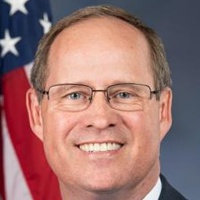
Gregory Murphy
Representative
NC
Gregory Murphy
Representative
NC
This Act prohibits Medicare-approved medical residency programs from requiring participation in abortion-related training. Programs that offer abortion training must ensure it is strictly voluntary, allowing residents to opt-in without facing discrimination. This ensures medical residents are not compelled to participate in abortion procedures, assistance, or referrals against their conscience.
This act mandates that commercial motor vehicle operators must demonstrate English proficiency to pass licensing tests and communicate effectively with relevant personnel.
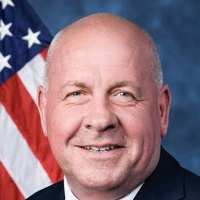
David Taylor
Representative
OH
David Taylor
Representative
OH
This bill, the Commercial Motor Vehicle English Proficiency Act, establishes new federal requirements for commercial driver's licenses. It mandates that all commercial motor vehicle knowledge tests must be administered only in English, effective two years after enactment. Furthermore, applicants must demonstrate the ability to read, understand, and communicate in English to pass testing and receive certification.
This resolution censures Delegate Stacey Plaskett and removes her from the House Intelligence Committee for allegedly colluding with convicted sex offender Jeffrey Epstein during a congressional hearing.
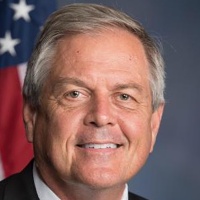
Ralph Norman
Representative
SC
Ralph Norman
Representative
SC
This resolution censures and condemns Delegate Stacey Plaskett for allegedly colluding with convicted sex offender Jeffrey Epstein during a 2019 congressional hearing. It cites evidence suggesting Plaskett coordinated her line of questioning with Epstein in real-time via text message. Consequently, the bill removes Delegate Plaskett from the House Permanent Select Committee on Intelligence and directs an ethics investigation into her conduct.
This bill mandates that federal agencies can only use "Male" or "Female" as options when collecting sex-related information on official forms and documents.
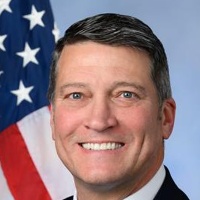
Ronny Jackson
Representative
TX
Ronny Jackson
Representative
TX
This bill, the "Male or Female Only Act," prohibits federal agencies from including any option other than "Male" or "Female" when collecting information about an individual's sex on official forms and documents. It also bans the collection of information regarding gender or gender identity. Agencies must update all relevant forms within 60 days to comply with these restrictions.
The SROS Act excludes certain retirement income received by qualified former military or law enforcement personnel employed as school resource officers from gross income.
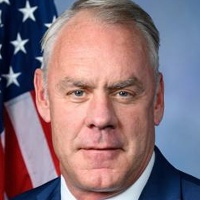
Ryan Zinke
Representative
MT
Ryan Zinke
Representative
MT
The Strengthening Resources for our Schools (SROS) Act aims to encourage qualified retirees to serve as school resource officers. This bill amends the Internal Revenue Code to exclude certain retirement income received by eligible former members of the Armed Forces or law enforcement officers from gross income while they are employed as school resource officers. The exclusion may become a lifetime exemption if the individual serves in the role for at least 10 years.
This Act repeals firearm-related provisions of the Bipartisan Safer Communities Act to restore constitutional protections under the Second Amendment.
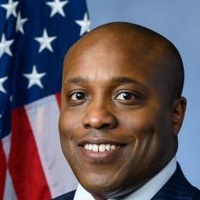
Wesley Hunt
Representative
TX
Wesley Hunt
Representative
TX
The Second Amendment Restoration Act of 2025 seeks to repeal firearm-related provisions enacted by the Bipartisan Safer Communities Act. This legislation asserts that those prior provisions placed unnecessary burdens on the Second Amendment rights of law-abiding citizens. By restoring prior federal statutes, the bill aims to refocus federal efforts on addressing the root causes of violence rather than restricting gun ownership.
This bill ensures that essential firearm-related government operations, such as background checks and export license processing, continue during a government shutdown.

Ben Cline
Representative
VA
Ben Cline
Representative
VA
The Firearm Access During Shutdowns Act ensures that essential firearm-related government operations continue without interruption during a federal shutdown. This legislation specifically mandates the continuation of the FBI's NICS background check system and related processing at the ATF, Department of Commerce, and Department of State. By deeming these functions essential for protecting life and property, the bill prevents delays in firearm transfers and export licensing during lapses in appropriations.
This resolution expresses the sense of the House to accept and prominently display a statue honoring Charles "Charlie" James Kirk for his legacy of free expression and civic leadership.
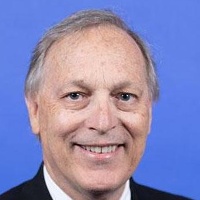
Andy Biggs
Representative
AZ
Andy Biggs
Representative
AZ
This resolution expresses the sense of the House of Representatives that a statue honoring Charles "Charlie" Kirk should be accepted and permanently displayed in the U.S. Capitol. It recognizes Mr. Kirk for founding Turning Point USA and promoting principles of free expression, civic leadership, and limited government. The bill mandates that the statue be accepted by the Fine Arts Board no later than January 2, 2027, to commemorate his legacy.
This bill strengthens and enforces mandatory country of origin labeling requirements specifically for beef, protecting the authority to enforce these standards against international trade challenges.
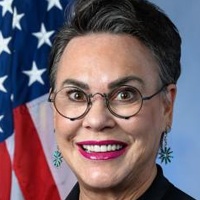
Harriet Hageman
Representative
WY
Harriet Hageman
Representative
WY
The Country of Origin Labeling Enforcement Act of 2025 updates existing agricultural law to specifically clarify and strengthen country of origin labeling requirements for beef. This bill ensures that beef labeling rules mirror those currently applied to lamb and venison, including for ground products. Furthermore, it explicitly protects the Secretary of Agriculture's authority to enforce these beef labeling standards against any conflicting international trade rulings.
This Act restores the "first-to-invent" patent system, abolishes administrative patent reviews, strengthens patent property rights, and ensures full funding for the USPTO.
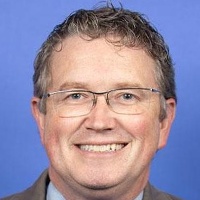
Thomas Massie
Representative
KY
Thomas Massie
Representative
KY
The Restoring America’s Leadership in Innovation Act of 2025 aims to significantly strengthen the U.S. patent system by reverting to a "first-to-invent" standard and eliminating administrative patent review boards. This legislation seeks to re-establish patents as fundamental private property rights, clarifying patentability for software and scientific discoveries. Furthermore, it ensures the USPTO is fully funded by its collected fees and prevents the automatic public release of pending patent applications.
This bill repeals the Smith-Mundt Modernization Act of 2013, restricting the domestic distribution of U.S. government-produced international information materials and imposing a 20-year waiting period for public access via the National Archives.
Thomas Massie
Representative
KY
Thomas Massie
Representative
KY
This bill repeals the Smith-Mundt Modernization Act of 2013 and significantly restricts the domestic distribution of U.S. government-produced international information materials. It mandates that materials created for foreign audiences must be archived and generally withheld from the U.S. public for a period of 20 years. Furthermore, the legislation explicitly bans the use of appropriated funds by the State Department or USAGM to influence domestic public opinion.
This bill denies or revokes all immigration benefits for individuals adhering to Sharia law, making them inadmissible or deportable without judicial review.
Chip Roy
Representative
TX
Chip Roy
Representative
TX
The Preserving a Sharia-Free America Act aims to prohibit any individual who adheres to Sharia law from receiving immigration benefits, visas, or admission into the United States. This legislation mandates the denial or revocation of immigration status for adherents, making them inadmissible or deportable. Furthermore, any false statements regarding Sharia adherence to federal officials will result in severe immigration penalties, and all related determinations are explicitly barred from judicial review.
The PAW Act of 2025 extends the period an individual can be classified as a surviving spouse for tax purposes from two to five taxable years following the death of their spouse.
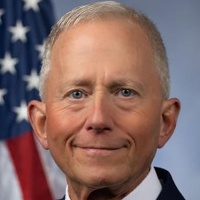
Jefferson Van Drew
Representative
NJ
Jefferson Van Drew
Representative
NJ
The PAW Act of 2025, or Protect American Widows Act, amends the Internal Revenue Code to expand the definition of "surviving spouse" for tax purposes. This legislation removes the previous two-year limit, allowing individuals to qualify as a surviving spouse for up to five taxable years following the death of their spouse. This change aims to provide extended tax benefits to surviving spouses starting with tax years after December 31, 2024.
This bill establishes a federal crime for knowingly providing certain gender-related medical treatments to minors, prohibits Medicare coverage for such treatments, and bans the use of federal funds for them.
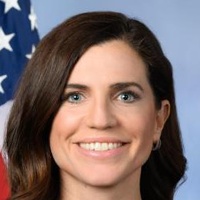
Nancy Mace
Representative
SC
Nancy Mace
Representative
SC
The Childhood Genital Mutilation Prevention Act establishes a new federal crime prohibiting medical professionals from knowingly providing specific gender-related medical treatments to minors under 18, with penalties up to ten years in prison. This legislation also prohibits Medicare from covering these treatments for minors and bans the use of all federal funds for such care. Exceptions to the prohibition apply only when treating a diagnosed disorder of sex development.
This bill authorizes the creation and sale of a limited-edition, silver one-dollar commemorative coin honoring the late activist Charles "Charlie" Kirk.
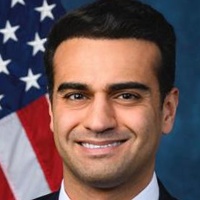
Abraham Hamadeh
Representative
AZ
Abraham Hamadeh
Representative
AZ
This bill authorizes the Secretary of the Treasury to mint and issue up to 400,000 special one-dollar silver commemorative coins honoring the late activist Charles "Charlie" Kirk. The coins must feature his likeness on the obverse and the inscription "well done, good and faithful servant" on the reverse. All costs associated with the production and sale of these coins must be covered by the revenue generated, ensuring no net cost to the U.S. Treasury.
This resolution honors the life and legacy of Charles "Charlie" James Kirk, condemns his assassination as political violence, and calls for a renewed commitment to civil discourse and American founding principles.

Mike Johnson
Representative
LA
Mike Johnson
Representative
LA
This resolution honors the life and legacy of Charles "Charlie" James Kirk, founder of Turning Point USA. It strongly condemns his assassination as an act of political violence. The bill calls for a renewed national commitment to civil discourse and the founding principles of the United States.
This Act mandates that new passenger motor vehicles sold in the U.S. must include standard equipment capable of receiving AM broadcast radio signals.
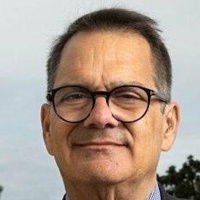
Gus Bilirakis
Representative
FL
Gus Bilirakis
Representative
FL
The AM Radio for Every Vehicle Act of 2025 mandates that the Secretary of Transportation establish a rule requiring AM broadcast radio receivers to be installed as standard equipment in new passenger motor vehicles. This requirement aims to ensure public access to AM radio signals, which are often used for emergency alerts. The bill also directs a GAO study on the effectiveness of AM radio within the national emergency alert system compared to other technologies. Finally, the Act preempts state and local laws on this matter and includes a sunset provision eight years after enactment.
This Act ensures the automatic continuation of pay for active duty military personnel and essential civilian support staff if Congress fails to pass a budget for fiscal year 2026.
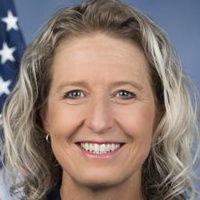
Jennifer Kiggans
Representative
VA
Jennifer Kiggans
Representative
VA
The Pay Our Troops Act of 2026 ensures that active duty military personnel and essential civilian support staff continue to receive their pay if Congress has not yet passed the full budget for fiscal year 2026. This act provides automatic continuing appropriations from the Treasury to prevent a lapse in military salaries due to budget delays. The funding automatically terminates once a new budget or continuing resolution is passed, or on January 1, 2027, whichever comes first.
This resolution authorizes the lying in honor of the remains of Charles James Kirk, a champion of free speech and youth political engagement, in the Capitol rotunda.
Nancy Mace
Representative
SC
Nancy Mace
Representative
SC
This resolution authorizes the use of the U.S. Capitol rotunda for a lying in honor ceremony for the late Charles James Kirk. Kirk is recognized as a lifelong advocate for freedom of speech, civil political discourse, and youth political engagement. The Speaker of the House and the President pro tempore of the Senate will oversee the necessary arrangements for the event.