Legislative Activity
Track Al's sponsored bills, co-sponsored legislation, and voting record
The Provider Reimbursement Stability Act of 2026 reforms Medicare physician payment policies by updating budget neutrality thresholds, establishing a correction process for utilization estimates, mandating periodic updates to practice expense data, and limiting annual conversion factor fluctuations.
Gregory Murphy
Representative
NC
Gregory Murphy
Representative
NC
The Provider Reimbursement Stability Act of 2026 aims to improve the accuracy and predictability of Medicare physician payments. The bill reforms budget neutrality calculations, mandates periodic updates to practice expense cost data, and establishes a 2.5% cap on annual conversion factor fluctuations. These measures are designed to ensure more stable reimbursement rates for healthcare providers.
This Act establishes a program for eligible noncitizen veterans removed or facing removal to adjust their status to lawful permanent residents and protects current noncitizen service members and veterans from removal except for convictions of violent crimes.
Adelita Grijalva
Representative
AZ
Adelita Grijalva
Representative
AZ
The Veterans Visa and Protection Act of 2026 establishes a program for noncitizen veterans removed or facing removal to return to the U.S. and adjust their status to lawful permanent residents. This Act prohibits the removal of noncitizen veterans and service members unless they have committed a qualifying crime of violence. Furthermore, it streamlines the path to naturalization and ensures eligible veterans receive all corresponding military and veterans benefits.
This bill authorizes the minting and sale of commemorative gold and silver coins to honor the 25th anniversary of the September 11, 2001, terrorist attacks, with surcharges supporting the National September 11 Memorial and Museum.

Dan Goldman
Representative
NY
Dan Goldman
Representative
NY
This bill authorizes the Secretary of the Treasury to mint and issue commemorative gold and silver coins marking the 25th anniversary of the September 11, 2001, terrorist attacks. The coins will honor the victims, first responders, and survivors, with designs selected in consultation with the National September 11 Memorial and Museum. All surcharges from the sale of these coins will be paid directly to the Memorial and Museum to support its operations and maintenance.
This bill mandates the NIH to study and report on the development of a standardized, noninvasive HPV test for men to close a critical gap in cancer prevention and public health equity.
LaMonica McIver
Representative
NJ
LaMonica McIver
Representative
NJ
The Closing the HPV Testing Gap Act directs the National Institutes of Health (NIH) to conduct a comprehensive study on developing a standardized, noninvasive HPV test for men. This action aims to close a critical gap in cancer prevention and public health surveillance, which currently lacks FDA-approved testing for men. The resulting report will provide recommendations for research, implementation, and interagency coordination to advance gender equity in cancer prevention efforts.
This bill directs the President to remove U.S. Armed Forces from hostilities with Iran, with a narrow exception for self-defense.
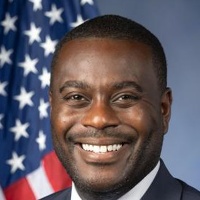
Gabe Amo
Representative
RI
Gabe Amo
Representative
RI
This bill directs the President to withdraw U.S. Armed Forces from hostilities involving Iran, as authorized under the War Powers Resolution. The only exception allows the President to maintain forces necessary for self-defense or the defense of allies against an imminent attack, provided specific reporting requirements are met. Any continued military engagement without a declaration of war requires explicit congressional authorization.
The **Protecting Our Democracy Act** imposes sweeping restrictions on presidential power, enhances congressional oversight, strengthens ethics and anti-corruption laws, and bolsters accountability for federal officials.
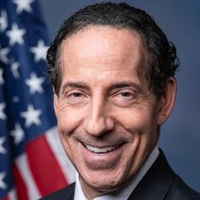
Jamie Raskin
Representative
MD
Jamie Raskin
Representative
MD
The **Protecting Our Democracy Act** imposes sweeping reforms across the executive branch to strengthen accountability and restore checks and balances. It restricts presidential pardon power, closes loopholes to ensure no President is above the law, and enforces constitutional emoluments clauses to prevent self-enrichment. Furthermore, the Act enhances congressional oversight by strengthening subpoena enforcement, increasing transparency around White House visitors and tax returns, and protecting federal whistleblowers from retaliation.
This resolution officially recognizes the historical and ongoing Palestinian Nakba, calls for the implementation of refugee rights, and demands the U.S. end its complicity in these actions.
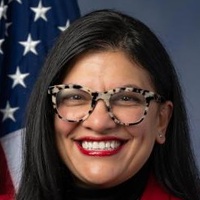
Rashida Tlaib
Representative
MI
Rashida Tlaib
Representative
MI
This resolution officially recognizes and commemorates the Palestinian Nakba, acknowledging the historical displacement of Palestinians and the ongoing nature of the crisis. It calls for the U.S. to support the rights of Palestinian refugees as established in UN Resolution 194. Furthermore, the bill demands the U.S. end its complicity by halting weapons transfers and diplomatic support that facilitate the ongoing displacement and destruction of Palestinian homes.
This act establishes universal free breakfast and lunch programs in schools, eliminates meal debt, and updates poverty metrics across various federal education and nutrition programs.
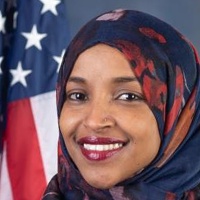
Ilhan Omar
Representative
MN
Ilhan Omar
Representative
MN
The Universal School Meals Program Act of 2026 establishes permanent, universal free breakfast and lunch programs for all enrolled students at participating schools, eliminating income tests and meal debt collection. The bill significantly updates federal funding mechanisms by replacing reliance on free and reduced-price lunch data with new measures for identifying economically disadvantaged students across various education and social programs. Furthermore, it expands access to summer and afterschool meals while making technical amendments across several federal education and nutrition laws.
The New Pathways Act requires the Bureau of Prisons to help certain prisoners obtain necessary identification documents, including REAL ID-compliant cards for citizens, before their release.
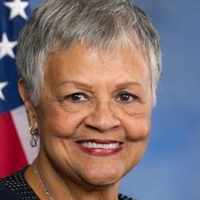
Bonnie Watson Coleman
Representative
NJ
Bonnie Watson Coleman
Representative
NJ
The New Pathways Act amends the Second Chance Act to require the Bureau of Prisons to assist certain returning citizens in obtaining crucial identification documents before their release. This includes providing U.S. citizens with a REAL ID-compliant identification card and helping noncitizens secure proof of lawful status. The goal is to ensure individuals have necessary documentation for successful reentry into their communities.
This act prohibits commercial airlines from discriminating against passengers based on protected characteristics and requires the GAO to assess TSA's compliance with non-discrimination policies during security screenings.
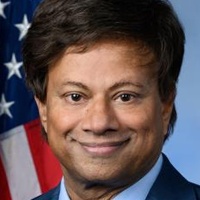
Shri Thanedar
Representative
MI
Shri Thanedar
Representative
MI
The Protecting Passengers from Discrimination Act prohibits commercial airlines from denying services or treating passengers differently based on race, religion, sex, disability, or national origin. This legislation empowers the Secretary of Transportation to investigate complaints and impose significant penalties on airlines found to be discriminating. Additionally, the bill mandates annual assessments by the GAO to ensure the TSA adheres to its own non-discrimination policies during security screenings.
This Act establishes the Language Access Board to create standards and enforce requirements ensuring individuals with limited English proficiency can meaningfully access federal programs and services.
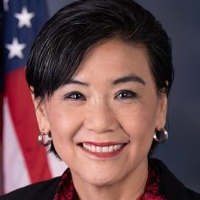
Judy Chu
Representative
CA
Judy Chu
Representative
CA
The Language Access Board Act of 2026 establishes a framework to ensure individuals with limited English proficiency (LEP) can meaningfully access federal programs and services. It creates a 32-member Language Access Board responsible for setting and enforcing language access standards across federal agencies. The Act mandates that federal agencies make public-facing materials accessible to LEP individuals, comparable to those provided to English speakers. Finally, the Board is empowered to investigate violations, develop corrective action plans, and report on compliance to Congress.
This bill officially designates May 2026 as Asian American, Native Hawaiian, and Pacific Islander Heritage Month to celebrate their significant contributions to U.S. history and culture.
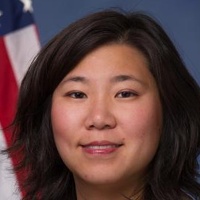
Grace Meng
Representative
NY
Grace Meng
Representative
NY
This bill officially designates May 2026 as Asian American, Native Hawaiian, and Pacific Islander Heritage Month. It calls for nationwide recognition and celebration of the significant contributions, achievements, and history of these communities to the United States. The measure emphasizes that these communities enhance the nation's diversity and strength.
This bill mandates stricter federal and state regulation of utility rate-setting by establishing lower return-on-equity ranges and banning numerous non-operational costs from being passed on to consumers.
Gregorio Casar
Representative
TX
Gregorio Casar
Representative
TX
The Lowering Utility Bills Act aims to reduce consumer energy costs by establishing stricter federal and state guidelines for how electric transmission providers and investor-owned utilities calculate their allowed rate of return. The bill mandates using the lowest reasonable return on equity based on market data and explicitly bans passing numerous lobbying, administrative, and political expenses onto customers. Furthermore, it requires utilities to prioritize lower-cost, grid-enhancing technologies when planning new capital expenditures.
This bill prohibits the Department of Homeland Security from establishing or operating any new immigration detention models, such as converting warehouses or using tent systems.
Rashida Tlaib
Representative
MI
Rashida Tlaib
Representative
MI
This bill prohibits the Department of Homeland Security (DHS) from establishing or operating any new models of immigration detention facilities, such as converting warehouses or using temporary structures. It specifically bans entering into new contracts for these alternative detention setups. Furthermore, any funds already allocated for these new models must be transferred to support services like affordable housing and healthcare.
This Act establishes federal programs to address the impact of climate change risks, like extreme heat and pollution, on maternal and infant health through grants, education, research, and risk zone identification.
Lauren Underwood
Representative
IL
Lauren Underwood
Representative
IL
The Protecting Moms and Babies Against Climate Change Act directs the Department of Health and Human Services to address how climate change risks, like extreme heat and pollution, harm maternal and infant health. The bill establishes grant programs to support local efforts and education, and mandates research and strategies to identify high-risk zones for pregnant individuals and young children. Its goal is to reduce adverse outcomes such as preterm birth, low birth weight, and maternal mortality linked to climate change.
This resolution affirms housing as a fundamental human right and opposes policies that would force families with mixed immigration status to separate or lose federal housing assistance.
Delia Ramirez
Representative
IL
Delia Ramirez
Representative
IL
This resolution affirms that stable housing is a fundamental human right essential for all families, regardless of immigration status. It strongly condemns a proposed rule that would force families with mixed immigration status to separate or lose vital housing assistance. The bill calls for protecting families in federal housing programs and demands increased investment to address the national housing crisis.
This bill establishes a federal grant program through the Treasury Department to fund community organizations providing financial coaching and to develop standardized credentialing for financial coaches.
Sylvia Garcia
Representative
TX
Sylvia Garcia
Representative
TX
The Improving Access to Financial Coaching Act of 2026 establishes a federal grant program through the Department of the Treasury to fund nonprofit and community organizations providing financial coaching. This legislation aims to increase access to high-quality financial guidance for low- and moderate-income consumers. The Act also mandates the development of standardized certification practices for financial coaches nationwide.
This resolution directs the President to remove U.S. Armed Forces from hostilities with Iran, unless necessary for imminent self-defense.
Gregory Meeks
Representative
NY
Gregory Meeks
Representative
NY
This resolution directs the President, under the War Powers Resolution, to remove U.S. Armed Forces from hostilities involving Iran. The order mandates withdrawal unless forces are necessary for imminent self-defense of the U.S. or its allies. Any continued defensive action must comply with existing War Powers reporting requirements.
This resolution impeaches Secretary of Defense Peter B. Hegseth for high crimes and misdemeanors stemming from unauthorized military actions, endangering service members, violating the laws of war, mishandling classified information, obstructing Congress, and abusing his office for political purposes.
Yassamin Ansari
Representative
AZ
Yassamin Ansari
Representative
AZ
This resolution impeaches Secretary of Defense Peter B. Hegseth for high crimes and misdemeanors. The charges primarily involve the unauthorized initiation of military hostilities against Iran, endangering service members, and violating the laws of armed conflict. Furthermore, the articles accuse him of gross negligence with classified information, obstructing Congressional oversight, and abusing his office for political purposes, including undermining military readiness and personnel protections.
This bill establishes a commission of medical and former government experts to evaluate a President's physical or mental capacity to discharge the duties of the office when directed by Congress.
Jamie Raskin
Representative
MD
Jamie Raskin
Representative
MD
This bill establishes the Commission on Presidential Capacity to Discharge the Powers and Duties of the Office, a body tasked with evaluating the physical or mental fitness of the President. The Commission, composed of medical experts and former high-ranking officials, can be directed by Congress to examine the President. Its findings regarding the President's ability to execute their duties are then reported to Congress and the Vice President.