
Legislative Activity
Track Valerie's sponsored bills, co-sponsored legislation, and voting record
This Act mandates the phase-out and eventual ban of engine bleed air systems in new and existing aircraft designs to improve cabin air quality.
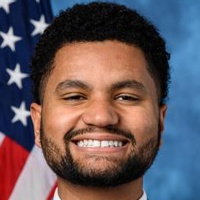
Maxwell Frost
Representative
FL
Maxwell Frost
Representative
FL
The Safe Air on Airplanes Act mandates the phase-out of "bleed air systems" in new aircraft designs to improve cabin air quality. This legislation requires the FAA to ban these systems in future aircraft designs within six months. For existing aircraft designs still in production, the bill requires the installation of specialized filters within seven years, followed by a 30-year timeline for completely eliminating bleed air systems from newly manufactured planes.
This resolution terminates the President's declared crime emergency in the District of Columbia, asserting that the emergency is unwarranted and the legal basis for federal MPD control is flawed.
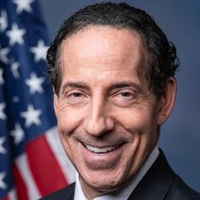
Jamie Raskin
Representative
MD
Jamie Raskin
Representative
MD
This resolution terminates the President's August 11, 2025, declaration of a crime emergency in the District of Columbia. Congress asserts that the President lacks the legal authority under the D.C. Home Rule Act to take operational control of the Metropolitan Police Department. Furthermore, the bill notes that local violent crime rates have been declining significantly.
The Land of the Free Act of 2025 repeals the provision of the Immigration and Nationality Act that made certain protected speech activities grounds for deportability.
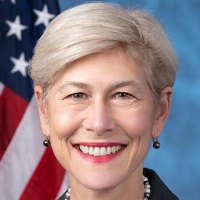
Deborah Ross
Representative
NC
Deborah Ross
Representative
NC
The Land of the Free Act of 2025 repeals a section of the Immigration and Nationality Act that previously made certain protected speech activities grounds for making an alien deportable. This legislation removes a specific restriction, ensuring that engaging in protected speech will no longer be a basis for removal from the United States under that provision.
This Act prohibits deceptive communications and voter intimidation related to federal elections, establishes penalties for spreading false voting information (including AI-generated content), and empowers the Attorney General to issue public corrections.
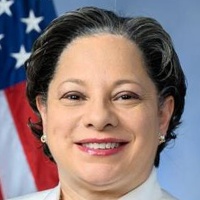
Jennifer McClellan
Representative
VA
Jennifer McClellan
Representative
VA
The Deceptive Practices and Voter Intimidation Prevention Act of 2025 establishes federal prohibitions and penalties against knowingly spreading materially false information intended to suppress voting in federal elections, including the use of AI-generated content within 60 days of an election. The bill also criminalizes intimidating election workers involved in ballot tabulation and certification processes. Furthermore, it authorizes the Attorney General to issue public corrections to widespread false voting information and requires detailed reporting on election interference allegations.
This act mandates that the Department of Veterans Affairs must provide abortion care, counseling, and related services and medication to eligible veterans and certain other individuals.
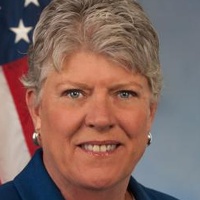
Julia Brownley
Representative
CA
Julia Brownley
Representative
CA
The Reproductive Freedom for Veterans Act mandates that the Department of Veterans Affairs (VA) must now provide abortion care, counseling, and related medication as part of the medical services offered to eligible veterans and certain other beneficiaries. This legislation formally amends existing VA health care provisions to include these reproductive health services.
This act authorizes $50 million annually from 2026 through 2031 for the CDC to conduct research on firearms safety and gun violence prevention.
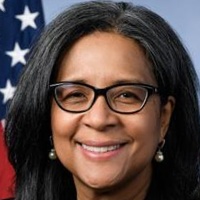
Marilyn Strickland
Representative
WA
Marilyn Strickland
Representative
WA
The Gun Violence Prevention Research Act of 2025 authorizes $50 million annually for the Centers for Disease Control and Prevention (CDC) to conduct or support research on firearms safety and gun violence prevention. This dedicated funding is authorized for each fiscal year from 2026 through 2031. This new allocation is separate from and in addition to any existing CDC research funding.
This Act establishes the "Local Farmers Feeding Our Communities" program to strengthen local food security by funding agreements that support local producers and distribute fresh food to communities.
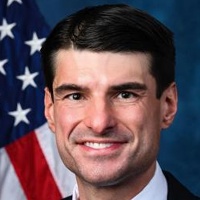
Robert Bresnahan
Representative
PA
Robert Bresnahan
Representative
PA
The Local Farmers Feeding our Communities Act establishes a new program to support local food producers and strengthen regional food security. This initiative requires the Secretary of Agriculture to fund agreements that ensure nutritious, locally sourced food is purchased and distributed widely, prioritizing small and beginning farmers. Funds must be used to buy minimally processed local products and provide technical assistance to producers. The program is backed by mandatory funding starting in Fiscal Year 2026.
This act repeals the prohibition on Medicaid payments to certain healthcare entities and mandates retroactive payment for services already rendered under the repealed ban.
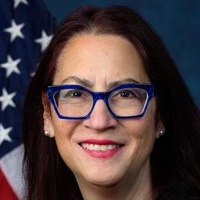
Laura Friedman
Representative
CA
Laura Friedman
Representative
CA
The Restoring Essential Healthcare Act repeals an outdated ban that prevented Medicaid from making payments to certain healthcare providers. This legislation ensures that these previously prohibited entities will now be reimbursed for medical services rendered between the enactment of the original ban and the passage of this Act. In short, it restores payment eligibility and retroactively covers past services.
The VISIBLE Act mandates that federal immigration officers clearly display their agency and identifying information when conducting public-facing enforcement activities.
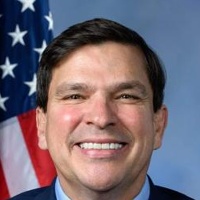
Vicente Gonzalez
Representative
TX
Vicente Gonzalez
Representative
TX
The VISIBLE Act mandates that federal immigration enforcement officers, such as those from CBP and ICE, must clearly display their agency name and either their last name or badge number during all public-facing civil immigration enforcement activities. This requirement ensures officers are easily identifiable to the public from a distance, promoting transparency and public trust. The law also establishes disciplinary procedures for non-compliance and requires annual reporting to Congress on enforcement activities and violations.
This Act prohibits businesses from using automated systems that rely on personal data surveillance to set individualized prices or determine worker wages, while preserving stronger state and collective bargaining protections.
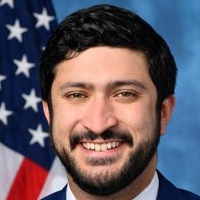
Gregorio Casar
Representative
TX
Gregorio Casar
Representative
TX
The Stop AI Price Gouging and Wage Fixing Act of 2025 prohibits businesses from using automated systems that analyze personal data to set individualized prices or determine employee wages. This legislation establishes strict transparency requirements for any permitted pricing exceptions and grants enforcement power to the FTC, EEOC, State Attorneys General, and private citizens. Furthermore, the Act ensures that existing state laws providing greater protections and collective bargaining rights remain fully in effect.
The Hands Off Our Social Security Act prohibits unauthorized tampering with benefits, data mining, privatization, workforce reductions, and office closures without explicit Congressional approval.
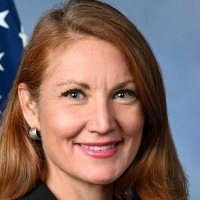
Melanie Stansbury
Representative
NM
Melanie Stansbury
Representative
NM
The Hands Off Our Social Security Act is designed to safeguard the functionality and integrity of the Social Security Administration (SSA). This bill prohibits the SSA from tampering with benefits, engaging in unauthorized data mining, or privatizing services. Furthermore, it prevents the agency from closing local offices or reducing staff without explicit approval from Congress. Ultimately, the Act ensures that essential services and communication channels remain accessible to beneficiaries.
This Act mandates comprehensive fertility treatment coverage across private insurance, federal employee plans, TRICARE, Medicaid, and Medicare, while also establishing a new benefit for veterans.
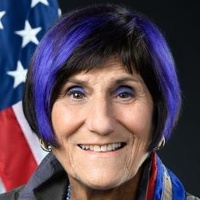
Rosa DeLauro
Representative
CT
Rosa DeLauro
Representative
CT
The Access to Fertility Treatment and Care Act mandates that private health insurance plans covering obstetrical services must also cover a broad range of fertility treatments, ensuring cost-sharing rules are comparable to other medical services. This legislation also extends mandatory fertility coverage to the Federal Employees Health Benefits Program (FEHBP) and TRICARE plans if they cover maternity care. Furthermore, the bill establishes new benefits for veterans and their families through the VA, requires State Medicaid plans to cover fertility treatment, and adds fertility care to Medicare coverage with a 100% payment rate and no deductible for patients starting in 2026.
This bill updates the eligibility requirements for creating records of lawful admission for long-term residents by changing the qualifying entry date to a minimum of seven years of U.S. residency prior to application.
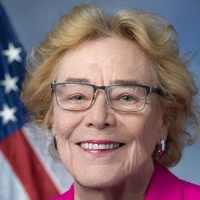
Zoe Lofgren
Representative
CA
Zoe Lofgren
Representative
CA
This bill, the Renewing Immigration Provisions of the Immigration Act of 1929, updates the eligibility requirements for creating records of lawful admission for long-term residents. It replaces a fixed entry date with a new standard requiring applicants to have resided in the U.S. for at least seven years prior to applying. These revised provisions will take effect 60 days after the Act is enacted.
The End Polluter Welfare Act of 2025 systematically eliminates federal subsidies, tax breaks, and financial support for the fossil fuel industry while increasing royalties and tightening environmental liability.

Ilhan Omar
Representative
MN
Ilhan Omar
Representative
MN
The End Polluter Welfare Act of 2025 is a comprehensive bill designed to eliminate financial support for the fossil fuel industry across the federal government. It achieves this by terminating numerous tax incentives, increasing royalties on federal energy leases, and blocking federal funding for fossil fuel projects through various agencies. Ultimately, the Act aims to shift financial burdens onto polluters while redirecting federal support toward cleaner energy initiatives.
Ally's Act mandates that certain private health insurance plans must cover auditory implant devices, related services, and upgrades for qualifying individuals without imposing stricter cost-sharing or treatment limitations than other medical benefits.
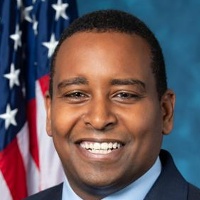
Joe Neguse
Representative
CO
Joe Neguse
Representative
CO
The Ally's Act mandates that certain private health insurance plans must cover auditory implant devices, related supplies, and necessary services for qualifying individuals. This coverage must be comparable to other medical and surgical benefits regarding cost-sharing and treatment limitations. Furthermore, plans cannot deny coverage if a physician or qualified audiologist determines the required hearing items or services are medically necessary. These new requirements take effect for plan years beginning on or after January 1, 2026.
This Act prohibits insurance companies from discriminating against living organ donors when issuing life, disability, or long-term care policies and mandates the updating of educational materials regarding donation risks and insurance implications.
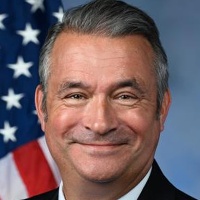
Don Bacon
Representative
NE
Don Bacon
Representative
NE
The Living Donor Protection Act of 2025 prohibits life, disability, and long-term care insurance companies from denying coverage or increasing premiums solely because an individual is a living organ donor. This legislation ensures that living donors are not financially penalized for their altruistic act. Additionally, the bill requires the Secretary of HHS to update educational materials to accurately reflect the insurance protections afforded to living donors.
The EACH Act of 2025 mandates that all federally funded health programs and facilities must cover and provide abortion services, while also prohibiting federal interference with private insurance coverage.
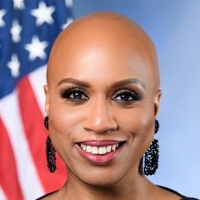
Ayanna Pressley
Representative
MA
Ayanna Pressley
Representative
MA
The EACH Act of 2025 aims to ensure equal access to abortion coverage by requiring all federally funded health programs and facilities to cover abortion services. This legislation prohibits federal interference with state or private insurance coverage of abortion and repeals Section 1303 of the Affordable Care Act. Ultimately, the bill seeks to eliminate financial and insurance barriers to abortion care, particularly for low-income individuals relying on programs like Medicaid.
This bill amends the Family and Medical Leave Act to explicitly qualify time taken for an employee's own organ donation surgery as a serious health condition.
Don Bacon
Representative
NE
Don Bacon
Representative
NE
This bill amends the Family and Medical Leave Act (FMLA) to explicitly clarify that time taken off for an employee's own organ donation surgery qualifies as a serious health condition. This ensures both private and federal sector workers receive FMLA protection for recovery from organ donation. The legislation also specifies how federal employees must substitute existing paid leave when taking FMLA time for this purpose.
This constitutional amendment prohibits immunity from criminal prosecution for federal officials based on their official duties and bars the President from self-pardoning.
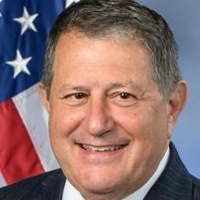
Joseph Morelle
Representative
NY
Joseph Morelle
Representative
NY
This proposed constitutional amendment would eliminate immunity from criminal prosecution for federal officials, including the President, based on their official duties. It also explicitly prohibits the President from issuing a self-pardon for any federal crimes. If ratified, these changes would take effect immediately.
This Act mandates that federal agencies integrate specific equity goals into their strategic and performance planning, establish internal equity advisory teams, and enhance data practices to ensure fair service delivery to underserved communities.
Ayanna Pressley
Representative
MA
Ayanna Pressley
Representative
MA
The Equity in Government Act mandates that federal agencies integrate specific equity goals into their strategic and performance plans, ensuring at least 20% of goals focus on improving service delivery to underserved communities. The bill establishes new leadership structures, including an Agency Equity Advisory Team, and enhances the role of the Chief Data Officer Council to prioritize equitable data collection and use. Furthermore, it creates an Equitable Data Working Group to guide the government toward fairer methods and outcomes in federal operations.