
Legislative Activity
Track Valerie's sponsored bills, co-sponsored legislation, and voting record
The FAMILY Act establishes a national paid family and medical leave insurance program administered by the Social Security Administration, providing benefits for caregiving related to serious health conditions or victims of violence.
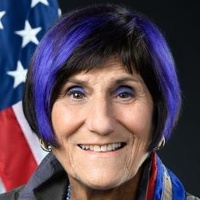
Rosa DeLauro
Representative
CT
Rosa DeLauro
Representative
CT
The FAMILY Act establishes a national Paid Family and Medical Leave Insurance program administered by a new office within the Social Security Administration. This program provides monthly benefits to eligible individuals who take time off for qualified caregiving reasons, including serious health conditions or victims of violence. The Act also sets forth detailed eligibility requirements, benefit calculation formulas, and job protection guarantees for employees utilizing the leave. Finally, it creates a funding mechanism to support existing state-level paid leave programs that meet federal standards.
This Act establishes grants for Minority-Serving Institutions to enhance arts education, support minority students, and address diversity gaps in the arts sector.

Sydney Kamlager-Dove
Representative
CA
Sydney Kamlager-Dove
Representative
CA
The Equitable Arts Education Enhancement Act establishes a new grant program to boost arts education at Minority-Serving Institutions (MSIs). These funds are intended to increase access to the arts for minority students through financial aid, mentorship, and career development. The bill aims to address the lack of diversity in arts leadership by supporting institutions well-positioned to train diverse arts professionals. Ultimately, this legislation seeks to preserve and promote the work of artists of color while strengthening arts programs nationwide.
This bill establishes the National Infrastructure Bank to finance major U.S. infrastructure projects while granting the Bank and its investors favorable federal tax exemptions.
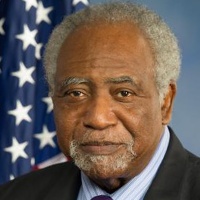
Danny Davis
Representative
IL
Danny Davis
Representative
IL
The National Infrastructure Bank Act of 2025 establishes a new, mixed-ownership federal corporation chartered to finance major infrastructure projects across the nation. This legislation authorizes the Bank to raise substantial capital and issue significant loans to spur economic growth while prioritizing projects in disadvantaged communities. Furthermore, the bill grants the Bank and its specific investors favorable tax exemptions to encourage participation and operation.
The George Floyd Justice in Policing Act of 2025 comprehensively reforms policing by increasing accountability, mandating transparency through data collection, restricting dangerous tactics, and prohibiting sexual misconduct by officials acting under color of law.
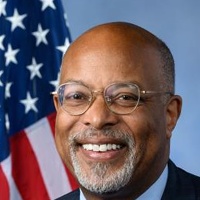
Glenn Ivey
Representative
MD
Glenn Ivey
Representative
MD
The George Floyd Justice in Policing Act of 2025 is a comprehensive bill designed to increase police accountability and transparency nationwide through federal mandates and funding incentives. It reforms standards for prosecuting civil rights violations, eliminates qualified immunity, and establishes national registries for police misconduct and use-of-force data. Furthermore, the Act bans specific dangerous police tactics like chokeholds and restricts the transfer of military equipment to local departments.
This resolution honors the victims of Hurricane Helene one year later and expresses the House's commitment to supporting the recovery of the affected communities in western North Carolina.
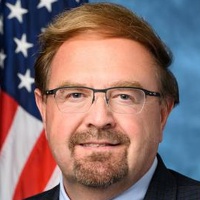
Charles (Chuck) Edwards
Representative
NC
Charles (Chuck) Edwards
Representative
NC
This resolution formally honors the victims of Hurricane Helene one year after the storm devastated western North Carolina. It expresses deep condolences to the affected communities and recognizes the heroic efforts of first responders and volunteers. Furthermore, the resolution affirms Congress's commitment to supporting ongoing recovery and rebuilding efforts in the region.
This bill posthumously awards a Congressional Gold Medal to honor the groundbreaking civil rights achievements of Constance Baker Motley and authorizes the production and sale of bronze duplicates.
Rosa DeLauro
Representative
CT
Rosa DeLauro
Representative
CT
This bill, the Congressional Tribute to Constance Baker Motley Act of 2025, posthumously awards the Congressional Gold Medal to the pioneering civil rights attorney and federal judge, Constance Baker Motley. The legislation recognizes her historic achievements, including her role in *Brown v. Board of Education* and her service as the first African-American woman appointed as a federal judge. The Secretary of the Treasury is authorized to strike the medal, and provisions are made for selling bronze duplicates to cover production costs.
This Act mandates a comprehensive review of liquid cooling technologies for data centers to address growing energy demands driven by AI.
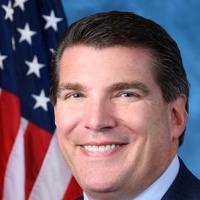
Jay Obernolte
Representative
CA
Jay Obernolte
Representative
CA
The Liquid Cooling for AI Act of 2025 addresses the rapidly growing energy demands of AI data centers by mandating a comprehensive review of liquid cooling technologies. This review, conducted by the GAO, will assess the costs, benefits, and market readiness of systems like direct-to-chip and immersion cooling. Ultimately, the bill seeks to establish federal standards and recommendations to promote the efficient and secure deployment of advanced cooling solutions necessary for future high-performance computing.
This act increases the corporate tax rate for companies whose CEO-to-worker pay ratio exceeds 50 to 1, based on a five-year average calculation.
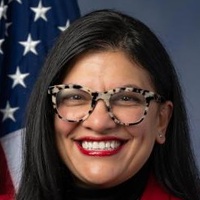
Rashida Tlaib
Representative
MI
Rashida Tlaib
Representative
MI
The Tax Excessive CEO Pay Act of 2025 imposes a federal income tax penalty on corporations whose CEO-to-worker pay ratio exceeds 50-to-1, calculated using a five-year average. If the ratio is too high, the standard 21% corporate tax rate will increase according to a specified penalty table. This measure applies to tax years beginning after December 31, 2025, with exceptions for smaller companies below a $100 million revenue threshold.
This resolution recognizes suicide as a serious public health crisis and expresses support for designating September as National Suicide Prevention Month and September 10, 2025, as World Suicide Prevention Day.
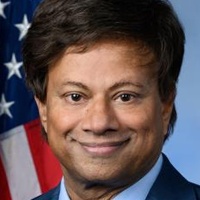
Shri Thanedar
Representative
MI
Shri Thanedar
Representative
MI
This resolution officially recognizes suicide as a serious public health crisis in the United States, highlighting the urgent need for prevention efforts across all demographics. It expresses strong support for designating September as "National Suicide Prevention Month" and September 10th as "World Suicide Prevention Day" to raise awareness. The measure calls for prioritizing comprehensive, tailored strategies to improve access to mental health and suicide prevention services nationwide.
This Act caps out-of-pocket costs for essential prescription inhalers and nebulizers at a maximum of \$15 per 30-day supply for most insured and establishes a new assistance program for uninsured individuals.
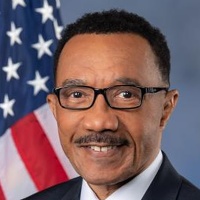
Kweisi Mfume
Representative
MD
Kweisi Mfume
Representative
MD
The Affordable Inhalers and Nebulizers Act of 2025 aims to significantly reduce patient out-of-pocket costs for essential prescription inhalers and nebulizers used to treat conditions like asthma and COPD. This bill caps patient cost-sharing for these products at a maximum of \$15 per 30-day supply for most private insurance and Medicare beneficiaries, effective in 2026. Additionally, it establishes a new program to provide similar cost relief for uninsured individuals. The legislation ensures that payments made toward these caps count toward deductibles and out-of-pocket maximums.
This Act establishes sanctions against Pakistani officials undermining democracy and human rights, while urging the U.S. government to promote democratic institutions in Pakistan until September 30, 2030.
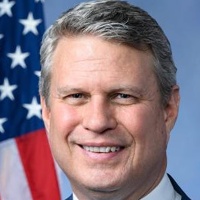
Bill Huizenga
Representative
MI
Bill Huizenga
Representative
MI
The Pakistan Freedom and Accountability Act expresses strong U.S. support for democracy and human rights in Pakistan, citing concerns over military influence and recent election interference. This legislation directs the President to identify and impose sanctions on Pakistani officials responsible for undermining democratic processes or committing serious human rights abuses. The Act emphasizes the need for civilian control over the military and sets an expiration date for its provisions in September 2030.
The Weather Act Reauthorization Act of 2025 comprehensively updates and funds federal weather research, modernizes forecasting infrastructure, integrates commercial data, and improves public communication to enhance severe weather preparedness and mitigation across the nation.

Frank Lucas
Representative
OK
Frank Lucas
Representative
OK
The Weather Act Reauthorization Act of 2025 aims to significantly enhance U.S. weather forecasting, research, and public safety measures across five years. It mandates the modernization of critical infrastructure, including radar systems and data processing, while prioritizing the integration of commercial technology and social science research into actionable, impact-based warnings. The bill focuses on improving predictions for severe events like tornadoes, hurricanes, and droughts, and overhauls how NOAA acquires and utilizes private sector weather data. Ultimately, this legislation seeks to deliver faster, clearer, and more reliable hazard information to protect American lives and property.
This Act prohibits the knowing distribution of materially deceptive AI-generated audio or visual media of federal candidates near an election, with exceptions for legitimate news coverage and satire.
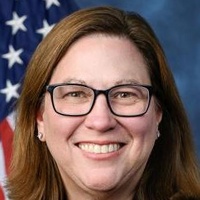
Julie Johnson
Representative
TX
Julie Johnson
Representative
TX
The Protect Elections from Deceptive AI Act prohibits the knowing distribution of materially deceptive, AI-generated audio or visual media of federal candidates close to an election with the intent to influence the outcome. This ban includes exceptions for legitimate news reporting, satire, and parody, provided proper disclosures are made. Candidates whose likeness is used deceptively can sue for immediate removal of the content and damages.
This bill redefines coordinated spending by Super PACs as direct contributions to candidates and prohibits federal officials from fundraising for political committees that accept non-compliant donations.
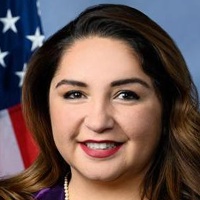
Delia Ramirez
Representative
IL
Delia Ramirez
Representative
IL
The Stop Super PAC-Candidate Coordination Act tightens campaign finance rules by redefining "coordinated expenditures" made with a candidate as direct contributions, subject to strict limits and severe penalties for violations. It also explicitly bans federal candidates and officeholders from soliciting funds for any political committee that accepts non-compliant donations. These changes aim to prevent candidates from indirectly influencing or benefiting from outside spending by Super PACs.
This Act establishes a framework for striking workers to access unemployment insurance benefits after a two-week waiting period or the hiring of permanent replacements.
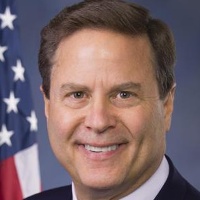
Donald Norcross
Representative
NJ
Donald Norcross
Representative
NJ
The Empowering Striking Workers Act of 2025 establishes a pathway for workers involved in a strike or lockout to receive unemployment insurance benefits after a mandatory 14-day waiting period. This legislation also exempts striking workers from the standard requirement to actively search for new employment while they are unable to work due to the labor dispute.
This bill formally integrates Puerto Rico into the federal Supplemental Nutrition Assistance Program (SNAP) structure, outlining a transition plan away from its current block grant system.
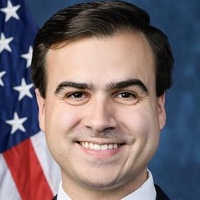
Pablo José Hernández Rivera
Representative
PR
Pablo José Hernández Rivera
Representative
PR
The Puerto Rico Nutrition Assistance Fairness Act aims to integrate Puerto Rico into the federal Supplemental Nutrition Assistance Program (SNAP) structure, aligning it with other territories like Guam. The bill mandates a transition period where Puerto Rico must submit a plan of operation to the Secretary of Agriculture for approval to join SNAP. During this transition, existing block grant funding may continue for up to five years while the territory moves toward full participation under federal SNAP rules.
This resolution recognizes suicide as a serious public health crisis and expresses support for designating September 8, 2025, as "988 Day" to promote the vital 988 Suicide and Crisis Lifeline.
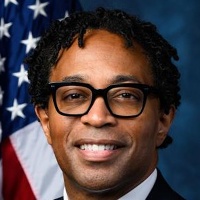
Wesley Bell
Representative
MO
Wesley Bell
Representative
MO
This resolution formally recognizes suicide as a serious public health crisis in the United States and expresses strong support for the 988 Suicide and Crisis Lifeline. It highlights the critical role of the 988 service in providing immediate, life-saving support to those in mental health distress. Furthermore, the resolution supports the designation of September 8th as "988 Day" to promote awareness of this essential resource.
This bill extends Haiti's preferential trade benefits until 2037, enhances annual labor compliance reviews for producers, and mandates U.S. technical assistance to boost and diversify Haitian exports.
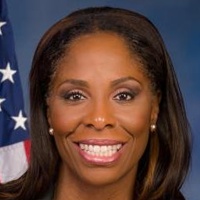
Stacey Plaskett
Representative
VI
Stacey Plaskett
Representative
VI
The HOPE for Haitian Prosperity Act of 2025 strengthens trade benefits for Haiti by extending preferential duty treatment until 2037 and increasing annual labor compliance reviews focusing on wages and working conditions. The bill also mandates the U.S. Trade Representative to provide targeted technical assistance aimed at increasing and diversifying Haitian exports to the United States. These measures seek to enhance Haiti's economic competitiveness while ensuring adherence to core labor standards.
This Act bans Members of Congress and their immediate families from trading or owning specific investments while in office, requiring divestment within 90 to 180 days or facing significant financial penalties.

Chip Roy
Representative
TX
Chip Roy
Representative
TX
The Restore Trust in Congress Act establishes strict new rules prohibiting Members of Congress and their immediate families from owning or trading specific financial assets, referred to as "covered investments," while in office. Covered individuals must divest existing prohibited holdings within a set timeframe or face significant financial penalties, including fines and forfeiture of profits. The legislation aims to eliminate conflicts of interest arising from personal financial trading while serving in federal office.
The FEMA Act of 2025 establishes FEMA as an independent, cabinet-level agency and enacts sweeping reforms across public assistance, individual aid, and mitigation programs to speed up recovery and increase transparency.
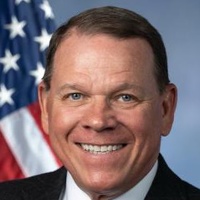
Sam Graves
Representative
MO
Sam Graves
Representative
MO
The FEMA Act of 2025 establishes the Federal Emergency Management Agency (FEMA) as an independent, cabinet-level agency to lead a unified, all-hazards approach to national emergency management. The bill enacts sweeping reforms across Public Assistance, Individual Assistance, and Mitigation programs to accelerate recovery, streamline funding, and reduce bureaucratic hurdles for disaster survivors and communities. Furthermore, it mandates significant new transparency measures, including public data reporting and GAO oversight, to ensure accountability for federal disaster spending.