
Legislative Activity
Track Valerie's sponsored bills, co-sponsored legislation, and voting record
The TRACE Act mandates that firearms receive a second, hidden serial number, extends the retention period for background check records, requires licensed dealers to conduct physical inventory checks, and removes certain spending limitations on the ATF.

Mike Quigley
Representative
IL
Mike Quigley
Representative
IL
The TRACE Act mandates that all newly manufactured firearms include a second, hidden serial number, either internally or visible only under infrared light. It also extends the retention period for instant criminal background check records to 180 days and requires licensed dealers to conduct regular physical inventories of their firearms. Finally, the bill removes several past budgetary limitations placed on the Bureau of Alcohol, Tobacco, Firearms and Explosives (ATF).
The True Justice Act of 2025 establishes a five-year, \$50 million grant program administered by the Attorney General to improve and fund legal representation and training for public defenders immediately following an arrest.

Summer Lee
Representative
PA
Summer Lee
Representative
PA
The True Justice Act of 2025 establishes a new grant program administered by the Attorney General to significantly improve public defense services nationwide. These funds are designated for providing legal representation to indigent defendants immediately following arrest and for specialized training of defense attorneys. Congress further affirms its belief that the constitutional right to counsel must extend to all post-arrest proceedings, not just the initial trial.
The Pride In Mental Health Act of 2025 establishes grants and federal initiatives to improve mental health services and research specifically for LGBTQ+ youth while explicitly prohibiting the use of funds for conversion therapy.
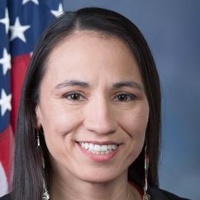
Sharice Davids
Representative
KS
Sharice Davids
Representative
KS
The Pride In Mental Health Act of 2025 establishes a new grant program to improve mental health and substance abuse outcomes for LGBTQ+ youth through culturally competent care and resource development. These grants strictly prohibit funding for conversion therapy practices. The bill also mandates federal data collection on LGBTQ+ youth mental health and requires a report on the needs of those in foster care.
The Complete Streets Act of 2025 establishes a federal program requiring states to create local plans and adopt design standards to ensure all new and reconstructed federally funded roads safely accommodate pedestrians, cyclists, transit users, and drivers of all ages and abilities.

Steve Cohen
Representative
TN
Steve Cohen
Representative
TN
The Complete Streets Act of 2025 establishes a new federal program to ensure public roads are designed safely for all users, including pedestrians, cyclists, transit riders, and drivers of all ages and abilities. This requires states to create competitive programs offering technical assistance and construction grants to local entities that adopt formal Complete Streets policies. The law mandates the creation of federal design standards that must be incorporated into future federally funded road construction and reconstruction projects, with specific requirements for accessibility and safety improvements. Furthermore, states must commit a portion of their existing federal highway funds to support these new Complete Streets initiatives.
This act repeals certain provisions of the Protection of Lawful Commerce in Arms Act and allows federal gun trace information to be discoverable and admissible in civil proceedings.
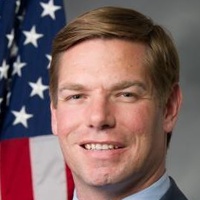
Eric Swalwell
Representative
CA
Eric Swalwell
Representative
CA
The Equal Access to Justice for Victims of Gun Violence Act of 2025 repeals key provisions of the Protection of Lawful Commerce in Arms Act. This legislation allows federal gun trace information to be discoverable and admissible as evidence in civil lawsuits and administrative hearings. The bill aims to provide victims of gun violence with greater access to relevant data in legal proceedings.
This Act establishes a coordinated federal response to extreme heat by creating an interagency committee and a National Integrated Heat Health Information System within NOAA to reduce heat-related health risks.

Yassamin Ansari
Representative
AZ
Yassamin Ansari
Representative
AZ
The Coordinated Federal Response to Extreme Heat Act of 2025 establishes a unified federal approach to mitigating the health and safety risks posed by extreme heat. It creates an Interagency Committee within NOAA to coordinate efforts across numerous federal departments and mandates the development of a National Integrated Heat Health Information System (NIHHIS). This new system will provide open access to data, forecasts, and science-backed tools to improve national preparedness and response to dangerous heat events. The Act authorizes $5 million annually through fiscal year 2029 to support these initiatives.
This Act formally establishes the science-based Advisory Committee on Immunization Practices (ACIP) and mandates that changes to the National Vaccine Injury Compensation Program's injury table must be supported by a preponderance of the best available scientific evidence.

Frank Pallone
Representative
NJ
Frank Pallone
Representative
NJ
The Family Vaccine Protection Act formally establishes the Advisory Committee on Immunization Practices (ACIP) into law, requiring all its vaccine recommendations to be based on the preponderance of the best available, peer-reviewed scientific evidence. This legislation mandates strict procedures for the CDC Director to adopt or reject ACIP advice, including notifying Congress if a recommendation is rejected. Furthermore, the Act requires that any changes to the National Vaccine Injury Compensation Program's injury table must also be supported by strong scientific evidence.
This bill mandates a comprehensive economic study to quantify the financial costs of extreme heat across health, property, labor, and infrastructure sectors.
Yassamin Ansari
Representative
AZ
Yassamin Ansari
Representative
AZ
The Extreme Heat Economic Study Act of 2025 mandates a comprehensive study, led by NOAA, to quantify the full financial costs of extreme heat events in the United States. This study must analyze impacts across health, property damage, labor productivity, and critical infrastructure like energy and agriculture. The final report will recommend a national system for tracking and publicly reporting these economic losses within four years of enactment.
The POST GRAD Act reinstates the government's authority to issue Federal Direct Stafford Loans to graduate and professional students until June 30, 2025, without requiring standard rulemaking procedures.
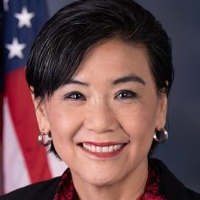
Judy Chu
Representative
CA
Judy Chu
Representative
CA
The POST GRAD Act reinstates the government's authority to issue Federal Direct Stafford Loans to graduate and professional students through June 30, 2025. This legislation amends existing law to extend the availability of these federal loans. Furthermore, the Act allows these changes to take effect immediately by exempting them from standard federal rulemaking and public comment requirements.
The Excess Urban Heat Mitigation Act of 2025 establishes a grant program to fund projects, prioritizing low-income areas, that reduce extreme heat in urban environments through measures like tree planting and installing cooling infrastructure.
Yassamin Ansari
Representative
AZ
Yassamin Ansari
Representative
AZ
The Excess Urban Heat Mitigation Act of 2025 establishes a new grant program to combat dangerous urban heat islands, which disproportionately affect low-income and minority communities. This program will fund eligible entities for projects like tree planting, installing cool pavements, and establishing cooling centers. At least 75% of the annual funding must target designated low-income census tracts, ensuring resources are directed to the most vulnerable areas. The Act authorizes $30 million annually through fiscal year 2033 to support these essential mitigation efforts.
This resolution urgently calls for the immediate delivery of humanitarian aid to address the severe hunger crisis in Gaza and demands the administration use all diplomatic means to secure hostage release and end the fighting.

Pramila Jayapal
Representative
WA
Pramila Jayapal
Representative
WA
This resolution formally expresses the House of Representatives' grave concern over the severe humanitarian crisis and widespread suffering of civilians in Gaza, alongside the plight of hostages. It urgently calls on the Administration to use all diplomatic tools to secure the release of all hostages. Furthermore, the bill demands the immediate delivery and secure distribution of essential humanitarian aid to address the catastrophic hunger crisis in Gaza.
This resolution expresses strong support for designating June 6, 2025, as National Gun Violence Awareness Day and June 2025 as National Gun Violence Awareness Month to honor victims and promote awareness.

Robin Kelly
Representative
IL
Robin Kelly
Representative
IL
This resolution expresses strong support for designating June 6, 2025, as "National Gun Violence Awareness Day" and June 2025 as "National Gun Violence Awareness Month." It highlights the devastating scale of gun violence in the U.S., recognizing the thousands of annual deaths and injuries across all demographics. The bill encourages Americans to wear orange on the designated day to honor victims and promote increased awareness and community action regarding gun safety.
The Magnus White Cyclist Safety Act of 2025 mandates the Department of Transportation to establish performance standards for automatic emergency braking systems in new passenger vehicles that effectively detect vulnerable road users, including cyclists, in all light conditions.

Joe Neguse
Representative
CO
Joe Neguse
Representative
CO
The Magnus White Cyclist Safety Act of 2025 mandates the Department of Transportation to establish performance standards for automatic emergency braking systems in new passenger vehicles. These standards must ensure the systems can detect vulnerable road users, including cyclists, in various lighting conditions. The final rule must be issued within three years, with compliance required within two model years following the rule's issuance.
The Menstrual Equity For All Act of 2025 mandates the provision of free menstrual products across schools, correctional facilities, federal buildings, and workplaces, while also expanding coverage under Medicaid and eliminating sales tax on these essential items.

Grace Meng
Representative
NY
Grace Meng
Representative
NY
The Menstrual Equity For All Act of 2025 aims to eliminate period poverty by ensuring access to free menstrual products across various sectors of society. This comprehensive bill mandates the availability of these essential supplies in K-12 schools, colleges, correctional facilities, federal buildings, and workplaces with over 100 employees. Furthermore, it expands coverage under Medicaid, allocates specific funding through social service block grants and TANF programs, and prohibits states from taxing menstrual products.
This resolution expresses Congressional support for designating May 2025 as Progressive Supranuclear Palsy Awareness Month to promote awareness, support patients, and encourage research for this devastating brain disease.

Suhas Subramanyam
Representative
VA
Suhas Subramanyam
Representative
VA
This resolution expresses the support of Congress for designating May 2025 as Progressive Supranuclear Palsy (PSP) Awareness Month. The designation aims to bring national attention to the serious, progressive brain disease that currently has no cure. By raising awareness, the bill seeks to support patients, improve diagnosis, and boost research efforts for better treatments.
This Act mandates the National Park Service to establish a program to reduce and eliminate the sale and distribution of disposable plastic products, like single-use water bottles and utensils, across all national park units.
Mike Quigley
Representative
IL
Mike Quigley
Representative
IL
The Reducing Waste in National Parks Act mandates the National Park Service (NPS) to establish a program to significantly reduce or eliminate the sale and distribution of disposable plastic products, including single-use water bottles, across all park units. Regional directors must implement these changes while considering operational costs, visitor safety regarding water access, and vendor contracts. The law also requires proactive visitor education and biennial reviews to assess the program's effectiveness and public impact.
The Fit to Serve Act prohibits discrimination against service members and recruits in the Armed Forces based on their gender identity.
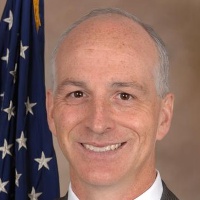
Adam Smith
Representative
WA
Adam Smith
Representative
WA
The Fit to Serve Act prohibits the U.S. Armed Forces from discriminating against service members based on their gender identity. This means military branches cannot set different standards, involuntarily discharge personnel, or deny medically necessary healthcare due to a service member's gender identity. The bill ensures equal opportunity for joining, serving, and receiving care regardless of one's internal sense of self.
This Act establishes the national Wildlife Confiscations Network to coordinate the proper care and placement of live animals seized by federal authorities during wildlife smuggling enforcement.
Andrew Garbarino
Representative
NY
Andrew Garbarino
Representative
NY
The Wildlife Confiscations Network Act of 2025 establishes a national, voluntary partnership—the Wildlife Confiscations Network—to coordinate the care and placement of illegally smuggled or confiscated wildlife. This network will utilize qualified animal care facilities to ensure seized animals receive proper triage, housing, and forensic documentation. The Act authorizes up to $5 million annually from Fiscal Year 2026 through 2030 to support this critical infrastructure.
The DEFIANCE Act of 2025 establishes a federal civil right of action against the creation, possession with intent to share, or sharing of nonconsensual sexually explicit digital forgeries, or "deepfakes."

Alexandria Ocasio-Cortez
Representative
NY
Alexandria Ocasio-Cortez
Representative
NY
The DEFIANCE Act of 2025 establishes a federal civil cause of action against the creation, possession with intent to share, or sharing of nonconsensual intimate digital forgeries, often known as deepfakes. This legislation updates existing law to specifically address image-based sexual abuse created through AI or digital manipulation, regardless of whether the image is labeled as fake. Victims can sue for significant statutory damages, attorney's fees, and injunctive relief to stop the spread of the harmful content. The Act ensures that this new federal standard does not preempt or limit stronger existing State or Tribal laws.
This act establishes fixed, non-renewable 18-year terms for future Supreme Court Justices and outlines a staggered appointment schedule, while also creating a temporary mechanism for filling vacancies below the nine-justice quorum.

Henry Johnson
Representative
GA
Henry Johnson
Representative
GA
The Supreme Court Tenure Establishment and Retirement Modernization Act of 2025 establishes fixed, non-renewable 18-year terms for all future Supreme Court Justices, with appointments staggered every two years. This legislation also outlines a process for phasing out current Justices upon the confirmation of new appointees. Finally, it grants the Chief Justice the authority to temporarily fill sudden vacancies below the standard nine-justice level using a randomly selected retired Justice.