Legislative Activity
Track C.'s sponsored bills, co-sponsored legislation, and voting record
This bill establishes federal standards for voter identification, registration, election administration, and mail-in ballot procedures for federal elections.
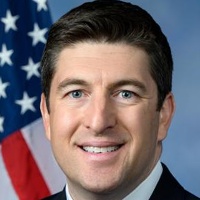
Bryan Steil
Representative
WI
Bryan Steil
Representative
WI
The Make Elections Great Again Act establishes new federal standards for voter identification, citizenship verification for registration, and statewide voter list maintenance for federal elections. It also standardizes election administration by mandating paper ballots, banning ranked-choice voting, and implementing strict new rules for requesting and returning mail-in ballots. The bill aims to increase election integrity through enhanced documentation and procedural uniformity across states.
This bill expresses support for the Iranian people protesting for a free and democratic Iran while condemning the Islamic Republic's violent repression.
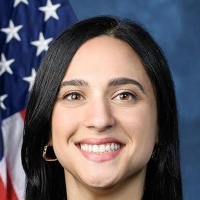
Yassamin Ansari
Representative
AZ
Yassamin Ansari
Representative
AZ
This resolution expresses strong support for the Iranian people protesting for freedom, democracy, and basic human rights against the repressive Islamic Republic. It condemns the regime's brutal crackdown on demonstrators and demands an end to violence and the release of political prisoners. Furthermore, it urges the U.S. government to work with allies to deter further lethal violence against protesters.
This bill modifies deposits into the Crime Victims Fund by excluding certain False Claims Act recoveries and mandates an Inspector General audit of the Fund's sustainability.
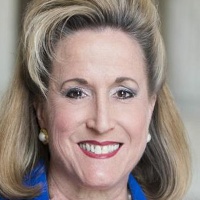
Ann Wagner
Representative
MO
Ann Wagner
Representative
MO
This bill amends the Victims of Crime Act of 1984 to temporarily exclude certain False Claims Act recoveries from being deposited into the Crime Victims Fund through fiscal year 2029. It also mandates a comprehensive audit by the Department of Justice Inspector General on the Fund's sustainability and the impact of recent legislative changes. The resulting report will provide recommendations for improving the Fund's effectiveness and oversight.
This bill officially designates January 9, 2026, as "National Law Enforcement Appreciation Day" while also establishing National Police Week and National Peace Officers Memorial Day to honor law enforcement officers.
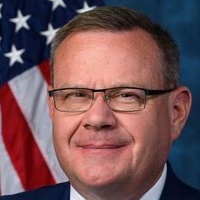
Tim Moore
Representative
NC
Tim Moore
Representative
NC
This bill officially designates January 9, 2026, as "National Law Enforcement Appreciation Day" to honor the service and sacrifice of law enforcement officers nationwide. It also establishes National Police Week and National Peace Officers Memorial Day (May 15th) to commemorate officers who have died in the line of duty. The legislation encourages the President to issue annual proclamations recognizing these days and calls for flags to be flown at half-staff on Memorial Day.
This act removes Section 4024(c) from the CARES Act to clarify the enforcement of state housing laws.
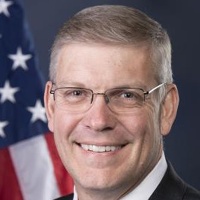
Barry Loudermilk
Representative
GA
Barry Loudermilk
Representative
GA
The Respect State Housing Laws Act aims to clarify federal housing regulations by amending the CARES Act. Specifically, this legislation removes Section 4024(c) from the CARES Act.
This bill establishes the Office of Fusion within the Department of Energy to accelerate the research, development, and commercial deployment of fusion energy in the United States.
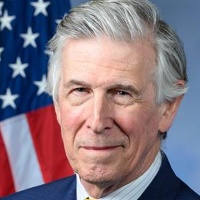
Donald Beyer
Representative
VA
Donald Beyer
Representative
VA
The Office of Fusion Act of 2025 reestablishes a dedicated Office of Fusion within the Department of Energy to accelerate the research, development, and commercial deployment of fusion energy. This office will coordinate federal efforts, foster public-private partnerships aimed at starting construction on private fusion power plants by 2028, and ensure U.S. leadership in the sector. The Act mandates the creation of a commercial deployment roadmap to identify and overcome key barriers to bringing fusion power online.
This bill authorizes Congress to award Congressional Gold Medals to the 1980 U.S. Men's Olympic Ice Hockey team for their historic "Miracle on Ice" victory.
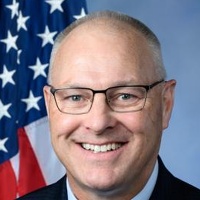
Pete Stauber
Representative
MN
Pete Stauber
Representative
MN
This bill, the Miracle on Ice Congressional Gold Medal Act, officially authorizes Congress to award Congressional Gold Medals to the 1980 U.S. Men's Olympic Ice Hockey Team for their historic "Miracle on Ice" victory. The medals will be struck by the Treasury and permanently displayed at specific national sports museums. The Act also permits the sale of duplicate bronze medals to cover production costs.
This bill establishes a 180-day deadline for the Secretary of the Interior to approve or disapprove state wildlife conservation plans, ensuring timely implementation of state wildlife restoration programs.
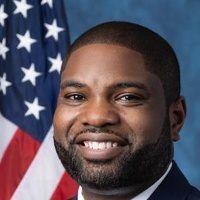
Byron Donalds
Representative
FL
Byron Donalds
Representative
FL
This act, the Make State Wildlife Action Plans Efficient Act of 2025, aims to streamline the federal review and approval process for state wildlife conservation plans. It establishes a strict 180-day deadline for the Secretary of the Interior to approve or disapprove these state plans. Furthermore, it conditionally authorizes states to begin implementing their programs upon submission, ensuring timely conservation efforts while requiring accountability for missed deadlines.
This bill mandates a report on the feasibility of using emerging technologies to enhance internet freedom in Iran.
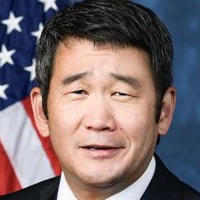
Dave Min
Representative
CA
Dave Min
Representative
CA
The Feasibility Review of Emerging Equipment for Digital Open Media Act (FREEDOM Act) mandates the Secretary of State to report on internet freedom in Iran. This report must assess the feasibility of using emerging technologies, like direct-to-cell wireless, to expand internet access. It will also analyze the impact of current drone and jamming technologies on these efforts.
This resolution denounces six Members of Congress for allegedly using dangerous rhetoric that attempts to sow disallegiance and encourage insubordination within the U.S. military and intelligence community against the Commander in Chief.
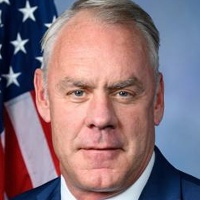
Ryan Zinke
Representative
MT
Ryan Zinke
Representative
MT
This resolution denounces the rhetoric of six specific Members of Congress for allegedly sowing disallegiance within the U.S. military and intelligence community. It condemns their actions for encouraging service members to potentially violate the Uniform Code of Military Justice by suggesting they defy orders without evidence of illegality. The bill asserts that this rhetoric undermines the President's role as Commander in Chief and compromises national security.
This act prohibits state and local governments from enacting regulations that restrict energy service based on the type or source of energy sold in interstate commerce.
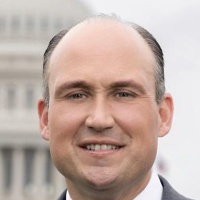
Nicholas Langworthy
Representative
NY
Nicholas Langworthy
Representative
NY
The Energy Choice Act places federal restrictions on state and local governments, preventing them from enacting regulations that prohibit or limit energy service based on its type or source. This means local governments cannot ban or restrict access to energy services sold in interstate commerce. The legislation aims to ensure consistent access to various energy sources across jurisdictions.
This act mandates the inclusion of a citizenship question on future decennial censuses and requires that only U.S. citizens be counted when apportioning congressional representation and electoral votes.
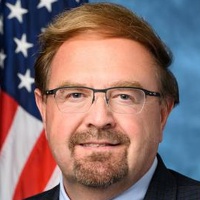
Charles (Chuck) Edwards
Representative
NC
Charles (Chuck) Edwards
Representative
NC
The Equal Representation Act of 2025 mandates the inclusion of a citizenship question on the decennial census starting in 2030. This legislation requires that the population counts used for apportioning seats in the House of Representatives and determining electoral votes exclude non-citizens. The bill ensures that representation is based solely on the count of U.S. citizens within each state.
The Mikaela Naylon Give Kids a Chance Act primarily focuses on enhancing pediatric drug research, ensuring completion of pediatric study requirements, extending incentives for rare pediatric disease treatments, and making targeted updates to FDA and organ transplant network operations.
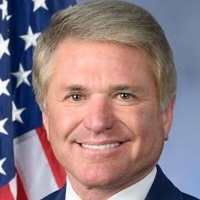
Michael McCaul
Representative
TX
Michael McCaul
Representative
TX
The Mikaela Naylon Give Kids a Chance Act focuses primarily on improving pediatric drug development and ensuring patient access to necessary treatments. This legislation mandates new research requirements for molecularly targeted pediatric cancer drugs, strengthens FDA enforcement of pediatric study completion, and extends incentives for developing drugs for rare pediatric diseases. Additionally, the bill updates organ transplant network functions and establishes an Abraham Accords Office within the FDA to enhance international regulatory cooperation.
This Act establishes a moratorium on oil and gas leasing and exploration off the coasts of Florida in the Gulf of Mexico and the Atlantic until 2032.
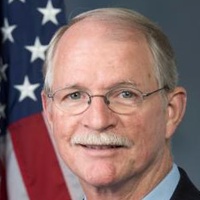
John Rutherford
Representative
FL
John Rutherford
Representative
FL
The PROTECT Florida Act establishes a comprehensive moratorium on new oil and gas leasing and exploration activities off the coast of Florida in both the Gulf of Mexico and the Atlantic Ocean. This measure extends existing protections and prohibits activities like seismic testing until June 30, 2032. The bill aims to safeguard Florida's coastal environment, tourism, and recreational resources.
This bill directs NASA and NOAA to expand civilian space cooperation with Taiwan and report annually to Congress on those efforts.
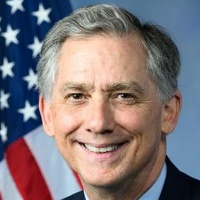
J. Hill
Representative
AR
J. Hill
Representative
AR
The Taiwan and American Space Assistance Act of 2025 directs NASA and NOAA to expand civilian space cooperation with Taiwan. This legislation mandates the initiation of discussions to collaborate on non-military space activities, including satellite programs and weather monitoring. The relevant agencies must report annually to Congress for five years on the progress and scope of this partnership.
This resolution honors the life and legacy of Charles "Charlie" James Kirk, condemns his assassination as political violence, and calls for a renewed commitment to civil discourse and American founding principles.

Mike Johnson
Representative
LA
Mike Johnson
Representative
LA
This resolution honors the life and legacy of Charles "Charlie" James Kirk, founder of Turning Point USA. It strongly condemns his assassination as an act of political violence. The bill calls for a renewed national commitment to civil discourse and the founding principles of the United States.
The PAAF Act grants automatic U.S. citizenship to certain internationally adopted individuals who meet specific residency and age requirements, clarifying and expanding existing pathways to citizenship.
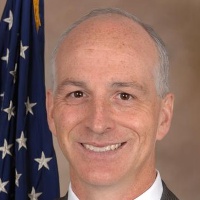
Adam Smith
Representative
WA
Adam Smith
Representative
WA
The Protect Adoptees and American Families Act (PAAF Act) aims to ensure that certain internationally adopted individuals automatically become U.S. citizens. This bill clarifies the requirements for automatic citizenship, particularly for adoptees who were physically present in the U.S. before turning 18. It also provides a pathway to citizenship for eligible adoptees residing abroad upon their legal entry into the United States.
This resolution officially recognizes the 250th anniversary of the United States Navy, celebrating its history, global strength, and vital contributions to national security and diplomacy.
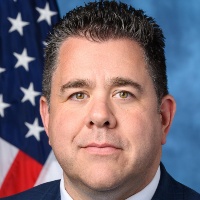
Nicolas LaLota
Representative
NY
Nicolas LaLota
Representative
NY
This resolution officially recognizes the 250th birthday of the United States Navy, celebrating its long history since the Continental Navy was established in 1775. Congress expresses deep gratitude for the bravery and dedication of all past and present Sailors who have defended the nation. The bill reaffirms the Navy's vital role in global security, humanitarian efforts, and maintaining American strength worldwide.
This resolution supports designating the week of September 21 through September 27, 2025, as "Gold Star Families Remembrance Week" to honor the families of fallen service members.
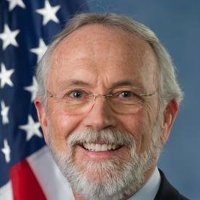
Dan Newhouse
Representative
WA
Dan Newhouse
Representative
WA
This resolution supports designating the week of September 21 through September 27, 2025, as "Gold Star Families Remembrance Week." The measure aims to officially recognize and honor the profound sacrifices made by families who have lost a loved one serving in the U.S. Armed Forces. It encourages communities nationwide to observe this week through acts of service and by celebrating the lives of these fallen service members.
This bill establishes a mechanism to ensure the Federal Aviation Administration remains funded and operational during a lapse in appropriations by drawing from the Airport and Airway Trust Fund.
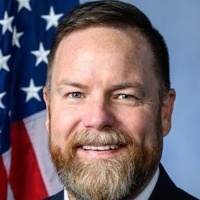
Aaron Bean
Representative
FL
Aaron Bean
Representative
FL
The Aviation Funding Stability Act of 2025 establishes a mechanism to ensure the Federal Aviation Administration (FAA) remains operational during a lapse in appropriations. If Congress fails to pass a budget, the FAA can draw from the Airport and Airway Trust Fund to continue existing programs and projects at the previous year's spending rate. This temporary funding lasts until a new budget is enacted or for a maximum of 30 days, whichever comes first. This measure aims to prevent disruptions to critical aviation services during government shutdowns.