Legislative Activity
Track Randy's sponsored bills, co-sponsored legislation, and voting record
The HALT Fentanyl Act permanently classifies fentanyl-related substances as Schedule I controlled substances while streamlining registration procedures for legitimate scientific research.
H. Griffith
Representative
VA
H. Griffith
Representative
VA
The Halt All Lethal Trafficking of Fentanyl (HALT Fentanyl) Act permanently classifies fentanyl-related substances as Schedule I controlled substances to strengthen enforcement and penalties against their trafficking. Additionally, the bill streamlines registration processes for researchers to facilitate legitimate scientific study of these substances. It also includes technical corrections and mandates updated federal rulemaking to ensure effective implementation.
The "Agriculture Export Promotion Act of 2025" aims to boost U.S. agricultural exports by increasing funding for the Market Access Program and the Foreign Market Development Cooperator Program.
Dan Newhouse
Representative
WA
Dan Newhouse
Representative
WA
The "Agriculture Export Promotion Act of 2025" aims to bolster U.S. agricultural exports by increasing funding for the Market Access Program and the Foreign Market Development Cooperator Program. It amends the Agricultural Trade Act of 1978 to extend and significantly increase financial support for these programs through 2029. These changes seek to address the competitive disadvantage faced by U.S. producers due to increased foreign competition and the impact of inflation on static funding levels. By increasing funding, the Act strives to enhance access to foreign markets, stimulate economic growth, and create jobs within the agricultural sector.
The Marc Fischer Memorial Act mandates the implementation of a comprehensive digital mail scanning strategy across all federal prisons to detect and interdict synthetic drugs like fentanyl.
Don Bacon
Representative
NE
Don Bacon
Representative
NE
The Marc Fischer Memorial Act mandates that the Bureau of Prisons implement a comprehensive strategy to achieve 100% digital scanning of all inmate mail to interdict fentanyl and other synthetic drugs. By transitioning to digital mail processing, the Act aims to protect staff and inmates from lethal exposure, improve institutional security, and alleviate the administrative burden on correctional personnel.
This resolution expresses the sense of Congress that the United States should formally recognize Taiwan as an independent nation, establish full diplomatic relations, negotiate a free trade agreement, and support its membership in international organizations.
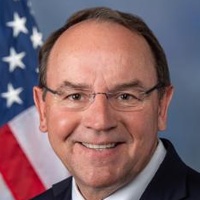
Thomas Tiffany
Representative
WI
Thomas Tiffany
Representative
WI
This resolution expresses the sense of Congress that the United States should formally recognize Taiwan as an independent, sovereign nation and abandon the obsolete "One China Policy." It calls for the normalization of diplomatic relations, the negotiation of a bilateral free trade agreement, and active U.S. support for Taiwan’s membership in international organizations.
Permanently extends the New Markets Tax Credit, provides inflation adjustments, and includes it for alternative minimum tax relief.
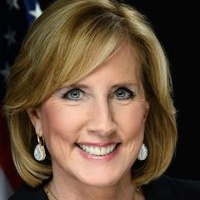
Claudia Tenney
Representative
NY
Claudia Tenney
Representative
NY
The New Markets Tax Credit Extension Act of 2025 permanently extends the New Markets Tax Credit, which incentivizes investment in low-income communities. It removes the credit's expiration date and adjusts the credit amount for inflation after 2025. The act also provides alternative minimum tax relief for qualified equity investments made after December 31, 2024.
The Tax Administration Simplification Act streamlines tax processes by applying the "mailbox rule" to electronic submissions, extends the deadline for S corporation elections, and adjusts quarterly estimated income tax payment dates for individuals.
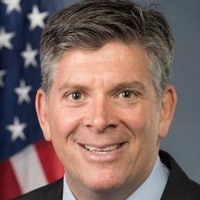
Darin LaHood
Representative
IL
Darin LaHood
Representative
IL
The Tax Administration Simplification Act aims to modernize and simplify tax processes by applying the "mailbox rule" to electronically submitted documents and payments, allowing more flexibility in S corporation elections, and adjusting the due dates for quarterly estimated income tax payments.
This bill authorizes the President to extend permanent normal trade relations to Kazakhstan by terminating the application of title IV of the Trade Act of 1974 to the country.
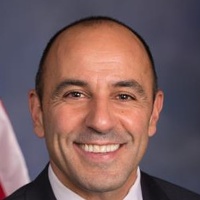
Jimmy Panetta
Representative
CA
Jimmy Panetta
Representative
CA
The US-Kazakhstan Trade Modernization Act authorizes the President to grant Kazakhstan permanent normal trade relations status. This legislation recognizes Kazakhstan’s compliance with international freedom of emigration requirements and its commitment to World Trade Organization standards. By terminating the application of title IV of the Trade Act of 1974, the bill aims to modernize and solidify the bilateral trade relationship between the two nations.
The Fair Access to Banking Act prohibits large financial institutions and payment networks from denying services to law-abiding businesses based on subjective, non-financial, or political criteria.
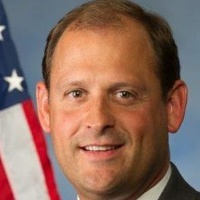
Garland Barr
Representative
KY
Garland Barr
Representative
KY
The Fair Access to Banking Act prohibits large financial institutions and payment networks from denying services to law-abiding businesses based on subjective, politically motivated, or reputational criteria. The bill mandates that financial institutions use impartial, quantitative, risk-based standards to evaluate customers rather than category-based exclusions. To ensure compliance, the legislation establishes enforcement mechanisms through federal regulators and provides a legal pathway for businesses to sue for damages if they are unfairly denied access to financial services.
This bill directs the Department of Education to consider the International Holocaust Remembrance Alliance's definition of antisemitism when evaluating discrimination complaints under Title VI of the Civil Rights Act of 1964, while also protecting First Amendment rights.
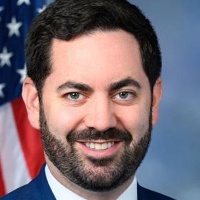
Michael Lawler
Representative
NY
Michael Lawler
Representative
NY
The Antisemitism Awareness Act of 2025 requires the Department of Education to consider the International Holocaust Remembrance Alliance's definition of antisemitism when evaluating discrimination complaints under Title VI of the Civil Rights Act of 1964, concerning race, color, and national origin. This aims to address rising antisemitism in educational settings. The Act clarifies that it does not expand the Department of Education's authority, change existing discrimination standards, reduce existing rights, or infringe upon First Amendment rights.
This bill prohibits state and local governments from imposing special taxes, insurance requirements, or user fees as a condition for the ownership, manufacture, or transfer of firearms and ammunition.
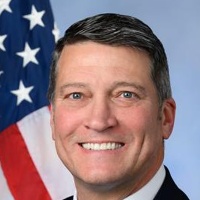
Ronny Jackson
Representative
TX
Ronny Jackson
Representative
TX
The "No User Fees for Gun Owners Act" prohibits state and local governments from imposing special taxes, insurance requirements, or user fees as a condition for owning, manufacturing, or transferring firearms and ammunition. The bill ensures that firearms are only subject to standard, generally applicable sales taxes, preventing discriminatory financial barriers to gun ownership.
The REVIVE VI Act amends the tax code to exclude certain income earned from services performed in the U.S. Virgin Islands from the calculation of global intangible low-taxed income (GILTI).
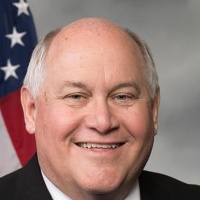
Ron Estes
Representative
KS
Ron Estes
Representative
KS
The Restore Economic Vitality and Investment in the Virgin Islands (REVIVE VI) Act aims to stimulate local economic growth by providing targeted tax relief for qualifying U.S. shareholders. The bill amends the Internal Revenue Code to exclude certain income derived from services performed in the U.S. Virgin Islands from the calculation of global intangible low-taxed income (GILTI). This measure is designed to incentivize investment and business activity within the territory.
The Educational Choice for Children Act of 2025 establishes federal tax credits for contributions to scholarship-granting organizations, providing lower- and middle-income families with financial support for K–12 educational expenses.

Adrian Smith
Representative
NE
Adrian Smith
Representative
NE
The Educational Choice for Children Act of 2025 establishes federal tax credits for individuals and corporations that contribute to scholarship-granting organizations. These organizations provide K–12 education scholarships to students from lower- and middle-income households to cover tuition, tutoring, and other qualified educational expenses. The bill also protects the autonomy of participating schools and scholarship organizations from government interference while ensuring that scholarship funds remain tax-free for recipient families.
This bill provides a 6.62 percent Medicare payment increase for physicians and practitioners from April through December 2025 to help stabilize medical practices.
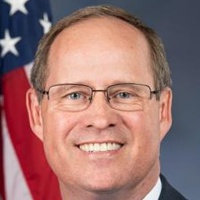
Gregory Murphy
Representative
NC
Gregory Murphy
Representative
NC
The Medicare Patient Access and Practice Stabilization Act of 2025 aims to support healthcare providers by extending Medicare payment adjustments through the end of 2025. Specifically, the bill provides a 6.62 percent payment increase for services rendered between April 1, 2025, and December 31, 2025, to help practitioners adjust to evolving Medicare payment policies.
The Educational Choice for Children Act of 2025 establishes a federal tax credit for donations to scholarship-granting organizations to help families fund K-12 educational expenses, including private school tuition and homeschooling costs.
Adrian Smith
Representative
NE
Adrian Smith
Representative
NE
The Educational Choice for Children Act of 2025 establishes a federal tax credit for donations to scholarship-granting organizations, which provide financial assistance for K-12 educational expenses. This initiative aims to expand school choice by helping eligible families cover costs such as tuition, tutoring, and educational therapies. The bill also includes robust protections to ensure the autonomy of participating private and religious schools and the freedom of parents to direct their children's education.
The Illegitimate Court Counteraction Act sanctions individuals assisting the International Criminal Court (ICC) in investigating, arresting, or prosecuting protected persons, including U.S. citizens and allies, and rescinds funding for the ICC.

Chip Roy
Representative
TX
Chip Roy
Representative
TX
The Illegitimate Court Counteraction Act imposes sanctions on individuals and their families who assist the International Criminal Court (ICC) in investigating, arresting, detaining, or prosecuting "protected persons," which include U.S. citizens, military personnel, government officials, and citizens/residents of U.S. allies not consenting to the ICC. It requires the President to block the property of those who aid the ICC, deny them entry into the U.S., and rescinds any funds for the ICC. The bill allows for waivers of these sanctions if vital to U.S. national security and termination of sanctions if the ICC ceases action against protected persons.
This bill recognizes the significant contributions of tax-exempt fraternal benefit societies to communities across the United States through charitable activities, volunteer work, and financial support for their members, and expresses Congressional support for their continued promotion.
Darin LaHood
Representative
IL
Darin LaHood
Representative
IL
This bill recognizes the significant historical and ongoing contributions of tax-exempt fraternal benefit societies to communities across the United States through charitable activities, volunteer work, and financial support for members. It expresses the sense of Congress that these societies are a valuable support system that addresses unmet needs and generates substantial returns to the U.S. through their tax-exempt status. The bill also advocates for the continued promotion of fraternal benefit societies.
This bill prohibits the use of federal Medicaid and CHIP funds for elective abortions, including related travel and lodging expenses, while maintaining exceptions for cases of rape, incest, or life-threatening medical conditions.
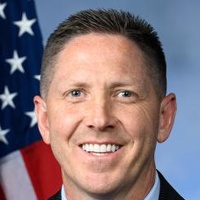
Josh Brecheen
Representative
OK
Josh Brecheen
Representative
OK
The No Abortion Coverage for Medicaid Act prohibits the use of federal Medicaid and CHIP funds for elective abortions, including associated travel and lodging costs. It specifically restricts the Secretary of Health and Human Services from approving demonstration projects that provide financial assistance for abortion services. The bill includes exceptions for cases involving rape, incest, or medical emergencies where the life of the mother is at risk.
The Life at Conception Act declares that the constitutional right to life begins at the moment of fertilization and applies to every member of the species *homo sapiens* at all stages of development.
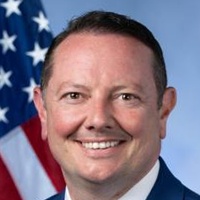
Eric Burlison
Representative
MO
Eric Burlison
Representative
MO
The Life at Conception Act declares that the constitutional right to life begins at the moment of fertilization, defining all human beings as persons from that point forward. The bill establishes legal personhood for every member of the species *homo sapiens* at all stages of development. Additionally, it explicitly prohibits the prosecution of any woman for the death of her unborn child.
The Born-Alive Abortion Survivors Protection Act requires health care practitioners to provide the same level of care to infants born alive after an abortion attempt as they would to any other newborn, mandating immediate hospitalization and imposing penalties for violations, while protecting the mother from prosecution. It also allows the mother of a child born alive to file a civil action against anyone who violated the act.
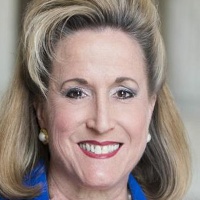
Ann Wagner
Representative
MO
Ann Wagner
Representative
MO
The "Born-Alive Abortion Survivors Protection Act" ensures that infants born alive after an abortion receive the same medical care as any other newborn, mandating immediate hospitalization and requiring healthcare practitioners to report any failures to comply. Violators face fines, imprisonment, and potential prosecution for homicide or attempted homicide, while the mother of the child cannot be prosecuted. The bill also allows the woman who had the abortion to file a civil action against anyone who violated the act. It defines abortion and attempts at abortion, and renames "Partial-Birth Abortions" to "Abortions" in relevant sections of the U.S. Code.
The SAVE Moms and Babies Act of 2025 prohibits the FDA from approving new abortion drugs and imposes strict federal restrictions on the distribution, usage, and reporting requirements for existing abortion medications.
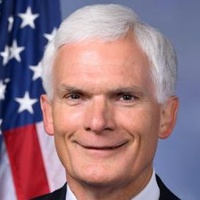
Robert Latta
Representative
OH
Robert Latta
Representative
OH
The SAVE Moms and Babies Act of 2025 prohibits the FDA from approving new abortion drugs and restricts the use of existing ones. The bill mandates strict safety protocols, including in-person administration requirements, expanded adverse event reporting, and limitations on gestational age for drug use.