Legislative Activity
Track Charles's sponsored bills, co-sponsored legislation, and voting record
This resolution condemns the persecution of Christians in Nigeria and supports decisive U.S. action to end the existential threat they face.
Riley Moore
Representative
WV
Riley Moore
Representative
WV
This resolution condemns the severe, ongoing persecution and mass killing of Christians in Nigeria by terrorist groups and militants. It criticizes the Nigerian government for failing to protect its Christian citizens and for enforcing blasphemy laws. Finally, Congress stands ready to support decisive action, including sanctions, to end this existential threat and calls for direct humanitarian aid to victims.
This bill authorizes HUD to award grants to local entities to select pre-approved housing designs for mixed-income developments to accelerate construction.
Janelle Bynum
Representative
OR
Janelle Bynum
Representative
OR
This bill, the Accelerating Home Building Act, authorizes the Secretary of Housing and Urban Development to award grants to local entities. These grants will help eligible entities select pre-reviewed construction designs for use in building mixed-income, low-rise or mid-rise housing structures. The goal is to speed up housing approvals by utilizing designs already vetted for local building codes, though the funds cannot be used for actual construction.
The SAFE Drivers Act mandates that all commercial driver's license applicants and renewal candidates must pass a standardized English proficiency test approved by the FMCSA.
Pat Harrigan
Representative
NC
Pat Harrigan
Representative
NC
The SAFE Drivers Act mandates that all applicants for a Commercial Driver's License (CDL) or learner's permit must pass a standardized English proficiency test approved by the FMCSA. This requirement applies immediately upon the bill's enactment for all new and renewing applicants. States are responsible for administering the test, and failure to comply with these new federal oversight rules may result in the withholding of federal highway funding.
This Act ensures FEMA has automatic funding to continue essential disaster relief operations if Congress has not passed the Fiscal Year 2026 budget by the start of the fiscal year.
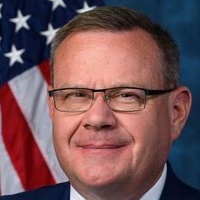
Tim Moore
Representative
NC
Tim Moore
Representative
NC
The Disaster Relief Continuity Act of 2025 ensures FEMA has immediate access to necessary funding to respond to declared disasters if Congress has not yet passed the budget for Fiscal Year 2026. This automatic funding allows essential disaster aid, operational costs, and ongoing recovery projects to continue without interruption. This temporary measure remains in effect until a new budget is passed or until January 1, 2027.
This Act prohibits federal crime-fighting grants to state and local jurisdictions that restrict cash bail for serious offenses or have cut police budgets without a justifiable, across-the-board shortfall.
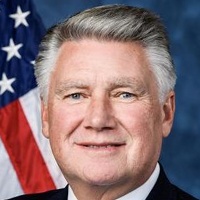
Mark Harris
Representative
NC
Mark Harris
Representative
NC
The No Funding for Lawless Jurisdictions Act restricts federal crime-fighting grants to state and local governments that limit cash bail for serious offenses or release convicted felons on personal recognizance. Furthermore, jurisdictions that cut their police budgets in the preceding year are ineligible for these funds, unless the cut was part of a fair, government-wide budget reduction. This legislation aims to ensure federal support only goes to jurisdictions maintaining traditional public safety and law enforcement funding standards.
This bill grants the U.S. Virgin Islands and Puerto Rico eligibility to issue commercial driver's licenses and ensures the application of federal commercial motor vehicle safety standards while providing a five-year grace period from related funding penalties.
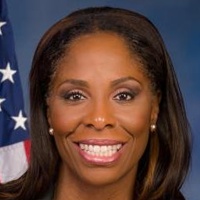
Stacey Plaskett
Representative
VI
Stacey Plaskett
Representative
VI
This bill amends federal law to officially include the U.S. Virgin Islands and Puerto Rico in the regulations governing commercial motor vehicle safety. It grants these territories eligibility to issue commercial driver's licenses under federal standards. Furthermore, the legislation provides a five-year grace period during which these territories will be exempt from federal highway fund penalties related to certain commercial driver's license requirements while they work toward full compliance.
The Faith in Housing Act of 2025 preempts local zoning laws to allow religious organizations to build deed-restricted affordable housing on their owned land.
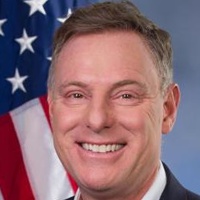
Scott Peters
Representative
CA
Scott Peters
Representative
CA
The Faith in Housing Act of 2025 aims to address the national housing shortage by empowering religious organizations to build affordable housing on their owned land. This Act preempts restrictive local zoning laws that currently hinder these faith-based efforts to create housing for low-income families. By overriding conflicting local ordinances, the bill seeks to unlock existing property for the development of deed-restricted affordable units.
This Act automatically provides 14-day continuing appropriations for federal programs at the previous funding level until Congress passes a new budget, effective September 30, 2025.
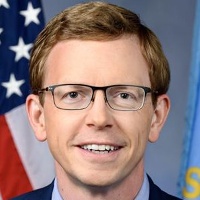
Dusty Johnson
Representative
SD
Dusty Johnson
Representative
SD
The Eliminate Shutdowns Act establishes an automatic, 14-day continuing appropriation mechanism to keep federal programs operational if Congress fails to pass a new budget by the start of the fiscal year. This funding continues to renew every 14 days until a full appropriation is enacted, ensuring essential services remain active. The Act also includes specific budgetary rules for counting this funding and sets an effective date of September 30, 2025.
This resolution honors the life and legacy of Charles "Charlie" James Kirk, condemns his assassination as political violence, and calls for a renewed commitment to civil discourse and American founding principles.

Mike Johnson
Representative
LA
Mike Johnson
Representative
LA
This resolution honors the life and legacy of Charles "Charlie" James Kirk, founder of Turning Point USA. It strongly condemns his assassination as an act of political violence. The bill calls for a renewed national commitment to civil discourse and the founding principles of the United States.
This bill posthumously awards a Congressional Gold Medal to Welles Remy Crowther for his heroic actions during the September 11, 2001, attacks.
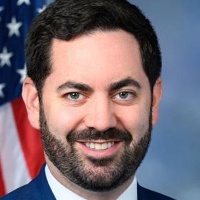
Michael Lawler
Representative
NY
Michael Lawler
Representative
NY
This bill, the Welles Remy Crowther Congressional Gold Medal Act, authorizes the posthumous presentation of a Congressional Gold Medal to Welles Remy Crowther for his extraordinary heroism and sacrifice during the September 11, 2001, attacks. The medal will be presented to his mother, Alison Crowther, on behalf of Congress. The Act also permits the creation and sale of bronze duplicates to cover production costs.
This act eliminates federal income tax on overtime compensation earned by all workers.
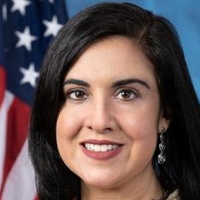
Nicole Malliotakis
Representative
NY
Nicole Malliotakis
Representative
NY
The No Tax on Overtime for All Workers Act amends the tax code to clarify and expand the definition of "qualified overtime compensation." This change ensures that overtime pay earned above a standard rate, whether mandated by the Fair Labor Standards Act or agreed upon beforehand with an employer, is treated favorably for tax purposes. The goal is to incentivize and reward workers for putting in extra hours.
This Act mandates that new passenger motor vehicles sold in the U.S. must include standard equipment capable of receiving AM broadcast radio signals.

Gus Bilirakis
Representative
FL
Gus Bilirakis
Representative
FL
The AM Radio for Every Vehicle Act of 2025 mandates that the Secretary of Transportation establish a rule requiring AM broadcast radio receivers to be installed as standard equipment in new passenger motor vehicles. This requirement aims to ensure public access to AM radio signals, which are often used for emergency alerts. The bill also directs a GAO study on the effectiveness of AM radio within the national emergency alert system compared to other technologies. Finally, the Act preempts state and local laws on this matter and includes a sunset provision eight years after enactment.
This act establishes a safe harbor for ESOP fiduciaries by allowing reliance on independent expert valuations of company stock based on IRS Revenue Ruling 59-60 for determining "adequate consideration."
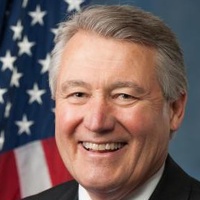
Rick Allen
Representative
GA
Rick Allen
Representative
GA
The Retire through Ownership Act establishes a safe harbor for fiduciaries of Employee Stock Ownership Plans (ESOPs) when valuing company stock for purposes of determining "adequate consideration" under ERISA. This safe harbor allows fiduciaries to rely on an independent expert's valuation if it uses the methods outlined in IRS Revenue Ruling 59-60. The bill clarifies valuation standards without altering a fiduciary's existing legal duties.
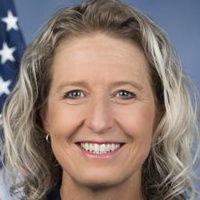
This Act ensures the automatic continuation of pay for active duty military personnel and essential civilian support staff if Congress fails to pass a budget for fiscal year 2026.
Jennifer Kiggans
Representative
VA
Jennifer Kiggans
Representative
VA
The Pay Our Troops Act of 2026 ensures that active duty military personnel and essential civilian support staff continue to receive their pay if Congress has not yet passed the full budget for fiscal year 2026. This act provides automatic continuing appropriations from the Treasury to prevent a lapse in military salaries due to budget delays. The funding automatically terminates once a new budget or continuing resolution is passed, or on January 1, 2027, whichever comes first.
This bill posthumously awards a Congressional Gold Medal to honor the groundbreaking civil rights achievements of Constance Baker Motley and authorizes the production and sale of bronze duplicates.

Rosa DeLauro
Representative
CT
Rosa DeLauro
Representative
CT
This bill, the Congressional Tribute to Constance Baker Motley Act of 2025, posthumously awards the Congressional Gold Medal to the pioneering civil rights attorney and federal judge, Constance Baker Motley. The legislation recognizes her historic achievements, including her role in *Brown v. Board of Education* and her service as the first African-American woman appointed as a federal judge. The Secretary of the Treasury is authorized to strike the medal, and provisions are made for selling bronze duplicates to cover production costs.
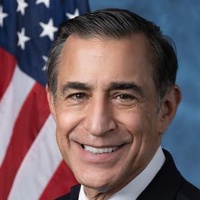
This bill protects firearm licensees from license revocation for self-reported or correctable violations by requiring notice, a chance to fix mistakes, and granting federal courts the power to review revocations *de novo*.
Darrell Issa
Representative
CA
Darrell Issa
Representative
CA
The FIREARM Act aims to protect licensed firearm dealers from overly harsh penalties for minor or self-reported mistakes. It establishes new standards requiring the government to provide notice and an opportunity for dealers to correct violations before license revocation. Furthermore, the bill retroactively applies these protections to licenses previously revoked under a specific 2021 enforcement policy, allowing affected individuals a path to reapply.
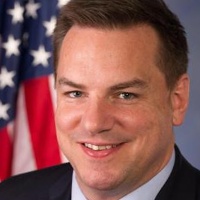
The RESULTS Act reforms how Medicare determines payment rates for clinical diagnostic laboratory tests by mandating the use of comprehensive, real-world private payor claims data collected from an independent entity.
Richard Hudson
Representative
NC
Richard Hudson
Representative
NC
The Reforming and Enhancing Sustainable Updates to Laboratory Testing Services Act of 2025 (RESULTS Act) aims to improve Medicare payment rates for clinical lab tests by mandating the collection of more accurate, real-world payment data directly from large, independent private insurance claims databases. This legislation updates definitions, collection timelines, and calculation methods to ensure Medicare payments for widely available tests reflect current market rates. It also establishes default payment rules if sufficient private payor data cannot be secured.
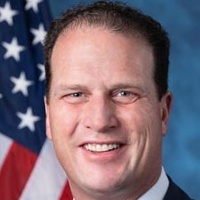
This Act mandates that federal agencies assist the Department of Commerce in maximizing the collection of detailed citizenship, noncitizen, and undocumented immigrant data for the census and requires the addition of a citizenship question to the 2030 decennial census while terminating the Census Bureau's use of differential privacy.
August Pfluger
Representative
TX
August Pfluger
Representative
TX
The Citizen Only Updated National Tally Act (COUNT Act) mandates that federal agencies must assist the Department of Commerce in gathering comprehensive administrative records to accurately determine the citizenship status of the U.S. population. This data collection effort aims to provide policymakers with precise facts regarding immigration's impact. Furthermore, the bill requires the addition of a citizenship question to the 2030 decennial census and terminates the Census Bureau's use of differential privacy for data protection six months after enactment.
The FEMA Act of 2025 establishes FEMA as an independent, cabinet-level agency and enacts sweeping reforms across public assistance, individual aid, and mitigation programs to speed up recovery and increase transparency.
Sam Graves
Representative
MO
Sam Graves
Representative
MO
The FEMA Act of 2025 establishes the Federal Emergency Management Agency (FEMA) as an independent, cabinet-level agency to lead a unified, all-hazards approach to national emergency management. The bill enacts sweeping reforms across Public Assistance, Individual Assistance, and Mitigation programs to accelerate recovery, streamline funding, and reduce bureaucratic hurdles for disaster survivors and communities. Furthermore, it mandates significant new transparency measures, including public data reporting and GAO oversight, to ensure accountability for federal disaster spending.
This bill exempts federal actions for infill housing construction from NEPA review and accelerates the required frequency of state natural hazard risk assessments.
Laura Friedman
Representative
CA
Laura Friedman
Representative
CA
This bill exempts federal actions related to the construction of qualifying infill housing from the environmental review requirements of the National Environmental Policy Act (NEPA). It defines qualifying infill housing based on location, size, and successful environmental site assessments. Additionally, the legislation accelerates the required frequency for states to update their natural hazard risk assessments from every five years to every three years.