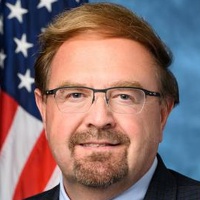
Legislative Activity
Track Charles's sponsored bills, co-sponsored legislation, and voting record
The STRONG Act doubles the maximum loan amounts available for both SBA 7(a) small business loans and development company loans to support national growth.
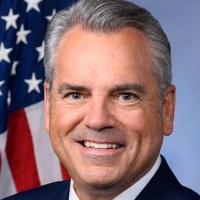
Mark Alford
Representative
MO
Mark Alford
Representative
MO
The Supporting Trade and Rebuilding Opportunity for National Growth Act, or STRONG Act, significantly increases the maximum loan amounts available through key Small Business Administration (SBA) programs. Specifically, it doubles the maximum size for standard 7(a) loans from $\$3.75$ million to $\$7.5$ million. Additionally, the bill raises the maximum loan amount for development company loans from $\$5$ million to $\$10$ million. These changes aim to provide greater capital access for small business growth and development.
This Act establishes a pilot program to utilize the Department of Defense's SkillBridge authority to train and hire transitioning servicemembers as U.S. Border Patrol agents.
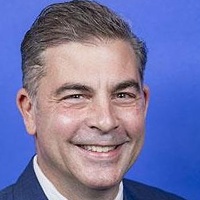
Mike Carey
Representative
OH
Mike Carey
Representative
OH
The Veterans Border Patrol Training Act establishes a pilot program to leverage the Department of Defense's SkillBridge program to train and hire transitioning servicemembers directly as U.S. Border Patrol agents. This initiative aims to facilitate a smooth transition for military personnel into federal law enforcement roles. The Secretary of Homeland Security must report annually to Congress on the program's participation and outcomes. This pilot program is set to automatically expire five years after its commencement date.
This bill extends the maximum holding period for certain real estate assets for Federal credit unions from 15 to 20 years and clarifies loan eligibility language.
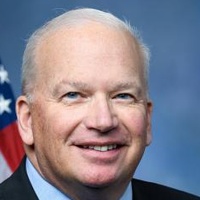
Scott Fitzgerald
Representative
WI
Scott Fitzgerald
Representative
WI
The Expanding Access to Lending Options Act directs the National Credit Union Administration (NCUA) to prioritize the safety and soundness of federally chartered credit unions. This legislation primarily amends the Federal Credit Union Act by extending the maximum holding period for certain real estate assets from 15 to 20 years. It also clarifies the eligibility language for property involved in these real estate loans.
This bill makes technical corrections and clarifications to the Camp Lejeune Justice Act of 2022, including adjusting venue options, setting standards of proof, and capping attorney fees, all retroactively applied to August 10, 2022.
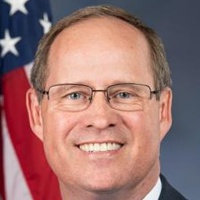
Gregory Murphy
Representative
NC
Gregory Murphy
Representative
NC
The Ensuring Justice for Camp Lejeune Victims Act of 2025 makes technical corrections to the 2022 Camp Lejeune Justice Act to clarify standards for proving harm and venue for trials. This legislation sets specific caps on attorney fees and retroactively applies these changes to all existing and future claims filed under the original 2022 Act. The bill ensures that existing statutes of limitations for filing claims remain unchanged.
The LEDGER Act mandates the establishment of a comprehensive, government-wide system to track and record the exact destination and availability period of every federal expenditure.
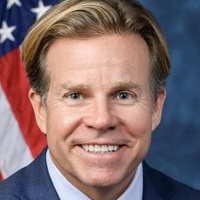
Mike Haridopolos
Representative
FL
Mike Haridopolos
Representative
FL
The LEDGER Act mandates the creation of a comprehensive, centralized system managed by the Secretary of the Treasury to track every expenditure made by all branches of the U.S. Government. This new system must detail exactly where federal funds are spent and how long those funds were available for obligation. The goal is to significantly enhance the traceability and transparency of government spending.
This Act mandates the prioritization and recapitalization of the Air Force's frontline fighter fleet by replacing legacy aircraft with advanced fighters, starting with the most frequently deployed wings.
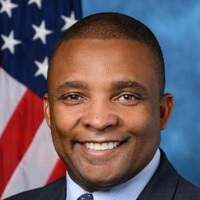
Donald Davis
Representative
NC
Donald Davis
Representative
NC
The Frontline Fighter Force First Act prioritizes recapitalizing the Air Force's active-duty fighter fleet by mandating the replacement of legacy aircraft with advanced fighters like the F-15EX and F-35. This process must begin with the most frequently deployed wings to ensure maximum combat readiness. The bill also requires a Government Accountability Office review of procurement challenges and mandates annual progress reports to Congress on the modernization effort.
This proposed constitutional amendment grants Congress the explicit power to prohibit the physical desecration of the United States flag.
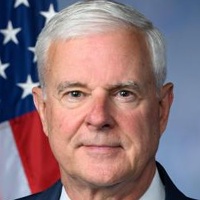
Steve Womack
Representative
AR
Steve Womack
Representative
AR
This proposed constitutional amendment seeks to grant Congress the explicit power to prohibit the physical desecration of the United States flag. If ratified by three-fourths of the states within seven years, this would allow Congress to enact federal laws protecting the flag from physical damage or destruction.
This Act establishes a federal crime with penalties for intentionally blocking public roads or highways in a manner that obstructs commerce.
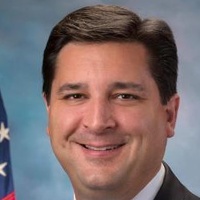
David Rouzer
Representative
NC
David Rouzer
Representative
NC
The Safe and Open Streets Act establishes a new federal crime for intentionally blocking public roads or highways in a manner that obstructs commerce. Violators of this provision face potential fines and imprisonment of up to five years. The Act also updates existing federal law language to reflect this new focus on physical obstruction of roadways.
This Act penalizes jurisdictions that restrict cooperation between local law enforcement and federal immigration officials by making them ineligible for certain federal development funds.
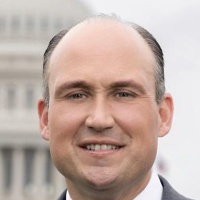
Nicholas Langworthy
Representative
NY
Nicholas Langworthy
Representative
NY
The Stop Dangerous Sanctuary Cities Act aims to penalize jurisdictions that limit cooperation with federal immigration enforcement. It defines "sanctuary jurisdictions" as those that refuse to honor detainer requests or share immigration information, with an exception for protecting crime victims and witnesses. Furthermore, the bill makes these designated sanctuary jurisdictions ineligible for specific federal development and community improvement funds, such as EDA grants and CDBG funds. Cooperating local officers are granted liability protection when honoring valid federal detainer requests.
This bill mandates the deportation and permanent inadmissibility of non-citizens who commit acts of violence against law enforcement or public property during civil unrest, with enhanced enforcement during declared emergencies.
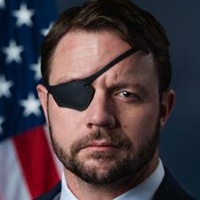
Dan Crenshaw
Representative
TX
Dan Crenshaw
Representative
TX
The Returning Illegals over Turmoil Act establishes new grounds for the deportation and permanent inadmissibility of non-citizens who incite or participate in violent acts against law enforcement or public property during civil unrest. This legislation mandates strict enforcement during declared emergencies and grants the Secretary of Homeland Security expedited removal authority under those conditions. Furthermore, individuals removed under these provisions are permanently barred from receiving any form of immigration relief or future DACA eligibility.
This act strips federal funding from any state or local jurisdiction deemed non-compliant with federal immigration enforcement cooperation requests.
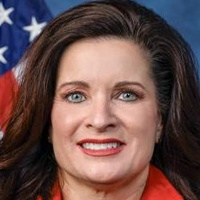
Sheri Biggs
Representative
SC
Sheri Biggs
Representative
SC
The Mobilizing Against Sanctuary Cities Act mandates that the Attorney General annually identify state and local jurisdictions that fail to cooperate with federal immigration enforcement requests, such as honoring detainers. Jurisdictions deemed non-compliant will immediately lose eligibility for all federal financial assistance for at least one year. Funding will only be restored after the Attorney General certifies that the area has corrected its non-compliance.
The SAFE Cities Act establishes a process for identifying and restricting federal funding to local jurisdictions that refuse to take reasonable steps to stop violence and property destruction.
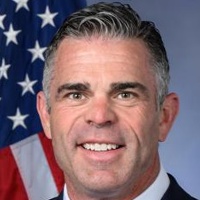
Tony Wied
Representative
WI
Tony Wied
Representative
WI
The SAFE Cities Act establishes a process for the Attorney General to officially designate certain state or local governments as "anarchist jurisdictions" based on their failure to take reasonable steps to stop violence and property destruction. Once designated, these jurisdictions will face restrictions or unfavorable treatment regarding the distribution of federal grants. The criteria focus on local policies that hinder law enforcement's ability to restore order or that involve significant cuts to police funding.
This Act grants the National Weather Service special hiring authority to quickly fill critical public safety positions and mandates regular workforce assessments and employee well-being reports to Congress.
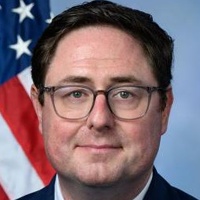
Mike Flood
Representative
NE
Mike Flood
Representative
NE
The Weather Workforce Improvement Act aims to strengthen the National Weather Service's ability to provide accurate and timely forecasts critical for public safety. It grants the NWS Director temporary direct-hire authority to quickly fill essential, public safety-related staffing vacancies. Furthermore, the bill mandates regular workforce assessments and reports on employee health and morale, particularly concerning shift work.
This bill establishes the Border Operations Service Medal to honor military personnel and federal employees involved in designated national security operations along the U.S.-Mexico border starting January 1, 2025.
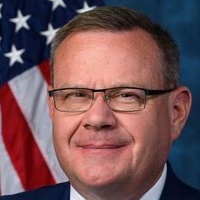
Tim Moore
Representative
NC
Tim Moore
Representative
NC
The Border Operations Service Medal Act establishes a new military decoration, the Border Operations Service Medal, to recognize service members and federal employees involved in designated national security operations along the U.S.-Mexico border starting January 2025. This medal will be awarded to active-duty, National Guard, and Reserve members who participated in these specific border security efforts. The Secretary of Defense is tasked with designing and implementing the medal within 60 days of the Act's enactment.
The Leveraging Educational Opportunity Networks Act establishes a grant program to fund partnerships that provide intensive, cohort-based career training with wraparound supports for low-income and underserved workers in high-demand fields.
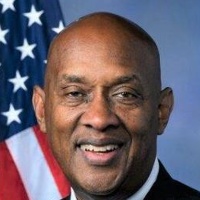
Dwight Evans
Representative
PA
Dwight Evans
Representative
PA
The Leveraging Educational Opportunity Networks Act establishes a new federal grant program managed by the Secretary of Labor to fund high-quality, cohort-based career training partnerships. These grants prioritize developing programs that offer living wages during training and comprehensive supportive services for participants from underserved populations. The goal is to rapidly equip low-wage and low-literacy workers with industry-recognized credentials needed to fill critical labor shortages in high-demand sectors. The Act authorizes up to $30 million annually for these initiatives through fiscal year 2029.
This resolution strongly condemns the rise of antisemitism in the United States and honors the memory of Yaron Lischinsky and Sarah Milgrim, who were murdered while promoting peace.
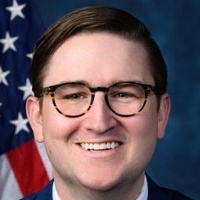
Addison McDowell
Representative
NC
Addison McDowell
Representative
NC
This resolution strongly condemns the rise of antisemitism in the United States and around the world. It specifically honors the memory of Yaron Lischinsky and Sarah Milgrim, who were tragically murdered while promoting peace. Ultimately, Congress reaffirms its commitment to combating all forms of hate and ensuring the vigorous enforcement of laws protecting religious freedom.
This bill modifies Small Business Administration disaster assistance by extending application deadlines and enhancing communication requirements with Congress following a major disaster.
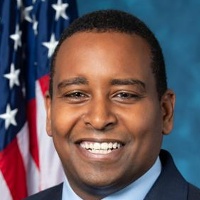
Joe Neguse
Representative
CO
Joe Neguse
Representative
CO
This bill modifies the Small Business Act to extend application deadlines for SBA disaster relief loans by 60 days and grants the Administrator discretion to accept late applications with good cause. Furthermore, it enhances communication requirements by mandating the SBA to directly notify the offices of affected Members of Congress following a major disaster declaration.
The DEFIANCE Act of 2025 establishes a federal civil right of action against the creation, possession with intent to share, or sharing of nonconsensual sexually explicit digital forgeries, or "deepfakes."
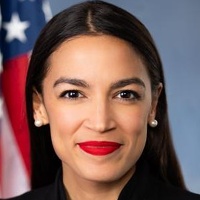
Alexandria Ocasio-Cortez
Representative
NY
Alexandria Ocasio-Cortez
Representative
NY
The DEFIANCE Act of 2025 establishes a federal civil cause of action against the creation, possession with intent to share, or sharing of nonconsensual intimate digital forgeries, often known as deepfakes. This legislation updates existing law to specifically address image-based sexual abuse created through AI or digital manipulation, regardless of whether the image is labeled as fake. Victims can sue for significant statutory damages, attorney's fees, and injunctive relief to stop the spread of the harmful content. The Act ensures that this new federal standard does not preempt or limit stronger existing State or Tribal laws.
This bill establishes a new excise tax on proceeds received by parties from third-party litigation financing agreements, effective after 2025.
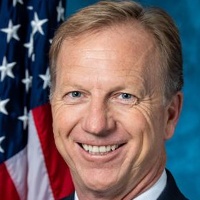
Kevin Hern
Representative
OK
Kevin Hern
Representative
OK
The Tackling Predatory Litigation Funding Act establishes a new federal excise tax on proceeds received from third-party litigation financing agreements. This tax is calculated at the highest income tax rate plus an additional 3.8 percentage points, applied annually to the proceeds received by a "covered party." The bill also institutes specific withholding requirements on payments made to financiers and reclassifies litigation funding proceeds to ensure this new tax structure is applied.
This bill mandates comprehensive federal data collection and reporting on attacks, aggression, and mental wellness to improve law enforcement officer safety and support.
Tim Moore
Representative
NC
Tim Moore
Representative
NC
This bill mandates comprehensive federal reporting to better understand and address violence, aggression, and wellness challenges facing law enforcement officers. It requires the Attorney General to produce detailed reports analyzing attacks on officers, potential new data collection methods for non-criminal aggressive incidents, and the state of officer mental health resources. The goal is to use this improved data to recommend better federal, state, and local responses and support systems for officers.